
Mark Cohen
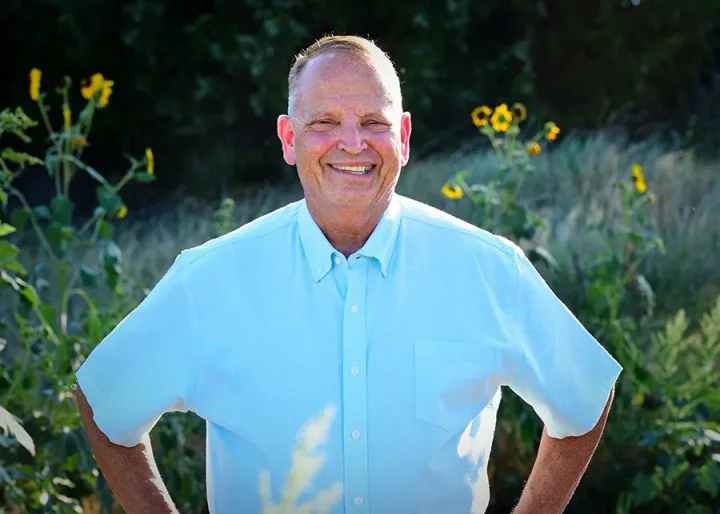
- Office
- U.S. Representative, Nebraska District 3
- State
- Nebraska
- Party
- By Petition
- Status
- On the general ballot
- Election
- Election held Nov 3, 2026
- Result
- Lost
Build a campaign strategy for Mark Cohen
About Mark Cohen
Experience
- US Air Force, Judge Advocate
- Attorney
- Special Assistant U.S. Attorney
Where Cohen stands
Campaign site, updated Nov 9, 2026. The campaign's issues page
Climate change & clean energy
Environment, Energy & Utilities
The earth
Nebraska farmers and ranchers don't need a scientist to tell them something is wrong. They see it in their fields, their water tables, and their insurance bills. In 2024 alone, extreme weather cost Nebraska $2 billion i…
Nebraska farmers and ranchers don't need a scientist to tell them something is wrong. They see it in their fields, their water tables, and their insurance bills. In 2024 alone, extreme weather cost Nebraska $2 billion in damages. The question isn't whether our climate is changing — it's whether our leaders have the courage to do something about it instead of pretending the problem doesn't exist.
What the Science Tells Us
Our planet keeps a journal by trapping air bubbles in glacial ice. Scientists can measure the levels of carbon dioxide and other gases in the atmosphere going back 650,000 years. For most of that time, CO2 levels hovere…
Our planet keeps a journal by trapping air bubbles in glacial ice. Scientists can measure the levels of carbon dioxide and other gases in the atmosphere going back 650,000 years. For most of that time, CO2 levels hovered between 200 and 280 parts per million. In 1950, they went above 300 for the first time in recorded history. Today they're above 400 and rising faster every decade. As a former prosecutor, I evaluate evidence. The evidence is clear.
A Practical Path Forward
We can’t switch off fossil fuels tomorrow. Fossil fuels are a necessary bridge while we work toward cleaner energy — energy sources that don't poison our soils, pollute our waters, or cause cancer. But a bridge must lea…
We can’t switch off fossil fuels tomorrow. Fossil fuels are a necessary bridge while we work toward cleaner energy — energy sources that don't poison our soils, pollute our waters, or cause cancer. But a bridge must lead somewhere. We need leaders who will invest in that transition honestly rather than pretending there's no river to cross.
The Bible says we are stewards of this Earth. Stewards don't hand future generations a disaster and call it freedom. Nebraska's farmers, ranchers, and rural communities deserve representatives who look at hard problems honestly and plan accordingly — not leaders who ignore them because it's politically convenient.
Global Warming
Ignoring global warming will ultimately harm farmers and ranchers. Extreme weather impacts our water supply, our ecosystems, the cost of insurance, and many other factors relevant to farming and ranching. We need leader…
Ignoring global warming will ultimately harm farmers and ranchers. Extreme weather impacts our water supply, our ecosystems, the cost of insurance, and many other factors relevant to farming and ranching. We need leaders who will assess these issues realistically rather than ignore them. You don’t solve problems by running from them.
I had to evacuate my home in Lemoyne in March because of a fire that burned more than 700,000 acres. A few weeks later, while visiting ag and labor leaders in Lincoln, it was 97 degrees. 97 degrees in Lincoln, Nebraska in March! Global warming is real.
Agriculture, Food & Animals
This Is an Agriculture Issue
Our agriculture sector is on the front lines. Rising temperatures and unpredictable precipitation affect crop yields and livestock health. More frequent droughts and extreme weather events are not abstractions — they ar…
Our agriculture sector is on the front lines. Rising temperatures and unpredictable precipitation affect crop yields and livestock health. More frequent droughts and extreme weather events are not abstractions — they are the difference between a profitable year and bankruptcy. Water levels in our reservoirs are falling. Flooding and drought are hitting Nebraska harder and more often. Farmers and ranchers in every county of this district know this.
Right to Repair
I support right to repair legislation that requires agricultural equipment manufacturers to provide owners and independent repair shops with the necessary parts, software, tools, and documentation to diagnose, maintain,…
I support right to repair legislation that requires agricultural equipment manufacturers to provide owners and independent repair shops with the necessary parts, software, tools, and documentation to diagnose, maintain, and repair equipment. This allows farmers to fix their own machinery or choose independent mechanics rather than being forced to rely exclusively on authorized dealers. While some claim such legislation would interfere with free markets, there is no "free market" when there is little competition among manufacturers and when equipment owners lack bargaining power. That's why the Republican party worked for antitrust laws more than one hundred years ago.
In July 2026, the Federal Trade Commission and five states settled an antitrust case against John Deere. That is a win, but it is not a law. It binds one manufacturer, it expires in ten years, and Deere admitted no wrongdoing. Every other manufacturer remains free to keep locking farmers out. A settlement is not a substitute for legislation.
My Experience in Agricultural Law
- Push to amend the Packers and Stockyards Act to change the “harm to competition” standard so a plaintiff does not have to prove harm to the entire industry
- Work to fund the USDA and the DOJ Antitrust Division, and to make them enforce the law
- Fight to mandate standardized packer contracts and USDA transparency reporting
I practiced law in Omaha during the farm crisis of the late 1980’s. I saw emotional pain farmers suffered when forced to file bankruptcy. Later, I earned an advanced degree in agricultural law. I know how laws impact farmers, ranchers, and agricultural industries. There has not been a new farm bill since 2018. I will work to fix that. We are headed for another farm crisis, and rural Nebraskans need a representative who works for them — not for a political party or a party boss.
As Your Representative I Will:
In short, I will represent Nebraska’s farmers and ranchers, not Big Ag.
- Work to restore Biden-era rules on competition in the meatpacking industry
- Push for campaign finance reform and to overturn Citizens United
- Work for a new farm bill (there has not been a new one since 2018)
- Fight to preserve and expand rural mental health funding and oppose cuts to rural health services
- Support right to repair legislation so farmers can fix their own equipment
What I Will Do
- Protect and increase federal funding for Ogallala Aquifer research, monitoring, and conservation programs.
- Fight for Nebraska's interests in interstate water compact negotiations and enforcement.
- Support federal cost-share programs that help farmers adopt water-efficient irrigation technology.
I earned an advanced degree in agricultural law (LL.M.) and spent years working with farmers and ranchers. I understand that water is not just a resource – it is the foundation of rural Nebraska's way of life. Every acre of corn, every head of cattle, every family farm in this district depends on it. I will treat it with the seriousness it deserves.
- Oppose cuts to the Bureau of Reclamation, NRCS, and USGS that provide the research and technical assistance rural Nebraska depends on.
- Support rural water infrastructure programs that help small communities maintain reliable water supplies.
- Treat water security as the agricultural and economic security issue it is – not as an environmental abstraction.
The Costs Don't Stop at the Farm Gate
Tariffs raise the cost of fertilizer, fuel, steel, machinery parts, and building materials. For an industry that already operates on thin margins, those cost increases are not an inconvenience — they are a threat to sur…
Tariffs raise the cost of fertilizer, fuel, steel, machinery parts, and building materials. For an industry that already operates on thin margins, those cost increases are not an inconvenience — they are a threat to survival. A farmer who cannot afford to repair equipment or pay for inputs does not plant. A farmer who cannot sell at a price that covers costs does not stay in farming.
Small rural businesses also feel the impact. Implement dealers, co-ops, feed stores, and rural banks are all connected to the health of the farm economy. When farm income drops, so does spending in every small town across the Third District.
Trade Agreements Must Protect Agriculture
Not all trade agreements are good for agriculture. Negotiators sometimes trade away agricultural market access to benefit other industries. As your representative, I will scrutinize every trade agreement specifically fo…
Not all trade agreements are good for agriculture. Negotiators sometimes trade away agricultural market access to benefit other industries. As your representative, I will scrutinize every trade agreement specifically for its impact on Nebraska’s farmers and ranchers. I will oppose any trade deal that sacrifices agricultural market access to benefit industries that have more lobbyists in Washington.
I earned an advanced degree in agricultural law and spent much of my legal career working with farmers and ranchers. I understand how these agreements work and what the fine print means. Nebraskans deserves a representative who reads the fine print.
Insurance & Financial Services
Insurance & Financial Services
This Is a Property Insurance Issue
Insurance companies aren't ideological — they follow the data. They see the increased risks of fire and severe weather and they raise premiums accordingly, or they pull out of markets entirely. When your property insura…
Insurance companies aren't ideological — they follow the data. They see the increased risks of fire and severe weather and they raise premiums accordingly, or they pull out of markets entirely. When your property insurance doubles or disappears, that's not politics. That's your bottom line.
National debt & federal deficit
National debt & federal deficit
State Budget, Bonds & Finance
This Is a Fiscal Issue
The cost of disaster relief, emergency response, and infrastructure repair after extreme weather events gets added to our national debt — the same debt the politicians lecture us about while cutting taxes for billionair…
The cost of disaster relief, emergency response, and infrastructure repair after extreme weather events gets added to our national debt — the same debt the politicians lecture us about while cutting taxes for billionaires. A true fiscal conservative addresses problems before they become catastrophes, not after.
The Budget and the National Debt
The national debt is now over $36 trillion. Every American's share of that debt — including every child born in Nebraska today — is over $100,000. Politicians from both parties created this problem. Politicians from bot…
The national debt is now over $36 trillion. Every American's share of that debt — including every child born in Nebraska today — is over $100,000. Politicians from both parties created this problem. Politicians from both parties are making it worse. And both parties are lying to you about how to fix it.
I will tell you the truth, even though the truth is not popular in an election year.
Both Parties Are Responsible
Democrats have sometimes spent too freely without finding a way to pay for it. But the loudest voices for deficit reduction in Washington today are the same people who just voted to add trillions of dollars to the debt…
Democrats have sometimes spent too freely without finding a way to pay for it. But the loudest voices for deficit reduction in Washington today are the same people who just voted to add trillions of dollars to the debt by cutting taxes on billionaires and giant corporations. They claim to be fiscal conservatives while running up debt faster than those they criticize. That is not fiscal conservatism, its hypocrisy.
Real fiscal conservatism means what it says. It means living within your means. It means not borrowing from your grandchildren to give tax breaks to people who already have more money than they can spend. George H.W. Bush called supply-side economics "voodoo economics" — and he was right. Tax cuts for the wealthy do not pay for themselves. The evidence is overwhelming, and has been for forty years.
The Revenue Side of the Equation
In 1953, the top marginal income tax rate was 92 percent — under Republican President Dwight Eisenhower. During the Eisenhower years, we built the interstate highway system, a family with one income could afford a house…
In 1953, the top marginal income tax rate was 92 percent — under Republican President Dwight Eisenhower. During the Eisenhower years, we built the interstate highway system, a family with one income could afford a house and a car, and we sometimes ran budget surpluses. Corporate taxes were higher too, which motivated companies to invest their profits in new ventures and new jobs rather than stock buybacks.
We should return to a tax structure more like the one that had bipartisan support under President Eisenhower. America functioned well, grew rapidly, and reduced its post-World War II debt under a tax structure that asked the most of those with the most. The idea that you cannot ask wealthy people and corporations to pay more without destroying the economy is a scare tactic and is not supported by history.
Corporations also find elaborate ways to shift profits offshore to avoid American taxes. When corporations pay lower effective tax rates than the nurses and teachers of Nebraska, the system is broken. Closing those loopholes is not class warfare. It is basic fairness, and it would raise significant revenue.
What This Means for Rural Nebraska
The federal debt is not just an abstract number. It drives up interest rates, which makes it harder for farmers to finance equipment and operating costs. It crowds out federal investment in rural infrastructure, broadba…
The federal debt is not just an abstract number. It drives up interest rates, which makes it harder for farmers to finance equipment and operating costs. It crowds out federal investment in rural infrastructure, broadband, healthcare, and education. And when the debt eventually forces painful choices — as it will — rural communities that depend on federal programs will feel the cuts most acutely.
Nebraska’s farmers are fiscally responsible people. They manage budgets, plan for uncertainty, and do not spend money they don't have. They deserve a representative in Congress who applies the same discipline to the federal budget that they apply to their own operations.
What I Will Do
- Oppose tax cuts that add to the deficit without corresponding spending reductions or revenue increases elsewhere.
- Support raising taxes on the wealthiest Americans and on corporations that use offshore strategies to avoid their fair share.
- Oppose cuts to Social Security, Medicare, and Medicaid as a budget-balancing tool.
There is no painless way to address the national debt. Anyone who tells you otherwise is either lying to you or has not thought it through. The question is not whether we will eventually have to make hard choices — we will. The question is whether those choices will fall on the people who caused the problem or on the people who can least afford to bear them. I know where I stand on that question.
- Support full Pentagon financial audits and real accountability for defense contractors.
- Call out politicians from either party who claim to care about the deficit while voting to increase it.
- Support a budget process that is honest about tradeoffs rather than one that hides them behind accounting gimmicks and deadline extensions.
Elections & Democracy
Protecting Democracy
“The Salvation of the State is the Watchfulness in the Citizen.” — Inscription on the Nebraska State Capitol Building
“The Salvation of the State is the Watchfulness in the Citizen.” — Inscription on the Nebraska State Capitol Building
I served as an Air Force Judge Advocate, sworn to uphold the Constitution and the rule of law. That experience reinforced that the rules must apply equally to everyone, regardless of rank. And regardless of wealth. Elections must be free and fair. Government must answer to the people — not to the highest bidder.
The Threat is Real
- “When you think of it, we shouldn’t even have an election.” (Reuters interview, Jan. 2026)
- “I won’t say cancel the election, they should cancel the election, because the fake news would say, ‘He wants the elections canceled. He’s a dictator.’” (Speech to House Republicans, Jan. 6, 2026)
- “I am going to lead a movement to get rid of MAIL-IN BALLOTS… and voting machines… by signing an EXECUTIVE ORDER to help bring HONESTY to the 2026 Midterm Elections.” (Truth Social post, Aug. 2025)
Recent statements and actions from President Trump raise serious concerns about his intent to interfere with or even cancel elections to benefit himself:
His specific interference attempts include:
Our representatives should speak out against these threats, not silently cower in a corner. We elected them to serve us, not a party or a president. They swore to uphold the Constitution – not pretend the emperor has no clothes.
- Announcing plans to ban mail-in voting and electronic voting machines via executive order.
- Suggesting elections should be canceled or delayed, undermining public confidence in democratic processes.
- Threatening federal involvement in election oversight, raising fears of voter intimidation.
Getting Big Money Out of Politics
Our democracy is in serious trouble. Citizens United opened the floodgates for corporations and billionaires to pour unlimited money into our elections. Wealthy interests form PACs to get around contribution limits, and…
Our democracy is in serious trouble. Citizens United opened the floodgates for corporations and billionaires to pour unlimited money into our elections. Wealthy interests form PACs to get around contribution limits, and the voices of ordinary Nebraskans get drowned out. In 2024, 100 billionaire families spent $2.6 billion on elections. That’s one out of six dollars spent by all candidates, parties, and committees. Not surprisingly, the 10 ten richest billionaires have seen their wealth soar by nearly $700 billion since Trump took office again.
The government has been quietly purchased by those with the deepest pockets — and until we change that, it will keep serving those who write the biggest checks, not the farmers, ranchers, and working families of Nebraska’s Third District.
We Need More Competition in Politics
A free market requires true competition, but the two parties work hard to exclude independents and third parties. Both parties appeal to extremists to raise money. There was a time when members of the two parties valued…
A free market requires true competition, but the two parties work hard to exclude independents and third parties. Both parties appeal to extremists to raise money. There was a time when members of the two parties valued logic over loyalty, but that time has passed, and the two-party system is no longer working for Nebraskans or for Americans. Both parties have lost the trust of the American people. The percentage of voters who identify as independent is the highest ever.
The Language We Use
The two-party system forces voters onto a left-right spectrum, but real life is not two-dimensional, and that’s not how voters – especially younger voters – think. Both parties use simplistic labels to divide us and rai…
The two-party system forces voters onto a left-right spectrum, but real life is not two-dimensional, and that’s not how voters – especially younger voters – think. Both parties use simplistic labels to divide us and raise money from the extremes. You’re either “pro-choice” or “pro-life.” You’re either “conservative” or “liberal.” The media rewards this ridiculous black and white thinking because controversy gets ratings. We must stop using language that encourages tribalism.
Defending Voting Rights
The Supreme Court has made it systematically harder for the most vulnerable citizens to vote. That erodes trust in our government and our courts — and it is not accidental. Government only works when citizens believe th…
The Supreme Court has made it systematically harder for the most vulnerable citizens to vote. That erodes trust in our government and our courts — and it is not accidental. Government only works when citizens believe their vote counts.
The SAVE Act is a solution in search of a problem. Every state already requires voters to certify their citizenship. Voting fraud is extremely rare — the evidence doesn’t justify this law. What it will do is disenfranchise women who changed their names after marriage and other citizens with documentation gaps. It’s a blatant attempt by Christian nationalists to disenfranchise women (who often change their name) and to disenfranchise others who are not wealthy, don’t travel, and therefore don’t have passports. I oppose it.
Fixing the House
- Introducing single subject bills
- Ending the use of continuing resolutions and omnibus bills
- Banning the trading of individual stocks by House members
There are several ways to make the House of Representatives work for better for Americans. These include:
- Term limits
Expanding the House of Representatives
Nebraska’s Third District covers eighty counties and borders six states. One representative cannot meaningfully serve 760,000 constituents — and that’s the situation every House member faces today, because Congress capp…
Nebraska’s Third District covers eighty counties and borders six states. One representative cannot meaningfully serve 760,000 constituents — and that’s the situation every House member faces today, because Congress capped the House at 435 members in 1929 and never revisited it, even as our population tripled.
I am open to uncapping the House. More representatives means smaller districts, members who know their constituents, lower campaign costs, and less power for outside money. It makes gerrymandering harder, increases diversity in the legislature, and could bring the Electoral College closer in line with the popular will. That’s a conversation worth having.
Confronting Media Consolidation and Corporate Censorship
A handful of conglomerates now control most of what Americans read, watch, and hear. They are driving independent local papers — essential in rural communities like ours — out of business. The major networks look nearly…
A handful of conglomerates now control most of what Americans read, watch, and hear. They are driving independent local papers — essential in rural communities like ours — out of business. The major networks look nearly identical: they profit from outrage and division, take corporate money for granted, and often repeat what the government tells them. We must enforce our antitrust laws and break up these concentrations of media power. Independent journalism matters, and we must support it.
“Journalism is printing what someone else does not want printed. Everything else is public relations.” - George Orwell
The censorship problem goes beyond consolidation. Search engines and social media platforms use algorithms to show us what they want us to see. And when our own government pressures the press or spreads disinformation, that’s not politics — that’s authoritarianism. Congress must hold the executive branch accountable. A politician who calls every critical story “fake news” is being cowardly, and it’s practically a confession that the story is true. Americans know that “alternative facts” are lies.
Electronic Voting Machines
I don’t fully trust electronic voting machines. Any system can be hacked, and too many reported results have seemed improbable. Every election should use paper ballots or a voter-verifiable paper audit trail. That’s the…
I don’t fully trust electronic voting machines. Any system can be hacked, and too many reported results have seemed improbable. Every election should use paper ballots or a voter-verifiable paper audit trail. That’s the only way to give people genuine confidence that their votes are counted as cast.
Our Responsibility as Citizens
We must be honest about our own role in this. We’ve let billionaires and their politicians distract us with trivia and divide us while they enrich themselves. As the saying goes: “Out of hatred for the cockroach, the an…
We must be honest about our own role in this. We’ve let billionaires and their politicians distract us with trivia and divide us while they enrich themselves. As the saying goes: “Out of hatred for the cockroach, the ants voted for the insecticide. They all died, including the housefly that didn’t vote.”
I swore to defend the Constitution. That oath didn’t come with an expiration date. Protecting democracy is not something someone else does for us — it requires the watchful eye of every citizen.
Foreign Affairs & Trade
Tariffs
This administration’s ill-conceived tariffs are hurting farmers, ranchers, and related industries. The cost of fertilizer and machinery is rising. The tariffs are causing other nations to impose retaliatory tariffs that…
This administration’s ill-conceived tariffs are hurting farmers, ranchers, and related industries. The cost of fertilizer and machinery is rising. The tariffs are causing other nations to impose retaliatory tariffs that reduce demand for U.S. agricultural products. This is why President Reagan opposed tariffs. He said, “The freer the flow of world trade, the stronger the tides for economic progress and peace among nations.”
The numbers confirm what Nebraska farmers already feel in their bones. According to Purdue University’s Ag Economy Barometer — a monthly survey of 400 agricultural producers nationwide — 46% of farmers now cite high input costs as their single biggest concern. One farmer recently told NBC News: “This is that perfect storm where everything comes together and hammers the farmer.” Fertilizer costs, diesel prices, and closed export markets are colliding at the same time. Small farm bankruptcies surged 46% in 2025 alone.
Free Markets Require Vigorous Competition. We Must Strengthen and Enforce Antitrust Laws
Those touting the unregulated free market forget that free market theory assumes vigorous competition. That’s the reason Republicans worked for antitrust laws more than one hundred years ago. We must strengthen and enforce our antitrust laws to be sure large agricultural corporations lack the market power to coerce or manipulate our farmers and ranchers. Your representative should work for you, not for Big Ag.
I will push to amend the Packers and Stockyards Act to change the “harm to competition” standard so a plaintiff does not have to prove harm to the entire industry. I will work to fund the USDA and the DOJ Antitrust Division, and to make them enforce the law. I will fight to mandate standardized packer contracts and USDA transparency reporting. And I will work to restore Biden-era rules on competition in the meatpacking industry.
As distressed family farms are bought up at fire-sale prices by corporate agribusinesses and Wall Street investors, the consolidation of American farmland is accelerating. This is not a free market — it’s a rigged one. The bottom 80% of American farmers received less than $5,000 each in recent federal farm aid, while agribusiness firms pocketed checks averaging $180,000. That is not a bailout for farmers. That is a bailout for Big Ag.
Tariffs and Trade Policy
Nebraska’s farmers and ranchers don't just feed Nebraska. They feed the world. And that means trade policy is farm policy. Every decision Congress makes about tariffs, trade agreements, and export markets lands directly…
Nebraska’s farmers and ranchers don't just feed Nebraska. They feed the world. And that means trade policy is farm policy. Every decision Congress makes about tariffs, trade agreements, and export markets lands directly in the pockets of the people who grow our food.
Ronald Reagan said it best: "The freer the flow of world trade, the stronger the tides for economic progress and peace among nations." This administration claims Reagan's mantle while doing the opposite of what Reagan believed. That is not conservatism. That is opportunism.
Tariffs Are Decimating Nebraska’s Agricultural Sector
The ill-conceived tariffs are decimating Nebraska’s agricultural sector. Tariffs caused a 52% drop in Nebraska soy sales to China. There has been a 66% collapse in beef exports to China — with no beef exports to China a…
The ill-conceived tariffs are decimating Nebraska’s agricultural sector. Tariffs caused a 52% drop in Nebraska soy sales to China. There has been a 66% collapse in beef exports to China — with no beef exports to China at all in April, May, or June 2025.
Tariffs Are a Tax on Nebraska
A tariff is a tax. When this administration imposes tariffs on imported goods, American companies and consumers pay that tax — not foreign governments. When we impose tariffs on steel and aluminum, farmers pay more for…
A tariff is a tax. When this administration imposes tariffs on imported goods, American companies and consumers pay that tax — not foreign governments. When we impose tariffs on steel and aluminum, farmers pay more for equipment and infrastructure. When we impose tariffs on Chinese goods, China retaliates with tariffs on American agricultural products. Nebraska corn, soybeans, beef, and pork lose market share they may never fully recover.
There is also a long-term damage that bailout payments cannot fix: trust. When American farmers prove to be unreliable suppliers because political decisions can cut off exports overnight, foreign buyers look for other sources. Once they find them and build relationships with them, it is hard to win that business back.
What Good Trade Policy Looks Like
I believe in free and fair trade. Those two words matter. "Free" means open markets, low barriers, and the ability to sell American products wherever there is demand. "Fair" means our trading partners play by the same r…
I believe in free and fair trade. Those two words matter. "Free" means open markets, low barriers, and the ability to sell American products wherever there is demand. "Fair" means our trading partners play by the same rules we do — no dumping products below cost, no government subsidies that distort competition, no theft of American intellectual property.
We have legitimate grievances with China's trade practices. But the way to address those grievances is through strong multilateral agreements, through the World Trade Organization, and through coordinated pressure from our allies — not through unilateral tariff wars that hurt Nebraska farmers and let China simply redirect its purchases to Brazil and Argentina.
Country of Origin Labeling
Nebraska produces some of the finest beef in the world. Consumers deserve to know where their beef comes from. I support restoring mandatory Country of Origin Labeling (COOL) for beef and pork, but I am mindful of the c…
Nebraska produces some of the finest beef in the world. Consumers deserve to know where their beef comes from. I support restoring mandatory Country of Origin Labeling (COOL) for beef and pork, but I am mindful of the costs of compliance. Congress eliminated those requirements in 2015 under pressure from meatpacking companies. Restoring COOL would let Nebraska ranchers compete on quality and give consumers the information they deserve.
This is not protectionism. This is transparency. If you have a quality product — and Nebraska ranchers do — you should want people to know where it comes from.
Big Tech antitrust & free speech
Big Tech antitrust & free speech
Technology, Data & Telecom
Antitrust Laws Help Nebraska Families
- The Sherman Act prohibits agreements in restraint of trade — price fixing, bid rigging, market allocation (§1) — and monopolization or attempted monopolization (§2). Aggressive enforcement against coordinated bidding in cash cattle markets would raise the price ranchers receive without raising retail beef prices, since the spread is where the money sits. I would change §2 so that when a buyer or seller holds market share above a set threshold in an agricultural market, the burden of proof shifts to the dominant firm to justify its conduct.
- The Clayton Act prohibits mergers and acquisitions whose effect may be substantially to lessen competition, exclusive dealing and tying, and interlocking directorates. The seed and agrichemical consolidation of 2016–2018 left a handful of firms controlling most of the market. Stronger §7 enforcement would have kept seed and chemical costs lower for row-crop producers, and prices lower for consumers. I’d close the serial-acquisition gaps so large companies can’t circumvent the law by buying smaller companies one at a time.
- The Robinson-Patman prohibits sellers from charging different prices to competing buyers for commodities of like grade and quality where the effect may substantially lessen competition, and prohibits discriminatory promotional allowances and brokerage payments. Strict enforcement would help independent groceries and pharmacies, and improve competition in rural areas. But the statute only tangible goods. I would expand it.
To address affordability we must strengthen and enforce our antitrust law to ensure competition that keeps prices down.
Civil Rights & Human Rights
Immigration
Similarly, this administration’s “one size fits all” approach to immigration hurts many industries in Nebraska, including agriculture, construction, the hospitality industry, and elder care.
Equal Pay
Women in Nebraska earn roughly 80 cents for every dollar a man earns for the same work. That's not a "women's issue" - that's a math problem and an economic problem. When women are underpaid, families are underpaid. Whe…
Women in Nebraska earn roughly 80 cents for every dollar a man earns for the same work. That's not a "women's issue" - that's a math problem and an economic problem. When women are underpaid, families are underpaid. When families are underpaid, rural communities suffer. I will support legislation that closes the pay gap, strengthens enforcement of equal pay laws, and requires transparency in compensation so that workers know if they're being shortchanged.
Health & Human Services
Rural Healthcare and Services
Rural Nebraska has already seen at least one hospital and several clinics close. The most recent budget bill (the Big Bag of gifts to Billionaires) harms rural healthcare, rural weather forecasts, and rural radio. In mo…
Rural Nebraska has already seen at least one hospital and several clinics close. The most recent budget bill (the Big Bag of gifts to Billionaires) harms rural healthcare, rural weather forecasts, and rural radio. In most rural areas the second largest employer (after agriculture) is the healthcare sector. And the third largest is often the school system. When our leaders cut funding for rural healthcare and other services, people leave the small towns and move to places where better healthcare and services are more readily available. When people move away from small towns, property values decrease and funding for schools drops. More people move away. I will work to preserve rural American and small town life. We can’t do that by cutting rural services and giving tax breaks to billionaires.
Mental health & youth crisis
Health & Human Services
Rural Mental Health
The farm crisis isn’t just an economic crisis — it’s a mental health emergency. The suicide rate among American farmers is now 3.5 times that of the general population, and it hit a record high in 2025. Calls to the nat…
The farm crisis isn’t just an economic crisis — it’s a mental health emergency. The suicide rate among American farmers is now 3.5 times that of the general population, and it hit a record high in 2025. Calls to the national Farm Aid hotline and the Iowa Concern hotline have surged four to five times compared to the same period last year. Established farmers with decades of experience are calling crisis lines because “the system that’s in place is simply letting them down.”
Farmers face a unique set of stressors: isolation, financial uncertainty, extreme weather, and cultural stigma around asking for help. Telehealth is not a viable option for some in rural Nebraska because cell and internet reception are limited. Driving long distances to see a counselor is impractical during planting and harvest season. Rural communities need mental health resources brought to them — not the other way around.
I will fight to preserve and expand rural mental health funding. I will oppose any budget that cuts mental health services for rural communities while handing tax breaks to billionaires.
Environment, Energy & Utilities
Environment, Energy & Utilities
Water and the Ogallala Aquifer
Under the Great Plains — including most of Nebraska's Third District — lies the Ogallala Aquifer – one of the largest underground freshwater reserves in the world. It irrigates about 30 percent of all groundwater-irriga…
Under the Great Plains — including most of Nebraska's Third District — lies the Ogallala Aquifer – one of the largest underground freshwater reserves in the world. It irrigates about 30 percent of all groundwater-irrigated farmland in the United States. It makes possible billions of dollars of agricultural production every year in Nebraska.
We are draining it faster than nature can refill it. In some parts of the aquifer, water levels have dropped more than 150 feet since large-scale irrigation began. If we do not address this problem seriously and soon, we are not talking about an inconvenience for future generations – we are talking about the end of irrigated agriculture as we know it across a significant portion of the Great Plains.
This Is Not a Distant Problem
Some Nebraskans take comfort in the fact that the aquifer is deeper and more robust in Nebraska than in other states. This leads to complacency. The aquifer does not respect state borders. What happens in Kansas and Col…
Some Nebraskans take comfort in the fact that the aquifer is deeper and more robust in Nebraska than in other states. This leads to complacency. The aquifer does not respect state borders. What happens in Kansas and Colorado affects Nebraska. And the rate of depletion in parts of southwestern Nebraska is already a serious concern.
Global warming compounds the problem. Hotter temperatures increase evaporation and crop water demand. Less precipitation means less recharge.
The Federal Role
Water rights are primarily a state matter, and Nebraska has worked hard through its Natural Resources Districts to manage groundwater. I respect that. The federal government should not trample on state water management…
Water rights are primarily a state matter, and Nebraska has worked hard through its Natural Resources Districts to manage groundwater. I respect that. The federal government should not trample on state water management systems that are working.
But the federal government has an important role to play. Interstate water compacts –agreements between states sharing the same water resources — often require federal involvement to negotiate, fund, and enforce. The Republican River Compact between Nebraska, Kansas, and Colorado is one example. These agreements are complex, contentious, and essential. Nebraska needs a representative in Congress who understands them and will fight for Nebraska's interests.
The federal government also funds research and provides technical assistance through agencies like the Bureau of Reclamation, the Natural Resources Conservation Service, and the United States Geological Survey. That research – on aquifer depletion rates, on water-efficient irrigation technologies, on drought forecasting – is essential for the long-term health of Nebraska agriculture. Cutting those agencies to give tax breaks to billionaires is not fiscal conservatism. It is trading our grandchildren's water for today's political points.
Conservation and Efficiency
The most cost-effective way to extend the life of the Ogallala Aquifer is more efficient water use. Modern irrigation technology – drip irrigation, soil moisture sensors, precision application systems – can dramatically…
The most cost-effective way to extend the life of the Ogallala Aquifer is more efficient water use. Modern irrigation technology – drip irrigation, soil moisture sensors, precision application systems – can dramatically reduce water use per acre without reducing yields. Many Nebraska farmers have already adopted these technologies. Federal cost-share programs through the Natural Resources Conservation Service help others do the same.
These programs work. They are good investments. And they are among the programs that get cut when politicians decide to balance the budget by slashing conservation funding while protecting tax breaks for corporations. I will fight to protect and expand conservation funding that helps Nebraska farmers use water more efficiently.
Water and Rural Communities
The Ogallala Aquifer does not just support agriculture. It supports communities. Rural towns across the Third District depend on groundwater for their drinking water supply. As the aquifer drops, some smaller communitie…
The Ogallala Aquifer does not just support agriculture. It supports communities. Rural towns across the Third District depend on groundwater for their drinking water supply. As the aquifer drops, some smaller communities face real threats to their municipal water supplies. This is not a hypothetical future problem in some areas – it is happening now.
Federal rural water programs help small communities develop and maintain reliable water supplies. Like rural housing programs, they are often underfunded and bureaucratically complex. We need to make them work better, not cut them.
Jobs, wages & the economy
Economic & Community Development
The Economy
You can't have an honest conversation about the economy without talking about taxes. And you can't talk honestly about taxes without acknowledging that for the past forty years, most of the benefits of our tax policy ha…
You can't have an honest conversation about the economy without talking about taxes. And you can't talk honestly about taxes without acknowledging that for the past forty years, most of the benefits of our tax policy have gone to the people who needed them least.
Tariffs Have Not Created Manufacturing Jobs
The President said tariffs would bring manufacturing jobs back to the US, but that has not happened. Payrolls in the manufacturing sector shrunk by roughly 72,000 positions between the start of the tariffs and December…
The President said tariffs would bring manufacturing jobs back to the US, but that has not happened. Payrolls in the manufacturing sector shrunk by roughly 72,000 positions between the start of the tariffs and December of 2025.
State Budget, Bonds & Finance
The Deficit Is Not an Abstraction
Adrian Smith and his colleagues in Congress just added 3.4 trillion dollars to the national debt and called it conservative. It is not conservative. George H.W. Bush — a Republican — called supply-side tax policy 'voodo…
Adrian Smith and his colleagues in Congress just added 3.4 trillion dollars to the national debt and called it conservative. It is not conservative. George H.W. Bush — a Republican — called supply-side tax policy 'voodoo economics' back in 1980. He was right then, and the evidence since has proven him right repeatedly. You cannot cut taxes for billionaires and large corporations and balance the budget at the same time. The math doesn't work. Every Nebraskan who has ever run a farm, a business, or a household knows that.
You Cannot Cut Your Way to a Balanced Budget
Some politicians tell you we can balance the budget by cutting "waste, fraud, and abuse." None of them have done it, because waste, fraud, and abuse — while real — do not come close to explaining a deficit that runs ove…
Some politicians tell you we can balance the budget by cutting "waste, fraud, and abuse." None of them have done it, because waste, fraud, and abuse — while real — do not come close to explaining a deficit that runs over a trillion dollars a year.
Others propose cutting Social Security, Medicare, and Medicaid. Those programs represent about 45 percent of federal spending. If you want to balance the budget purely through spending cuts, you either cut those programs severely or you do not come close to balancing the budget. When politicians tell you they will balance the budget without touching Social Security, Medicare, defense, or interest on the debt, ask them to show you the math. They can't.
Trying to balance the budget by cutting services while giving tax breaks to the wealthy is like trying to fill a bathtub while someone keeps pulling out the drain plug. You can work as hard as you want; you will not fill the tub.
Property & income tax relief
Taxation & Revenue
What Real Fiscal Conservatism Looks Like
In the 1950s, under President Eisenhower — a Republican — we had a progressive tax system with higher rates on the highest incomes and higher corporate taxes. With that revenue, we built the interstate highway system. A…
In the 1950s, under President Eisenhower — a Republican — we had a progressive tax system with higher rates on the highest incomes and higher corporate taxes. With that revenue, we built the interstate highway system. A family with one wage earner could afford a car and a home. Corporate taxes were structured to incentivize reinvestment in new ventures and job creation rather than stock buybacks and executive bonuses.
We must go back to a tax structure more like that. We must have an honest conversation about who is actually paying for the services we depend on — and who is getting a free ride. When the billionaires don't pay their fair share, the rest of us make up the difference through higher property taxes, reduced services, and debt passed to our children.
Property Tax Relief Starts in Washington
If the federal government required large corporations and the very wealthy to pay closer to their historical share, we could fund grants to state and local governments — money that can be used to buy down property taxes…
If the federal government required large corporations and the very wealthy to pay closer to their historical share, we could fund grants to state and local governments — money that can be used to buy down property taxes the way Nebraska's own school tax credits already do. Nebraska has proven it works: when the state increased aid to Ainsworth's schools, the district cut its property tax request nearly dollar for dollar. For rural Nebraska landowners, that's not a political theory. That's real money.
Economic & Community Development
Economic & Community Development
Antitrust and the Free Market
I believe in regulated capitalism. Free market theory assumes competition — no single buyer or seller has enough power to control prices. That may have been true in 1776. It has not been true since the rise of the railr…
I believe in regulated capitalism. Free market theory assumes competition — no single buyer or seller has enough power to control prices. That may have been true in 1776. It has not been true since the rise of the railroads and the oil companies, which is why Republicans worked for antitrust laws more than a hundred years ago. We must strengthen and enforce those laws. When four companies control most of the beef processing in this country, there is no free market for Nebraska ranchers. There is a take-it-or-leave-it market. That's not freedom — that's coercion with a business license.
We must stop measuring prosperity by how well the stock market is doing and start measuring it by how well people in greater Nebraska are doing.
Veterans & Military
Defense Spending and Accountability
The United States spends more on defense than the next ten countries combined. I support a strong military — our economic stability and security depend on it. But I also believe Congress has a responsibility to ensure t…
The United States spends more on defense than the next ten countries combined. I support a strong military — our economic stability and security depend on it. But I also believe Congress has a responsibility to ensure that money is actually spent on defense, not funneled to private contractors through systems designed to avoid congressional oversight and public accountability.
The Pentagon has failed its audit five years running. That means we genuinely do not know where trillions of dollars went. Any family that managed its finances the way the Pentagon manages its budget would be broke. Congress must reassert its constitutional authority over the purse and demand real accountability.
Tariffs & import prices
Foreign Affairs & Trade
What I Will Do
- Oppose unilateral tariffs that harm Nebraska's agricultural export markets without achieving concrete, measurable results.
- Support expanding free and fair trade agreements that open markets for Nebraska corn, soybeans, beef, pork, and other commodities.
- Scrutinize every trade deal for its specific impact on Nebraska agriculture before casting a vote.
Nebraska's agricultural economy does not need charity. It does not need bailout checks to make up for self-inflicted trade wounds. It needs a representative who understands that open markets built this district's economy and that protecting those markets is protecting Nebraska.
- Support restoring mandatory Country of Origin Labeling for beef and pork.
- Work with allies to address China's unfair trade practices through coordinated multilateral pressure rather than unilateral tariff wars that backfire on American farmers.
- Fight for stable, predictable trade policy so Nebraska farmers can plan for the future without worrying that a presidential tweet will close their markets overnight.
Health care costs & insurance premiums
Health care costs & insurance premiums
Health & Human Services
Healthcare
America is the only advanced nation that does not provide healthcare to its citizens. Instead, we have a system where insurance and pharmaceutical companies make huge profits from illness and suffering while MBAs make h…
America is the only advanced nation that does not provide healthcare to its citizens. Instead, we have a system where insurance and pharmaceutical companies make huge profits from illness and suffering while MBAs make healthcare decisions instead of doctors. Why? Because insurance and pharmaceutical companies donate to both parties, and both parties depend on big money.
I Support Some Form of Healthcare For All Americans. I had publicly funded medicine in the Air Force, and it worked just fine. (In fact, the Air Force could discipline airmen who failed to seek appropriate care because one unhealthy airman endangers the health of other airmen and endangers the mission). America is the richest nation in the history of planet Earth, but millions of our fellow citizens are dying from treatable illnesses and rationing insulin. How can a nation call itself “great” if a citizen must create a GoFundMe campaign for chemotherapy? We can afford to care for all Americans, but our leaders must decide it's more important to take care of American citizens than to cut taxes for billionaires. It's the right thing to do. If every American had access to healthcare, we might start to feel like we're all in it together – like we care about each other and we really are one nation.
The Big Bag of Gifts To Billionaires Hurts Rural Healthcare. The so-called Big Beautiful Bill (really the Big Bag of Gifts to Billionaires) hits rural healthcare hard. At least one hospital and several clinics in rural Nebraska have closed in the past few years. (Not counting the Tilden Community Hospital that closed in 2014). Garden County Health Services filed Chapter 9 bankruptcy in August of 2026, having downgraded earlier this year from a critical access hospital to a rural emergency hospital. It's going to get worse. Many hospitals and clinics are downgrading their status because this administration decided to cut $1 trillion from Medicaid to fund tax cuts for billionaires. The rural healthcare sector is often one of the largest employers in rural communities. When people lack access to healthcare, they move to places where access to healthcare is easier. The administration's supporters claim the Rural Health Transformation Program (RHTP), created by the same bill, is the answer to rural hospital closures — but that's a shell game. While Congress cut an estimated $137 billion in Medicaid funding to rural areas over ten years, the RHTP offers only $50 billion spread over five years to offset those losses. Nebraska's share is $218.5 million for the first year and roughly $1.1 billion across the five years, and only if it jumps through the federal hoops. Worse, the law itself explicitly prohibits RHTP funds from being used to replace Medicaid dollars or to directly stabilize struggling rural hospitals. In other words, Congress talked about saving rural hospitals, then wrote a law that prevents the money from doing exactly that. This is no accident. It reflects the same hostility to Medicaid — the backbone of rural healthcare — that has driven efforts to gut the Affordable Care Act for years. Rural Nebraskans deserve honesty: the RHTP is not a lifeline. It is a con.
The Affordable Care Act. The Affordable Care Act has been a huge success. Health insurance marketplace sign-ups exceeded 24 million for 2025, an all-time high, and 44 million people were enrolled in the ACA marketplace or Medicaid expansion coverage in 2024. The law has strengthened health insurance benefits by providing greater coverage and eliminating denials for pre-existing conditions. Enhanced premium tax credits that reduced the cost of coverage expired on January 1, 2026, because Congress refused to extend them. KFF estimated the expiration would raise premium payments by an average of 114 percent, and the damage is now measurable: marketplace enrollment is on track to fall from the 22.3 million people who paid for coverage in 2025 to roughly 17.5 million in 2026. All so billionaires pay less in taxes.
Facility Fees. The Hidden Tax on Rural Healthcare. You go to what looks like a doctor's office, see a doctor, and then get two bills. The second one — sometimes hundreds of dollars — comes from the hospital that owns the building. They call it a facility fee, and nobody told you about the fee or that insurance doesn't cover it. Hospitals have charged facility fees for decades, but the problem is growing as hospitals buy up clinics and physician practices across rural Nebraska. When a hospital acquires a doctor's office and reclassifies it as an outpatient department, patients pay hospital-level fees for the same visit they've always had in the same building. These fees impact everyone. Congress has sat on its hands while other states have passed laws to protect patients. Nebraska has done nothing. Meanwhile, the $1 trillion in Medicaid cuts Congress approved in 2025 to fund tax cuts for the wealthy are pushing financially stressed rural hospitals to lean even harder on facility fees. As your representative, I will push for federal laws that require upfront disclosure of facility fees, ban facility fees at off-campus clinics that function like ordinary doctor's offices, and protect Medicare and Medicaid patients from bills they never saw coming. You deserve to know what your care will cost before you receive it.
Stop One Size Fits All Requirements. Federal requirements say healthcare facilities don’t get paid unless they enter the proper codes, but complying with such requirements is much more difficult for rural hospitals and clinics, which can’t afford the software and expertise. A hospital in Oshkosh, Nebraska should not be subject to the same requirements as one in Chicago.
As Your Representative I Will:
· Work to restore Medicaid funding
· Oppose tax cuts for the wealthy that harm healthcare and rural communities
· Support the Affordable Care Act
· Fight for strict regulation of insurance companies
· Always support preventative care
Abortion access & reproductive freedom
Abortion access & reproductive freedom
Health & Human Services
Women's Issues
"You've never been a law enforcement officer, so you should leave these issues to the professionals."
"You've never been a law enforcement officer, so you should leave these issues to the professionals."
I addressed that kind of logic on my law enforcement page: the same people who say that, mostly men, have never been pregnant, but some of them have no problem legislating women's health decisions. So let me be straightforward about where I stand on issues that affect women in Nebraska.
Quoted from the campaign's website. What a campaign says is weaker evidence than a bill it sponsored or a vote it cast.
Track record
Campaigns filed
- MARK FOR NEBRASKA
In the candidate's own words
I first came to Nebraska in 1983 as a young Air Force Judge Advocate. I served four years at Offutt AFB and for two of those years also served as a Special Assistant U.S. Attorney for Nebraska. In 1986 the ABA honored me as the Outstanding Young Military Service Lawyer of the Year. One of my last acts on active duty was to travel to Nebraska’s death row to hand convicted serial killer John Joubert his dishonorable discharge from the Air Force. For calling out a potential abuse of power, Gov. Bob Kerrey honored me by making me a Nebraska Admiral.
My parents were both Air Force officers. I grew up in Colorado. I earned a degree in economics at Whitman College, where I also played rugby and was a team captain.
After leaving active duty I practiced law in Omaha for eight years, including during the farm crisis of the late 1980’s. During that time, I was twice a finalist in the Nebraska Toastmasters State Humorous Speech Contest. I also took graduate courses in philosophy and logic at the University of Nebraska in Lincoln. I attended the First Unitarian Church in Omaha for twelve years while living in Omaha.
I returned to Colorado in 1995 and lived in a small town 8,236 feet above sea level. During my time in Colorado, I also served as a municipal judge. I later relocated to Fayetteville, Arkansas, where I earned an advanced law degree (LL.M.) in agricultural law and served as an adjunct faculty member at the University of Arkansas School of Law.
In 1996 my article on the Nebraska National Forest was the cover story for Camping and RV magazine. I wrote two mysteries published by Time-Warner. My first mystery was The Fractal Murders. Part of the story takes place in Nebraska. It was a Book Sense mystery pick.
During the pandemic I bought my Lemoyne home. I have long loved the Sandhills, so I later made that my primary home. Today I teach karate in Ogallala, though I still sometimes take on legal matters in Colorado.*
I left the Democratic party about four years ago for several reasons. First, I disagreed with that party’s position on guns. Second, I felt the party was sometimes tone deaf and was becoming increasingly less hospitable to moderates and people from rural areas. Many Democratic leaders just don’t get that policies popular in New York City and San Francisco are not always popular elsewhere. I was frustrated by the party’s inability to control some of the nonsense such as the “Defund the police” rhetoric. Third, I felt some in the party were unwilling to compromise; some preferred to “fight the good fight” and lose rather than fight a smart fight and win. Finally, I was tired of belonging to a party that relied on corporate donors and sometimes brought a knife to a gunfight.
I have three grown children. My companion, “Nurse Sheri,” is from Crete, Nebraska, and was the Nebraska State Pork Queen. I live in Lemoyne with my Irish Wolfhound, Solomon. I enjoy teaching karate and floating the Niobrara River. I have a bad popsicle habit.
*Not licensed in Nebraska
Campaign site, updated Nov 9, 2026.
Campaign finance
- Raised
- $71,860 · Raised this cycle, through Oct 14, 2026.
- Cash on hand
- $1,255 · As of Oct 14, 2026.
Attention
- News articles, last 30 days
- 8
- Ads seen, last 30 days
- 0
Updated Nov 25, 2026.
Ran against
- Adrian Smith · Republican · incumbent · sitting legislator
- Becky Stille · Democratic
- Dave Else · Legal Marijuana NOW
- Macey Budke · Nebraska Working People
Official site and accounts
Filing record
The candidacy record
| Status | True from | Known since |
|---|---|---|
| Filed | Dec 16, 2025 | Sep 17, 2026 |
| On the general ballot | — | Oct 16, 2026 |
Updated Oct 15, 2026.