
Jillian England
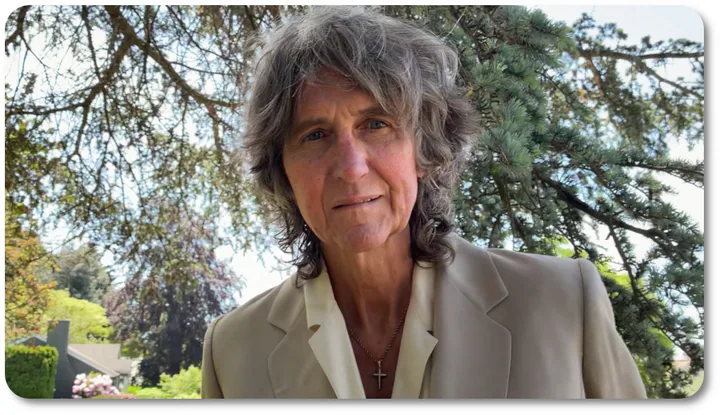
- Office
- State Senator District 36
- State
- Washington
- Party
- Republican
- Status
- On the general ballot
- Election
- Election held Nov 3, 2026
Build a campaign strategy for Jillian England
Where England stands
Campaign site, updated Nov 24, 2026. The campaign's issues page
Homelessness & poverty
Housing & Land Use
The Compounding Homelessness, Addiction, and Overdose Problem in Seattle
Addiction + Open Tolerance + Migration Inflow = Exponential Growth in Visible Homelessness and Overdoses
Addiction + Open Tolerance + Migration Inflow = Exponential Growth in Visible Homelessness and Overdoses
A path out—
of addiction.
of homelessness.
of hopelessness.
Compassion without consequences is not mercy — it is a recruitment engine. Government policies that remove accountability while subsidizing visible failure do not reduce addiction; they multiply the number of people trapped in it and the neighborhoods destroyed by it.
Fix the Aurora Corridor
Not one intersection — the corridor, the camps in between, and nodes like 12th & Jackson
Not one intersection — the corridor, the camps in between, and nodes like 12th & Jackson
A path out—
of addiction.
of homelessness.
of hopelessness.
Government’s only legitimate role is protecting people from aggression. Soft words are how we keep walking past Aurora — and past every other open-air market like it. Accountability with a path — a roof with rules, treatment that is not optional, and markets that are shut — is how we stop funding the funeral.
Fellow Washingtonians,
Seattle/King County’s visible homelessness crisis — tent cities, encampments, open drug use — is not just a simple housing shortage. It is driven by a self-reinforcing feedback loop centered on addiction.
Seattle/King County’s visible homelessness crisis — tent cities, encampments, open drug use — is not just a simple housing shortage. It is driven by a self-reinforcing feedback loop centered on addiction.
Fentanyl and other synthetics create high lethality and high dependence. Survivors keep using; new users are recruited. There is a large and growing baseline population of active addicts.
Permissive local policies — low-barrier shelters, harm-reduction focus without strong accountability, decriminalization signals, and generous services — act as a powerful migration magnet. Surveys and local data have repeatedly shown that a large share of the street homeless population originated outside Seattle/King County. People struggling with addiction elsewhere migrate here for easier access to drugs, services, and tolerance of open use.
“Housing First” without sobriety requirements, resistance to clearing encampments, and limited enforcement against open-air drug markets and property crime allow visible, unmanaged tent cities to persist and expand. This creates a visible “success story” for others in similar situations — further accelerating inflow.
The result is compounding growth. More addicts on the street produces more overdoses (statewide in Washington, overdose deaths rose from 1,259 in 2019 to 3,458 in 2023 — nearly tripling in four years — before easing to 3,145 in 2024, per the Washington State Department of Health). More tent cities normalize public drug use and disorder, which drives more recruitment and migration. More disorder causes businesses and residents to leave or disengage, which reduces social pressure and resources to push back — creating an even larger baseline.
This is classic compounding. The death, user, and homeless counts grow multiplicatively because each wave enlarges the pool that drives the next wave. Individual addicts may not “compound” personally after an overdose, but the system-level pool does through migration, new initiates, and survival of the current cohort.
Fellow Washingtonians,
This is not just one bad corner. It is the Aurora corridor — from the south stretches of Aurora Avenue up through Aurora and Northgate Way, with addiction camps and dealing storefronts all along the way. The same death-…
This is not just one bad corner. It is the Aurora corridor — from the south stretches of Aurora Avenue up through Aurora and Northgate Way, with addiction camps and dealing storefronts all along the way. The same death-cycle market shows up at nodes across the city, including places like 12th and Jackson. Different map pins. Same system: dealers set up, users cluster, tents become the storefront, crime follows.
Open prostitution, drug dealing, gang activity, and shootings are not separate from the tents. The camps are the market. Families and businesses pay the spillover while the city keeps renaming the problem.
One movie says “house them first, services optional.” Another says “get clean before you get a key.” Both leave people dying — one indoors with a kit, one outside waiting for permission. The missing film is the only one that isn’t a eulogy: a real path out — of addiction, of homelessness, of hopelessness.
That means we do not pretend compassion without duty is kindness. We do not treat a foil kit and a pallet as an exit. We name what is happening on this corridor — and at the other open markets like it — then we fund the way out.
Restore Enforcement and Clear the Streets
Enforce laws against open drug use, encampments, and related property crime. Remove the visible “success stories” that recruit more users and migrants. Disorder is not compassion.
Close the Migration Magnet
Reform low-barrier policies, generous services without accountability, and decriminalization signals that draw addicts from across the region and country. Stop importing the problem while exporting little accountability.
Postscript: Interactive Policy Model
Explore how changes in migration discouragement and enforcement levels affect the projected overdose death trajectory over time. This is a simplified exponential/compounding model built directly from the analysis in thi…
Explore how changes in migration discouragement and enforcement levels affect the projected overdose death trajectory over time. This is a simplified exponential/compounding model built directly from the analysis in this paper.
Open the full interactive model in a new tab →
· Download standalone bundle (zip — Windows, macOS, Linux, ChromeOS) ↓
· Download standalone bundle (tar.gz — macOS, Linux) ↓
The model is a self-contained HTML file: unzip the download into one folder and open washington_overdose_model.html in any current browser — no install, extensions or internet connection needed. The bundle contains the page, its supporting files (local Chart.js, model math, data, diagrams), the full license, and a README with step-by-step instructions for Windows, macOS, Linux and ChromeOS. On phones and tablets, use the online version above.
The Compounding Homelessness, Addiction & Overdose Problem in Seattle
Addiction + open tolerance + migration inflow = exponential growth in tent cities, disorder, and overdoses. Not “just housing.”
Addiction + open tolerance + migration inflow = exponential growth in tent cities, disorder, and overdoses. Not “just housing.”
Stop recycling our problems.
Vote for an EXIT.
Self-reliance beats dependence. Practical reality beats political fantasy.
Together, we can make Washington golden.
— Jillian England
Candidate for Washington State Senate, Legislative District 36
State Budget, Bonds & Finance
Cut Fraud and Wasteful Spending
End the Waste So Working Families Can Keep More of What They Earn
End the Waste So Working Families Can Keep More of What They Earn
Government does not create wealth — it only seizes it from those who produce and wastes much of it in the process of expanding its own power.
Fellow Washingtonians,
Years of one-party rule have driven residents and employers out of Seattle with excessive taxes and heavy regulations. Instead of fixing the real problems, politicians keep finding new ways to spend your money on failed…
Years of one-party rule have driven residents and employers out of Seattle with excessive taxes and heavy regulations. Instead of fixing the real problems, politicians keep finding new ways to spend your money on failed programs.
The Climate Commitment Act has added 50-65 cents per gallon to gas and increased home energy bills — with funds often diverted away from actual environmental goals. We need accountability, not more blank checks for bureaucracy.
End CCA Fund Diversions
Stop the wasteful spending and redirect resources to real priorities like roads, public safety, and practical energy solutions.
Audit and Cut Failed Programs
Review every major spending line for fraud, waste, and duplication. Government should live within its means like families do.
Cut Fraud and Wasteful Spending
End the waste, reform the Climate Commitment Act, and put government on the side of working people.
Environment, Energy & Utilities
Environment, Energy & Utilities
Energy You Can Count On
Our energy infrastructure is more fragile than it should be.
Our energy infrastructure is more fragile than it should be.
Abundance beats scarcity. Firm power, protected hydro, and new nuclear keep the lights on and the bills payable.
Fellow Washingtonians,
Demand for power is rising — homes, hospitals, and data centers — while reliable plants retire and costly mandates push bills up without making the grid firmer. That is fragility, not progress.
Demand for power is rising — homes, hospitals, and data centers — while reliable plants retire and costly mandates push bills up without making the grid firmer. That is fragility, not progress.
Energy is the lifeblood of our economy. Seattle’s tech boom, our hospitals, and working families all need power that stays on in a cold snap and costs they can afford. Hydro is a real advantage. Mandates that tax carbon while the grid stays brittle are not.
The Climate Commitment Act is a cost and fragility problem. It raises gas and home energy bills for working people with almost no global effect — Washington is about 0.2% of world emissions — and it does not harden the wires or add firm capacity.
Energy Abundance & Affordable Power
Fast-track nuclear, protect hydro, repeal the carbon tax, and keep costs down for families and businesses.
Energy Abundance — Build New Nuclear
Support Small Modular Reactors, including Amazon and Energy Northwest projects, for clean, reliable 24/7 power that scales with demand.
Protect Hydroelectric Power
Keep and modernize the dams that already deliver clean, firm power — Washington’s greatest energy asset.
Taxation & Revenue
Repeal the New State Income Tax
They promised it would only hit millionaires. That promise never lasts.
They promised it would only hit millionaires. That promise never lasts.
No one has a moral right to the product of another person’s labor. An income tax is government claiming ownership over your life and the fruits of your effort.
Repeal the New State Income Tax
They promised it would only hit millionaires. History says it won’t stay there. End it before it reaches working families.
Fellow Washingtonians,
Governor Ferguson and the Democratic majorities in Olympia sold the new 9.9% income tax with a familiar line: it will only apply to “millionaires and billionaires.”
Governor Ferguson and the Democratic majorities in Olympia sold the new 9.9% income tax with a familiar line: it will only apply to “millionaires and billionaires.”
That is the same sales pitch used every time a state creates an income tax. The threshold always moves. What starts as a tax on the wealthy becomes a tax on the middle class, then on everyone who still works and still owns something.
My opponent sponsored this tax. She helped crack the door open. Once that door is open, history shows it never stays limited. Washington already has one of the highest sales taxes and a cascading B&O tax that hits small businesses hard. Instead of fixing those real problems, they chose to create a new income tax and pretend it would never grow.
Repealing this tax is my top priority. We stop the precedent now, before it spreads.
Repeal the “Millionaires Tax” Immediately
Strike this dangerous precedent from the books before the threshold is lowered and working families are next.
Reform the Real Regressive Taxes
Fix the high sales tax and the cascading B&O tax that already punish families and small businesses — instead of layering on new income taxes.
Lock the Door Against Tax Creep
Require broad voter approval and hard limits before any future income tax can be imposed. No more quiet expansions.
Cut Waste Instead of Raising Taxes
Force government to live within its means. Stop punishing success to paper over spending failures.
Force government to live within its means. Stop punishing success to paper over spending failures.
They lied about who would pay. We should not pretend otherwise.
Self-reliance beats dependence. Innovation beats ideology.
Together, we can make Washington golden.
— Jillian England
Candidate for Washington State Senate, Legislative District 36
Technology, Data & Telecom
Data Centers: Build Them or Fall Behind
Rejecting Luddism — Capturing Technology’s Gains for Washington Families
Rejecting Luddism — Capturing Technology’s Gains for Washington Families
Technology advances whether politicians approve of it or not. Regions that treat productive tools as the enemy end up poorer and less influential. The humane strategy is to capture the gains quickly — not throttle the tools and export the upside.
Data Centers: Build Them or Fall Behind
Seattle’s moratorium is Luddite symbolism. Capture AI infrastructure gains — or export the jobs, tax base, and power planning to other states.
Housing & Land Use
Norse Home: Preserving Affordable Senior Housing
Protecting a Community Legacy from Downsizing
Protecting a Community Legacy from Downsizing
Housing problems are created by government zoning, subsidies, and regulations that distort the market. More government force will not fix what government force caused.
Transforming Age (nonprofit, EIN 32-0672552)
President/CEO Torsten Hirche; Board Chair Barb Bennett (retired Vulcan Inc.). They manage multiple communities in the PNW and emphasize mission-driven senior services. Contact: (425) 559-6301 or transformingage.org/cont…
President/CEO Torsten Hirche; Board Chair Barb Bennett (retired Vulcan Inc.). They manage multiple communities in the PNW and emphasize mission-driven senior services. Contact: (425) 559-6301 or transformingage.org/contact-us. Their stated goal is sustainable renovation while preserving legacy; critics argue the downsizing prioritizes financial viability over community need.
End “Housing First” Without Strings
Require sobriety and active participation in real treatment for any publicly funded housing or services. Pure harm-reduction models that ignore addiction drivers have failed at scale.
Save Norse Home (Grassroots Advocates)
Advocating for full restoration of assisted living capacity, community oversight, and affordability protections. They highlight traumatic displacement of vulnerable seniors and the broader shortage of moderate-income se…
Advocating for full restoration of assisted living capacity, community oversight, and affordability protections. They highlight traumatic displacement of vulnerable seniors and the broader shortage of moderate-income senior housing. Meeting: May 21, 5:30–6:30 PM at Phinney Neighborhood Association.
Norse Home: Preserving Affordable Senior Housing
Preserving affordable senior housing options for Seattle residents.
Core Tension
Safety-driven closure vs. community desire to preserve legacy affordable units. Transforming Age provided relocation help and remains open to input, but reduced scope has fueled distrust. No demolition is planned, yet d…
Safety-driven closure vs. community desire to preserve legacy affordable units. Transforming Age provided relocation help and remains open to input, but reduced scope has fueled distrust. No demolition is planned, yet delayed or scaled-back reopening risks permanent loss of capacity.
Housing shortage & rents
Housing & Land Use
Fellow Washingtonians,
Norse Home (5311 Phinney Ave N, Phinney Ridge, Seattle) is a historic senior living facility originally developed with community donations from the Norwegian-American community. For roughly 70 years it provided assisted…
Norse Home (5311 Phinney Ave N, Phinney Ridge, Seattle) is a historic senior living facility originally developed with community donations from the Norwegian-American community. For roughly 70 years it provided assisted living, independent living, and retirement housing for approximately 130 residents, many at moderate-income levels. It served as a community anchor in North Seattle.
In 2024, operator Transforming Age (a nonprofit) announced a temporary closure effective around mid-2025 for critical safety and infrastructure upgrades to the aging building. All residents (roughly 80–86 remaining at closure) were relocated with support. The organization’s submitted plans reduced capacity significantly—from ~130 units (mostly assisted living) to approximately 32 independent living units. This sparked community concern about loss of affordable senior housing stock in a high-demand area.
Broader Implications
Accelerating senior housing shortage in Seattle/King County. Questions about nonprofit operators balancing mission with financial realities. Opportunity for creative public-private or nonprofit/for-profit collaboration…
Accelerating senior housing shortage in Seattle/King County. Questions about nonprofit operators balancing mission with financial realities. Opportunity for creative public-private or nonprofit/for-profit collaboration rather than prolonged conflict.
Electricity bills & data centers
Electricity bills & data centers
Environment, Energy & Utilities
Fellow Washingtonians,
Data centers are not optional infrastructure in the AI era. They are the factories of the next industrial wave. Regions that treat them as enemies will not stop the technology. They will simply watch the investment, the…
Data centers are not optional infrastructure in the AI era. They are the factories of the next industrial wave. Regions that treat them as enemies will not stop the technology. They will simply watch the investment, the jobs, the tax base, and the downstream prosperity move elsewhere.
Seattle’s 2026 one-year moratorium on large data centers (above roughly 20 MW) is a clear local example of symbolic restriction that does nothing to reduce global demand for compute. It only raises the odds that the next wave of capacity — and the economic activity that follows it — lands in other states or countries. That is how places fall behind.
Legitimate concerns exist: grid capacity, rate impacts on ordinary customers, water use, noise, and land-use conflicts. Those deserve targeted tools — full marginal-cost rates for large loads, water and noise standards, heat recovery where district systems already exist. None of those tools requires a freeze on applications.
The technology will advance whether we like it or not. The only open question is whether Washington captures the gains or exports them.
Power and Waste Heat in Context
Large facilities are measured in hundreds of megawatts. All electricity consumed eventually becomes heat that must be rejected. The relevant comparison is not neighborhood folklore — it is planetary energy flow.
Gas-fired plant + 500 MW data center
Component
Component
Power (MW)
Notes
Fuel input at plant
1,000 – 1,250
Natural gas
Waste heat at plant
500 – 750
Cooling towers / exhaust
Electricity to data center
Delivered output
Waste heat at data center
Essentially all electricity becomes heat
Total waste heat to environment
1,000 – 1,250
Combined
That is approximately 1/97,600,000 of the solar energy Earth absorbs daily.
Nuclear plant + 500 MW data center
Component
Component
Power (MW)
Notes
Thermal input
~550
Fission heat
Waste heat at plant
~50
Cooling
Electricity to data center
Delivered output
Waste heat at data center
All electricity becomes heat
Total waste heat to environment
~550
Combined
Nuclear is dramatically more efficient. Even the gas case is vanishingly small relative to daily solar absorption. Claims that treat a single facility as climatically decisive are orders of magnitude off the physical scale.
Technical detail and units examples: MassEnergyUnits — data center power · Energy Abundance platform →
Nameplate Is Not Continuous Draw
- Servers use dynamic voltage and frequency scaling, idle/sleep states, and power-off of racks or floors when utilization is low.
- Cooling systems use variable-speed drives and zone control so they track real heat load.
- Power distribution is modular; sections can be de-energized without taking the whole site offline.
Modern hyperscale and AI facilities are engineered so power and cooling track real demand:
The 500 MW figure is a design ceiling, not a constant. High capital cost of AI accelerators creates strong pressure to keep utilization high — but the engineering ability to scale down exists and is used.
PUE (Power Usage Effectiveness = total facility power ÷ IT equipment power) multiplies remaining IT load by facility overhead. Typical hyperscale values run about 1.1–1.4 under good conditions. At very low load, fixed plant can raise effective PUE, so facility draw does not fall quite as far as IT power alone. Even so, deep reductions remain large:
Case
IT Power
Approx. PUE
Facility Draw
Peak
500 MW
1.2
~600 MW
Scaled
50 MW
1.5
~75 MW
Waste heat at the site tracks facility electrical input. Nameplate capacity is a poor proxy for continuous environmental load.
- Workload orchestration consolidates jobs so unused capacity can be powered down between large training runs or during low inference traffic.
Policy Honesty
- Supply / abundance — expand generation and transmission (nuclear, hydro, gas where needed) and allow facilities so load can be met.
- Demand — price or restrict the end uses that create the load (heavy training, high-volume services).
If the real concern is energy and infrastructure scale, two coherent levers exist:
What is incoherent is the third path often taken in practice: obstruct data-center siting while leaving AI demand politically unconstrained. Servers exist to serve load. Blocking local supply without reducing demand mainly exports the activity, delays planning, and creates scarcity. The joules do not disappear; they simply move.
Washington’s competitive position depends on choosing the first path. Energy abundance is the prerequisite for hosting high-value compute without scarcity pricing for everyone else. Restricting the physical plants while celebrating the applications that require them is the opposite of serious industrial strategy.
The Stakes
Places that build the infrastructure capture construction employment, long-term operating jobs, property and business tax base, and the surrounding ecosystem of suppliers and skilled talent. Places that block it watch t…
Places that build the infrastructure capture construction employment, long-term operating jobs, property and business tax base, and the surrounding ecosystem of suppliers and skilled talent. Places that block it watch those gains leave. The historical pattern is consistent across earlier industrial transitions. The same pattern is visible now with AI, automation, and energy-dense sources.
Seattle’s moratorium does not protect ratepayers or the climate in any meaningful way relative to the scale of the problem. It does signal to capital that Washington is a higher-friction jurisdiction for the defining infrastructure of this decade. Other states and countries are competing aggressively for exactly that capital.
This is the opposite of energy abundance. Blocking the facilities that create concentrated demand for firm power makes it harder — not easier — to justify and finance the nuclear, hydro, and gas resources our grid needs.
Full-cost rates for large loads
Require data centers to pay the full marginal cost of service so residential and small-business rates are protected.
Standards, not freezes
Clear, technology-neutral rules for water efficiency, noise, and heat recovery — especially where district energy already exists — instead of freezing applications.
Expand firm generation
SMRs, preserved and modernized hydro, and natural gas as bridge/peaker capacity so the region can host high-value loads without scarcity pricing.
Skills and shared returns
Align workforce training with the complementary jobs these facilities create, and structure tax and ownership mechanisms so ordinary Washingtonians share in the returns.
Align workforce training with the complementary jobs these facilities create, and structure tax and ownership mechanisms so ordinary Washingtonians share in the returns.
Throttling the tools does none of these things. It only makes the adjustment steeper when the technology arrives anyway — and it will.
Washington can choose to build or it can choose to fall behind. There is no third option that keeps the prosperity while rejecting the infrastructure that produces it.
Innovation beats coercion. Abundance beats scarcity politics. Results beat ideology.
Together, we can make Washington golden.
— Jillian England
Candidate for Washington State Senate, Legislative District 36
State Government, Ethics & Administration
State Government, Ethics & Administration
Name the Market
Treat open dealing, prostitution networks, and gang violence along Aurora — and at nodes like 12th & Jackson — as a market to shut, not scenery to manage. Focused enforcement and prosecution against the people who suppl…
Treat open dealing, prostitution networks, and gang violence along Aurora — and at nodes like 12th & Jackson — as a market to shut, not scenery to manage. Focused enforcement and prosecution against the people who supply the death cycle.
Clear Camps Once an Offer Is Real
Remove the storefronts that recruit the next wave — the camps in between the big intersections as well as the famous corners. A camping rule after a documented offer of shelter is not cruelty. Leaving the market open an…
Remove the storefronts that recruit the next wave — the camps in between the big intersections as well as the famous corners. A camping rule after a documented offer of shelter is not cruelty. Leaving the market open and calling it care is.
Roof Plus Rules
Reject the false binary. Housing without sobriety warehouses addiction. Treatment with nowhere to go leaves people in the rain. Do both: low-barrier beds so “nowhere to go” dies, and sobriety and engagement as the price…
Reject the false binary. Housing without sobriety warehouses addiction. Treatment with nowhere to go leaves people in the rain. Do both: low-barrier beds so “nowhere to go” dies, and sobriety and engagement as the price of longer-term housing.
Fund the Exit
Treatment capacity, medication when it works, recovery housing that is not a shooting gallery. Stop blank checks for programs that grow the invoice while the body count climbs. Name the market. Fund the exit.
Treatment capacity, medication when it works, recovery housing that is not a shooting gallery. Stop blank checks for programs that grow the invoice while the body count climbs. Name the market. Fund the exit.
A path out—
of addiction.
of homelessness.
of hopelessness.
Name the market. Fund the exit.
Stop recycling our problems.
Vote for an EXIT.
Together, we can make Washington golden.
— Jillian England
Candidate for Washington State Senate, Legislative District 36
Restore Fiscal Accountability
Require transparency in how every tax dollar is spent and tie funding to measurable results.
Require transparency in how every tax dollar is spent and tie funding to measurable results.
Self-reliance beats dependence. We choose practical reality over political fantasy.
Together, we can make Washington golden.
— Jillian England
Candidate for Washington State Senate, Legislative District 36
Demand Real Accountability and Outcomes
Track every tax dollar against measurable reductions in street population, overdoses, and crime — not services delivered or beds occupied. End the blank checks for programs that grow the crisis.
Track every tax dollar against measurable reductions in street population, overdoses, and crime — not services delivered or beds occupied. End the blank checks for programs that grow the crisis.
Linear housing spending cannot outrun a compounding feedback loop driven by addiction and permissive policy.
Stop recycling our problems.
Vote for an EXIT.
Self-reliance and accountability beat managed decline. Practical reality beats political fantasy.
Together, we can make Washington golden.
— Jillian England
Candidate for Washington State Senate, Legislative District 36
Health & Human Services
Reform Long-Term Care and Social Services
Focus resources on outcomes, not endless bureaucracy. Protect vulnerable residents while cutting red tape that drives up costs.
Performance Note on Models
Nonprofit status does not automatically guarantee superior quality, efficiency, customer satisfaction, or outcomes. Data across U.S. senior care shows mixed results: nonprofits often maintain higher average staffing and…
Nonprofit status does not automatically guarantee superior quality, efficiency, customer satisfaction, or outcomes. Data across U.S. senior care shows mixed results: nonprofits often maintain higher average staffing and fewer deficiencies due to reinvestment mandates, while for-profits can bring operational agility, capital access, and innovation—but may face stronger pressure to cut costs for returns. Success depends far more on management competence, transparency, and accountability than tax status. Both models operate in the same challenging Seattle economics (high labor/regulation costs, aging stock).
Roads, bridges & commuter rail
Roads, bridges & commuter rail
Transportation & Motor Vehicles
Natural Gas as Bridge Fuel
Use natural gas to keep costs down and cover peaks while nuclear comes online — flexible capacity when wind, solar, or hydro fall short.
Cost of Living
Reliable and Affordable — Reform the CCA
End wasteful fund diversions. Reform or repeal costly carbon-tax experiments that raise bills without hardening the grid.
End wasteful fund diversions. Reform or repeal costly carbon-tax experiments that raise bills without hardening the grid.
November 3 is a choice about power you can count on.
Abundance over scarcity. Firm capacity over fragile mandates. Bills working families can pay.
— Jillian England
Candidate for Washington State Senate, Legislative District 36
Criminal Justice, Firearms & Corrections
Criminal Justice, Firearms & Corrections
Aurora Corridor Public Safety
Not one intersection — the corridor to Northgate Way, the camps in between, and the same open-air markets at nodes like 12th & Jackson. Name the market. Fund the exit.
Quoted from the campaign's website. What a campaign says is weaker evidence than a bill it sponsored or a vote it cast.
Track record
In the candidate's own words
LD 36 State Senate · Unofficial results
Jillian England 10,337 (12.2%) · Noel Frame 74,069 (87.6%)
As of Nov 23, 2026, 3:31 p.m. PT · Unofficial results. King County updates daily afternoons. · Secretary of State results →
Campaign site, updated Nov 24, 2026.
Attention
- News articles, last 30 days
- 0
- Ads seen, last 30 days
- 0
Updated Nov 26, 2026.
Ran against
Filing record
The candidacy record
| Status | True from | Known since |
|---|---|---|
| On the primary ballot | — | Nov 12, 2026 |
| On the general ballot | — | Nov 12, 2026 |
Updated Nov 24, 2026.