
John Kingston
- Office
- State Representative District Chittenden-4
- State
- Vermont
- Party
- Independent
- Status
- On the general ballot
- Election
- Election held Nov 3, 2026
Build a campaign strategy for John Kingston
Where Kingston stands
Campaign site, updated Nov 25, 2026. The campaign's issues page
Education
PROPERTY TAXES and EDUCATION FUNDING
The Challenge
The Challenge
Maybe no other issue impacts affordability for so many Vermonters as the unprecedented increases in property taxes which are in turn driven by the significant increases in school funding requirements. Many measures put Vermont’s property tax burden as one of the top five highest in the nation with the Lincoln Institute of Land Policy placing Vermont as the second highest in the nation.
Unfortunately, spending is not necessarily correlating to educational outcomes. Recent reports show that standardized test scores for 4th and 8th grade reading and math have been trending down and are now near the national average per the NAEP.
The Opportunity
Education needs to continue to be a top priority in Vermont providing a quality education to all Vermont youth and supporting the wonderful educators in our State. Vermont should be a place where all children, regardless of economic means, have access to an equitable and high-quality education that best positions them for rewarding lives.
Establishing such an education system requires a funding system that is sustainable over the long-term. A system that allows Vermonters to live, be educated and to stay in Vermont with reasonable tax burdens. A system that better allows school boards to control curriculum and costs and holds them accountable for both fiscal management and educational performance. Act 73 is a step in the right direction. It needs to be improved and it needs to be implemented and it can be.
Housing & Land Use
HOUSING
The Challenge
The Challenge
Most people and families want a home that anchors them in community and offers them the financial security that owning a home can provide. Today, in Vermont, those goals are elusive for many, especially young people. While the goal of increasing housing supply (30,000 new homes by 2050) is laudable, it can only be achieved if the costs associated with housing development and construction fall into line with what is ultimately affordable.
The Opportunity
Along with increasing housing supply Vermont needs to look closely at development costs and the regulations that significantly impact those costs. While Act 181 was thoughtful in its approach to Tier 1 development, there was over-reach as it relates to rural property rights. This legislation can be improved to both reduce development costs and protect property owners.
State and local funding can incent both infrastructure and low-income housing. That funding needs to be well structured and the resulting programs need to be monitored against success measures.
Vermont can also lead the way in providing training and incentives to educate and attract tradespeople in the critical work needed for housing development. This provides increased availability of critical services while also offering economic opportunity as young people enter these rewarding fields.
Vermont is a wonderful and beautiful place to live. It can also be a place that is accessible for people of varying means who want to live here, and for employers hoping to attract and retain employees.
Taxation & Revenue
TAXES
The Challenge
The Challenge
Along with some of the highest property tax rates in the country, Vermont also has some of the highest State taxes per capita in the country as well. A recent Vermont Legislative Joint Fiscal Office report places Vermont third highest nationally on a per capita basis. High local and state taxes directly impact affordability for many Vermonters. Moreover, it places additional challenges on attracting and retaining both additional residents and businesses. Our state population and job growth are stagnating to declining and the question needs to be asked: Is there a correlation to our tax structure and our population and the job market?
The Opportunity
Establish a tax structure in the state that allows for efficient government and that supports robust job expansion and opportunity for Vermonters. Prioritize services for those most in need. Create a tax structure that attracts and retains individuals and businesses such that Vermont can grow its tax base by increasing the number of taxpayers and avoid increasing tax rates (which are already among the highest in the nation).
Environment, Energy & Utilities
Environment, Energy & Utilities
ENVIRONMENT
The Challenge
The Challenge
Our beautiful natural surroundings in Vermont are under threat. Global warming is real and will continue to be a risk to our communities. We need regulation that protects our natural beauty and water ways, but does not overly burden reasonable growth and development. The question also needs to be asked: Does all of our current and recently enacted environmental legislation make sense for Vermont, namely the Global Warming Solutions Act and the pending Clean Heating Standard?
The Opportunity
Vermont can continue to be a national leader in offering a clean and healthy environment with the open spaces, forests and waterways we all cherish. We can do this with sensible regulation that does not overly burden household, governmental and business budgets. Resources and budgets need to be focused on what can be controlled like clean water, flood prevention and sound developmental regulations. Reducing Vermont’s carbon footprint is a laudable goal, but it needs to be done in a context that does not place additional burden on household, local and state budgets.
Health & Human Services
HEALTHCARE
The Challenge
The Challenge
While it can be argued that the term “crisis” may be overused at times, most of us would agree that Vermont and the nation are in the midst of a healthcare crisis both in terms of access, affordability and health outcomes.
Healthcare costs in the U.S. are the highest in the world due to, among other issues, an opaque pricing structure and high administrative costs (roughly 25% of total healthcare costs). Moreover, an aging demographic and poor health outcomes are placing tremendous strain on an already flawed system. Today, only 18% of doctors in Vermont (less than 600) are primary care physicians while the balance are specialists (which have grown threefold since 2000 to just over 2,500). Maybe no other statistic points to a healthcare system that reacts to illness rather than trying to prevent it.
The Opportunity
So much of what impacts healthcare happens at the national level with Medicare, Medicaid and large national health insurers. Within that construct, Vermont needs to lead the way in assuring effective oversight of our healthcare establishments with an emphasis on pricing transparency and efficiency.
We can break away from “reactionary medicine” with a keener focus on preventative care. We need to further explore the Direct Primary Care models and how they might be expanded to proactively address healthcare and avoid so many chronic conditions. We need to attract and retain more primary care physicians to focus on preventive care and overall health outcomes. This work needs to start now, especially with young Vermonters, if we hope to reverse trends we are currently experiencing.
Economic & Community Development
Economic & Community Development
ECONOMIC OPPORTUNITY
The Challenge
The Challenge
With the impact of the COVID pandemic largely passed, Vermont is once again experiencing stagnant to declining population growth with resulting job losses. Economic opportunity exists in Vermont, but employers struggle to find the employees they need to expand their businesses. The cycle is concerning, because affordability and housing challenge potential workers from either coming to or staying in Vermont, while employers struggle to retain and attract the talented employees they need to expand in Vermont. Moreover, many employers view regulatory and tax environment in Vermont as an impediment to growth.
The Opportunity
We can change this cycle. Vermont is a wonderful place to live, raise a family, work and grow a business. We can grow an economy where employees and families can flourish, and where business can grow. Almost all of the issues impacting affordability (housing, school funding, healthcare) are positively impacted with responsible growth and a growing tax base. Businesses will expand if they see a talented workforce available and a predictable regulatory and tax structure. Economic opportunity for everyone comes when business and government work together.
Public Safety & Emergency Services
Public Safety & Emergency Services
PUBLIC SAFETY
The Challenge
The Challenge
School funding is crowding out local spending on necessary public safety investment for our firefighters, emergency responders and police. Municipal governments largely recognize the strain school taxes are placing on their residents and are often cutting municipal budgets to the bone. Response times to emergencies are often not optimal as a result. Moreover, it is becoming increasingly difficult to recruit qualified candidates in these fields.
The Opportunity
By and large Vermont is a safe place to live, and we need to prudently invest to keep it that way. Our state government needs to support our public safety officials with clear and consistent regulations. Smaller towns in Vermont (of which there are many) need effective and efficient regulations and state guidance to effectively share resources. This would allow for better coverage at reduced overall costs. Vermont S.255 addressing “law enforcement governance councils” appears to be an excellent step to allow small towns to efficiently share services and should be further explored and promoted.
Quoted from the campaign's website. What a campaign says is weaker evidence than a bill it sponsored or a vote it cast.
Track record
In the candidate's own words
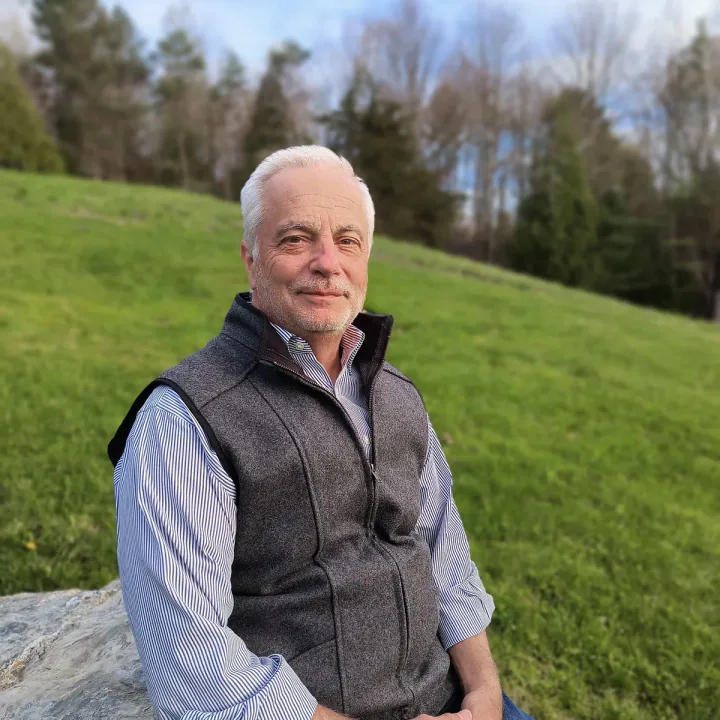
After college John pursued a career in accounting and banking, before taking on executive roles at two of Vermont’s finest food companies, Butternut Mountain Farm where he served as the CEO, and Lake Champlain Chocolates, where he was COO and CFO. Today John splits his time with board work with some wonderful local businesses including Lawson’s Finest Liquids, Lake Champlain Chocolates and The Forest Farmers. He is also engaged with community service and local government as Vice Chair of the Board for the Vermont Youth Conservation Corps and serves as the Hinesburg Board Representative for the Chittenden County Regional Planning Commission.
John and his wife Diane moved to Vermont over 30 years ago where they raised their two children, Zachary and Hanley. Zachary and his wife Emily live nearby in Jericho and have blessed the family with two grandchildren. Hanley resides in Seattle and is a frequent traveler to the Green Mountain State to visit her family and friends.
John grew up in West Haven, Connecticut with two brothers. Of modest means, his mother and father always stressed the importance of education. He was the first member of his family to graduate from college, followed by his brothers shortly thereafter.
Campaign site, updated Nov 25, 2026.
Attention
- News articles, last 30 days
- 0
- Ads seen, last 30 days
- 0
Updated Nov 26, 2026.
Ran against
Filing record
The candidacy record
| Status | True from | Known since |
|---|---|---|
| On the general ballot | — | Nov 13, 2026 |
| On the general ballot | — | Nov 15, 2026 |
Updated Nov 25, 2026.