
Cameron Sexton
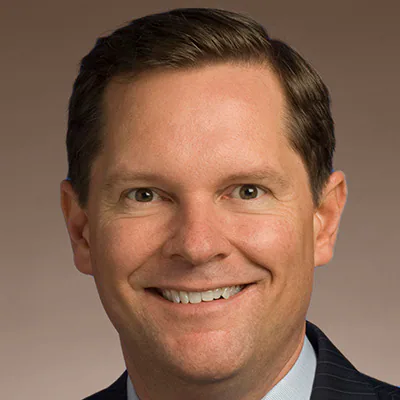
- Office
- State Representative District 25
- State
- Tennessee
- Party
- Republican
- Status
- On the general ballot
- Election
- Election held Nov 3, 2026
- Incumbent
- Sitting legislator · State Representative District 25
Build a campaign strategy for Cameron Sexton
About Cameron Sexton
Cameron Allen Sexton (born November 11, 1970) is an American politician from Tennessee. A Republican, he has been a member of the Tennessee House of Representatives for the 25th district since 2011, and has been the Speaker of the state House since 2019. Before becoming Speaker, Sexton was Majority Caucus Chairman.
From Wikipedia, read Nov 20, 2026.
Where Sexton stands
Campaign site, updated Nov 20, 2026. The campaign's issues page
Jobs, wages & the economy
Economic & Community Development
Jobs
Over the last decade, we have propelled this state to lead the nation on many different levels – reducing burdensome regulations, cutting red-tape, eliminating and reducing taxes, key reforms like tort reform and worker…
Over the last decade, we have propelled this state to lead the nation on many different levels – reducing burdensome regulations, cutting red-tape, eliminating and reducing taxes, key reforms like tort reform and workers compensation. Together, we have made Tennessee one of the most business-friendly states in America. Since 2011, we have supported the creation of 494,900 new private sector jobs.
Our economy is thriving, and as we look all around us, there is evidence that things in Tennessee are good; in fact, some would say they are very good. We have seen historically low unemployment, and Tennessee is also the lowest debt state, median household incomes are increasing at the second fastest rate in the entire southeast, and we are the most fiscally stable state in the entire country. Our house is stable, in order, and our economic torch is shining brightly.
Education
Education
As we have put our conservative economic principles into the healthcare marketplace, we must continue to focus on our workforce.
As we have put our conservative economic principles into the healthcare marketplace, we must continue to focus on our workforce.
Tomorrow’s workforce starts with solidifying the academic foundations of Tennessee’s current and future generations. We have made considerable progress; In the last eight years, we have invested over $1 billion dollars in K-12 education, and we have made the largest combined investment in teacher salaries than at any other point in our history.
There is no denying the success we have experienced from these investments, and we are seeing transformative results. We used to say, “thank god for Mississippi!” Now, our children have become the fastest improving in the entire nation across math, reading, and science, but we want more for them.
Despite these successes, we have experienced a few hiccups along the way including a lack of uniformity across the state for the Response to Instruction and Intervention program and only partially funding it.
Additionally, we cannot accept that 2/3 of our students aren’t reading proficiently by the 4th grade. If someone cannot read – how can they write or achieve success in math, science, or social studies?
Our primary focus must be on improving early childhood literacy rates across this state – every year that we wait, is another that our students are falling. Let me be very clear – this isn’t falling through the cracks, because that implies we are unaware they fell – which we are not.
One of the most formative periods in a child’s academic development is between kindergarten and third grade. How can a child move along their educational journey in life, if they aren’t proficient in reading? We must have a disciplined focus on k-3 rd through targeted investments, retaining and incentivizing the best educators to teach in this important area, fully funding the RTI program and creating uniformity through best practices, as well as a mastery of skills that are narrow and deep, instead of wide and shallow.
I also think it is important to expand the Imagination Library program from its current birth to age five model – to a birth to 3rd grade model. We don’t need to stop fostering a love for reading and providing books to students just as they begin learning to read.
We have also seen great examples of success in public education whether it is our public schools or public charter schools. Recently, I visited Collegiate public charter school in Memphis. I left there amazed at student success rates. The average ACT score at Collegiate is 24 – Tennessee’s average is 20. What is leading to this success? Is it discipline? Parental involvement? The Christian-based learning environment at Collegiate? Headmaster? Educators? A combination of all these things? I don’t know the exact answer – but I see a tangible result with similar demographics like other schools in Memphis.
Our goal must be to ensure that every student has the same opportunity for success in all public schools across our state.
Solidifying the foundations of our students earlier in their academic careers will make the education torch shine brighter for our current and future generations of leaders.
Prescription drug prices & PBMs
Prescription drug prices & PBMs
Health & Human Services
Healthcare
As we have built a very competitive marketplace in the economy that adds jobs, increases income, controls costs, and fosters innovation. A good paying job is essential to survival, but there are other obstacles getting…
As we have built a very competitive marketplace in the economy that adds jobs, increases income, controls costs, and fosters innovation. A good paying job is essential to survival, but there are other obstacles getting in the way. While we let the marketplace work in a few sectors like the economy, we don’t utilize the same principles that have made us successful in other areas like healthcare.
Healthcare costs are escalating much faster than the normal rate of inflation. One of the many reasons is the lack of a free, competitive marketplace.
Some people don’t think it is possible to have a free, competitive healthcare system. I believe we can, but we must be disciplined and patient. Cost transparency, improved access, and less government intervention will help yield better outcomes and promote affordability. We must strive to create a healthcare system that empowers patients and providers, not 3rd party administrators.
Currently, a huge problem is the fact that some of the players are acting and behaving like ‘big brother.’ There really are no checks and balances, and everything is considered privileged information – even information about taxpayer funded services.
I am against government run healthcare for all, but if we think about it, isn’t our healthcare system just an insurance company monopoly……they have absolute control over the marketplace – the insurance plans – the pricing, they send out more mandates than the government, they own the big pharmacy benefits managers (PBMs), own pharmacies, and even some of the EMS companies. This sounds like a start to a utopian monopoly.
Is it too late to change course or change direction? No; however, there is no single solution to fixing healthcare, it is too vast, too complex, and competition is being stifled. The things that have made our economy great are not being utilized in healthcare – like true competition and an open marketplace.
As we untangle this monopolistic approach – we can start opening access through tele-medicine, which is the gateway to bring specialized healthcare into our rural areas and a concept which insurance companies have fought for years.
Bringing transparency to the reimbursement disparities for providers, transparency in costs through solutions like a public database, so patients can compare prices, and transparency of ownership in the healthcare marketplace are essential in transforming healthcare. Removing barriers to competition by redoing and eliminating the Certificate of Need laws is also an essential part of the fix.
Finally, we must also determine what a basic healthcare plan is and what its intended use is.
This healthcare monopoly wasn’t created overnight, so it will take time to correct. By controlling pricing, providing more access, and creating transparency – together, we can regain control of the healthcare torch and make it shine brighter for all patients.
Taxation & Revenue
Tax Cuts
Under Conservative leadership, we have eliminated more than $645 million in taxes since 2011. This includes multiple cuts to the Hall income tax, which will be completely eliminated by Jan. 1, 2021. We have also repeale…
Under Conservative leadership, we have eliminated more than $645 million in taxes since 2011. This includes multiple cuts to the Hall income tax, which will be completely eliminated by Jan. 1, 2021. We have also repealed both the gym tax and the inheritance tax, slashed the food tax, exempted sales tax on fiber optic cable and water for farming operations, made multiple reductions to the Franchise and Excise tax in order to attract new business to our state, and we continue to slash taxes on Tennesseans impacted by the professional privilege tax.
With a large budget surplus, we should look for new ways we can return more money to the citizens of Tennessee.
Criminal Justice, Firearms & Corrections
Criminal Justice, Firearms & Corrections
Law & Order
We must prioritize our responsibility of keeping Tennesseans safe. We are a society of laws, and we follow the rule of law.
We must prioritize our responsibility of keeping Tennesseans safe. We are a society of laws, and we follow the rule of law.
As I have traveled throughout this state in recent months, I have met with law enforcement, district attorneys, public defenders, and our judges. During these meetings, the concepts of truth in sentencing and mental health are frequently discussed. The federal sentencing guidelines are clear and concise. However, Tennessee’s are based on percentages, levels of offenders and varying degrees of reductions – we need to better mirror the federal system.
We can be smart on crime but not at the expense of safer communities. Not at the expense of law enforcement and not at the expense of our judicial system. Compassion is a great quality – but not if it jeopardizes public safety.
Truth in sentencing laws are designed to hold violent and repeat offenders totally accountable for their actions, reducing the possibility of early release and keeping bad individuals off of our streets.
Truth in sentencing is clear, concise and easy to understand. It may cost some additional money and resources. But getting away from a 5 means 2 mentality and starting a 5 means 5 sends a strong message to criminals and an even stronger message to those who protect and serve us that we stand with you.
Quoted from the campaign's website. What a campaign says is weaker evidence than a bill it sponsored or a vote it cast.
Track record
In the candidate's own words
On Friday, August 23, 2019, Cameron Sexton was elected as the 83rd Speaker of the Tennessee House of Representatives. Known as a pragmatic conservative, the fifth generation Tennessean is currently in his fifth term serving the 25th House District, which includes Cumberland and Van Buren Counties, as well as the City of Monterey in Putnam County.
Sexton previously served as House Republican Caucus Chairman for the first half of the 111th General Assembly. As Caucus Chairman, Rep. Sexton expanded and grew conservative initiatives under the House Republican Majority over the past six years. He also chaired the House Health Committee during the 109th and 110th General Assemblies and has served as Majority Whip during the 108th General Assembly.
Throughout his time in the legislature, Sexton has prioritized the health and well-being of Tennessee’s citizens. In 2016, former House Speaker Beth Harwell appointed him to serve as Chairman of the 3-Star Healthy Taskforce, which focused on finding an innovative approach to enhance health coverage while being fiscally responsible — a concept that was never before proposed to the Centers for Medicare and Medicaid Services.
Additionally, Sexton was chief architect of the historic and innovative CARE Plan, which was unveiled during the 2019 legislative session by House Republicans. This plan is designed to transform healthcare in Tennessee by creating a patient-centered approach to improve access and the quality of care available to our citizens through Consumerism, increasing Access, improving Rural health systems, and Empowering patients. This will ensure individuals and families can make medical decisions with limited interference from insurance companies or the government.
Rep. Sexton is a member of the sixth class of Leadership Tennessee, and he has been recognized by the International Dyslexia Association for his tireless advocacy on behalf of citizens affected by the learning disorder. Sexton has also previously been named Legislator of the Year by the Biotechnology Industry Organization and the Tennessee Chiropractic Association.
Sexton holds a Bachelor of Arts from the University of Tennessee. He and his wife Lacey live in Crossville and they have three children: Greer, Olivia, and Nathanial. They are members of Central Baptist Church where he is active in the church’s youth programs. Sexton is also employed by Cumberland County Bank where he works in Business Development, and he is on the bank’s Board of Directors.
Rep. Sexton is actively involved in his community and in civic organizations. He has served as a board member on the Friends of Cumberland Mountain State Park and the Good Samaritan Society. He is also a member of the Crossville Noon Rotary Club, serves on the Relay for Life Committee, and is active in the Fairfield Glade Lions Club.
Campaign site, updated Nov 20, 2026.
In the Tennessee House of Representatives
Committees and subcommittees
- Member
Offices
- Capitol officeRoom 600, Cordell Hull Building 425 Rep. John Lewis Way NorthNashville TN 37243615-741-2343
Attention
- News articles, last 30 days
- 22
- Ads seen, last 30 days
- 0
Updated Nov 25, 2026.
Ran against
Official site and accounts
Filing record
The candidacy record
| Status | True from | Known since |
|---|---|---|
| On the primary ballot | — | Nov 12, 2026 |
| On the general ballot | — | Nov 12, 2026 |
Updated Nov 20, 2026.