
Ken Block
On the ballot as Kenneth Block
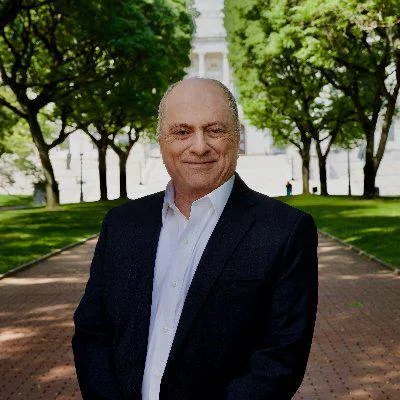
- Office
- Governor
- State
- Rhode Island
- Party
- Independent
- Status
- On the general ballot
- Election
- Election held Nov 3, 2026
- Result
- Lost
Build a campaign strategy for Ken Block
Where Block stands
Campaign site, updated Nov 8, 2026. The campaign's issues page
Health care costs & insurance premiums
Health care costs & insurance premiums
Health & Human Services
Healthcare
Number 1. I will begin conversations with the five other New England Governors about organizing an interstate effort to comprehensively analyze the potential costs and benefits of establishing a regional health insuranc…
Number 1. I will begin conversations with the five other New England Governors about organizing an interstate effort to comprehensively analyze the potential costs and benefits of establishing a regional health insurance marketplace across New England.
Number 2. I will begin working with our four-member Congressional delegation to raise Medicare reimbursement rates for providers in Rhode Island.
Number 3. I will work with Rhode Island’s hospitals and health insurance companies to craft legislation for my “One Stay, One Bill” proposal, which would require hospitals to send a single bill to a patient after any hospitalization. I will then build support in the General Assembly for that legislation.
Number 4. I will assemble a team within my administration focused solely on improving the efficiency of healthcare spending by Rhode Island’s state government. This will include a review of any findings by the Auditor General relating to healthcare programs, a review of the government agencies managing healthcare policy, an analysis of our $5 billion in annual Medicaid spending, and assessing the state’s ability to increase Medicaid reimbursement rates to providers. We will take a close look at the Executive Office of Health and Human Services and identify any areas of overlap and duplication. The goal is not to reduce overall spending on healthcare. The goal is to achieve the greatest possible benefit for every dollar that we spend.
Number 5. To improve dental and oral-surgery access, we will address reimbursement and participation problems that contribute to shortages of dentists and oral surgeons, including Medicaid payment issues.
Number 6. I will reform PBM (Pharmacy Benefit Managers) practices and protect independent pharmacies by requiring greater transparency and accountability for pharmacy benefit managers, examining reimbursement and market practices that undermine community pharmacies and access to prescriptions.
Nothing said here runs counter to the goals of the Affordable Care Act, also known as the ACA or Obamacare. My opponent Helena Foulkes has been spending hundreds of thousands of dollars on television commercials and mailers that misrepresent my positions on healthcare policy. While I was critical of the Affordable Care Act twelve years ago, I view it as settled law today. As Governor, I will not take any actions that undermine the ACA.
I support key provisions of the ACA, such as allowing young adults to stay on their parents’ healthcare plans until they’re 26. In fact, I do exactly that with my own two adult children. I also support requiring health insurers to accept people with pre-existing conditions. The ACA allows millions access to healthcare. It should continue to do so. My comments in 2014 were related to the ACA’s inability to control the escalating cost of health insurance and the wisdom of creating a healthcare exchange just for Rhode Island. We all know how poorly UHIP turned out.
I want to expand access to health insurance and healthcare services. I want to ensure we have high-quality healthcare providers in our state. I want to bring down the cost of health insurance for employees, individuals, and families. And I want to make sure we maximize federal spending on healthcare in Rhode Island.
Climate change & clean energy
Environment, Energy & Utilities
Energy policies and energy bills
Number 7. I will direct the Office of Energy Resources to allocate every dollar possible from upcoming Regional Greenhouse Gas Initiative auctions to energy bill relief for low-income households.
Number 7. I will direct the Office of Energy Resources to allocate every dollar possible from upcoming Regional Greenhouse Gas Initiative auctions to energy bill relief for low-income households.
Number 8. I will work with Rhode Island Energy, the Public Utilities Commission, the Division of Public Utilities and Carriers and the Office of Energy Resources to develop a plan for ending subsidies to out-of-state renewable energy projects and directing those funds back into Rhode Island clean energy projects.
Number 9. I will work with the General Assembly to enact legislation that pushes back our 100% renewable energy goal from 2033 to 2040 and incrementally remove property taxes levied by municipalities and fire districts from energy bills.
Cost of Living
Unaffordability in Rhode Island
Number 10. I will work with the General Assembly to enact legislation that removes income taxes on social security.
Number 10. I will work with the General Assembly to enact legislation that removes income taxes on social security.
Number 11. I will push for legislation to prohibit auto insurers from using credit-based insurance scores when determining rates.
Number 12. I will push for legislation to reduce taxes and fees on cell phone bills. Rhode Island currently has the highest state and local wireless tax and fee burden in New England at 15.75%.
Government shouldn't be allowed to hide the cost of government
My plan targets hidden and regressive taxes, fees, and government-imposed costs that are driving the affordability crisis in Rhode Island.
My plan targets hidden and regressive taxes, fees, and government-imposed costs that are driving the affordability crisis in Rhode Island.
Learn more: www.kenblock.com
My "Cost of Living Relief Plan" is aimed at reducing the taxes, fees, surcharges and other government-imposed costs buried in the everyday bills Rhode Islanders pay.
Rhode Islanders are being nickel-and-dimed to death, and too often government makes it difficult for us to even see what we're paying. That's not just an affordability problem. It's a transparency problem.
And there's another problem with the way we collect this money. Many of these taxes and fees are regressive. They fall on necessities like electricity, cell phones, insurance, and transportation, and they hit people who are struggling to make ends meet much harder than people who aren't.
A pair of bills introduced in the General Assembly this year provides a striking example of the transparency problem. Senate Bill 2020 and its House companion, House Bill 7465, proposed a new 0.25% assessment on property-and-casualty insurance premiums to fund fire-service training. The legislation provided that the assessment "shall not be passed onto policyholders as a specific line-item surcharge."
Think about that. The government was proposing a new cost on insurance and specifically preventing it from appearing as a separate surcharge on your bill. If the government imposes a cost that Rhode Islanders ultimately pay, people have a right to know about it. Thankfully, these bills didn't pass.
Electric bills provide an even bigger example. The state's own analysis says state programs and taxes account for approximately 24% of the average residential electric bill. But even that doesn't tell the whole story. Municipal taxes and other government-imposed costs are embedded elsewhere in utility rates and aren't identified to customers as taxes. When those costs are included, government-driven costs approach 40% of a typical electric bill.
And these hidden costs aren't progressive. The electric company doesn't ask how much money you make before collecting them. A family struggling to pay the rent has to pay them just like a wealthy household does. The difference is that the family struggling to get by feels every dollar.
Rhode Island cannot control inflation, interest rates or the national economy. But it can control the taxes, fees and mandates imposed by state and local government.
Government shouldn't be allowed to hide the cost of government. If the General Assembly wants to impose a tax or fee, disclose it. If government wants to spend money on a program, put it in the budget. Debate it publicly. Debate it annually. Make legislators vote for it. And let Rhode Islanders see what they're paying.
And while we're making these costs visible, let's ask a second question: why are we financing so much of our government with regressive taxes on things everyone needs? That's backwards. Rhode Island has an affordability crisis. Government should stop making it worse.
Block said the five proposals would be the beginning of a broader review of the taxes, fees, surcharges and mandates embedded in the cost of living in Rhode Island.
Rhode Island government can't fix every cause of the affordability crisis. But it can stop adding unnecessary and regressive costs to the things people need every day. Make the costs visible. Make the government justify them. Make them fair. And get the costs down.
4 Stop the return of truck tolls and oppose passenger-vehicle tolls
- My administration would request a full stop on the planned return of Rhode Island's truck-tolling program and oppose new tolls on passenger vehicles. Groceries…gasoline…almost everything we buy has to get to Rhode Island somehow, and much of it arrives by truck. The truck toll doesn't stop with the trucking company. It becomes another cost of bringing goods into Rhode Island and ultimately another cost paid by consumers. Truck tolls are another tax you pay - you just don't see it.
5 Eliminate RIPTA fares for one year and measure the results
- RIPTA currently collects roughly $9 million a year in passenger fares. My administration would implement a one-year fare-free trial, replacing that revenue with savings identified elsewhere in the state budget, and measure the effect on ridership and transportation costs. Finding $9 million in a $15 billion state budget to fully subsidize RIPTA fares should be like finding a dime in your seat cushion. If we can't find savings of that magnitude and redirect them toward something that could meaningfully lower transportation costs for Rhode Islanders, we're not looking hard enough.
Transportation & Motor Vehicles
Transportation & Motor Vehicles
Affordability, transportation, environmental management, and efficiency
Number 13. After installing a new director at the Department of Transportation (DOT), I will determine a timeline for merging DOT with the Rhode Island Turnpike and Bridge Authority and begin working with the General As…
Number 13. After installing a new director at the Department of Transportation (DOT), I will determine a timeline for merging DOT with the Rhode Island Turnpike and Bridge Authority and begin working with the General Assembly to enact enabling legislation.
Number 14. I will assemble a team within my administration to focus solely on analyzing the Washington Bridge fiasco including ongoing litigation.
Number 15. I will determine a timeline for merging the Department of Environmental Management with the Coastal Resources Management Council and begin working with the General Assembly to enact enabling legislation.
Number 16. I will take steps to fill any unused capacity at the Bristol Veterans Home including addressing staffing issues or other operational barriers. We must eliminate the 25% vacancy rate as quickly as possible.
Number 17. I will assemble a team within my administration to focus solely on failing computer systems and contracts with consultants and outside vendors relating to technological services to our state government. This would include UHIP (Unified Health and Human Services Information Platform) and our payroll system.
RIDOT (Rhode Island Department of Transportation)
- Ken will revamp RIDOT's management and change how the department operates.
- Make the department fair, transparent, and efficient.
- Ensure contracts are awarded based on merit.
Electricity bills & data centers
Electricity bills & data centers
Environment, Energy & Utilities
1 Reduce government-imposed costs on electric bills
- My administration would target a significant reduction in residential and business electric bills by eliminating unnecessary government-imposed costs and moving appropriate and necessary taxation from electric bills to other, fairer mechanisms available to the state. Our electric bills have become hidden tax bill. Electricity is a necessity. We shouldn't use everyone's electric bill as a backdoor way to raise revenue, especially when those charges bear little relationship to someone's ability to pay. If the state needs the revenue, let's raise it transparently and fairly.
Insurance & Financial Services
Insurance & Financial Services
2 Prohibit auto insurers from using credit-based insurance scores to set rates
- Rhode Island allows auto insurers to use credit-based insurance scores when determining rates. My administration would work with the General Assembly to prohibit the practice. Your auto insurance should be based on how you drive. We should not penalize a good driver because they struggle financially. In fact, charging someone more because they're already having trouble making ends meet just makes it harder for them to get ahead.
Taxation & Revenue
3 Reduce taxes and fees on cell-phone bills
- According to the Tax Foundation, Rhode Island has the highest state and local wireless tax and fee burden in New England at 15.75%, compared with 10.75% in Massachusetts and 8.42% in Connecticut. Rhode Island applies its 7% sales tax to cell-phone service, imposes a separate 5% telecommunications gross-receipts tax, and adds a monthly E-911 surcharge. These taxes and fees increase the cost of providing wireless service and ultimately contribute to what consumers pay. My administration would work to significantly reduce the taxes and fees imposed on wireless service. Where the revenue is necessary to fund state services, I would seek to replace it through fairer and more transparent sources of revenue. A cell phone isn't a luxury anymore. It's a necessity. Yet we pile taxes and fees onto everyone's cell-phone bill without regard to their ability to pay. If government needs the money, it should raise it in a fair and transparent way - not hide regressive taxes in the bills for things everyone needs.
Millionaires Tax
- If passed by the legislature, Ken will veto a Millionaires Tax.
- Ken’s mission is to reduce expenses, not add more taxes.
- $15 billion should be more than enough.
Roads, bridges & commuter rail
Roads, bridges & commuter rail
Transportation & Motor Vehicles
Truck Tolls
- As your Governor, I will suspend the truck toll program because it makes no sense. When we last tolled trucks, we took in over $100 million from the trucking industry - much of it from Rhode Island businesses. We only kept about $35 million, sending much of the rest of it out-of-state to pay for - wait for it - the tolling program. What genius decided that pulling $100 million from our economy to net $35 million was a good idea? It is a TERRIBLE idea, and one that we all pay for, since trucking companies pass the cost of tolls on to consumers. Rhode Island imposed a major new cost on commerce, spent tens of millions building and administering the collection system, and then spent millions more defending it in court. Now the state wants to resume tolls. Doubling down on such a bad idea is not how we are going to fix our state. I will veto any effort made to expand the tolling program to automobiles.
State Budget, Bonds & Finance
State Budget
- The state budget has nearly doubled in ten years while incomes have not even begun to keep pace.
- Our state employees are crippled by poor, outdated computer systems and obsolete equipment.
- Rhode Island has spent billions on these systems and have not got the results that were paid for.
- Ken will stop wasting money on poorly run projects while making our state workforce better trained and more effective.
State Government, Ethics & Administration
State Government, Ethics & Administration
Government Efficiency
- Ken’s Department Heads will be leaders who understand efficiencies and customer service.
- State government will focus on proper training and equipment for employees.
- The Block administration will systematically review operations, systems, services, and personnel for every state agency.
- Bottlenecks, missing resources, and root causes of dysfunction will be identified and fixed.
Housing & Land Use
Housing
- Ken understands that all state policies affect housing, directly or indirectly.
- We struggle to build affordable homes while promoting solar projects that take thousands of acres of buildable land.
- The Block administration will review state-owned land and buildings for affordable housing opportunities.
- All legislation should include a 'Housing Note' identifying its impact on housing availability.
- We need more housing – legislation should not make that harder.
Courts & Civil Law
Judges and Magistrates
- We have made progress in diversifying judges but more work is needed.
- The judicial selection process remains highly political.
- Ken will prioritize judicial and legal merit in appointments.
- The administration will push to move magistrate appointments away from the General Assembly.
- Use the same fair process as judicial appointments.
Elections & Democracy
Election Choices
- Elections should allow for real choice, not political entrenchment.
- Rhode Islanders deserve to vote for something, not against someone.
- Voting for Ken Block means choosing a government focused on fixing problems.
Quoted from the campaign's website. What a campaign says is weaker evidence than a bill it sponsored or a vote it cast.
Track record
In the candidate's own words
Ken Block is a Rhode Island businessman, data expert, and two-time candidate for governor who has spent his career building companies, solving complex problems, and fighting for better government.
Ken and his wife, Jennifer, have raised their two children, Sam and Anna, here, and remain deeply committed to the state’s future.
Early in his career, Ken worked at GTECH, helping modernize technology systems and contributing to the development of one of the country’s first electronic benefits systems. His work helped the state of Texas eliminate waste and fraud in its social services programs—saving taxpayers over $1 billion.
He later founded and led a successful software company that managed large-scale government systems across multiple states and territories.
Ken’s interest in government reform led him to take on some of Rhode Island’s most entrenched political challenges. He played a key role in the effort to eliminate the “Master Lever,” helping bring greater accountability and transparency to elections after decades of advocacy.
In 2008, Ken successfully challenged Rhode Island’s restrictive ballot access laws in federal court, making it easier for new political voices to be heard. He went on to run for governor in 2010 and again in 2014.
Over time, Ken developed deep expertise in election and voting data, working on legal cases across the country involving election systems and integrity.
Following the 2020 presidential election, Ken was asked to analyze claims of voter fraud. After a thorough, data-driven investigation, he found no evidence of fraud sufficient to change the outcome in any swing state. His work was later reviewed in multiple high-profile investigations.
To document his findings and ensure transparency, Ken authored the book Disproven, published in 2024.
Ken believes Rhode Island government should work better for its citizens. He is focused on improving accountability, fixing broken systems, and delivering results for the people of this state.
Campaign site, updated Nov 7, 2026.
Attention
- News articles, last 30 days
- 0
- Ads seen, last 30 days
- 0
Updated Nov 25, 2026.
Ran against
- Aaron Guckian · Republican
- C D Reynolds · Independent
- Helena Buonanno Foulkes · Democratic
- Jasjit S Gotra · Independent
Official site and accounts
Filing record
The candidacy record
| Status | True from | Known since |
|---|---|---|
| Declared | — | Sep 14, 2026 |
| Nomination papers | — | Sep 14, 2026 |
| On the general ballot | — | Sep 14, 2026 |
| Qualified | — | Sep 14, 2026 |
| On the general ballot | — | Oct 30, 2026 |
Updated Oct 31, 2026.