
Jeff Givan
On the ballot as Jeffrey Givan
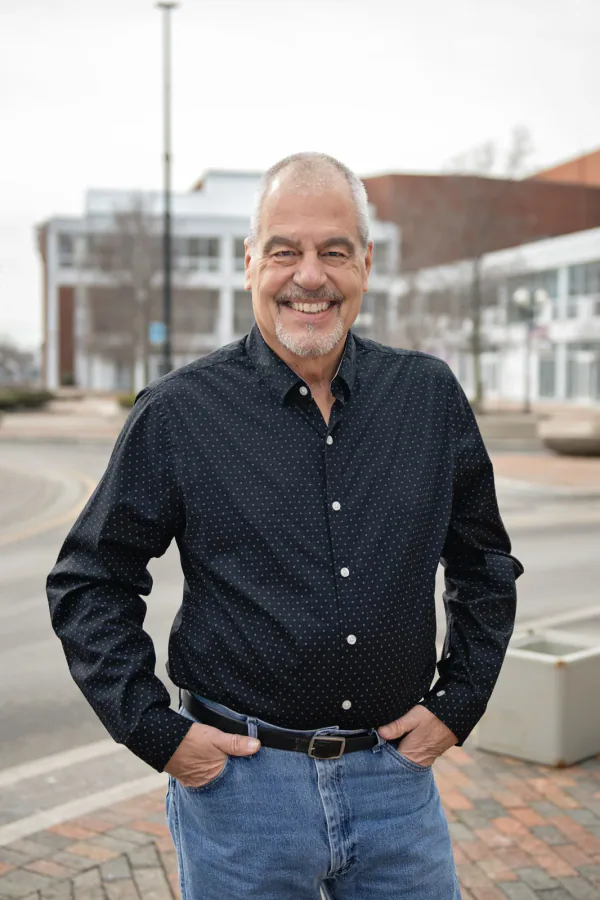
- Office
- State Representative District 78
- State
- Ohio
- Party
- Democratic
- Status
- On the general ballot
- Election
- Election held Nov 3, 2026
Build a campaign strategy for Jeff Givan
Where Givan stands
Campaign site, updated Nov 24, 2026. The campaign's issues page
Agriculture, Food & Animals
AGRICULTURE
Northwest Ohio is farm country. The land here feeds families, supports local businesses, and defines the character of our communities. But family farms are under pressure from every direction. Ohio has lost a million ac…
Northwest Ohio is farm country. The land here feeds families, supports local businesses, and defines the character of our communities. But family farms are under pressure from every direction. Ohio has lost a million acres of farmland in twenty years, and now data centers are paving over some of the best cropland on earth with the state paying them to do it. A third of our farmers are at retirement age, and Ohio law says nothing about whether the next buyer is a farm family or a hedge fund. Equipment manufacturers lock farmers out of their own tractors. And Columbus gutted the water quality program that was actually working.
None of this happened by accident, and some of the loudest voices claiming to speak for farmers have been cutting deals on the other side of the table. The state handed data centers $1.6 billion in tax breaks last year while farmland preservation got $6.5 million. The people growing our food deserve a representative who fights for them, not one who hands their tax dollars to the biggest corporations on earth.
You bought the tractor. You should be able to fix it.
- Repair restrictions cost U.S. farmers an estimated $4.2 billion per year: $3 billion in tractor downtime plus $1.2 billion in excess repair costs. U.S. PIRG Education Fund, Jan 2023
- The FTC and the attorneys general of Illinois, Arizona, Michigan, Minnesota, and Wisconsin secured a settlement requiring Deere to give farmers and independent shops the same repair resources as dealers for ten years. Ohio was not among them. Federal Trade Commission, July 2026
- Colorado's first-in-the-nation agricultural right-to-repair law took effect January 1, 2024, guaranteeing farmers access to parts, manuals, and diagnostic software. National Farmers Union, Apr 2023
When a combine throws an error code during harvest, every hour waiting on a dealer technician is money lost in the field. Manufacturers built that dependence on purpose, locking the diagnostic software so farmers and independent shops can't do the work themselves. Repair restrictions cost American farmers an estimated $4.2 billion every year. This July, the FTC and five states forced John Deere to open its repair tools to farmers. Ohio's attorney general sat that case out, and the right-to-repair bill in our own Statehouse specifically excludes farm equipment. Colorado passed a real agricultural right-to-repair law in 2023. Ohio should be next, and I'll introduce it.
They're paving our best cropland, and the state is paying them to do it
- "We went from about 14.5 million acres of productive farmland to 13.5 million acres," per Ohio's own agriculture director. The state's response so far: $1 million in county planning grants. Statehouse News Bureau, July 2026
- Ohio is projected to lose 518,475 acres of farmland to development by 2040 under current policy, the most severely affected of seven Midwest states studied. American Farmland Trust, 2022
- Ohio's data center sales-tax exemption cost $1.6 billion in 2025, twelve times the state's $136 million forecast. Policy Matters Ohio, May 2026
Google is building a $500 million data center on more than 200 acres of productive farmland in American and Sugar Creek townships, for about 50 permanent jobs. It's part of a pattern: Ohio has lost roughly a million acres of farmland over two decades, and the American Farmland Trust projects we'll lose another half million by 2040, among the worst in the Midwest. Meanwhile the state's data center tax break cost $1.6 billion last year, twelve times what was forecast, while Ohio's farmland preservation program makes do with $6.5 million and a cap of $2,000 an acre. You cannot preserve farmland at $2,000 an acre when data center money is paying twenty times that. I'll fight to multiply preservation funding and make any megaproject subsidy contingent on staying off prime farmland.
- Ohio's farmland easement program offers up to $2,000 per acre and $500,000 per farm; the current round totals $6.5 million statewide. Ohio's Country Journal, Jan 2026
Wall Street is buying farm country, and Ohio law has nothing to say about it
- In Allen County, 545 of 1,564 farm producers are 65 or older; in Auglaize County, 623 of 1,799. Both counties are more than 90% family farms. USDA Census of Agriculture, 2022
- Institutional investors like pension funds hold an estimated $26 billion in U.S. farmland. Minnesota law prohibits pension and investment funds from owning agricultural land; Ohio has no comparable restriction. Council of State Governments Midwest, Dec 2024
- Average western Ohio cropland reached a projected $11,856 per acre in 2025, with top land at $14,384. Values roughly doubled over the past decade. OSU Extension Farm Office, July 2025
A third of the farmers in Allen and Auglaize counties are 65 or older. Over the next decade, an enormous amount of our land will change hands, and the question is who gets it: the next generation of farm families, or investment funds that see western Ohio cropland at $12,000 an acre as a portfolio asset. Institutional investors already hold tens of billions in American farmland. Minnesota has barred pension and investment funds from buying farmland since 1971. Six Midwest states restrict corporate farmland ownership. Ohio restricts nothing. The Statehouse's only answer is a bill chasing "foreign adversaries," but the largest foreign holder of Ohio farmland is Denmark, and the bill does nothing about the hedge funds outbidding your kids. I'll push for a Minnesota-style limit on investment-fund land purchases, a public registry of who actually owns Ohio farmland, and first shot at the land for beginning farmers.
- Foreign investors hold about 538,000 acres of Ohio farmland; the top holder is Denmark. The pending Statehouse bill targets "adversary" nations and leaves domestic investment funds untouched. Statehouse News Bureau, Mar 2025
The middle is disappearing. Family farms deserve a fair contract.
- Ohio lost roughly 1,800 farms from 2017 to 2022. Mid-size farms of 140 to 1,000 acres declined most, while farms over 2,000 acres grew by nearly 150. Statehouse News Bureau, Mar 2024
- Four-firm concentration in cattle slaughter reached 85%, and USDA economists found packer-rancher price spreads widened substantially after 2015. USDA Economic Research Service, Jan 2024
- Minnesota and Iowa both prohibit confidentiality provisions in agricultural production contracts so growers can seek legal and financial advice. Institute for Local Self-Reliance
Ohio lost about 1,800 farms in the last agricultural census, and the mid-size family operations that built this region took the biggest hit, while the number of farms over 2,000 acres grew. This isn't the free market working; it's a rigged market. Four packers control 85% of beef processing. Nearly two-thirds of hogs are raised under contract, on terms written by the integrator, often with confidentiality clauses that bar a grower from showing his own contract to a lawyer. Allen and Auglaize counties are both top-ten hog producers in Ohio, so contract terms are our terms. Minnesota and Iowa passed agricultural contract fairness laws: plain language, a right to rescind, no gag clauses, mediation before termination. Ohio growers deserve the same, and I'll introduce it.
Agriculture
Protecting farmland from corporate land grabs and keeping family farms in family hands.
Grow it here. Eat it here. Local food for local schools.
- Area schools and colleges, including Lima Senior, Bath, and Cory-Rawson, formed the Northwest Ohio Food Security Hub to grow food for cafeterias in a region where about 1 in 8 families is food-insecure. Hometown Stations, Apr 2026
- USDA's termination of local food purchasing ended Ohio CAN, which bought from more than 170 Ohio farmers and delivered 4.6 million pounds of Ohio-grown food in its final year. WYSO, Apr 2025
- Michigan's "10 Cents a Meal" program matched state funds for locally grown food in school meals, reaching 270 sites across 66 of 83 counties and buying from over 130 farms and food businesses. Michigan did not fund it for the 2025–2026 school year, so no program is operating. 10 Cents a Meal Michigan
Some of the most productive farmland in America surrounds towns where one in eight families struggles to put food on the table. That's a supply chain problem we can fix. Local schools are already trying: Lima Senior, Bath, and Cory-Rawson have joined a food security hub with Rhodes State and Bluffton University to grow food for their own cafeterias. Then Washington killed the $660 million program that paid schools to buy from local farms, and Ohio CAN, which moved 4.6 million pounds of Ohio-grown food and paid over 170 Ohio farmers, died with it. Ohio's own farm-to-school grants total just $367,000 statewide. Michigan showed what the alternative looks like: its "10 Cents a Meal" program matched state money for locally grown food in two-thirds of its counties, until the legislature left it out of the school aid budget and the program went dark for this school year. That's the whole lesson. These programs work, and they disappear the moment a budget gets written without them. I'll fight for an Ohio version built to last, state dollars to replace what Washington cut, and processing capacity so local meat and produce can actually reach local kitchens.
They gutted the water program that was working for farmers
- The legislature followed through with steep cuts to H2Ohio, appropriating $165 million instead of the $270 million requested. Speaker Huffman suggested the cuts were justified because "a lot" of the money "was not spent." Lima News, June 2025
- More than 3,200 farmers had voluntarily enrolled nearly 2.2 million acres of cropland, the program's highest participation, before the cuts raised concerns about a rollback of phosphorus-reduction progress. WOSU, June 2025
- Auglaize River watershed farmers show broad adoption of conservation practices, per the Ohio Agriculture Conservation Initiative's watershed assessment. Farm and Dairy, May 2026
H2Ohio paid farmers to do voluntary conservation, and farmers showed up: more than 3,200 enrolled nearly 2.2 million acres, the highest participation in the program's history, and Auglaize River watershed farmers show some of the broadest adoption of conservation practices in the state. Then the legislature cut the program by roughly 40%, appropriating $165 million instead of the $270 million the governor requested. Asked about it, the House Speaker, from right here in Lima, suggested the cuts were justified. Smaller payments for the farmers doing the right thing, and less progress against the algae that still closes beaches at Grand Lake St. Marys. Farmers held up their end. Columbus didn't. I'll fight to restore full H2Ohio funding.
Ask who's paying the people who claim to speak for you
- Ohio ranchers documented that the checkoff-funded Ohio Beef Council and the lobbying Ohio Cattlemen's Association shared identical staff, office, phone, and fax, despite a legal firewall. Investigate Midwest, Feb 2018
- Under the 2023 memorandum with John Deere, the American Farm Bureau agreed to encourage state Farm Bureaus to refrain from supporting right-to-repair legislation that goes beyond the MOU's commitments. The MOU is non-binding, and Deere can walk away on 30 days' notice. OSU Extension Farm Office, Jan 2023
- Independent hog farmers who invested in higher-welfare housing oppose the "fix" pushed on their behalf; Smithfield, owned by Hong Kong-based WH Group, already sells compliant pork profitably while funding repeal efforts. The New Lede, June 2026
Farmers pay mandatory checkoff dollars on every head and every bushel, money that's legally barred from lobbying. In Ohio, investigative reporters found the beef checkoff board sharing staff, an office, and a phone line with the industry's lobbying association. The American Farm Bureau signed a deal with John Deere in 2023 agreeing to discourage right-to-repair legislation, trading away farmers' strongest fight for a promise Deere could cancel on 30 days' notice. And in Washington, a campaign to overturn animal welfare standards gets sold as saving family farmers while it's backed by the world's largest pork company, owned by a Chinese conglomerate, over the objections of independent hog farmers who already invested in doing it right. I'll stand with the organizations that answer to farmers, and I'll say plainly who the others answer to.
Our farms deserve better. Join us.
Civil Rights & Human Rights
CIVIL RIGHTS
Ohioans have spoken clearly at the ballot box on redistricting, reproductive rights, and personal freedom. They have been ignored every time. The legislature drew maps the courts struck down seven times, then used them…
Ohioans have spoken clearly at the ballot box on redistricting, reproductive rights, and personal freedom. They have been ignored every time. The legislature drew maps the courts struck down seven times, then used them anyway. Voters enshrined reproductive rights in the constitution, and Columbus immediately went to work trying to narrow them. When the people lead, their government should follow. In District 78, that starts with a representative who believes your rights are not up for negotiation.
The government told Ohio parents they cannot make medical decisions for their own children
- The Ohio House and Senate overrode DeWine's veto of HB 68, making Ohio one of over 20 states to ban gender-affirming care for minors. Ohio Capital Journal, Jan 2024
- DeWine's veto message cited testimony from parents of trans youth and the positions of major medical associations. The legislature moved to override within weeks. Columbus Dispatch, Jan 2024
In January 2024, the Ohio legislature overrode Governor DeWine's veto of HB 68, a bill banning gender-affirming healthcare for transgender minors and barring trans girls from school sports. DeWine had vetoed the bill citing parental rights and the advice of medical professionals. The supermajority override sent a clear message that ideology trumped both medical science and the conservative principle of family autonomy. For families in District 78, this is the government telling parents they cannot make medical decisions for their own children, and telling kids they do not belong.
Civil Rights
Protecting the rights and dignity of every person in Ohio.
Economic & Community Development
Economic & Community Development
ECONOMY
People in Allen and Auglaize counties work hard. The math is what's broken. The average wage in the Lima area runs more than five dollars an hour behind the national average, nearly one in four Lima residents lives belo…
People in Allen and Auglaize counties work hard. The math is what's broken. The average wage in the Lima area runs more than five dollars an hour behind the national average, nearly one in four Lima residents lives below the poverty line, and about 40% of Allen County households earn too much to qualify for help but too little to cover the basics.
It's not just a city problem. The latest reappraisals raised home values about 30% in Auglaize County and nearly 18% in Allen, and the tax bills followed. Meanwhile a $500 million data center got a 15-year tax break in a deal negotiated behind a shell company, before anyone here knew who was on the other side of the table. Columbus wrote the rules that produced all of this. The people who wrote them should have to answer for them.
The short version
- Housing and childcare a family can afford on the wages this district actually pays.
- A pause on new data centers until Ohio writes real rules, and a binding local say after that.
- Property tax relief that doesn't come out of your local schools and services.
Economy
Creating good-paying jobs and supporting small businesses in our community.
Education
EDUCATION
Ohio's public schools are in crisis, and it didn't happen by accident. The legislature passed a bipartisan plan to finally fund our schools fairly, then broke its own promise. It funded schools $2.75 billion below what…
Ohio's public schools are in crisis, and it didn't happen by accident. The legislature passed a bipartisan plan to finally fund our schools fairly, then broke its own promise. It funded schools $2.75 billion below what that plan called for, shifted the cost onto your property taxes, and found more than a billion dollars a year for private school vouchers with almost none of the accountability it demands of public schools.
Meanwhile, a Columbus teacher describes classrooms of 42 kids, Lima schools cut 24 and a half positions this spring, and 70% of new school levies fail because homeowners can't afford another hike. Every superintendent in Allen County signed the same letter asking the state to step up. This is what happens when Columbus stops working for your community. What that shift costs you at home is on the economy page.
The short version
- Finish and fund the bipartisan school funding plan Columbus walked away from.
- Vouchers paid for somewhere other than your public schools, under the same public rules.
- Property tax relief that lasts, by putting the state back to paying its share of schools.
Education
Investing in our schools and teachers to give every child the opportunity to succeed.
What I'll fight for in Columbus
- Fair funding, fully implemented. Finish and fund the bipartisan Fair School Funding Plan, written together by Bob Cupp, a Lima Republican, and John Patterson, an Ashtabula Democrat. Columbus funded the plan's first two phases in two straight budgets, while it was cheap. When the final bill came due, the House Speaker announced, "We won't be doing the Cupp-Patterson Plan…" (Lima News, April 2, 2025), and the budget came in $2.75 billion below what the formula called for. A promise made is a promise owed. I'll vote for the budget that finishes the plan and against any budget that keeps walking away from it.
- Vouchers can't be paid for out of your public schools. Ohio spent more than a billion dollars on private school vouchers last year, and the current two-year budget sets aside $2.44 billion, the most ever. Vouchers and public schools are paid out of the same state budget, so when one grows that fast, the other is what gives — and what gave was the school funding formula the legislature promised to finish. Here in Lima, the district's then-superintendent said last year that 591 students were using vouchers, that only 28 of them were low-income, and that nearly five million dollars in public funds was leaving the district. This isn't about telling a family where to send their kids. It's arithmetic: if Columbus wants a voucher program, it has to find the money somewhere other than the schools that take every child who walks in the door. I'll fight for accountability, transparency, and enrollment caps on the voucher and charter programs — published budgets, state tests, and the same anti-discrimination rules public schools already follow — and I'll vote against any budget that grows the program faster than its accountability.
- Targeted property tax relief. Your property taxes climbed because the state cut its share of school funding: from 44.8% to 33.5%, by Allen County's own superintendents' count, while Ohio fell to 45th in the nation. Columbus did pass a package of relief bills in December 2025 and a one-time credit this June for some seniors and disabled homeowners. None of it restores the state's share, so your school district still has to come back to you with another levy. I'll fight for circuit-breaker relief that caps property tax bills for homeowners and renters, and for the state to carry its share of school costs again. That's the relief that lasts.
They are banning books and silencing teachers instead of funding classrooms
- HB 8 and related education bills included provisions requiring parental opt-in for certain materials, effectively enabling small groups to remove books from libraries for all students. Ohio Capital Journal, 2023-2024
- Ohio saw some of the highest numbers of book challenges in ALA national data, with organized campaigns targeting library boards across the state. Columbus Dispatch, 2023
Ohio has been at the center of the national book-banning movement. Proposed legislation like HB 8, the "Parents' Bill of Rights," included provisions that could restrict what books are available in school libraries and what teachers can discuss in classrooms. Meanwhile, organized pressure campaigns have targeted public library boards across Ohio, submitting lists of books for removal, predominantly titles by or about LGBTQ+ people and people of color. Ohio saw some of the highest numbers of book challenges in the country. The legislature is spending its energy policing what children can read instead of making sure their schools have the funding to teach them.
Your rights are worth fighting for. Join us.
They passed a plan to fund our schools fairly, then broke their own promise
- "Ohio's public school financing scheme must undergo a complete systematic overhaul." Ohio Supreme Court, DeRolph v. State, March 24, 1997 (PDF)
- The enacted 2026–27 budget funds schools $2.75 billion below the Fair School Funding Plan formula. Policy Matters Ohio, September 2025
- The House Speaker, announcing the House GOP budget proposal: "We won't be doing the Cupp-Patterson Plan, but all (school) districts will be getting an increase." Lima News, April 2, 2025
Between 1997 and 2002, the Ohio Supreme Court ruled four separate times that Ohio's school funding system was unconstitutional. In the first DeRolph decision, the court wrote that the system must undergo a "complete systematic overhaul," because leaning so heavily on local property taxes created unfair gaps between wealthy and low-income districts. Representatives Bob Cupp, a Republican from Lima, and John Patterson, a Democrat from Ashtabula, answered with the Fair School Funding Plan. An earlier version passed the Ohio House 87 to 9, and the legislature enacted the plan in 2021 with a six-year phase-in. Columbus funded the first two phases. When the final phase came due, the House Speaker announced, "We won't be doing the Cupp-Patterson Plan, but all (school) districts will be getting an increase." The enacted budget funded schools $2.75 billion below what the formula called for. That wasn't belt-tightening. That was breaking a promise to every kid in Ohio.
A billion dollars for private schools while your kids' school can't keep the lights on
- Ohio spent $1.09 billion across its five voucher programs in fiscal year 2025. Ohio Capital Journal, October 2025
- The two-year budget sets aside $2.44 billion for vouchers, the most ever; one study suggests the growth has mainly come from students who were already attending private school. Ideastream Public Media, June 2025
- The appeal was argued before the 10th District Court of Appeals in May 2026; the program keeps operating while a decision is pending. Statehouse News Bureau, May 2026
Ohio spent $1.09 billion on private school vouchers in fiscal year 2025, almost double what it spent two years earlier, and the current two-year budget sets aside $2.44 billion, the most the state has ever spent on the program. A Franklin County judge ruled the EdChoice voucher program unconstitutional in a 47-page decision. The state's response was to appeal and keep the money flowing while the case heads toward the Ohio Supreme Court. Meanwhile, Lima's public schools cut 24 and a half positions this March against a $6 million deficit.
This is what underfunding looks like in the classroom
- Columbus teacher Joe Decker: "I've had classrooms from 42 to 26 kids… We're bleeding our schools dry." Ohio Capital Journal, December 2025
- Lima City Schools eliminated 24.5 full-time positions, about 4% of staff, against a $6 million deficit. Hometown Stations, March 2026
- Elida schools cut 11 jobs as part of $1.3 million in budget cuts to exit deficit spending. Lima News, June 2025
When you underfund schools for twenty years, you don't get an abstraction. You get a Columbus teacher who has stood in front of 42 students at a time. You get Lima cutting 24 and a half positions in a single March board vote. You get Elida cutting eleven jobs to climb out of deficit spending. And you get 70% of new school levies failing, because the state keeps pushing its costs onto your property taxes.
- 70% of new school levies fail, according to district officials. Statehouse News Bureau, June 2025
When 330 school districts stood up for their kids, Columbus tried to take their money
- HB 671 would let the state withhold foundation funding from any district involved in legal action over school funding; former Chief Justice Eric Brown called it "another attempt to intimidate and bully." Statehouse News Bureau, February 2026
- Dayton school board member Jocelyn Rhynard: "If this bill had been in law at that time, we would not have been able to address the unconstitutionality in the courts, and we would not have the DeRolph decision." Statehouse News Bureau, February 2026
More than 330 Ohio school districts, including Lima and Elida, joined the lawsuit challenging the constitutionality of EdChoice. The legislature's response was not to fix the program. It was House Bill 671, a bill that would let the state withhold funding from any district that sues it over school funding. A former chief justice of the Ohio Supreme Court called it "another attempt to intimidate and bully." If a law like that had been on the books in the 1990s, the DeRolph case might never have reached a courtroom. The bill is sitting in the House Finance Committee.
Every superintendent in Allen County signed the same letter. That tells you something.
- "Real property tax relief must involve the state of Ohio stepping up to fulfill its responsibility to fund public education, just as 44 other states do more effectively than we do." Allen County school officials' letter, October 2025; also carried by the Bluffton Icon, October 2025
In October 2025, every superintendent and treasurer from all ten Allen County school districts signed a joint letter to the community. Not a political letter. Not a partisan letter. A letter from educators who said: the state has shifted the burden to you, and you deserve to know the truth. They wrote that Ohio's state share of education funding dropped from 44.8% to 33.5% while your local property tax burden jumped from 49.5% to 53.1%. They asked the state to be "partners in this solution, not bystanders watching local communities struggle."
Health & Human Services
HEALTHCARE
More than one in four people in Allen County get their health coverage through Medicaid, including nearly half of our kids. Care keeps moving farther away, the overdose crisis is still taking neighbors, and one hospital…
More than one in four people in Allen County get their health coverage through Medicaid, including nearly half of our kids. Care keeps moving farther away, the overdose crisis is still taking neighbors, and one hospital bill can follow a family for years.
In June, the people who run the Statehouse tried to stop Medicaid from paying family caregivers. Families packed the hearing room, and the provision came out of the bill. That is the story of healthcare in Columbus right now: they will send you the bill unless someone makes them answer for it. What you pay for care is part of what it costs to live here, and the rest of that plan is on the economy page.
The short version
- Protect Medicaid for the one in four Allen County neighbors who count on it.
- Fight for care you can actually reach in Allen and Auglaize counties.
- Make every dollar you pay toward care count, so care costs less.
What I'll fight for in Columbus
- Protect Medicaid. Medicaid covers 28,311 people in Allen County, more than one in four of us and nearly half of our children. Columbus leadership keeps pushing work requirements and paperwork barriers, even though the state's own projection says about 61,000 Ohioans would lose coverage, not for refusing to work, but for missing a form. In June, House Bill 795 nearly banned Medicaid payments to family caregivers here and across Ohio, and the provision came out only after families testified. I'll vote against every coverage cut dressed up as paperwork, and I'll keep that pressure on.
- Expand access to care where we actually live. Allen County ranks 59th out of 88 Ohio counties for health outcomes. Lima is fortunate to still have two hospital systems, Mercy Health–St. Rita's and Lima Memorial, and we shouldn't take that for granted. Across rural Ohio, hospitals keep closing service lines, maternity care first, and the families farthest from town are the ones who feel it. I'll push for the state loan-repayment and residency dollars that bring doctors and nurses to shortage counties, and demand public notice and review before a hospital system closes a service line this district depends on.
- Lower what care costs, starting with a bill that already exists. When a drugmaker or a charity helps cover your copay, many insurers take that money and still refuse to count it toward your deductible. Senate Bill 207, with a Republican and a Democrat as lead sponsors, would make every dollar paid on your behalf count. It was introduced over a year ago and is still sitting in committee. I'll fight for it, and if Columbus lets it die, I'll work to bring it back and vote for it.
Healthcare
Making quality healthcare accessible and affordable for every family in our district.
I'll also fight for
- Treatment beds for the overdose crisis. Allen County lost 139 neighbors to overdoses in four years; I'll fight for the state dollars that build on We Care's new 17-bed crisis center in Lima instead of leaving local boards to fund it alone.
- The Ohio Medical Debt Fairness Act. House Bill 257 would cap interest on medical debt and keep it off your credit report; I'll vote for the strongest version of it.
- Insurance denials a person has to answer for. House Bill 579 would set rules for insurers that use artificial intelligence to deny claims; I'll push for it, and for insurers to report their denial rates publicly.
Our families deserve care they can count on. Join us.
"An Ohio You Can Afford." Ohio House Democrats have introduced a legislative package aimed at costs in healthcare, childcare, housing, energy, and consumer goods. Its healthcare piece is a state reinsurance program designed to bring down premiums on individual plans. Read the caucus announcement of the package
- Care for moms and babies. Ohio gets a D for preterm birth and ranks 48th of 52 for infant deaths; I'll fight for the maternity care rural Ohio keeps losing.
Three million Ohioans depend on Medicaid. Columbus keeps threatening to pull the rug.
- Medicaid covers 28,311 Allen County residents, 27.8% of the county, including 47% of children and 24% of working-age adults. Ohio's uninsured rate is about half what it was before Medicaid expansion (12.3% down to 6.1%). Community Solutions, Allen County Medicaid fact sheet, April 2025
- Ohio's federal waiver application for Medicaid work requirements projects roughly 61,000 people would lose coverage out of about 776,000 covered through expansion. Signal Cleveland, March 2025
- The family-caregiver payment ban was stripped from House Bill 795 after roughly two dozen caregivers and disabled Ohioans testified across two hearings. Statehouse News Bureau, June 9, 2026
More than three million Ohioans, about one in four, get health coverage through Medicaid. In Allen County the share is higher: 28,311 people, 27.8% of the county, including nearly one in two children and one in four working-age adults. Nearly half of Ohio's Medicaid expansion enrollees already work; most of the rest are students, caretakers, or managing a chronic health condition. Statehouse leadership keeps pushing work requirements anyway. The state's own waiver application projects that about 61,000 Ohioans would lose coverage, and the mechanism is paperwork: if a caseworker can't verify your status and you can't produce the right document, you lose your card. And in June, the legislature's Medicaid anti-fraud bill came one committee vote from banning Medicaid payments to family caregivers statewide before testimony from disabled Ohioans and their families forced it back out.
Rural Ohio is losing access to care, and this county feels it first
- Allen County ranks 59th of 88 Ohio counties in health outcomes. County Health Rankings 2022, Ohio state report
- Medicaid covers one in four working-age adults in Allen County, a population that depends on local providers staying in the program. Community Solutions, Allen County Medicaid fact sheet, April 2025
Allen County ranks 59th out of 88 Ohio counties for health outcomes. Care is also getting harder to reach. Lima still has two hospital systems, but for families out in our smaller towns and townships, a closed service line means a long drive to the next option, and rural Ohio has been losing those service lines for years. The strain lands hardest where the need is greatest: the home care agencies that serve disabled and elderly neighbors already struggle to hire and keep staff, so every new compliance burden Columbus hands them comes out of actual caregiving time.
Ohio is one of the worst states in the country for mothers and babies
- Ohio's preterm birth grade is D (11.0% in 2024); infant mortality is 7.2 per 1,000 births (48th of 52), with Black infants at 1.9 times the state rate; maternal mortality is 25.4 per 100,000 births. March of Dimes 2025 Report Card for Ohio
The March of Dimes gives Ohio a D for preterm birth: 11% of Ohio babies were born early in 2024. Ohio ranks 48th out of 52 states and territories for infant mortality, with 7.2 deaths per 1,000 births, and Black infants die at nearly twice the state rate. Maternal deaths run 25.4 per 100,000 births. In rural counties the nearest delivery unit keeps getting farther away as hospitals cut maternity services, which means longer drives at exactly the moments when minutes matter.
Abortion access & reproductive freedom
Abortion access & reproductive freedom
Health & Human Services
Voters protected reproductive rights. Columbus is trying to take them back.
- Issue 1 passed 56.6% to 43.4%, making Ohio the latest state where voters directly protected abortion access after the Dobbs decision. Ohio Capital Journal, Nov 2023
- Multiple legislative efforts followed to narrow the amendment, including SB 104 (conscience clause bill) and proposals to restrict minors' access to reproductive care without parental consent. Ohio Capital Journal, 2024
- The Attorney General and legislative leadership pursued legal strategies to define the amendment as narrowly as possible, drawing criticism that the legislature was defying the will of voters. Columbus Dispatch, 2024
In November 2023, Ohio voters enshrined reproductive rights in the state constitution by passing Issue 1 with nearly 57% of the vote, including significant support in rural and small-city counties. Despite this clear mandate, the legislature has pursued bills to restrict abortion access through regulatory burdens, limit standing to challenge abortion laws, and allow healthcare providers to refuse care based on personal beliefs. For voters in Allen County, this is a straightforward question of democracy: when the people speak, their representatives should listen.
Elections & Democracy
Ohio voters fixed gerrymandering twice. The legislature ignored them both times.
- The Ohio Supreme Court rejected Republican-drawn legislative maps seven times for violating the anti-gerrymandering provisions voters approved. Ohio Capital Journal, 2022-2024
- Ohio was frequently cited alongside North Carolina and Wisconsin as a worst-case example of partisan gerrymandering. Brennan Center for Justice
- The Citizens Not Politicians amendment (Issue 1, 2024) passed with approximately 54% of the vote, creating an independent citizens redistricting commission. Cleveland.com, Nov 2024
Ohio's redistricting saga is one of the most egregious in the country. Voters approved anti-gerrymandering reforms in 2015 and 2018 by overwhelming margins, over 70% approval each time. The Ohio Redistricting Commission, controlled by Republican officeholders, repeatedly drew maps the Ohio Supreme Court struck down as unconstitutional gerrymanders. They submitted seven sets of maps. The court rejected all seven. The maps were used anyway. In 2024, voters passed the Citizens Not Politicians amendment to create an independent redistricting commission, because the legislature proved it would not police itself.
Electricity bills & data centers
Electricity bills & data centers
Environment, Energy & Utilities
Our counties can veto a solar farm. They get no say on a data center.
- The Ohio Power Siting Board denied Birch Solar, a 300-megawatt project spanning Allen and Auglaize counties, citing local government opposition. It was the first utility-scale solar denial in state history. Ohio Capital Journal, Oct 2022
- Data center siting controversies are mounting across rural Ohio, with townships scrambling to adopt zoning while projects face no state review comparable to the solar process. OSU Extension Farm Office, Apr 2026
- In Preble County, residents used a township zoning referendum to force withdrawal of a plan to rezone 300 acres of farmland for a data center. It's one of the few tools communities have. WDTN, 2025
In 2021, the legislature gave county commissioners binding power to block utility-scale solar and wind projects. That power was used right here: Birch Solar, 1,410 acres in Allen and Auglaize counties, became the first solar project the state ever denied, after our commissioners objected. But when a 200-acre data center comes for the same ground, there is no state siting review at all, and townships without zoning have almost no defense. Whatever you think of solar, the double standard is indefensible. If local communities deserve a binding say over a solar lease a farmer chose, they deserve at least that much over a hyperscale data center they didn't. I'll introduce legislation giving counties and townships the same authority over data centers and megaprojects that they already have over renewables.
Data centers have claimed $2.5 billion in Ohio tax breaks, and the meter is running
- Google's Allen County data center: $500 million investment, 50 full-time jobs, 15-year tax abatement, $250,000/year to Elida schools. Lima News, Mar 2026
- The project spans more than 200 acres, includes $50 million for local infrastructure, and Google was publicly revealed as the company only in March 2026. Hometown Stations, Mar 2026
- Ohio data centers received $2.5 billion in state and local tax incentives between 2017 and 2024. Signal Ohio, Oct 2025
Big tech companies are investing billions in Ohio data centers, but communities are not seeing a fair return. Google is building a $500 million facility on more than 200 acres in American and Sugar Creek townships, with a 15-year tax abatement, about 50 permanent jobs, and $250,000 a year for Elida schools. The buyer's identity stayed hidden behind a shell company until the agreements were already signed. Statewide, data centers claimed $2.5 billion in tax breaks from 2017 to 2024, and the sales-tax exemption alone cost more than $1.5 billion in 2025, over 11 times what the state forecast. Legislators from both parties have now filed bills to void the NDAs and stop data-center costs from landing on your electric bill. Those bills deserve votes.
- The data center sales-tax exemption cost Ohio more than $1.5 billion in 2025, over 11 times the state's forecast. Policy Matters Ohio, May 2026
- House Bill 695 would void NDAs that keep local officials from discussing public deals; House Bill 706 would stop utilities from billing data-center infrastructure to other customers. OSU Extension Farm Office, Feb 2026
- Regulators have ordered AEP Ohio to bill large data centers for at least 85% of their contracted power so those costs aren't shifted to households. Public Utilities Commission of Ohio
Ohio used to help you cut your power bill. Columbus ended that in 2019.
- The 2019 law "gutted Ohio's standards for energy efficiency and renewable energy, which is still the case today"; the 2025 repeal bills targeted coal subsidies, not efficiency restoration. Canary Media, Feb 2025
Ohio once ran energy-efficiency programs that helped families and small businesses bring their power bills down. The 2019 energy law wiped those standards out, and they have not come back. When the legislature reopened that law in 2025, it went after the coal subsidies and left the efficiency programs where they fell. Every month those programs stay gone, the bill lands on your kitchen table instead.
K-12 public school funding
Education
I'll also fight for
- Universal public preschool. Allen County went from 60 in-home childcare providers to 15 in eight years; a public preschool option helps parents get back to work and kids arrive at kindergarten ready.
- Fully funding STRS. Teachers' pensions run on contributions from educators and their employers, not the state, so the honest lever is the employer rate: I'll support raising it, and vote for the state school funding that lets districts carry it without cutting classrooms to do it. I'll also oppose the budget maneuver that cut the board's elected educator seats from 7 to 3 and raised political appointees from 4 to 8, inserted at 1 a.m. with no public testimony; a court has paused that change while educators' lawsuit is heard.
- Support for teachers, faculty, and staff. A $50,000 minimum teacher salary, grow-your-own recruitment, free school meals: I'll vote for every bill that gets us there, whoever sponsors it. Also protected collective bargaining and tenure, paid family leave, real support for student teachers so the cost of training isn't what keeps someone out of the profession, and an end to teachers buying classroom supplies out of their own pockets.
Our kids deserve better. Join us.
Where the teacher-pay numbers come from. A legislative package introduced in the Ohio House in May 2024 would raise Ohio's minimum teacher salary to $50,000, create a Grow Your Own teacher training program, and fund universal public preschool and free meals in public schools. Read the announcement of the package
- Classrooms over politics. Politicians should spend less time telling teachers what they can't say and more time paying what they owe. More on where I stand on those questions.
Columbus cut school funding and sent the bill to your mailbox
- Ohio's state share of education funding is 33.5%, against a national average of about 45%; Ohio fell from 24th to 41st in state revenue per pupil and funds students $2,672 below the national average. Allen County school officials' letter, October 2025
- Ohioans paid $16.7 billion in property taxes last year, the eighth-highest property tax rate in the country, and Ohio has dropped to 45th in the state share of K-12 revenue. Statehouse News Bureau, September 2025
Ohio dropped from 35th to 45th in the nation in the state share of school funding. Allen County's superintendents put the numbers in writing: the state's share fell from 44.8% to 33.5%, more than eleven points below the national average, while the local share of the burden rose from 49.5% to 53.1%. That didn't make schools cheaper. It made your property taxes higher. Every time Columbus cuts its share, your local school board has to come back to you asking for another levy.
Labor, Employment & Workforce
Lima workers earn five dollars less per hour than the national average
- Lima MSA average hourly wage: $26.05 vs. national average of $31.48 (May 2023). U.S. Bureau of Labor Statistics, Aug 2024
- Lima poverty rate: 23.9% (2024). Data USA
- In 2024, 15,073 of Allen County's 41,808 households — 36% — earned less than the ALICE Threshold, the bare-minimum cost of housing, childcare, food, transportation, healthcare, and a phone. Of those, 7,888 are ALICE households: Asset Limited, Income Constrained, Employed. They work, they earn above the federal poverty line, and they still come up short. United For ALICE, 2026 Ohio Report (2024 data)
The average hourly wage in the Lima metro area is $26.05, compared to the national average of $31.48. That is a gap of more than $10,000 a year for a full-time worker. Nearly one in four Lima residents lives below the poverty line. And the squeeze reaches well past the poverty line: about 40% of Allen County households are ALICE households, working families whose income can't cover a bare-bones local budget. These are not just statistics. They are families choosing between groceries and gas.
Cost of Living
Only 33 affordable rentals for every 100 families who need them
- Allen County: 33 affordable and available rental units per 100 extremely low-income households. Ohio statewide shortage: 264,083 units. COHHIO 2025 Gap Report, Mar 2025
The affordable housing crisis is not just a big-city problem. In Allen County, there are only 33 affordable and available rental units for every 100 extremely low-income households. Statewide, Ohio is short more than 264,000 affordable rental homes. When rent eats most of a family's paycheck, there is nothing left for savings or for an emergency.
Children, Youth & Families
Ohio loses more than $5 billion a year because parents cannot find affordable childcare
- Allen County in-home childcare providers dropped from 60 to 15 in eight years, per the director of OhioMeansJobs Allen County. Ideastream Public Media / WYSO, Oct 2023
- Roughly 1,700 job openings within 10 miles of Lima, per OhioMeansJobs Allen County. Hometown Stations, Feb 2026
- Insufficient childcare costs Ohio an estimated $5.48 billion in lost economic activity each year. U.S. Chamber of Commerce Foundation, "Untapped Potential in Ohio," 2025
In Allen County, the number of in-home childcare providers has collapsed from 60 to just 15 in eight years, while roughly 1,700 jobs sit unfilled within ten miles of Lima. Parents want those jobs. Many can't take them, because there is nowhere safe and affordable to leave their kids: 61% of Ohio parents not working full-time say they would if childcare were affordable. The U.S. Chamber of Commerce Foundation puts the cost to Ohio's economy at $5.48 billion a year. And Ohio's aid cutoff for childcare assistance, 145% of the federal poverty level, is among the strictest in the country, so a Lima or Wapakoneta parent can earn too much to qualify and still far too little to afford a slot. This is not just a family issue. It is a workforce issue.
- 61% of Ohio parents who are not working full time would do so if childcare were more affordable. Policy Matters Ohio, Apr 2025
- Ohio's initial eligibility for publicly funded childcare is 145% of the federal poverty level; only two states set a lower cutoff. Policy Matters Ohio, Mar 2025
Public Safety & Emergency Services
Public Safety & Emergency Services
The overdose crisis has not gone away. Allen County is still in the fight.
- 4,452 unintentional drug overdose deaths statewide in 2023; Allen County averaged 38.1 deaths per 100,000 residents from 2020–2023 (139 deaths). Ohio Department of Health, 2023 Unintentional Drug Overdose Annual Report, Table 8
- We Care Regional Crisis Center's $6 million expansion opened in early 2026, adding a nine-bed unit for longer-term psychiatric care. Hometown Stations, January 2026
Ohio lost 4,452 people to unintentional drug overdoses in 2023. Allen County lost 139 neighbors from 2020 through 2023, an average of 38 deaths per 100,000 residents. The trend is finally bending down here, from 47 deaths in 2022 to 30 in 2023, but the treatment system is still smaller than the need. The We Care Regional Crisis Center in Lima just finished a $6 million expansion that takes it from 8 beds to 17, funded by a patchwork of local, state, and federal dollars. Capacity like that should be state policy, not a local fundraising project.
School choice & private vouchers
School choice & private vouchers
Education
Private schools get public money with zero public accountability
- Canton City School Board President Scott Russ: "They're not subject to any of the state testing. They're not subject to a state report card. They are not subject to public records requests." Ideastream Public Media, June 2025
- Judge Page: "'School choice' here is made by the private school, not 'as the result of independent decisions of parents and students.'" Ohio Capital Journal, June 2025
Public schools have to publish their budgets, take standardized tests, issue report cards, follow anti-discrimination laws, and accept every student who walks through the door. Private schools that take your tax dollars through EdChoice don't have to do any of that. They can turn away students based on religion, sexual orientation, or disability. They don't have to tell you how they spend your money. And the judge who ruled the program unconstitutional found that private voucher schools receive roughly double the per-pupil state funding of public schools.
Taxation & Revenue
Google gets a 15-year tax break. Your schools get $250,000 a year.
- Google's Lima-area data center: $500 million investment, 50 full-time jobs, a 15-year tax abatement, and $250,000 a year to Elida schools. Lima News, March 2026
- Value of property with tax abatements: $5.7 billion in 2004 to $26.6 billion in 2024, an 82.2% increase. Statehouse News Bureau, September 2025
Google is building a $500 million data center in Allen County. It comes with a 15-year property tax abatement, 50 full-time jobs, and $250,000 a year for Elida schools. Deals like this are spreading across Ohio: the value of tax-abated property statewide went from $5.7 billion in 2004 to $26.6 billion in 2024. That is money that could be funding schools, and every dollar of it was somebody's decision.
Quoted from the campaign's website. What a campaign says is weaker evidence than a bill it sponsored or a vote it cast.
Track record
In the candidate's own words
I grew up in Texas. My dad worked in management at Sears, and the company moved us around the state. We lived in Dallas, San Antonio, and Houston. We moved five times before I entered eighth grade. I was always the new kid.
That sounds hard, and sometimes it was. But it gave me something I've carried my whole life: I learned early that people everywhere are more alike than they are different, and that everyone deserves respect. That wasn't an idea I read in a book. I learned it by walking into rooms full of strangers and finding out they weren't strangers for long.
I went to the University of Houston, got my degree in Organizational Behavior Management, and went to work. Most of my career was in sales and management. In my mid-thirties I was transferred to Newport Beach and ended up in international sales for a manufacturing company. Eventually I found my way to the Palm Springs Air Museum, one of the largest World War II air museums in the country, with a collection of warbirds still being flown. I started as a volunteer and worked my way up to Staff Vice President, overseeing daily operations: 25 aircraft, a gift shop, a large event venue, 17 staff members, and more than 300 volunteers, most of them retired military officers. Running that museum taught me something about leadership I still believe: it's not about being in charge. It's about making sure everyone around you has what they need to do their best work.
I met Bill, my future husband, online. Our first meeting was on my 41st birthday. We knew right away we were a good match. We'd both been through tough stretches, and that drew us together instantly.
Bill had been in real estate his whole life. I got my license and we opened a brokerage in the Palm Springs area. We had a lot of fun and success doing that together. In 2006, Bill was diagnosed with Stage 4 esophageal cancer. The doctors told me he wouldn't live six months. After chemo and radiation, he proved them wrong. The cancer came back, this time in his lungs. He had most of his left lung removed over several surgeries. Bill was a fighter, but the cancer returned to his bones. He passed away in 2016, at home.
I cared for Bill for the ten and a half years he fought cancer. I saw the healthcare system from the inside out. I had to fight the bureaucracy, fight to get treatments approved. We had some amazing care, but you shouldn't have to fight for it. I learned to be our advocate, but what about the people in our communities who don't have advocates? During all of this I started having orthopedic issues of my own. I know that struggle firsthand.
We left the position at the Air Museum in late December 2011. The economy in the Palm Springs area had been hit hard by the 2008 recession, so we made the decision to move to Lima in January 2012. Bill was born and raised here, and he had family here. We bought a house in the Elida area and started building our dream: a commercial aquaponic greenhouse. The greenhouse was completed but never opened commercially due to my health. Friends have used it, though, and it's brought joy and learning to adults and kids alike. My mother joined us in Lima. She passed away in 2015 from bone cancer.
In 2015, same-sex marriages were ratified. We were the second couple to be married in Lima. It meant everything to us. It felt like we were no longer second-class citizens. It also provided legal protections that matter in this world. Now people are trying to take that right away, and the LGBTQ+ community has fought too hard to let our rights be removed.
When Bill passed, I struggled. I had an alcohol problem that I addressed. I've been alcohol-free for seven-plus years now, and I've been involved in Lima-area recovery programs. Mental health is a big issue, and so much more needs to be done for people who want recovery. The opioid crisis is real.
After Bill died, I had a choice. I could leave Lima. I didn't have family here. Bill's family was here, but Bill was gone. I didn't want to go back to Texas, and the cost of living in California is insane. But I love it here. I liked it here when we'd visit before the move. And I'd started building a family of friends.
What really helped was getting my hands in the dirt. I'd always loved gardening, and after Bill passed I threw myself into finishing the greenhouse, a dream project I'd been thinking about for years. Friends helped me build it. It became the place where I could breathe again.
Over time, I started volunteering with community agriculture programs around Lima. Right now I'm collaborating with a startup called Growbriety. They've been using my greenhouse to fund a program that helps people in recovery by showing the connection between tending plants and tending yourself. Growth in one area carries into others. For several years before the pandemic, I volunteered at South Tech with the science teacher. We had outside gardens, a small indoor aquaponic system, hydroponics, worm bins, and an Ecology Club. I'm currently helping with the YWCA TOPS program, giving teenagers the knowledge to grow their own food, sustain themselves on their own land, and build entrepreneurial skills.
I'm also a founding member of the Lima Pride Alliance. We've put together four events in our first year, with more planned. Building LGBTQ+ community here matters to me, especially in times like these.
I'm a Unitarian Universalist. One thing I was taught is that in a country and a community made up of people from all over, we can live and work alongside each other even when we disagree about the big picture. Right now, I think it's more important than ever that we listen to and learn from everyone who lives here, so we can make the best decisions for all of us. Not just some of us.
I couldn't watch the current representative for District 78 run unopposed again. The current leadership in the State House is not listening to their constituents. They're creating and promoting policy that won't help our economy, won't strengthen our communities, and will actually destroy our public school system, in this district and across the state.
I'm not a politician. I've never run for anything. But I know this community. I've rebuilt my life here, and I've watched other people rebuild theirs. I know what it takes to show up, listen, and do the work. There's room for volunteers if you want to help figure this out with the team I'm building. We're going to figure this out together.
Moving around Texas taught me that people everywhere deserve respect. Bill taught me what it means to fight for someone you love. Lima taught me what it means to put down roots and give back. All of it brought me here. To this race, to this moment, to you.
I'm running because I believe District 78 deserves a representative who actually lives in your world. I'd be honored to earn your trust.
Campaign site, updated Nov 24, 2026.
Attention
- News articles, last 30 days
- 0
- Ads seen, last 30 days
- 0
Updated Nov 25, 2026.
Ran against
Filing record
The candidacy record
| Status | True from | Known since |
|---|---|---|
| On the primary ballot | — | Nov 12, 2026 |
| On the general ballot | — | Nov 12, 2026 |
Updated Nov 24, 2026.