
Debbie Hecht
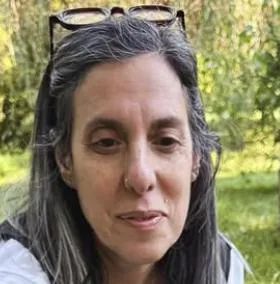
- Office
- Town Supervisor, Rhinebeck town
- State
- New York
- Party
- Democratic
- Status
- On the general ballot
- Election
- Election held Nov 3, 2026
Build a campaign strategy for Debbie Hecht
Where Hecht stands
Campaign site, checked Nov 21, 2026. The campaign's issues page
Environment, Energy & Utilities
Environment, Energy & Utilities
The great success of the Public access, Open Space and Natural Resources Commission’s Fund (PONC) aka the 2% Land Fund Program
- During the Petition Initiative process in 2006, the Save Our Lands Citizen’s Committee had over 100 people who collected more than 9,500 signatures.
- The Committee has a 2,200 personal email list, which we use to keep supporters informed, or if we need emails sent to elected officials, or to ask people to show up for public meetings or to lobby their County Council members. They represent almost 10% of the voting public on the island. Historically, there have been approximately 100,000 voters registered for the County of Hawaii, usually about 33,000 of these registered voters actually vote. Our grassroots efforts asked supporters to forward our emails to friends and family. We learned a lot about grassroots organizing and petitions!
- Where did the 2% amount come from? In 2004 and in early 2005 the Trust for Public Lands (TPL) surveyed more than 400 Hawaii County residents to ask if they would like to see a 1% Land Fund or 2% Land Fund. A large majority of residents said they would want a 2% Land Fund because land is so expensive on the Big Island. Sammie Stanbro donated the money to TPL for this survey. Sammie was also a huge supporter with time and effort to talk to people, collect signatures and making and deliver signs. Her son, Josh Stanbro was the original driving source along with attorney, David Kimo Frankel to get the Petition Initiative Drive going.
September 21, 2022August 31, 2026 ~ debbiehecht ~ Leave a comment
Updated 4.22.2026
“…. We abuse land because we regard it as a commodity belonging to us. When we see land as a community to which we belong, we may begin to use it with love and respect.”
― Aldo Leopold
MY name is Debbie Hecht. It has been my greatest honor to collaborate with so many people on the 2% Land Fund Program since 2005. The 2% Land Fund program is also known as the Public Access, Open Space and Natural Resources (PONC) program. I have co-authored all of the legislation for the Land Fund with Brenda Ford, Charter Commissioner Sally Rice and others. I have served as a Public Access, Open Space and Natural Resources (PONC) Commissioner and I wrote a Process paper for the commission (posted at the end of the article). In 2023, I assisted the Waimea Trails and Greenways in submitting a Suggestion Form for the acquisition of a 14-mile public trail from Waimea to the coast to link to the Ala Kahakai Trail. The PONC commission approved this project with a 75.5% rating. This past year I helped obtain the PONC Commission’s 77.6% approval for a conservation easement for the Joseph Rock Arboretum, a 48+ acres of botanical garden in Kailua Kona, HI. I have helped other community groups with their applications to the Land Fund and the Maintenance Fund, Waimea Trail, Punalu’u, south Kona group etc. I have experienced the 2% Land Fund program from many different perspectives.
Building kuleana communities who care for these lands is the greatest benefit that has grown out of the challenges of the 2% Land Fund. Out of the love of the land, there are non-profit community groups volunteering their time and using their own money and obtaining grant money from the Maintenance Fund to care for these special places. I have met so many intelligent, heartfelt people who deeply care about the places of Hawai’i island that make our island home one of the most beautiful places in the world. Out of this campaign for the last 20 years, people have forged great friendships that have resulted in important acquisitions to protect our treasured places.
Hawai’i County Acquisitions as of As of June 2024 the county has acquired 29 separate properties that equal
See the Acquisition Status Report Below. for updates check at https://records.hawaiicounty.gov/weblink/1/doc/153325/Page1.aspx
There is $26,892,785. in the fund as of March 2026 https://records.hawaiicounty.gov/weblink/1/doc/140526/Page1.aspx
The Maintenance Fund contains $3,196,741 as of March 2026 https://records.hawaiicounty.gov/weblink/1/doc/154717/Page1.aspx
Acquisition Report as of 012826
The 2024 Report to the Mayor has 10 properties. Here is the Report to the Mayor https://records.hawaiicounty.gov/weblink/1/doc/143183/Page1.aspx anything with 50% approval or more will make the Report to the Mayor and could possibly be acquired, in early 2026 the PONC commissison changed the criteria standard to 70% and higher.
Here is the 2025 Report to the Mayor:
The 2026 Report to the Mayor is not out yet.
GRASS ROOTS ORGANIZING PROCESS with our grassroots volunteers to pass the 3 ballot measures:
BRIEF HISTORY OF THE LEGISLATION FROM 2005 through 2024:
How to apply for 2% Land Fund money to acquire property: Here is the link to the Suggestion Form: https://records.hawaiicounty.gov/weblink/1/edoc/126798/2025%20Suggestion%20Form.pdf
How does the Public Access, Open Space and Natural Resources Commission rate the properties submitted by the Suggestion Forms? See the Criteria Assessment Form: https://records.hawaiicounty.gov/weblink/1/doc/126766/Page1.aspx
To see the 2024 Report to the Mayor by the Public Access and Open Space Commission (PONC), which lists this year’s top properties recommended for acquisition go to: http://records.hawaiicounty.gov/weblink/1/doc/110224/Page1.aspx
Another great gift of the 2% Land Fund is the capacity to apply for matching funds. The County frequently applies for an gets money for matching funds from State Legacy Lands and US Fish and Wildlife Service. So far, the County has received approximately 25% of the purchase price of the acquired properties. This is the greatest gift of the Land Fund program to maximize taxpayer funds.
THE MAINTENANCE FUND CHARTER AMENDMENT was on the ballot in 2012. Council member Brenda Ford and I wrote the legislation creating the 2% Maintenance Fund to care for the lands obtained by the 2% Land Fund. Maintenance Fund grants are available to community groups who are maintaining Hawai’i Islands treasured lands. The goal is to empower these groups to continue their good work and to enable and encourage kuleana and the building of community for these lands. The County has used these funds for studies, goat tending for weeds, surveys, fencing, luas etc . But in the 5-year period of 2013- 2018, there have only been 6 groups that have obtained these funds for a total of $343,800.00 There was $3,833,000 that has been deposited during the same time period 2013- 2018. THAT MEANS THAT LESS THAN 9% OF FUNDS WERE OBTAINED BY THE NON-PROFITS THEY WERE INTENDED FOR- WHY? Here is the information: Maintenance Fund with Critique 1.31.2019 https://debbiehecht.com/wp-content/uploads/2018/03/maintenance-fund-with-critique-1.31.2019.pdf
I called every group that had applied for funding to get their input on the process. I worked with Brenda Ford to make changes to the Maintenance Fund to accomplish the original goal: to get funding to help the non-profits manage the lands.
Charter Commissioner Sally Rice was our champion on the Charter Commission to get the changes that were requested by the non-profits and to move the administration of the Maintenance Fund to the Department of finance. Voters approved this measure at the polls in November 2020.This should help get these funds to community groups!
I was a PONC commissioner, and these volunteers are strong advocates for land conservation and maintenance. Get in touch with your PONC Commissioner and ask their help to obtain Maintenance Funds or how to suggest lands for preservation in your community. Who is your PONC representative for your District? https://records.hawaiicounty.gov/weblink/browse.aspx?dbid=1&startid=13770 There are several openings for PONC commissioners, please consider applying.
An information sheet on PROPERTY ACQUISITION PROCESS is available here: https://records.hawaiicounty.gov/weblink/1/doc/97127/Page1.aspx
The Public Access and Open Space and Natural Resources Commission’s Stewardship Grants are located:
- The Save Our Lands Citizen’s Committee Petition Initiative drive collected 9,600 signatures April through July of 2006. We only needed 4,400. This was during Harry Kim’s first term. Mayor Kim was adamantly against setting aside 2% of property taxes for land acquisition, even though it was only 1.5% of the total income for the County. County Clerk Connie Kiriu and County Counsel Lincoln Ashida (both Kim appointees) disqualified almost 6,000 signatures for leaving off Pl, St. or Rd, or if husband and wife used ditto marks for their address when signing under each other or if the year was left off, (we collected signatures from May to July so it was only during 2005 which made the year implied and not including it was irrelevant).
- We needed 4,400 signatures, but because of the disqualifications we ended with less than 4,000. “qualified” signatures. The County Council, under Chair Stacy Higa decided to place the measure on the ballot for 2006 anyway. Stacy supported us and I remember him saying that if all those people cared enough to sign we should put it on the ballot.
- Despite the Corporation Counsel submitting confusing ballot language using double negatives, the amendment to the Code passed by 63% of voters who voted on the issue and become part of the Hawaii County Code.
- In 2008- Mayor Kenoi and the County Council suspended deposits to the Fund for two years as his very first piece of legislation after taking office since the legislation was part of the Hawaii County Code and could be changed by the Council. On a tip from a friendly council staffer, we learned there were more than 260 funded but unfilled jobs in the county budget totally $14 million. Despite this source of possible funding, Mayor Kenoi failed to reinstate payments to the 2% Land Fund after cutting these budget entries
- In 2010, the Charter Commission put the Land Fund on the ballot again, but only as the 1% Land Fund. WE lobbied hard to get the 2% amount. Again the Land Fund passed by 63% of voters, who voted on the measure.
- In 2012, to honor all the people who signed the petitions for a 2% set aside and worked so hard over the years, Brenda Ford and I realized we needed to put the 2% Land Fund back on the ballot as a Charter Amendment, together with a 1/4% Maintenance Fund. We wanted to make sure the Council and Mayor couldn’t stop funding deposits. A charter amendment can only be changed by a vote of the people. Again, 63% of voters approved both measures.
- Important NOTE: THE PERPETUITY CLAUSE: As part of the 2% Land Fund legislation in 2012, every property obtained with the 2% Land Fund, which is taxpayer funds, shall have a covenant that runs with the land that states: “This property (or easement) was acquired with money from the Public Access, Open Space and Natural Resources Preservation Fund. It shall be held in perpetuity for the use and enjoyment of the people of Hawai’i County and may not be sold, mortgaged, traded or transferred in any way.” This has already blocked a proposed land trade with the State of Hawaii for Hapuna Beach State Park.
- THE IMPORTANCE OF THE PERPETUITY CLAUSE:
- To make sure that 2% Land Fund monies and Maintenance Fund monies are used for the public benefit. They are public tax dollars.
- To protect matching funds by making sure that matching funds are spent as originally promised.
- The Maintenance Fund was clarified in the Hawaii County Code in 2016 to allow the PONC Commission to review Stewardship Grants and to recommend which grants to approve to the Director of Finance. This legislation was written by then Council member Karen Eoff.
- In November of 2020, citizens once again passed two charter amendment to approve the 2% Land Fund and the Maintenance Fund. The results are:
- Charter amendment to pay for Staff from the 2% Land Fund– This approved charter amendment allows the 2% Open Space Fund to pay a staff person to dedicate their time to the 2% LAND FUND PROGRAM. We are trusting that the county will not deplete the purchasing power of the 2% Land Fund by paying out more than 1 salary, wages or benefits. The intent is to have:
- more properties purchased,
- more matching funds obtained and
- more Maintenance Funds granted to the non-profits to care for lands purchased with 2% funds.
- Charter Amendment for the Maintenance Fund– This proposed charter amendment will allow the non-profits who care for lands obtained with 2% Land Fund money to increase their good works. The Stewardship Grant process will be improved by:
- Moving the administration of the Maintenance Fund to the Department of Finance from the Department of Parks and Recreation.
- Streamlining, and further defining and expediting the Stewardship Grant process.
- Giving the Public Access, Open Space and Natural Resources Commission AND the Department of Finance Department oversight of Stewardship Grants.
- Allowing the non-profits to build, rent or lease toilet facilities, paths, trails and small structures for education purposes or the storage of equipment.
- Allowing the non-profit stewardship groups to pay workers for their duties caring for the land.
STEWARDSHIP GRANT
Properties that are acquired with Land Fund monies can apply for maintenance funds. Here is a link to apply: https://records.hawaiicounty.gov/weblink/1/edoc/135881/2025%20Stewardship%20Grant%20Application%20Instructions…
Properties that are acquired with Land Fund monies can apply for maintenance funds. Here is a link to apply: https://records.hawaiicounty.gov/weblink/1/edoc/135881/2025%20Stewardship%20Grant%20Application%20Instructions%20-%20Final.pdf
*MATCHING FUNDS- My opinion: The highest and best use of 2% of taxpayer’s funds is to use the 2% Land Fund to get dollar for dollar matching funds. To date the County has only received 1 dollar for every 3 dollars spent for taxpayers OR only 32% of the money spent is from grants. The ultimate goal would be to get dollar for dollar matching funds.
Citizens have proposed almost 200 properties for acquisition: Here is a link to the list as of May 2024: https://records.hawaiicounty.gov/weblink/1/edoc/153742/Status%20of%20Properties%20on%20Prioritized%20List%20(as%20of%2003.02.26).pdf
THE HAWAII COUNTY CHARTER AND THE HAWAII COUNTY CODE: which regulates the 2% Land Fund (PONC) and the PONC Maintenance Fund go to: http://records.co.hawaii.hi.us/weblink/browse.aspx?startid=13770&dbid=1
Submitted by Debbie Hecht, Campaign Coordinator Save Our Lands Citizen’s Committee Hecht.deb@gmail.com 808-989-3222
More information on Debbie: https://debbiehecht.com/about/
The Benefits of Conservation Easements
August 30, 2026 ~ debbiehecht ~ Leave a comment
August 30, 2026 ~ debbiehecht ~ Leave a comment
A conservation easement can be a financial-planning tool to reduce taxes, a way to help landowners maintain the conservation values of the land in perpetuity and to obtain funding while retaining title to your property, without selling or mortgaging your land. Not many people know about conservation easements and the benefits to the environment, tax benefits, and the potential for funding. We recommend that you talk to your financial adviser and accountant to understand how a conservation easement can benefit you.
A conservation easement is a legally binding agreement between a willing landowner and a land trust or government and stays in place in perpetuity. The property owner retains the title of the property and the responsibility to pay property taxes and other expenses. The conservation easement can protect wildlife habitat, scenic vistas, productive farmland, and important wetlands, watersheds, or forests.
THE ALTRUISTIC GOALS
Responsible landowners often think about the future of their land. As people near retirement, more people are searching for ways to be able to afford to convey their cherished land to their heirs. Some families want to…
Responsible landowners often think about the future of their land. As people near retirement, more people are searching for ways to be able to afford to convey their cherished land to their heirs. Some families want to preserve a working farm, ranch or forest in production, others want to preserve open space, protect watershed lands, wildlife habitat and places of scenic beauty. Properties near important waterways, natural lakes, or the ocean can help protect these water sources from pollution.
The conservation easement specifies what activities are allowed on the land, which may include farming, ranching, forestry, recreation, limited construction, and maintenance of existing property and structures. A conservation easement also defines what activities are restricted permanently, such as development and subdividing, excessive grading, mining, logging, and other activities that would damage or eliminate the conservation values of the property. The permanent protections of the conservation easement “run with the land” and remain in place in perpetuity, even if the easement donor sells or conveys title to the land or the property is inherited.
THE FUNDING POTENTIAL
Landowners can be paid for conservation easements by working with a non-profit organization qualified to hold conservation easements or a state or county government to apply for funding from the 2% Land Fund, several US…
Landowners can be paid for conservation easements by working with a non-profit organization qualified to hold conservation easements or a state or county government to apply for funding from the 2% Land Fund, several US Department of Agriculture Funding sources, and the State of Hawaii Legacy Lands. By placing a conservation easement on a property, a landowner retains title, but relinquishes their right to subdivide their land in order to protect specific natural, scenic, farming, ranching, water rights or other resources. The landowner continues to own and manage the land and continues to pay all the same costs of ownership, including property taxes.
The income tax benefit and the value of the conservation easement are established by obtaining two appraisals. The first appraisal is the fair market value, in other words, if the property were listed for its highest and best use and were sold through a real estate broker on the open market, what the sales price would be. The second appraisal is the value of the land with the conservation easement in place which limits the uses of the land. If you subtract the second appraisal amount from the first appraisal amount, that is the value of the conservation easement that can be deducted against regular income on income taxes.
A conservation-easement donation requires a willing donor and a qualified conservation organization to accept the donation. That organization needs to be able to show that the donation closely fits its charitable mission and their 501(c)(3) designation.
Every easement is tailored to suit the goals of the landowner to preserve the conservation values of the property. As an example, most conservation easements limit development and to protect endangered or threatened wildlife habitat, while a conservation easement on a farm might allow continued farming and the building of necessary agricultural structures.
For more information contact Debbie Hecht at hecht.deb@gmail.com. I have worked in land conservation for 30 years and was a licensed real estate broker in Arizona selling land and apartment buildings.
A Win-Win-Win with Solar Electricity for the Unitarian Universalist Fellowship of San Dieguito (UUFSD)
November 20, 2025 ~ debbiehecht ~ Leave a comment
November 20, 2025 ~ debbiehecht ~ Leave a comment
The installation of a solar system has been an all-win situation for the UUFSD Fellowship, our members, and the environment. The church property is 6.42 acres located in Solana Beach, California which includes four educational buildings (leased to a pre-school during the week), a newly renovated administration building, a recently remodeled kitchen and a small library building that houses bathroom facilities. We hold services in Founders Hall, or outside in the amphitheater under the shade umbrellas weather permitting. The property was donated in 1962.
In 2017, my friend, and our current UUFSD President, Linda Giannelli Pratt and I were co-chairs of the Environmental Justice Task Force. We surveyed the membership to understand the biggest environmental issues facing the day-to-day operation of the fellowship, and how to best fulfill our ongoing stewardship of the property. The top three issues were the use of solar power, zero waste and recycling, and using a financial institution that had investments congruent with UU values. Amazingly, we accomplished all three projects in 2 years.
The process to build the solar system was simple. We contacted 3 solar companies and provided them with utility bills that showed the prior year’s usage. They calculated how much electricity we needed to run the campus and what equipment was needed to generate that amount of electricity. Luckily we didn’t have any overhanging trees to prune or cut down. Since churches are non-profit organizations under IRS rules, we could not take advantage of the tax credits to reduce the cost, but the contractor agreed to reduce his price by donating the amount of the tax credit as a charitable deduction.
The total cost of the project was $56,000. which included re-roofing and the solar system. Founders Hall, our newest and largest building, had to be re-roofed which cost $22,335. The total cost of the solar installation project was $33,665. The solar system consists of 46 panels with inverters, and a “smart meter” system to send excess electricity to the grid.
The next decision was how to pay for the solar system or lease it from the solar contractor. The contractor offered to lease the solar system to the Fellowship for 10 years at 5.99% with payments of $392. per month and after 10 years we would own the system. We decided to fund it ourselves. We had four generous families that loaned us the money to pay for the project. The four individual notes for the loans were paid at 4% interest over 10 years with twice yearly payments.
As of 2017, our average electric bill was $404. per month. Since flipping the switch on the solar system, our electric bills have been reduced to only paying the flat fee for using the grid, which is the base fee that our local utility company charges all users. We are reimbursed for excess energy that is sent back to the grid through a net energy metering agreement. Our solar electric system has protected us from several skyrocketing rate increases. Since our area has only occasional rainfall, we have an additional cost of cleaning the panels every few years.
We are well pleased with this outcome which has decreased our costs by about $500 per month or $6,000 per year. To see a bird’s eye view of our campus and the solar installation go to: https://uufsd.org/visitor-frequently-asked-questions/our-facilities/drone-tour-of-campus/
This Win-win situation has worked out very well for our fellowship and is a great model for our members and the wider community.
If you would like further information, please email me at hecht.deb@gmail.com.
The photos below are of Founders Hall located on the 6.42 acres of the UUFSD campus in Solana Beach. Founders Hall is our main building. There are 46 panels with individual inverters.
Becoming Adept at Adapting
- Macro and Micro views- Adaptable people can see the forest for the trees.
- They have the courage to act, but they also understand timing.
- They have humility and know they do not have all the answers. They are not afraid to fail.
July 2, 2023July 6, 2023 ~ debbiehecht ~ Leave a comment
This talk by Debbie Hecht was given on July 2, 2023 at the amphitheater of the Unitarian Fellowship of San Dieguito in Solana Beach, CA. Photo by Jon Luft. Here is a link to the UTube recording https://www.youtube.com/watch?v=bCTcCibQSrg The worship associate is Mary Anne Trause.
What a crazy world we live in! I don’t know about you, but I feel like we are players in an apocalyptic movie complete with special effects from climate change catastrophes. Is it true, what John Lennon said: “The more real you get the more unreal the world gets.” Roe v Wade is gone- all that marching and 50 years of vigilance, the possibility of common-sense gun laws are fading. Black men call for their mamas as white men kneel on their necks and gloat as they die. I can’t unsee that photo of the death of George Floyd. We keep people in jail for minor drug offenses and rich men pay no taxes to help the poor. We are ashamed of our whiteness and privileged culture but are paralyzed to help. Man’s inhumanity to man. We are going backwards! We have mostly survived the Pandemic, sort of, it still continues… We have survived, but now we should be thriving!
I believe that human beings were meant to thrive. How can we reach this level of human community together? HOW can we lift everyone up to thrive as humanity? The lesson I learned during the pandemic was to get ADEPT AT ADAPTING. As Theodore Roosevelt said: “There can be no life without change, and to be afraid of what is different or unfamiliar is to be afraid of life.”
What does adept at adapting look like?
Aging gracefully: Some people don’t like to tell their age. Some people try to power through the aches and pains of old age. I am deeply grateful for every birthday. IS adaptability the secret to survival? Darwin thought so: “It is not the strongest of the species that survives, nor the most intelligent. It is the one that is most adaptable to change.” Can progress for growth as a human species be measured by intellectual and spiritual growth? George Bernard Shaw said, “Progress is impossible without change; and those who cannot change their minds, cannot change anything.”
Aging gracefully is a process denied to many, but in the gracefully part, many of us trip over our egos. People grow as they age or do some of us get stuck in our long-held, never examined beliefs? This could be from how your parents did things, their racial or cultural biases. Carl Jung said: “The first half of life is devoted to forming a healthy ego, the second half is going inward and letting go of it.” That is the core of being adept at adapting, the inward thought, and then outward actions. Do happy people live longer and have more “successful lives”? Look around you and notice the people that you would say are well adjusted, adaptable, and reasonably happy.
From my political organizing, I have concluded that human beings do not like change. You can only really change someone’s mind or habits by appealing to them emotionally, financially or by building on concepts they already know. As Buckminster Fuller said: “You never change things by fighting the existing reality. To change something, build a new model that makes the existing model obsolete.” Show people a different way of doing things and get them excited about the new idea. Adaptable people are comfortable with ambiguity, conflicting views, and paradox.
Adaptable people have an elastic-like energy, a willingness to bend and break habits, to challenge themselves when circumstances change. They embrace change. My favorite yoga teacher said, “Yoga teaches you to get comfortable with the uncomfortable.” Just like we relax into a yoga pose, adaptable people relax into a new situation.
Here are eight traits of adaptable people.
So, let’s dive a bit deeper to understand these traits: please note that when discussing adaptability this goes for individuals, families, organizations, and communities and can be applied to all.
Adaptable people can see the forest for the trees: They go easily between macro and micro, meaning the mission and vision and the details. This means being able to create a grand plan and break the plan down into goals and steps. They do not get mired in the worries and the weeds. They stick to the plan while adjusting along the way. The long-term plan is the important first step- seeing the forest. Two examples, you need well written plans to build a house and you need someone to keep people on track. The other example is when I was new to serving on volunteer boards, I really disliked having retreats where we would discuss the vision and mission for the next year. I thought it was a waste of time. Then when I was elected President of the Tucson Mountains association and the board would devolve into petty arguments, I learned to point to the mission, vision, and goals that we had set forth and ask if this was on our list? Was this in line with our mission? It saved time and furthered the goals for the organization.
When you have had the discussions on mission, vision, and goals it reinforces your courage to adapt to changing circumstances. Adaptable people and groups see opportunities where others may see problems. They are able to look ahead, come up with a Plan B or C and are willing to experiment and try new things.
- They are collaborators.
- They have strong personal values, morals, and integrity and respect these traits in other people.
- They value introspection and are emotionally intelligent.
- They have confidence in their abilities.
- They acknowledge the importance of human growth… and celebrate growth in their families, friends, and colleagues and communities.
CELEBRATING THE 2% LAND FUND SUCCESSES by Mālielani Larish
March 8, 2023August 9, 2023 ~ debbiehecht ~ Leave a comment
March 8, 2023August 9, 2023 ~ debbiehecht ~ Leave a comment
2020 MAR-APR, AGRICULTURE, LAND, MĀLIELANI LARISH, SUSTAINABILITY as published in as published in KeOla Magazine
Innovations Public Charter School students help restore Hylaeus bee habitat at ‘O‘oma in North Kona. photo courtesy of the Kohanaiki ‘ohana
By Mālielani Larish
A Hawaiian yellow-faced bee zips through the air like a flash of black lightning, attracted to the fragrant white flower of the endemic maiapilo shrub. On this weekday morning, the shoreline of ‘O‘oma in North Kona is blissfully deserted save for the resident flora and fauna. Thanks to dedicated community organizing and the 2% Land Fund, which is powered by setting aside 2% of Hawai‘i County’s real property taxes each year, this parcel of coastline will remain in its natural state in perpetuity.
Click the cover to see this story in our digital magazine.
Since voters first approved the measure in 2006, the 2% Land Fund has acted like a superhero, partnering with State and Federal funding sources, nonprofit groups, and community members to save natural areas of significant cultural, historical, and environmental value from development.
Thus far, the 2% Land Fund, which is officially titled the Public Access Open Space and Natural Resources Preservation Commission (PONC) Fund, has preserved 7,500 acres on Hawai‘i Island. The public can nominate lands to be considered for purchase through an online suggestion form, and PONC produces an annual report which describes and ranks a prioritized list of the nominated properties before making recommendations to the mayor.
Debbie Hecht, Kona resident and campaign manager for the Save Our Lands Citizens’ Committee that worked to place the original 2% Land Fund measure on the ballot in 2006, says that she and Council Member Brenda Ford co-wrote the legislation for the 2% Land Fund and Maintenance Fund Charter Amendment.
“We wrote the Maintenance Fund with the intention of empowering the nonprofits,” Debbie says, referring to the 501c3 groups of community volunteers that already put their money, time, and sweat into mālama ‘āina: caring for—and in many cases improving—each of the PONC acquisitions. Nonprofit groups in Ka‘ū, North Kohala, Kona, and Honoka‘a are actively working to steward these treasured lands.
West Hawai‘i Explorations Academy students monitor the shoreline at ‘O‘oma in North Kona. photo courtesy of the Kohanaiki ‘ohana
Ka‘ū
The largest acquisitions in terms of acreage have occurred in Ka‘ū, where the County acquired Kāwā, Kahua Olohu, and Kahuku. Matching funding from the State Legacy Land Conservation Program and support from the Trust fo…
The largest acquisitions in terms of acreage have occurred in Ka‘ū, where the County acquired Kāwā, Kahua Olohu, and Kahuku. Matching funding from the State Legacy Land Conservation Program and support from the Trust for Public Land and US Fish and Wildlife Service’s Recovery Land Acquisition Program made these purchases possible. According to Debbie, using 2% Land Fund monies in order to secure matching funding represents one of the fund’s best uses.
In 2008 and again in 2011, the County purchased several parcels in the Hīlea and Ka‘alāiki ahupua‘a, preserving a four-mile stretch of coast that includes Ke‘eku Heiau and a popular surfing beach at Kāwā Bay. In addition, these properties protect habitat used by critically endangered Hawaiian hawksbill sea turtles and Hawaiian monk seals.
(Above) Hawai‘i Wildlife Fund, Nā Mamo O Kāwā, and KUPU volunteers helped remove an invasive grass from the Ka‘alāiki fishpond at Kāwā, Ka‘ū in December of 2018. photo courtesy of the Hawai‘i Wildlife Fund (Below) Runners from the Aha Pule ‘Āina Holo conduct traditional protocols at Kahua Olohu, Ka‘ū. photo courtesy of Ho‘omalu Ka‘ū
Hawai‘i Wildlife Fund’s (HWF) work to restore the estuary at Kāwā using a Maintenance Fund grant award illustrates the importance of stewardship work on PONC acquisitions. Over 276 participants, about half of whom were kids, helped to remove 2,000 pounds of invasive paspalum grass that was suffocating the fishpond and its periphery. Volunteers also removed 1,300 pounds of marine debris littering the area. HWF Director Megan Lamson Leatherman explains that during one of the 11 work parties that HWF hosted between 2017 and 2018, the grass removal exposed a set of ancient niho stones, which are the first stones laid during Hawaiian rock wall construction. This awe-inspiring moment helped the participating volunteers appreciate the significance of the work they were doing. The restored estuary serves as habitat for juvenile fish species like ‘ama‘ama (mullet) and āholehole (flagtails), and hopefully for the Hawaiian orangeblack damselfly, an endangered species which was once Hawai‘i’s most abundant species of damselfly.
In a world where natural and cultural resources are under constant threat, Megan emphasizes that Hawai‘i Island is uniquely poised to protect the abundance of natural areas that still exist here. “We wholeheartedly support the PONC program and hope that it continues to flourish,” she says.
In June 2016, the 2% Land Fund purchased 13 acres at Kahua Olohu, Ka‘ū, which beloved Hawaiian scholar Mary Kawena Pukui identified as the site of traditional Makahiki games in her writings.
Keoni Fox, board member of Ho‘omalu Ka‘ū, a nonprofit dedicated to perpetuating the culture and history of Ka‘ū, says, “When Kahua Olohu was purchased by the County, we were ecstatic—we saw that we are really answering a call from our ancestors to save something that will be a gift for the next generation. With this purchase comes the kuleana, or responsibility, to take care of it.” Keoni’s great-grandfather lived near the property and was interviewed by Pukui for her landmark book, Native Planters.
Using Maintenance Fund grant awards, Ho‘omalu Ka‘ū obtained a mower to maintain the grass-engulfed property. For the last three years, the island-encircling prayer run known as Aha Pule ‘Āina Holo has stopped at Kahua Olohu to conduct traditional protocols, and Keoni envisions using the site to educate students about traditional Makahiki games.
In December 2019, the Ala Kahakai Trail Association became the new steward of 2,317 acres at Waikapuna with the help of PONC funds, which covered about 67% of the transaction’s price. Keoni, who also serves as the director of the Ala Kahakai Trail Association, looks forward to working closely with the Ka‘ū community to mālama the land, which contains important cultural sites, the ancient fishing village of Waikapuna, and more than 2.3 miles of the Ala Kahakai National Historic Trail.
In addition, PONC funds helped secure a 3,128-acre parcel in Ka‘ū in November 2016. The Kahuku property encompasses a mile-long stretch of coastline, an endangered species habitat, an extensive anchialine pool complex, and many archaeological sites.
A shrine looking out over the ocean at Kaiholena, North Kohala. photo courtesy of Keith Wallis
North Kohala
“Once something is built, it’s over for conservation,” says North Kohala resident Toni Withington. She echoes the feelings of many Hawai‘i residents, who testify en masse whenever the 2% Land Fund is under political thr…
“Once something is built, it’s over for conservation,” says North Kohala resident Toni Withington. She echoes the feelings of many Hawai‘i residents, who testify en masse whenever the 2% Land Fund is under political threat. As part of a dedicated team of five community nonprofits that collectively operate under the name Kohala Lihikai, Toni has worked on preserving lands in North Kohala for more than 40 years. Thanks to the community’s tireless work, 390 acres of North Kohala’s coastline have been preserved as open space within the last seven years, with the 2% Land Fund and the State’s Legacy Land Preservation Program contributing the majority of the funding.
The Kohala Lihikai groups steward the lands that they have helped to acquire through plant restoration, erosion control, wildfire control, and protection of historic sites. Local high school students engage in archaeology projects at these locations, and younger students grow native plants for outplanting.
The 2% Land Fund helped purchase a trio of parcels south of Lapakahi in 2010 and again in 2013, enabling Kohala Lihikai to realize a long-sought goal of fully protecting the entire Kaiholena ahupua‘a makai (ocean-side) of the highway.
Like much of the leeward North Kohala coast, the Kaiholena ahupua‘a contains the most intact, pre-contact cultural and archaeological sites of any place in Hawai‘i, including heiau (temples), large hālau (structures where hula was performed), burial sites, and village complexes.
Due to the fragile nature of the archaeological features that they contain, Toni advises that the public should avoid disturbing these areas.
Furthermore, Kohala Lihikai is working diligently to protect Kamehameha’s homeland, which lies along a 4.5-mile stretch on the district’s north coast. Most of Kauhola Point was purchased in 2012 using State and local fundraising. PONC funds purchased 22 acres at Hapu‘u in March 2018. Kamehameha himself built Hale O Ka‘ili Heiau, a temple dedicated to the feathered war god Ku-ka‘ili-moku, on land at Hapu‘u. Since adjacent parcels related to Kamehameha’s home are high on the County priority list, they are expected to be purchased in upcoming years.
DEBBIE HECHT LOVES OPEN SPACES: A TIRELESS CAMPAIGNER FOR THE 2-PERCENT LAND FUND
March 8, 2023 ~ debbiehecht ~ Leave a comment
March 8, 2023 ~ debbiehecht ~ Leave a comment
HADLEY CATALANO, HAWAII ISLAND 2012 SEP–OCT , LAND
As published in KeOla Magazine.
By Hadley Catalano
Debbie Hecht is not your typical sign-waving activist. For the past eight years, since the Tucson, Arizona transplant relocated to the Big Island, Hecht has become the leading voice on what she considers to be one of the most important issues on the island: saving Hawai`i’s great places.
As a licensed real estate broker in Arizona, specializing in selling land and apartment buildings since 1981, Hecht earned her stripes through her mastery of her profession during her 35 years of field work and by helping to save the 880 acres of pristine desert critical habitat called Sweetwater Nature Preserve, part of Pima County parks. Hecht was president of Tucson Mountains Association, the group who led the preservation effort with the Trust for Public Lands and helped run the campaign for a $215 million bond election.
“When I got to Hawai`i in 2004, I got in touch with the Trust for Public Lands (TPL),” said Hecht, who is currently the District 8 Commissioner on the County of Hawai`i Public Access, Open Spaces, and National Resources Preservation Commission (PONC). “They told me to get in touch with Josh Stanbro. When I met with Josh, I asked if there was anything I could do to help? He asked me if I wanted to run the petition initiative campaign to get the Open Space fund on the ballot.”
With her inherent commitment to the natural beauty and the preservation of open space, Hecht has made it her mission to work with island conservationists to improve the quality of life on Hawai`i Island through information, advocacy and legislation.
Even as a newcomer to the island, Hecht felt that her experience in real estate land sales, land conservation, working with community groups, and a determined attitude made her the ideal candidate to tackle land issue reform. She genuinely embodies and represents a quote from Margaret Mead: “A small group of thoughtful people could change the world. Indeed, it’s the only thing that ever has.”
“It’s much better to be proactive,” said the avid swimmer, snorkeler and hiker. “My motivation was my love of the outdoors. Hawai`i Island is one of the most beautiful places in the world. We need to save the great places for future generations.”
Shortly after her work with land conservation began, Hecht was knee-deep in running the petition initiative to set aside property taxes to purchase land.
“They wanted to do 1 percent, I said let’s do it at 2 percent,” said the real estate broker for Real Estate Equities. “Sammie Stanbro paid for an opinion poll to be done through TPL and they found that most people were interested in having 2 percent of taxes being set aside for open space.”
Only a year after settling on Hawaiian soil, Hecht was already actively working on its protection. A petition was soon drawn up and the tedious process of collecting signatures began. Through the help of individuals whom Hecht refers to as her “100 Angel List” of volunteers, they collected 9,600 registered voters’ signatures in support of the initiative. However the County disqualified more than 6,000 signatures on technicalities, such as the word “Road” not being included on a street address.
“It was very frustrating. They could still figure out if the signer was a registered voter, but the County disqualified them anyway.”
Voters Approved Land Preservation Fund
The committed activists were not disheartened; they brought the issue up before the county council, who voted to put the 2 Percent Land Fund initiative on the 2006 ballot.
The committed activists were not disheartened; they brought the issue up before the county council, who voted to put the 2 Percent Land Fund initiative on the 2006 ballot.
The ordinance received 57 percent of voter support, and it was in effect for two years, bringing in $4 million dollars annually from property taxes. This helped the County of Hawai`i purchase (with the help of matching funds for some purchases from organizations such as NOAA, State Legacy Lands Fund, and U.S. Fish and Wildlife Services, among others) the following properties: Waipi‘o Lookout, both parcels of Kāwā Bay (Ka’ū), Ka‘iholena North (Kohala), Pao’o (Kohala), and Kingman Trust Property (Kona) along Ali’i Drive.
Land Fund Put on the Shelf
However, during the first budget hearing in January of 2009 newly elected Mayor Billy Kenoi suspended the land fund for reasons related to balancing the budget.
However, during the first budget hearing in January of 2009 newly elected Mayor Billy Kenoi suspended the land fund for reasons related to balancing the budget.
“For two budget cycles (2009-2011), taxes were suspended from being deposited into the land fund,” Hecht explained, noting that the land fund lost out on $8 million dollars. “I sat in budget hearings every two weeks for four or five months, testifying, before I started to look into the budget. It turned out that there were 300 funded, but not filled, vacant jobs in the county. Around $14 million was padding the budget. We were wasting so much of citizens’ and council members’ time to write emails and testify at council meetings to keep the 2 percent amount in the budget for land conservation. We knew we needed a charter amendment, because a charter amendment can only be changed by a vote of the people and not the council or Mayor. This assures the people of Hawai`i that 2 percent of our property taxes will be deposited each year for use to obtain matching funds and we won’t have to watchdog the budget.”
Hecht wrote and submitted the amendment to the 2010 Charter Commission. It was then put on the ballot for only 1 percent and excluded some important, key measures, and again 57 percent of the voters approved the inclusion of the land fund. The annual deposits that will help the County acquire the additional properties that PONC has ranked as the top of their 2001-2012 list of recommendations including, among many others: Pohoiki Bay (Puna), Hāpu‘u to Kapanai‘a Cultural Corridor (North Kohala), Kahuku Coastal Property (Ka’ū), Mahukona Banyan’s Beach (Kona), Niuli’i (Kohala), and Maulua Gulch (Hāmākua).
Back on the Ballot Again
“Here we are again,” a repetitious phrase Hecht’s become familiar with, in reference to the newest voter items, two amendments for land conservation on the November 2012 ballot. “Brenda Ford and I wrote up a 2-Percent C…
“Here we are again,” a repetitious phrase Hecht’s become familiar with, in reference to the newest voter items, two amendments for land conservation on the November 2012 ballot. “Brenda Ford and I wrote up a 2-Percent Charter Amendment and an additional Charter Amendment for Maintenance Funds. Both amendments got through the county council and are on this year’s ballot.”
The new amendment on this year’s ballot, which Hecht is equally excited about, proposes a charter amendment that would establish a Maintenance Fund for properties purchased with 2-Percent Land Fund dollars. The drafting of the amendment by Hecht and Ford asks for a maintenance fund of $500,000, or ½-percent of property taxes, be set aside to maintain the properties purchased by the 2-Percent Land Fund.
“My favorite part of that charter amendment is that the grants can be applied for by community groups that care for the land. There are some great 501(c)(3) organizations that have been doing a remarkable job around the island,” said the activist, who touted Ka`ū non-profit Ka ‘Ohana O Honu‘apo and their executive director Lehua Lopez for the work they’ve put into Whittington Park/Honu‘apo. “They have gotten grants to restore watersheds, they clean up the whole park, totally weeded, cleaned up the bathrooms, they painted and they are working on Kāwā Bay, both pieces obtained by 2-Percent funds.”
The dedication Hecht has put into her conservationism is reflected in her support and “it takes an island” mantra of her fellow conservationists, including groups such as People’s Advocacy Trails Hawai`i (PATH) and Kohala organizations such as Kohala Historic and Cultural Preservation Group, Mālama Na Wahi Pana O Kohala, Maika`i Kamakani ‘O Kohala, and Kamakani ‘O Kohala ‘Ohana.
The new grandmother and outdoor enthusiast who claims hiking as her favorite pastime is especially excited about Ala Kahakai National Historical Trail.
Money to the People
“That’s why the maintenance fund is so important,” she expounds. “These groups can apply for the funding to help with their project, maintain the trails, restore buildings. That’s taking money from the government and gi…
“That’s why the maintenance fund is so important,” she expounds. “These groups can apply for the funding to help with their project, maintain the trails, restore buildings. That’s taking money from the government and giving it to the people who are already on the ground, working hard and loving those places. That’s new and exciting to me. I’m really excited to empower our citizens who love these places.”
She continues on, describing the Ala Kahakai Trail, the 175-mile long Upolu Point to Volcanoes National Park route that the Hawaiians used to traverse the island. The groups that work on the trail could apply for the money and uphold the surrounding properties. This idea has obviously spiraled for the nature enthusiast, who would like to see the obtained lands surrounding the trail become a “brown/blue” trail system, encouraging people to hike, kayak and canoe around the cultural sites, while stimulating the ecotourism industry and creating jobs. The “brown trail,” on the land, would run parallel to the Ala Kahakai, and the “blue trails” would follow the voyaging route of the sea.
“This is the kind of stuff that gets me excited,” Hecht said. “I just really hope that people will vote for these charter amendments so that we save the places that make our island one of the most beautiful places in the world. If we don’t preserve these places, they are at risk of becoming part of big hotel complexes or expensive subdivisions; then residents have less access. I moved to Hawai`i because it is so beautiful. That’s what keeps people here and keeps people coming back here year after year.”
Hecht has found the balance between political and environmental activism, which includes being appointed by Mayor Kenoi in 2011 to the Open Space and Natural Resources Commission seat of PONC. Both forceful in her perseverance for her passion to improve quality of life and governmentally savvy, Hecht has taken her years of experience and applied her professional knowledge for land conservation. Not one to sit idly by, Hecht has worked with the island’s dedicated land conservationists to work towards a common goal fueled by the notion that her granddaughter and future generations will be able to enjoy the natural scenery of the island.
“We’re better and stronger when everyone participates,” she stressed. “People have to go out and vote, spread the word and educate each other on the charter amendments. Things can only be changed by the people at the polls.”
Debbie Hecht is indeed one person making a difference. While the votes matter and the handing out of flyers and talking to council members makes a difference, it’s the small, personal mementos that keep Hecht fighting for her cause. The small stories, like the one of an elderly local man during the time when Hecht was collecting signatures for 2-Percent Land Fund.
“He came up to me and asked, ‘Missy, what is this for?’ and I explained it to him and he said, ‘Oh, I’ve never voted; I’ll sign that’,” explained Hecht about her delight to see that people were moved and motivated by the land conservation effort. “ I asked if he’s a registered voter and he said no and I handed him a voter registration form, and he looked down and I thought to myself, ‘Oh my gosh, he can’t write and he can’t fill this out.’ So I said, ‘Can I fill this out for you?’ And his whole face lit up and shoulders relaxed, and I filled it out for him, showed him how to sign it, sent it in and it was so heartening to see. So exciting, that here’s somebody that had never been engaged in the American voting process and this got him so excited he promised that he was going to vote. To me, that’s exciting to empower people.” ❖
For more information on 2-Percent Land Fund Charter Amendments, Maintenance Fund or Debbie Hecht visit www.dhecht.com, email hecht.deb@gmail.com or call 808.989.3222.
Contact writer Hadley Catalano: hadleycatalano@gmail.com
Museums on the Big Island of Hawai’i
September 29, 2021September 29, 2021 ~ debbiehecht ~ Leave a comment
September 29, 2021September 29, 2021 ~ debbiehecht ~ Leave a comment
Anna Ranch
Kamuela
Big Island
Historic house
Historic ranch
Astronaut Ellison S. Onizuka Space Center
North Kona
Big Island
Science
Located at Kona International Airport, space science and artifacts of astronaut Ellison Onizuka
East Hawaii Cultural Center
Hilo
Big Island
Art
In historic building that served as District Courthouse and Police Station
Greenwell Store
South Kona
Big Island
Living
Operated by the Kona Historical Society, site of Henry Nicholas Greenwell (1826–1891) store
Hawaii Science and Technology Museum
Hilo
Big Island
Science
website, mobile science museum
Huliheʻe Palace
Kailua-Kona
Big Island
Historic house
Former vacation home of Hawaiian royalty (see photo below)
ʻImiloa Astronomy Center
Hilo
Big Island
Astronomy
Hawaiian culture and history, astronomy (particularly at the Mauna Kea Observatories), and the overlap between the two
Isaacs Art Center
Waimea
Big Island
Art
Art museum of early and mid twentieth century Hawaii artists, also retail gallery, operated by the Hawaii Preparatory Academy
Jaggar Museum
Kilauea
Big Island
Science
Geological museum dedicated to seismology & volcanology, at Kīlauea in Hawaii Volcanoes National Park CLOSED
Kona Coffee Living History Farm
South Kona
Big Island
Living
Operated by the Kona Historical Society, depicts coffee pioneer’s story with daily lives of early Japanese immigrants during the period of 1920-1945
Lyman House Memorial Museum
Hilo
Big Island
Natural history
Features Hawaiian culture, shells and minerals
Mokupāpapa Discovery Center
Hilo
Big Island
Natural history
Exhibits on the Northwestern Hawaiian Islands, now a National Monument, including fish and coral life
Nani Mau Gardens
Hilo
Big Island
Natural history
Botanical garden with museum about tropical plants and their role in Hawaiian culture
Onizuka Center for International Astronomy
Saddle Road
Big Island
Astronomy
On the slopes of Mauna Kea, stargazing programs, information about the telescopes and astronomical work done there
Pacific Tsunami Museum
Hilo
Big Island
Science
History of the April 1, 1946 Pacific tsunami and the May 23, 1960 Chilean tsunami which affected Hilo
Parker Ranch
Waimea
Big Island
Historic house
Working ranch with tours of two historic houses
Pu’uhonua o Honaunau National Historical Park
Hōnaunau
Big Island
Archaeology
Park with complex of archeological sites and reconstructed temple and thatched structures
Pu’ukohola Heiau National Historic Site
Kohala
Big Island
Archaeology
Temple ruins and exhibits
Photo of Hulihe’e Palace on Ali’i Drive in Kailua-Kona
Pu’ukohola Heiau National Historic Site
Hawai’i Volcanos National Park
The KALOKO TRAIL has made the prioritized list of the Hawai’i County’s Public Access, Open Space and Natural Resources Commission (PONC) and will appear in the 2021 Report to the Mayor.
February 26, 2021July 30, 2021 ~ debbiehecht ~ Leave a comment
The proposed steeper trail route was proposed by owner Gary Watts. The existing trail is noted in white broken lines. The existing trail is the preferred route because it is generally level and easier for less experienced hikers, kapuna and keiki. This trail provides a gentle access into the Forest Preserve. The sign below was posted at the Ha’o Street entrance to the existing trail. The map below shows the existing Kaloko Trail access to the trails in the State of Hawai’i’s Honua’ula Forest Preserve and Hualalai’s unique cloud forest habitat.
February 26, 2021
Public Access, Open Space and Natural Resources Commission 25 Aupuni Street
Hilo, HI 96720
Aloha Commissioners-
The acquisition of the Kaloko Trail would be a wonderful opportunity to open the door to more trail access island wide. I believe this would be the first trail acquisition by the PONC Fund. This would help to fulfill the Commission’s mandate, which is also part of the name PUBLIC ACCESS, Open Space and Natural Resources. In the pages to follow you will find this acquisition will fulfill the 2% Land Fund legislation that describes the properties that can be acquired:
(c) Monies in this fund shall be used solely to:
(1) Purchase or otherwise acquire lands and easements in the County of Hawai‘i for public outdoor recreation and education, including:
(A) Access to beaches and mountains.
(B) Preservation of historic or culturally important land areas and sites.
(C) Protection of natural resources, significant habitat or eco-systems, including buffer zones.
(D) Preservation of forests, beaches, coastal areas, natural beauty and agricultural lands; and
(E) Protection of watershed lands to preserve water quality and water supply.
The real opportunity would occur if the County is able to use a Trail Easement or a Grant of Public Access Easement, which would be significantly less expensive. This stretches the PONC funds to go farther to purchase more properties. This trail should be a comparatively inexpensive acquisition of approximately 10 acres, even if purchased fee simple. As a condition of sale, the landowners may require fencing.
We ask your help to acquire this trail for recreation and exploration of the cloud forest’s unique habitat. This trail is easier for seniors and kids since most of the trail is wide and located at 2,800 feet of elevation. By comparison, the upper Makahi Trail, is much steeper, winds back and forth, and is covered in tree roots from the dense forest canopy which frequently keeps it muddy. Immersion in nature is important to all ages! It is important to note that this property would be preserved forever for the use and enjoyment of the citizens of Hawaii county.
Please look at the maps, the history, and make special note that the trails were built in the 1990s by Jeff McDevitt and Grant Miller who maintain the trails today. They are working to form a 501c3 to be able to apply for grants from the Maintenance Fund.
We ask your support to rate this trail with the highest of marks. Mahalo nui loa,
Debbie Hecht, Former PONC commissioner
Co-author of the 2% Land Fund Program Legislation
And Campaign Manager for the 2% Land Fund Ballot Measures since 2006
ATTACHMENT B- KALOKO TRAIL SUMMARY OF BENEFITS
RE: Attachment B: Provide a clear statement detailing how public acquisition would fulfill one or more of the above purposes. Also, explain the intent, long-term vision, and/or strategy of this proposed acquisition or p…
RE: Attachment B: Provide a clear statement detailing how public acquisition would fulfill one or more of the above purposes. Also, explain the intent, long-term vision, and/or strategy of this proposed acquisition or project.
Kaloko property owners and the greater Kona Community have been hiking and biking the Kaloko Trail System for the last 30+ years. This acquisition would provide outdoor recreation for all ages, a place for families to foster a love of the outdoors for their children from an early age and to protect a beautiful portion of the cloud forest jungle on Hualālai mountain. This would help to preserve the natural beauty and watershed of the area by educating the public about this unique type of habitat.
The Kaloko Trail starts on Parcel 3 and crosses Parcel 2 and Parcel 1. See the Proposed Trail Map and the USGS map showing access to the Kaloko Trail to the Honu’a Forest Reserve (both are part of Attachment B). The Kaloko Trail is one of the only trails that is fairly level, with not much elevation change, that is usable for older people and children, making it ideal for a family outing. The trail is located at approximately 2,400 feet of elevation which makes it the perfect place for a cool summer hike. There is another entry to this trail system about 1.5 miles mauka at Makahi Street. This trail commonly known as the Jurassic Trail is very steep and very rugged over tree roots that winds through the forest/ jungle habitat. See the Trail Map It is a narrow, single person, trail where the Kaloko Trail is much wider and better for small groups. The two trails are an entirely different hiking and biking experience. Most hiker systems rate the Kaloko Trail as easy and the Makahi Street trail as moderate to difficult.
Within the last 3 years, The Kaloko Trail was closed off by the new landowner of Parcel 3. No Trespassing signs have gone up at the trailhead on Ha’o Street just north of Kaloko ( see photo included in Attachment B). The Kaloko community, bikers and hikers from Kona seeking mellow day hiking were up in arms. Sadly, many people keep trespassing. The landowner is very concerned with invasive species brought in by hikers, bikers, dogs and feral pigs and intends to fence the entire property. Property owners also very concerned with people hiking or biking in case someone is hurt and decides to sue. It would be advantageous if the liability was lifted off the landowner.
The landowner of Parcel 3 has been approached several times with offers to purchase the entire property. He has so far declined these offers. As sponsors of this Suggestion Form to PONC, we are presently working with all 3 property owners to craft an all- win situation. We believe this can be achieved if the terms of acquisition are to fence part of the properties and eliminate the liability of having a public trail on their properties. We believe that the landowners can then assist the public with easy access to the Honu’a Ul’a Forest Preserve.
STEWARDSHIP and MAINTENANCE: We are currently getting letters of support from Community organizations and Kaloko neighbors. Several have been provided here from 2015 and from current supporters to show wide based ongoing support. Jeff McDevitt, a local doctor and Grant Miller, owner of Bikewerks have been actively maintaining these trails since the 1990s. (see 2 letters included in Attachment D) Please see Jeff’s History of the Trail System included in Attachment B. We have agreed to establish a 501c3 non-profit to apply for Maintenance Funds to maintain the trails and recruit more people for this purpose. Jeff and Grant are standing by to relocate the trail if the owner of Parcel 3 at the beginning of the trail on Ha’o Street agrees to relocate the trail. See their statements of support. It is the long-term vision for this non-profit to steward other trail acquisitions around the island. It would be the long-term goal of this non-profit to help with island-wide trail acquisition and maintenance. We see a great need to preserve, create and maintain more trails on Hawai’i Island.
The following in italics is part of the Charter Amendment that lists the attributes or types of properties that may be acquired with the 2% Land Fund Monies.
The Kaloko Trail property fits almost every criterion (see bold and underlined):
“(c) Monies in this fund shall be used solely to:
(1) Purchase or otherwise acquire lands and easements in the County of Hawai‘i for public outdoor recreation and education, including:
(A) Access to beaches and mountains;
(B) Preservation of historic or culturally important land areas and sites;
(C) Protection of natural resources, significant habitat or eco-systems, including buffer zones;
(D) Preservation of forests, beaches, coastal areas, natural beauty and agricultural lands; and
(E) Protection of watershed lands to preserve water quality and water supply.”
The Public Access, Open Space and Natural Resources Fund has fallen short on acquiring trail access. Portions of the Ala Kahakai Trail have been acquired as part of the large parcels in North Kohala and Ka’u have been purchased. To my knowledge, the Public Access, Open Space and Natural Resources Program has not used Trail Easements or Grants of Public Access Easements as a method of acquisition (samples of these documents can be supplied upon request). Theoretically, this acquisition could be a 30-foot strip of land leading through someone’s property and use only a small amount of PONC funds. We are hoping that this will be the first of many Trail Easements or Grants of Public Access Easements that can be used island wide.
We ask your support to preserve this important hiking jewel for the Kona Community, indeed the entire island to provide recreation for residents, young and old and for visitors. We imagine they could tour the Cloud Forest first and then have a cloud forest immersion experience to hike or bike the Kaloko Trail with greater appreciation.
Mahalo for your service and your interest to preserve public access, open space and natural resources on Hawai’i Island.
Sincerely,
Debbie Hecht, Campaign Coordinator for the 2% Land Fund Program since 2005, former PONC Commissioner, Chair of Moku O’ Keawe Land Conservancy and avid Kona Hiker.
_________________________________________________________
History of the trail system in the Honu’a Ul’a forest reserve
Letters from neighbors’ hikers and bikers
This trail has been used since the 1990s by hikers, bikers, Kaloko neighbors and the Kona Community. The previous landowner allowed access and the community enjoyed the trail. The property was purchased within the last…
This trail has been used since the 1990s by hikers, bikers, Kaloko neighbors and the Kona Community. The previous landowner allowed access and the community enjoyed the trail. The property was purchased within the last 5 years and shut off to the community, which is the reason for this Suggestion to the Public Access and Open Space Commission. I have been hiking this trail since the early 2000s and also the upper trail off of Makahi Street. Both trails provide access to the Makaula-O’oma Section of the Honua’ula Forest Reserve which is managed by the state of Hawaii and maintained by Na ala Hele. This pristine, native forest has is pristine native plants in the cloud forest elevation. It is truly a world away from the shoreline lava hikes and only 15 minutes from downtown Kona
As I grow older, I miss hiking the lower trail because of the gentle slope that rarely vary from 2,800 feet. There is no better place to hike on hot summer days. The trail goes about 2 miles to the Makalei Golf Course boundary. The upper Makahi Trail is much harder to hike because it is narrow, of the elevation change and extensive roots to trip on. The Kaloko Trail is much easier for older people and kids. Please take the time to read the letters of testimony. We are planning on doing a petition to show the overwhelming support for this trail. Please contact me for more information at hecht.deb@gmail.com or 808-989-3222. Mahalo for your service to the community!
Please click the link below, to read the letters of support, including: former Council member Karen Eoff, Tina Clothier former E.D. of PATH, Deborah Chang, former planner County of Hawaii, Hawaii State Division of Forestry and Wildlife-Steve Bergfield,
Kaloko neighborhood organizer Lydia Weiss (808) 960-3800, Kona Hiking Club Leaders Joan Kinchla and Ruby Tzimeas, Karen Eberly, Kathryn and Neil Simms, Alice Jenkins, the Newkolds, Dr. Carol Hendrix, Dr. Glenn Brasington, Winfield Chang, Caroline Carlson, Laura Weaver, Tamara Gouveia, Scott and Karen Susman, Linda Lesley, and many more. other letters to follow that will be passed to the Commission by Communication. They will all be posted on the website by March 1.
Kaloko / Hao Street Trail, support from Neighbors (more to follow)
NOTE: Also included are some letters from supporters from 2015, when then Council member Karen Eoff worked with Tina Clouthier, then Executive Director for PATH (People’s Advocacy for Trails Hawaii), Deborah Chang, well known and respected for trail expertise.
______________________________________________
_____________________________________________________
From: Lydia Weiss (808) 960-3800 and <aloha.lydia.w@gmail.com>
February 23, 2021
Dear friends at Public Access, Open Space and Natural Resources Commission,
Re: LOWER KALOKO TRAIL ACQUISITION
Acquiring the Hao Street trail for the public would be a BIG plus. The only other public trail in Kaloko, Makahi St trail, has become overused with lots of people and cars since this lower trail has been closed due to private ownership.
I’ve been walking these trails for over 35 years.
I appreciate whatever you can do to help those of us who enjoy being out in the fresh air and staying healthy.
Mahalo,
Lydia Weiss
________________________________
Aloha to the Open Space & Natural Resource Commission !
Being raised in Kona for the last 28 years I grew walking the trails up Kaloko, my native Hawaiian Husband and I love it so much we purchased land at Kaloko Makai Place and want to raise our daughter and generations on this beautiful Ahapua’a. We went on our first date on the trail, and when I was pregnant would walk there most mornings before work. It’s perfect to escape a hot day in town and do something healthy. Our 5 year old daughter recognizes most of the Native plants on the trail, she learned how to walk on those trails. We understand how unique it is on the Kona side to have access to the mountain & forrest without trespassing, and the educational value of having trails to bring our children and grandchildren into nature is priceless and vital to their physical & mental health. Study after study show the benefit of being in nature, one of my favorite books is “Last held in the Woods” . The whole Kaloko Ahapua’a is an amazing opportunity for educating Kama’aina & Visitors on what a healthy ahapua’a should look like hands on, with volunteers we can keep this a treasure for the community. I support the purchase of this new Trail 100% and hope the commission sees the value and urgency for securing it for future generations. Makalo Nui Loa !!
Sincerely,
Moriah Smith Kramer
Kaloko Coffee, an Organic Farm
_____________________________________________________
FROM RICCI BEZONA:
Aloha PONC Commissioners,
I have been hiking the Kaloko Trail since I found it by accident, back in 1996. I would see people entering the trail on their horses, so I decided to check it out one day. Since then, I have recorded running at least 10,000 miles on that trail, with no exaggeration. I live about a half mile down the road, and this has been part of my usual running route for the past 16 years, since I finally moved up here in 2005. I have used this trail to run both of my dogs, Lulu and Ernie, which I am sad to say, are now both deceased. I credit this trail for helping me through major crises in my life, such as the loss of my Grandmother Phyllis in 2010, and my brother Tim, in 2015. It has also been a place where I can wind down from a hard day of work, and get a good hard work out, away from the heat down below at lower elevations.
I have used this trail as a botanical study, and to keep in practice with identifying the native, as well as alien species along the trail. I also know all of the ups an downs of this trail, including the mud holes, and the rocks I have tripped over more than once. I have enjoyed running this trail in the beautiful sunshine, and at sunset, when just the tops of the trees are lit. I have run the trail with my head light at night, and under a full moon. I have run this trail early in the morning, when I know I am the first person of the day, because I am clearing spider webs along the way. In some case I have been completely amazed seeing spider webs spanning a distance of over 20 feet. One time I ran the trail in a thunder storm and the rain turned to hail. There was a beehive I ran by for over 10 years, toward the end of the trail, that I recently witnessed the bees vacating. I have it on video if anyone wants to see it. I have limped 2 miles in the dark after tripping on a rock and flying down a hill. I watched endangered tree species die after someone sprayed glyphosate toward the end of the trail. I have come within 10 feet of startled pigs as I rounded a corner, only to see them relax a little, when they realize it is only me, and I don’t have a gun. And by the way, the avocado tree a little over 1 mile from the road, has excellent tasting avocados. Summing it up, this trail has been a huge blessing to me, and a big part of my life!
What I see happening now seems somewhat similar to what I witnessed happening in the 1970s. As properties along the coastline were being bought up and developed, we lost more and more of our favorite camping spots, and access to our shorelines. The land owners always think it is their right to keep people off of their property. Luckily we had a few good politicians who helped fight for shore line access every few hundred feet. Otherwise many of our favorite surfing and diving spots would no longer be accessible by the general public. The Makaula-O’oma Honu’ala Forest Reserve is public land, meant to be enjoyed by all of us! Access to this forest treasure should not be limited to just 1 or 2 locations. And the Ha’o Street trail is a logical access point to keep, since it has been in place for at least 100 years.
I would also like to mention, in all of the years I have spent running on the trail, everyone has been warm and friendly. This goes for the regulars I see all of the time, to the people who are lost, wondering which way it is to the main road. If the problem is all of the cars, or the shady people hanging out on the road near the trail head. Then let’s focus on minimizing the negative effects in that area. Blocking the entire trail off is not the right answer. There are a lot of criminals whom I believe would not be criminals, if they had the opportunity to spend more time in the forest.
I could write much more, and if I had more time I would fine tune the letter to be much more eloquently written. I am busy running my own business and taking care of my own responsibilities. But keeping this trail open to the public, is not only very important for my sake. It is a treasure that should be shared with the public to help make all of our lives a little better.
Please support the Kaloko Trail for acquisition with 2% Land Fund monies. Thank you very much for your consideration!
Sincerely,
—
Ricci Bezona
Owner/President | ISA #: WE-8785A
Owner/President | ISA #: WE-8785A
P.O. Box 3096 | Kailua-Kona, Hawaii 96745
Nursery +1.808.325.1034 | Cell +1.808.960.4946
http://www.bezonabotanical.com/
___________________________________________________________________________________________________
To:Public Access, Open Space and Natural Resources Commission
RE: The lower Kaloko Trail Acquisition
To Whom it May Concern,
I have been visiting the Big Island since 1986 and have been a permanent resident since 2001.
My husband and I own a home in Kailua Kona. During that time we were fortunate to be introduced to the Lower Kaloko Trail. It is a very special place and unique in Kailua Kona surroundings. We have been hiking it on a regular basis for the last 16 years.
In the last 2 o 3 years we were quite shocked that access from lower Hao Rd had been closed off. Apparently a private landowner chose to do this and I understand that it is his right.It came to my attention that a group may want to purchase the easement that would again allow access from Lower Hao Rd. I would certainly be in favor of this.
This trail is unlike any other in this area of North Kona. The flora and fauna that is present is more typical of that in the Volcanoes National Park region. Those of us who don’t choose to or can’t drive the 4 hour round trip to Volcanoes are fortunate to have this area to appreciate.
We have taken countless friends and family members who have been visiting us from around the world because it is so” special “. There are many native birds and native plants and orchids that i have photographed over the years.
There are so many public trails that have been closed off in the last 10 years that there are not many places for local people to get out and enjoy what we may have moved here to appreciate. Many of the trails where I used to hike can only be accessed by paying a private company such as Hawaii Forest and Trail. While I want to support local businesses, it is too costly for me to do this for my hiking experience. Hence my choice of trails is diminishing yearly.
I would encourage you to consider this proposal of purchasing and maintaining the easement off of Hao Rd.
Thank You,
Barbara Pool
Kailua Kona, HI
_________________________
February 23, 2021
Public Access, Open Space and Natural Resources Commission
Re: Lower Kaloko Trail Acquisition
Aloha,
I am writing in support of extending access to the Makaula O’oma Trail from Hao Street. Having access from Hao Street would provide hikers who are not capable of hiking up hills an opportunity to enjoy the Honua’ula Forest Reserve, the Hawaiian song birds, native vegetation, and experience a rainforest.
When the lower access trail to Makaula O’oma Trail was open, I met a group of preschoolers who were learning about the plants along the trail. This was a great opportunity for 3 and 4 year olds to engage in a rainforest environment. This lower access trail is close to Kailua-Kona thus providing easy access to an outdoor classroom by students of the many preschool and lower elementary grades. These students are not physically capable of walking the steep and lengthy trails accessible from Makahi Street.
Kapuna and physically impaired people who enjoy being in nature, are bird lovers and hobby botanists, currently do not have access to the Makaula O’oma Trail and Honua’loa Forest Reserve. Having access from Hao Street would provide access to these people. From what I know about hiking trails, the Makaula O’oma Trail is the only forested trail in the Kailua-Kona vicinity and West Hawaii.
The Makaula O’oma Trail, unlike the lower elevation trails, the temperature does not got too hot for hikers. It provides a variety of birds and native vegetation for hikers to enjoy, as well as a tranquil environment.
Please take the necessary action to restore access from Hao Street to Makaula O’oma Trail. Makaula O’oma and Honua’loa Forest Reserve are an educational resource, restore one’s mana, and provide a cool place for non-strenuous exercise for residents and visitors in Kona and West Hawaii.
Mahalo piha,
Karen Peitz-Eberle PO Box 697
_______________________________________________________________________________
To: Public Access, Open Space and Natural Resources Commission
Re: Lower Kaloko Trail Acquisition
The Lower Kaloko Trail off Hao Street is a gem for all us local hikers and visitors. I was very sad when the owner cut off access. It’s relatively level (good for aging hikers) and has more shade than most West Hawaii trails. It’s one of few rainforest trails in West Hawaii. Most of West Hawaii is private property, so any public trails are very much needed. I urge you to acquire public access to this trail and fence it off.
Sincerely,
Alice Jenkins
67-1296 Laikealoha Street
Kamuela, HI 96743
_______________________________________
2.23.2021
Aloha PONC,
Please put the Hao Street trail (Kaloko Mauka) on the acquisition list for 2021. Easements on this lower portion of the trail hopefully will maintain access to the full trail.
The freedom to hike the beautiful trails of the Big Island is such a blessing and privilege. It should not be lost.
Mahalo for your consideration.
Colleen Meyer
Keauhou Bay
______________________________
February 24, 2021
To whom it may concern on the acquisition committee,
Please register this plea on behalf of my wife and I, Ulrike and Richard Newkold, of 525A Wainaku Street, Hilo, HI 96720: We ask and urge the Committee to make the purchase of a trail easement on the Lower Kaloko Trail at your next sitting. Although we live in Hilo, we hike all corners and elevations of our beloved Big Island. We’ve hiked the Lower Kaloko Trail several times, prior to its closure, with friends we met in the Kona Hiking Club. It is a beautiful trail and gives access to a part of the island poorly served by other public access.
Richard and Ulrike Newkold
_____________________________________
Note: The following letters are from Ruby Tzimeas along with Joan Kinchla, who were founding members of the KONA HIKING CLUB, this is what she wrote on Feb 23, 2021:
To the members of the Public Access, Open Space, and Natural Resources Commission:
I am writing in support of the use of PONC funds to acquire easements to the lower portion of the hiking/biking trail located in Kaloko Mauka. I have been hiking this trail since I moved to Kona, over 20 years ago. It is the only mauka trail, close to town, that is even partially open to the public.
I remember when I first discovered it, one hot summer day. It was a revelation to learn that there was a refreshingly cool place that I could take my dog to hike that did not require an hour in the car to get to! There is nothing else within miles that compares to the luxurious forest of hapu’u fern, ‘ohi’a, koa, and and kahili ginger growing there. (Although it is true that the ginger is invasive, the scent is truly intoxicating when it is in bloom.) There are also many other native plants and forest birds along the trail, as well.
Walking just a few minutes from your car here, is like stepping out of the “big city” of Kailua-Kona, back into Jurassic times. Perhaps this is why the mountain biking community has christened the trail Jurassics, although I personally think the Hawaiian name of the ahupua’a, ’O’oma (posted at the upper trailhead), is far more appropriate.
As a past leader (2005 – 2009) of the Kona Hiking Club, I can tell you that this trail is very important to many members of our community. Encouraging outdoor activity is something that our community leaders (including all of you!) should be doing to the greatest extent possible. Kona is known for it’s healthy, active, lifestyle, but far too many of our trails have been lost to public use in the past 20 years. You have an opportunity now to help preserve one more that is in danger of being lost.
Originally, the trail was a loop, with access from both Hao Street and Makahi Street. But parts of the lower (Hao Street) portion cross private property, and have been posted “No Trespassing”. Unfortunately, this removes the loop option for the hike. More importantly, the lower portion is wider and flatter, more comfortable for older hikers and families with young children. If this access was to be permanently lost, a large segment of our community will no longer find it safe to hike there.
When hiking in other parts of the country, it is very common for trails to cross back and forth over undeveloped public and private lands. It is less common here in Hawai’i, perhaps because property owners have liability concerns. If the County of Hawai’i were to purchase these easements, it would eliminate these concerns to a large degree. I hope that you will see fit to include it as a high priority for purchase, on this year’s list!
Mahalo nui loa,
Ruby Tzimeas. rubyolili@hotmail.com
73-1401 Kaika Place
Kailua-Kona, HI 96740
____________________________________________________
Joan Kinchla
77-6393 Kaheiau Street
Kailua-Kona, HI 96740
808-987-1869
808-987-1869
February 24, 2021
Public Access, Open Space and Natural Resources Commission
Dear Commission:
I am a full time resident of Kailua Kona and fully support PONC to consider purchasing the lower portion of Koloko mauka trail (off Old Hao Road) as an easement for public access. It would be an excellent addition to PONC. This mauka trail access is so important to those of us who enjoy hiking in cooler temps in the summer. The Big Island has so few mauka trails that are open to the public. It is a wonderful, relatively flat trail for those of all ages (families) to enjoy, not to mention the variety of vegetation: ohia trees, ginger, etc.
As a former Kona Hiking Club leader, I have seen too many coastal trails be relocated or fenced off completely (i.e., private developers and/or second home buyers from mainland) which is an incredible loss for both local kama’aina and visitors alike. The time to protect this section of the Koloko trail and make available for public access is NOW. Hikers, walkers, mountain bikers and hunters have, in the past, utilized this area and it would be wonderful to secure and maintain this trail for all to enjoy in the future. I hope PONC will seriously consider purchasing this important easement.
Mahalo for your consideration.
Respectfully,
Joan Kinchla
808-987-1869
____________________________________________________________
To:Public Access, Open Space and Natural Resources Commission
RE: The lower Kaloko Trail Acquisition
To Whom it May Concern,
I have recently become aware of interest in the Lower Kaloko Trail Acquisition. I fully support any effort on behalf of public access to our beautiful island.
Over the past 20 years I have watched as more and more access to our public lands being hindered by development or person gain. The “Kaloko Trail” is one of the last public access areas within a short drive from Kailua Kona. Over the years I have hiked the trails, brought visitors to area and found peace from the sometimes hectic tourist areas. The area is pristine and the volunteers that have maintained the trails have done an excellent job. The trails are safe and free from liter.
I believe that purchasing an easement for public access, working with the local property owners and perhaps fencing-off the private lands will benefit everyone. No one wants to infringe on the rights of private property owners, but working together we can keep the area open and still provide protection to the property owners.
Please consider helping us keep such a beautiful area open to all. It would be such a pity that we should have to drive hours to experience this type of solitude that sits just 20 minutes from most Kona areas.
Thank you for your consideration.
Respectfully submitted,
Ken Pool
Kailua Kona, HI
_________________________________________________________________
__________________________________________________
Lower Kaloko Trail
2/24/2021
Since over 15 years my favorite activity is to hike in Kaloko. It keeps me healthy physical and gives me mental relaxation from hectic day to day life. I really miss my walks on the lower Kaloko trail! I used to hike 3-4 times a week with friends as well as alone. Please open this trail up again for the public. I feel so connected to Hawaii and it’s culture when I am in this cloud forest.
Aloha
Ursula Vietze
P.O. Box 2652
Kailua Kona, HI 96745
____________________________________________________
Part of Attachment D. Attachment D: Provide verification of community organizations, land trusts, or individuals, who are. willing to be part of the long-term management /maintenance of this property.
RE: ONGOING KALOKO TRAIL MAINTENANCE since the 1990s
2% LAND FUND REPORT: History, Process and Successes for Hawai’i County’s 2% Land Fund as of March 1, 2019
March 9, 2018August 11, 2019 ~ debbiehecht ~ Leave a comment
March 9, 2018August 11, 2019 ~ debbiehecht ~ Leave a comment
These properties have been acquired by the 2% Land Fund through 2019
A MESSAGE FROM DEBBIE HECHT: It has been my great honor to be Campaign Coordinator for the 2% Land Fund over the last 13 years. I have learned that kuleana communities are built around our island’s treasured places. Building community is the “gold” and the greatest benefit that has grown out of the struggles for the 2% Land Fund. Out of this love of the land has grown non-profit community groups that are volunteering their time and using their own money to care for these special places. To see the 2018 Report to the Mayor by the Public Access and Open Space Commission (PONC), which lists this year’s top 10 properties recommended for conservation go to: http://records.co.hawaii.hi.us/weblink/1/edoc/97446/2018-12-31%20(2018%20PONC%20Annual%20Report%20to%20the%20Mayor)-PDF.pdf
THE 2% LAND FUND WAS ON THE BALLOT AS A CHARTER AMENDMENT. In 2012, Debbie Hecht and Council member Brenda Ford added an important clause that runs with the land as a Deed Restriction, which says:
“This property (or easement) was acquired with money from the Public Access, Open Space and Natural Resources Preservation Fund. It shall be held in perpetuity for the use and enjoyment of the people of Hawai’i County and may not be sold, mortgaged, traded or transferred in any way.”
Council Member Brenda Ford and I thought this was very important. It takes several years before a property is proposed by citizens, gets through the Public Access and Open Space Commission and is funded and acquired by the County with our tax dollars. The groups that propose these lands work hard to bring them forward and hard to care for them after they are acquired, frequently using their own money, their time and hard work to improve these properties. These properties are purchased with citizen’s tax money and the properties should be reserved for the use of all of us, our keiki and grandchildren. This should not be subject to change just because the county cannot make their budget. The county should be fiscally responsible and have a sizeable Disaster Relief Fund. Our County has more natural disasters than any county in the US. Wouldn’t this be prudent? This is a voter mandated set aside. IF not dedicated in perpetuity, the land could be sold, developed for a hotel; beach access controlled like what happened at the Mauna Kea, Mauna Lani, Kukio Four Seasons Resorts and Kohanaiki. The money would disappear into the general fund. Another great gift of the 2% Land Fund is the capacity to apply for matching funds. The County frequently applies for an gets money for matching funds from State Legacy Lands and US Fish and Wildlife Service. So far, the County has received $8.76 million in matching funds, approximately 25% of the purchase price of the acquired properties. Why would they want to contribute money to these land purchases if the County could turn around and sell the land?
COUNTY/ STATE and FEDERAL GOVERNMENT COOPERATION
- PROPERTIES ACQUIRED since 2006: 14 Waikapuna is in escrow as of March 1, 2019
- PROPERTIES SUBMITTED FOR ACQUISITION: 180
- LAND ACQUIRED: 4,428 acres of land already acquired suggested by community members Waikapuna will add approximately 2,200 acres.
The County is currently collaborating with the National Park Service for both the Kahuku property and on the Waikapuna property which is under contract in Ka’u. Hawaii Volcanoes National Park helps to manage the Kahoka property. The Ala Kahakai Trail Association in conjunction with the Ala Kahakai National Historic Trail https://www.nps.gov/alka/index.htm, which has a management plan for the King’s Trail or Ala Kahakai Trail that runs 175 miles from Upolu Point near Hawi to Hawaii Volcanoes National Park. The State of Hawaii Legacy Lands program frequently donates money to purchase properties.
THE MAINTENANCE FUND CHARTER AMENDMENT was on the ballot in 2012. Council member Brenda Ford and I wrote the legislation creating the 2% Maintenance Fund to care for the lands obtained by the 2% Land Fund. Maintenance Fund grants are available to community groups who are maintaining Hawai’i Islands treasured places. Our intent was to empower these groups to continue their good work and to enable and encourage kuleana and the building of community for these lands. The County has made good use of these funds. But in the last 5 years there have only been 2 groups that have obtained these funds. WHY? This process needs to be improved. It has now been placed under the care of the PONC Commission. This should help get these funds to community groups! I was a PONC commissioner and these volunteers are strong advocates for land conservation and maintenance. Get in touch with your PONC Commissioner and ask their help to obtain Maintenance Funds or how to suggest lands for preservation in your community. Only 9% of all deposits in the Maintenance Fund have been received via stewardship grants by land conservation non-profits. Here is the information: Maintenance Fund with Critique 1.31.2019
PROPERTY ACQUISITION PROCESS is available here: http://records.co.hawaii.hi.us/weblink/browse.aspx?dbid=1&startid=13770
In the above map you can see there are 14 properties that have been purchased and 14 groups that can use assistance. If you are one of these groups we encourage you to apply to the Public Access and Open Space Commission (PONC). There is one property in escrow as of March 1, 2019 that will add 2,200 acres.
The County should do better to enable and empower our communities and the PONC Commission seems to agree.
The 2018 Report to the Mayor contains: The Report is located here: http://records.co.hawaii.hi.us/weblink/1/edoc/97223/2018-12-31%20(2018%20PONC%20Annual%20Report%20to%20the%20Mayor)-PDF.pdf
The Public Access and Open Space and Natural Resourses Commission’s STEWARDSHIP GRANT: Properties that are acquired with Land Fund monies can apply for maintenance funds. Here is a link to the application. http://records.co.hawaii.hi.us/weblink/1/edoc/80189/PONC%20Stewardship%20Grant%20Request%20Form%20(application%20period%20801%20-%2083116).pdf
The GREAT SUCCESS OF THE 2% LAND FUND:
Grants from Matching funds* $8,764,083.
- MONEY SPENT: County of Hawaii 2% Land Fun $ 27,389,268.
Taxation & Revenue
TAX BENEFITS
There are three potential tax reduction benefits: Federal income taxes, a potential reduction in estate taxes, and in some locations, property taxes. As with any charitable gift, the donor may be able to take a federal…
There are three potential tax reduction benefits: Federal income taxes, a potential reduction in estate taxes, and in some locations, property taxes. As with any charitable gift, the donor may be able to take a federal income-tax deduction for a donation.
Conservation easements can provide income-tax write-offs on federal income taxes and reduce the value of the land to keep the total estate below the estate-tax limit, which is $12.9 million for 2023. Some local governments may also reduce the property taxes for the property because the value of the land is reduced due to the conservation easement.
IRS AND THE TAX SYSTEM
The tax breaks in the current tax system are not understandable to most Americans without hiring a tax professional. Only people who are in the middle to upper classes can afford to hire Certified Public Accountants to…
The tax breaks in the current tax system are not understandable to most Americans without hiring a tax professional. Only people who are in the middle to upper classes can afford to hire Certified Public Accountants to navigate the tax system, so they can benefit from tax shelters. The middle class and lower class may miss out on tax breaks without expert advice.
THE STOCK MARKET: The stock market is confusing to even the most educated people . This avenue of investment is not open to most people. As of April 2016, stock ownership has fallen to 52% of Americans from a high of 60% in 1998.
THE IMPORTANCE OF UNDERSTANDING OTHER RACES and CULTURES THE UNCONSCIOUSNESS OF “OTHERING” or MARGINALIZING and WHITE BIAS: Whites are somewhat unconscious of this “othering”. We need to understand how this works. Most people had the experience of “othering” during middle school or high school, when there were cliques or the in-crowd. Most kids were just trying to fit in. It might have happened because you are female, when your mother said, “Boys don’t like girls who are too smart”, or possibly your father said, “ You don’t need an education, you’re just going to get married and have kids.”
From Othering 101: “By “othering”, we mean any action by which an individual or group becomes mentally classified in somebody’s mind as “not one of us. Rather than always remembering that every person is a complex bundle of emotions, ideas, motivations, reflexes, priorities, and many other subtle aspects, it’s sometimes easier to dismiss them as being in some way less human, and less worthy of respect and dignity, than we are.” Human beings are a tribe. There are many human tribes. Race and culture divide people into tribes. It is necessary for survival and emotional thriving to belong.
“White privilege is the right of whites, and only whites, to be judged as individuals, to be treated as a unique self, possessed of all the rights and protections of citizenship. I am not a race, I am the unmarked subject. I am simply man, whereas you might be a black man, an Asian woman, a disabled native man, a homosexual Latina woman, and on and on the qualifiers of identification go. With each keyword added, so too does the burden of representation grow…But white men are just people. Normal. Basic Humanity. We carry the absent mark, which grants us the invisible power of white privilege. Everyone else gets some form of discrimination.” (From the Problem of Othering or Belonging). White people rarely discuss race. My black friends told me they discuss race every day. They are discussing the “othering” that occurs in our “white skewed” society. They were shocked that whites don’t discuss race. Whites are the baseline, the standard.
Let’s apply this to racism. I’m ashamed to admit that I used to say, “I’m colorblind” and “I have black friends” which means, I’m not a racist. I would say, “ All lives matter.” This is “othering”, not honoring. This perpetuates the “not seeing” of others that live differently and have different circumstances. It denies and dismisses the existence and problems of privilege. That is why the “Black Lives Matter” Movement is so important; it elevates the systemic differences and problems of the culture.
In an interview with Oprah Winfrey, black poet Claudia Rankin, sums it up very well:
Transportation & Motor Vehicles
Transportation & Motor Vehicles
Protected: 1 bedroom apartment just makai of the intersection of Kaloko and the Mamalahoa Highway in Kailua Kona, HI 96740
June 2, 2020November 3, 2020 ~ debbiehecht
Health & Human Services
The Doctor Shortage in Hawai’i
June 1, 2020May 16, 2023 ~ debbiehecht ~ 2 Comments
HAWAII’S DOCTOR SHORTAGE
- Negotiate new Medicare Reimbursement Rates to include Hawaii in the same class as California or Alaska. Right now the Medicare reimbursement is gauged by population density, so Hawaii is included with rural areas such as Guam and Louisiana, who have a much less expensive standard of living. The reimbursement rate is only 92% of the actual cost. This is the basic reason why doctors can’t stay in Hawaii. THIS IS THE MOST IMPORTANT CHANGE THAT CAN BE MADE.
- Institute a national licensing program for doctors and nurses. Streamline and reduce licensing tests for doctors. Have reciprocity for medical licensing with other states. It takes 3-6 months to obtain a license in Hawaii. Telemedicine is starting to become important due to the pandemic and could be a model for this.
- Forgive student loan debt for doctors, nurses and medical staff who serve in rural areas like Hawaii that are suffering with doctor shortages. There is a similar program for doctors who work on Indian Reservations.
People move from the outer islands to Honolulu, or leave the state entirely when they get older and need more medical care, because of the shortage of doctors. This is an economic problem for doctors and the islands. There is always a shortage of doctors. What can be done to retain doctors in the Islands?
IDEAS TO RETAIN DOCTORS and PROPOSED LEGISLATIVE CHANGES:
US REPRESENTATIVES AND SENATORS COULD PROPOSE TO:
STATE OF HAWAI’I REPRESENTATIVES AND SENATORS COULD PROPOSE TO:
HAWAI’I COUNTY COUNCILS AND LOCAL LEADERS COULD PROPOSE TO:
“The report by the Hawaii Physician Workforce Assessment Project found
Annual Report on Findings from the Hawai‘i Physician Workforce Assessment Project for the 2020 Legislative Session from the Executive Summary: “There are currently 3,484 active physicians providing patient care to patients in Hawaiʻi for a total of 2,974 Full Time Equivalents (FTEs) of direct care to patients. The national demand model applied to the State of Hawaiʻi indicates a need for 3,483 total FTEs or a shortage of 509. However, when island geography and unmet specialty specific needs by county are examined,the estimated unmet need for physicians (accounting for geographic distance and air travel)increases to 820 FTEs (up from 797 last year). Primary care is the largest shortage statewide (300 FTEs needed), and on all islands, with Infectious Disease (72%), Pathology (58%), Pulmonology (56%), Colorectal Surgery (52%), Hematology/Oncology (47%), Thoracic Surgery (45%), and Allergy & Immunology (43%) being the largest subspecialty shortages statewide by percent of estimated unmet need.” From the Annual Report on Findings from the Hawai‘i Physician Workforce Assessment Project for the 2020 Legislative Session https://www.hawaii.edu/govrel/docs/reports/2020/act18-sslh2009_2020_physician-workforce_annual-report.pdf https://www.hawaii.edu/govrel/docs/reports/2020/act18-sslh2009_2020_physician-workforce_annual-report.pdf
Doctors leave Hawaii for a variety of reasons, including the high cost of living and lower average pay, limited job prospects for spouses and dissatisfaction with the medical community, see more: https://www.usnews.com/news/best-states/hawaii/articles/2019-12-26/hawaii-experiencing-shortage-as-more-doctors-leave-state
“So, from the Big Island, we’re very much in a state of crisis there. We have a 44% shortage of physicians on the Big Island. About 230 doctors is the number of physicians that we’re short of and of the remaining practicing physicians 32%, or basically a third of the remaining doctors, are 65 years old or older.” From Dr. Scott Grosskreutz<https://www.linkedin.com/in/scott-grosskreutz-a87b0913b/> is a radiologist with Hawaii Radiologic Associates and is a member of the Hawaii Physician Shortage Crisis Task Force. He joins us in this edition of “What They’re Watching” to discuss doctor shortages on the Big Island.
This report was compiled from research and conversations and multiple doctors.
Questions or Comments? Debbie Hecht hecht.deb@gmail.com
- Increase medical coverage for poor people in a basic healthcare system, so people are more likely to go to the doctor when they first get sick.
- Insurance companies must validate pay- for- service or your insurance model must require that the insurance companies reimburse for service based on actual cost in the State of Hawaii for reimbursement by HMSA, Aloha Care, United etc.
- Eliminate the GET tax for medical services. Medical services, doctors, labs and drugs are a necessity. It is against the law for doctors to pass this tax on to patients, this cost further reduces doctor’s income. This tax affects poor people as a larger percentage of their income.
- Cap Malpractice claims at $1 million: From a ER doctor who explains it perfectly: “Without malpractice caps all our hard earned assets are at risk with each malpractice suit. We are covered for one million per case. If the award is over one million it comes out of our personal assets. The longer you practice the more likely you will be sued. One every ten years, statistically. So we want to retire so our assets, needed to retire, are not at risk. Hawaii has several suits with a $3-5 million award. The caps need to align with the malpractice insurance caps. This is a huge and worrisome disconnect.”
- Streamline and reduce the licensing test for doctors. Have reciprocity for medical licensing with other states. It takes 3-6 months to obtain a license in Hawaii. This is a disencentive and makes it more difficult.
- Help aspiring primary care physicians to work in Hawaii to increase the general care to people. Too many people use Urgent Care as their primary care entry to the system.
- The Hawaii State legislature could create an annuity fund to pay a stipend to each doctor. The goal would be to help pay Hawaii doctors the same as their peers on the mainland.
- Increase medical coverage for poor people in a basic healthcare system, so people are more likely to go to the doctor when they first get sick.
- Eliminate the GET tax for medical services. Medical services, doctors, labs and drugs are a necessity. It is against the law for doctors to pass this tax on to patients, this cost further reduces doctor’s income. This tax affects poor people as a larger percentage of their income.
- The County Council and Local Chambers of Commerce could fund an annuity to pay partial scholarships for medical students that would require then to stay for 4 years on Hawaii island for loan forgiveness.
- More than 150 doctors left the state in 2019, another 91 physicians retired, while 123 decreased their work hours, with the highest shortages happening in primary care.
- The decrease represents about 8% of Hawaii’s physician workforce.
- Hawaii needs to add as many as 820 doctors to a pool of 3,484 physicians actively providing care to satisfy the need for services, the report said.
- The physician population in Hawaii is aging. Not enough new doctors are being recruited, with about half of active physicians aged at least 55, while nearly 1 in 4 are age 65 or older, the report said.
- The shortages mean people throughout the state are waiting longer for health care and at times facing life-threatening consequences, said Dr. Kelley Withy, lead investigator for the report.
Education
The RACIAL DIVIDE IN OUR EDUCATION SYSTEM
- Upper class white children frequently attend private school, which leads to less integration in public schools and less understanding of racial differences.
- Affirmative Action allows people of color more opportunities for college admission. There has been mixed support in the courts for affirmative action at state universities.
- Affirmative Action has been voted out in the state of Michigan in 2014. This was affirmed by the US Supreme Court. Supreme Court Justice Sonia Sotomayor wrote a 75- page dissenting opinion: “This refusal to accept the stark reality that race matters is regrettable. The way to stop discrimination on the basis of race is to speak openly and candidly on the subject of race, and to apply the Constitution with eyes open to the unfortunate effects of centuries of racial discrimination,” she said, “As members of the judiciary tasked with intervening to carry out the guarantee of equal protection, we ought not sit back and wish away, rather than confront, the racial inequality that exists in our society,” she added.
Education is one route out of from poverty. As the Brooking Institute study states: “The color line divides us still. In recent years, the most visible evidence of this in the public policy arena has been the persistent attack on affirmative action in higher education and employment. From the perspective of many Americans who believe that the vestiges of discrimination have disappeared, affirmative action now provides an unfair advantage to minorities. From the perspective of others who daily experience the consequences of ongoing discrimination, affirmative action is needed to protect opportunities likely to evaporate if an affirmative obligation to act fairly does not exist. And for Americans of all backgrounds, the allocation of opportunity in a society that is becoming ever more dependent on knowledge and education is a source of great anxiety and concern.”
THE RACIAL DIVIDE IN OUR SCHOOLS:
INEQUALITY IN REAL ESTATE that causes an EDUCATIONAL DISADVANTAGE :
Owning your own home is one of the best ways for anyone to build wealth. All white people have an experience or know of a friend or relative who has greatly profited by real estate investment. This avenue is not open to renters. People of Color were omitted from this path to wealth by Redlining and also Deed Restrictions. This means that most people of color live in rental areas with less property taxes to pay for a quality education, good teachers and better facilities. Many people take out a 2nd mortgage to fund a child’s education.
- In Fisher v. the University of Texas in April of 2016- The Supreme Court rejected a challenge to a race-conscious admissions program at the University of Texas at Austin. Justice Kennedy, writing for the majority, said courts must give universities substantial but not total leeway in designing their admissions programs. “A university is in large part defined by those intangible ‘qualities which are incapable of objective measurement, but which make for greatness,’” Justice Kennedy wrote, quoting from a landmark case re: desegregation.“Considerable deference is owed to a university in defining those intangible characteristics, like student body diversity, that are central to its identity and educational mission. But still,” Justice Kennedy added, “it remains an enduring challenge to our nation’s education system to reconcile the pursuit of diversity with the constitutional promise of equal treatment and dignity.”
- Less money for schools means fewer and lower-quality books, less labs, fewer computers, larger classes, less qualified and less experienced teachers can be hired and less new and innovative teaching systems. Few science courses and art courses are available.
- Student engagement and achievement suffer in overcrowded classrooms with lower quality teachers and less enriching materials. Computers are especially important in lower-income areas because families may not have them at home.
- Nutritional school lunches are important to boost students learning: From a study of all California public schools over a five-year period by the National Bureau of Economic Research: “Students at schools that contract with a healthy school lunch vendor score higher on CA state achievement tests, with larger test score increases for students who are eligible for reduced price or free school lunches.”
- Applying for admissions to our colleges and universities is daunting for bilingual or poorly educated people. On the positive side many community colleges require remedial classes to raise student’s knowledge to levels that can help them to be more successful in college. The question is “Why weren’t core competencies stressed in high school?” I think if you look at funding issues, you will see why there is such a wide disparity.
Housing & Land Use
REDLINING OF NEIGHBORHOODS
Redlining is defined in Merriam Webster Law Dictionary as: “the illegal practice of refusing to offer credit or insurance in a particular community on a discriminatory basis (as because of the race or ethnicity of its r…
Redlining is defined in Merriam Webster Law Dictionary as: “the illegal practice of refusing to offer credit or insurance in a particular community on a discriminatory basis (as because of the race or ethnicity of its residents).” Which means that families of color could not get mortgages. This was done by the US Government assisted by real estate agents and appraisers. Ta-Nehisi Coates talked about redlining in his “Case for Reparations” in The Atlantic. “Neighborhoods where black people lived were rated “D” and were usually considered ineligible for FHA backing,” he wrote. “Black people were viewed as a contagion. Redlining went beyond FHA-backed loans and spread to the entire mortgage industry, which was already rife with racism, excluding black people from most legitimate means of obtaining a mortgage.” Without access to FHA-insured mortgages, he writes, black families who sought homeownership were forced to turn to predatory and abusive lenders.”
DEED RESTRICTIONS were very common in the 1920s – 1940s. These restrictions that “ run with the land” and are recorded with the Deed and govern who can own the property. They were known to say “Whites Only” or Negroes not allowed. “Racial restrictive covenants became common practice in cities across the county, dozens of cities in the North, the South, the West,” Seattle Historian Gregory says. “For, you know, a quarter of a century, this was the thing to do.” Sometimes the deeds read “whites only.” In Seattle, Gregory says Asian restrictions were common, while Hispanics were the target in Los Angeles. In 1948, the U.S. Supreme Court ruled that states could not enforce the racial restrictions. In 1968, Congress outlawed them altogether. But Gregory says their impact endures.” from NPR: Hidden in Old Home Deeds.
Health care costs & insurance premiums
Health care costs & insurance premiums
Health & Human Services
COVID 19 points to HEALTHCARE DISPARITY for PEOPLE of COLOR
- Fewer people would be on welfare.
- Fewer people would need food stamps.
- Better nutrition means better health and lower health care costs.
QUESTION? Why are infection and death rates so high in black and Latino communities due to Covid-19?
ANSWER: The HEALTH CARE DISPARITY BETWEEN PEOPLE OF COLOR AND WHITES.
Across the country, African American and Hispanic or Latino communities have been hit much harder than white communities.
As of June 2, 2020- In Louisiana, black people make up less than 33 percent of the population but account for 56 percent of deaths from COVID-19. In Chicago’s black residents make up 30 percent of the population but account for 48.7 percent of deaths.
“COVID-19 is taking the gaps we know exist in health care, from an ethnic and socioeconomic standpoint, and not just amplifying them but making them scream out,” says Panagis Galiatsatos, M.D., assistant professor of pulmonary and critical care medicine at Johns Hopkins Medicine. “These outcomes are the result of decades of institutional racism,” Galiatsatos says. “Can we come together and commit to overcoming these health disparities in the future? I’m hesitant. If there is a silver lining later, we should take it, but it’s going to come at a disproportionate cost of life for very specific populations.”
“If the ultimate analyses confirm that blacks are six times more likely to die, then we have reached an incredibly important pause moment,” Yancy says. “I’ve been looking at health care disparities for a long time. It’s not frequently that we discover differences of this magnitude. This is a 600 percent more likely association with death. That is a halting comment. It may be the numbers settle out at less, but even if it’s twofold or greater, that will be so much more substantial than any other health difference we’ve seen as a function of race. We will be compelled to act.”
“There isn’t anything per se about race, as in black or African American, or ethnicity, like Hispanic or Latino, that would necessarily put one at a higher risk for infection,” says Clyde W. Yancy, M.D., chief of cardiology at Northwestern University’s Feinberg School of Medicine. “It is the living circumstances in which these populations reside,” he says, that is responsible for the elevated infection and mortality rates.
WHY INFECTION RATES ARE HIGHER:
According to the Centers for Disease Control and Prevention (CDC), “the places where people live, learn, work and play affect a wide range of health risks and outcomes.”
1. Housing density. in lower-income urban populations, a distance of 6 feet and social distancing is impossible when multiple generations live together and share rooms. Why the density? Most blacks earn way less than whites and the minimum wage is so low.
2. “ Health disparity”-the difference in access to medical care (doctors and drugs) , quality foods, exercise and other aspects of a healthy lifestyle.
• Lack of quality food. Poor diet can compromise immune system function and raise health risks. Caused by:
• “Food deserts,” or regions that lack retailers offering healthy food; People making inexpensive, unhealthy choices like simple carbohydrates and junk food even when healthy fare is accessible.
NOTE: School and senior center feeding programs help, but during a pandemic those facilities are not open.
3. Jobs. Many black and Latino people are unable to self-quarantine or telecommute because they are often essential workers in health care and public transit. They often can’t afford to stay at home and not go to work. Galiatsatos puts it bluntly: “Quarantine is a privilege.”
“COVID-19 is taking the gaps we know exist in health care, from an ethnic and socioeconomic standpoint, and not just amplifying them but making them scream out.” Panagis Galiatsatos, M.D., Johns Hopkins Medicine
WHY DEATH RATES ARE HIGHER:
Underlying health issues (comorbidities) can cause worse outcomes, more severe symptoms, and complications specific to COVID-19 such as a toxic immune response (cytokine storm) that can cause respiratory distress. Underlying health issues could be diabetes (due to poor diet and lack of exercise), high blood pressure, excessive blood clotting, kidney failure and heart failure. Age and decreased immune function due to stress caused by racism and fear decrease the body’s ability to fight the disease.
• Obesity. Being overweight makes people more vulnerable and harder to treat. Black and Hispanic populations have higher obesity rates in general (38.4 percent of black adults and 32.6 percent of Hispanic adults are obese compared with 28.6 percent of white adults, per the CDC).
• High blood pressure has historically been more prevalent in African Americans — It affects 40 percent of black adults compared with 28 percent of white and Hispanic adults — and the condition appears to be linked to poor COVID-19 outcomes. About 57 percent of people hospitalized in the New York City area had hypertension.
• Lack of health insurance and limited testing- many people remain uninsured despite the Affordable Care Act. In many cases, getting tested for COVID-19 requires a primary care physician’s recommendation and transportation to a testing site. The lack of these critical needs may be suppressing official case numbers in black and Hispanic communities, experts say.
“A lot of urban communities have limited access to testing,” Glanz says. “Some testing sites are drive-through, and a lot of people don’t have a car.”
Galiatsatos takes it further. “If people have symptoms but aren’t bad enough for hospitalization, we tell them to go for testing. Well, they can’t take public transportation because that’s a violation of public health policy. I can’t ask them to ride with a friend because that puts the friend at risk. So, what we do is ask them to keep us posted on how they’re doing. If they get worse, we may have to call 911. But the testing numbers are so low for these communities because the only way they can come for testing is if they’re hospitalized.” This leaves untold numbers of likely COVID-positive people unquarantined and unable to prevent the spread of the disease.
Most of this information came from AARP Mike Zimmerman is a health journalist and author of the 14-Day Anti-Inflammatory Diet. https://www.aarp.org/…/in…/race-coronavirus-disparities.html the chart is from Forbes.
This chart is from Forbes:
ECONOMICS, the STOCK MARKET and TAX SYSTEM:
There are frequent legislative battles at the state level overpaying a living wage. Currently, 29 states and D.C. have minimum wages above the federal minimum wage of $7.25 per hour.
Low paid workers can barely make ends meet. They see no path to the “American Dream” and they see nothing changing soon. This leads to hopelessness, frustration and anger. Many people are one paycheck from homelessness.
Paying a living wage is better for our country because:
What is the downside of having a living wage? A Big Mac or a cup of coffee at Dunkin’ Donuts might cost more? The federal minimum wage in the United States is currently $7.25 an hour (before taxes). Which is about $6.26 after taxes.
Australia has the highest minimum wage with $9.54 after taxes, then Luxemburg with $9.25 after taxes, then Belgium with $8.57 after taxes.
- Fewer people would need assistance with health insurance, care costs and drugs.
- Higher wages means more people would be contributing to Social Security.
- More people would be paying income taxes, increasing l federal and state revenues.
- More money in the national budget would mean more money for other things like infrastructure and education.
- More people could afford to buy big-ticket items: appliances, cars and homes to stimulate the economy.
- Since more people would have more buying power there would be more sales taxes paid for local governments.
Criminal Justice, Firearms & Corrections
Criminal Justice, Firearms & Corrections
GUN VIOLENCE PROTECTION Take Action, Issues, Polls & Statistics 5.2022
October 6, 2017May 25, 2022 ~ debbiehecht ~ 4 Comments
October 6, 2017May 25, 2022 ~ debbiehecht ~ 4 Comments
A NATIONAL GUN CONTROL LAW is NEEDED TO HAVE CONSISTENCY AND TO GUIDE STATE LAWS.
WHY ACTION IS IMPORTANT?
The National Rifle Association (NRA) is the strongest lobby in Washington DC. Since the Supreme Court Ruling on Citizen’s United Corportations can now donate to political campaigns. The NRA also donates heavily to the R…
The National Rifle Association (NRA) is the strongest lobby in Washington DC. Since the Supreme Court Ruling on Citizen’s United Corportations can now donate to political campaigns. The NRA also donates heavily to the Republican Party and other Political Action Committees (PAC).
HOW MUCH HAS THE NATIONAL RIFLE ASSOCIATION DONATED TO YOUR CONGRESS PEOPLE? CHECK THIS INTERACTIVE CHART. Since 1998, the National Rifle Association has donated $3,533,294 to current members of Congress. Explore below to see how much money has been donated to members of Congress in your state:As of May 2022 here are the statistics of US legislators who have taken money from the NRA: https://docs.google.com/spreadsheets/d/1-7PdCI2NawSgP1QE-cGYVYedetYqepR-4jBweaJyqFo/edit#gid=1782600961.
Here is a sampling of the list of NRA recipients:
WHAT/ WHO FUNDS THE NRA? Prior to the passage of the McClure-Volkmer Act signed by President Reagan 1986, interstate ammunition sales by common carrier to private individuals were banned and records were maintained of ammunition sales. McClure-Volkmer ended these limited controls on interstate — and opened up a new financial funding stream for the NRA.
Today the NRA receives millions of dollars from online sales of ammunition, high-capacity ammunition magazines, and other accessories through the Round-Up Program, created by top NRA benefactor Larry Potterfield. Potterfield is founder and head of MidwayUSA, which claims to stock “[j]ust about everything for shooting, reloading, gunsmithing and hunting,” including ammunition and high-capacity ammunition magazines. The Round-Up Program encourages buyers to “round-up” their purchase to the nearest dollar with the difference going to the NRA.’ ‘Alleged Aurora mass shooter James Holmes’ ability to reportedly purchase more than six thousand rounds of ammunition online without any record-keeping is the direct result of Congressional passage of the National Rifle Association’s flagship bill of the 1980s: the Firearms Owners’ Protection Act. https://www.huffingtonpost.com/josh-sugarmann/nra-reaps-profits-from-th_b_1698652.html
HOW THE GUN INDUSTRY FUNNELS TENS OF MILLIONS OF DOLLARS TO THE NRA: “The bulk of the group’s money now comes in the form of contributions, grants, royalty income, and advertising, much of it originating from gun industry sources.
Since 2005, the gun industry and its corporate allies have given between $20 million and $52.6 million to it through the NRA Ring of Freedom sponsor program. Donors include firearm companies like Midway USA, Springfield Armory Inc, Pierce Bullet Seal Target Systems, and Beretta USA Corporation. Other supporters from the gun industry include Cabala’s, Sturm Rugar & Co, and Smith & Wesson.
The NRA also made $20.9 million — about 10 percent of its revenue — from selling advertising to industry companies marketing products in its many publications in 2010, according to the IRS Form 990.
Additionally, some companies donate portions of sales directly to the NRA. Crimson Trace, which makes laser sights, donates 10 percent of each sale to the NRA. Taurus buys an NRA membership for everyone who buys one of their guns. Sturm Rugar gives $1 to the NRA for each gun sold, which amounts to millions. The NRA’s revenues are intrinsically linked to the success of the gun business.
The NRA Foundation also collects hundreds of thousands of dollars from the industry, which it then gives to local-level organizations for training and equipment purchases.” http://www.businessinsider.com/gun-industry-funds-nra-2013-1
Get Active: DONATE MONEY
Everytown for Gun Safety: https://www.everytown.org/
Everytown for Gun Safety: https://www.everytown.org/
Giffords Law Center: Gabby Giffords was a much loved House Represntative in Arizona when I lived there. She was shot in the head but survived and went on to found the Giffords Law Center with her husband AZ senator Mark Kelly https://giffords.org/lawcenter/gun-laws/
MOM’s DEMAND ACTION FOR GUN SAFETY: https://momsdemandaction.org/
BRADY CAMPAIGN TO PREVENT GUN VIOLENCE: https://www.bradycampaign.org/
AMERICANS FOR RESPONSIBLE SOLUTIONS: https:americansforresponsiblesolutions.org/
The sad truth about gun deaths that might be controlled if people locked up their guns:
4.2021 information from Pew Research. https://www.pewresearch.org/fact-tank/2021/09/13/key-facts-about-americans-and-guns/
What Works and Doesn’t Work in Reducing Gun Deaths
Suggested Policy
Suggested Policy
Effectiveness
Public Support
Requiring all sellers to run background checks on anyone who buys a gun.
Requiring all sellers to run background checks on anyone who buys a gun.
7.3
86%
Preventing sales of all firearms to people who have been convicted of violent misdemeanors, including domestic assaults.
7.1
83%
Preventing sales of all firearms to people who have been convicted of stalking another person
6.5
85%
Requiring all gun owners to possess a license for their firearm.
6.4
78%
Requiring all sellers to run background checks on anyone who buys ammunition.
6.4
72%
Banning the sale and ownership of all semi-automatic and automatic firearms.
6.1
63%
Preventing sales of all firearms to people who have been reported as dangerous to law enforcement by a mental health provider.
6.0
87%
Requiring all owners to report lost or stolen firearms.
6.0
88%
Banning the sale and ownership of all ammunition magazines with a capacity greater than 10 bullets.
5.8
63%
Requiring that all firearms be recorded in a national registry.
5.7
70%
Expanding screening and treatment for the mentally ill.
5.6
86%
Requiring that all gun buyers demonstrate a a ”genuine need” for a gun, such as a law enforcement job or hunting.
5.6
49%
Requiring all guns to microstamp each bullet with a mark that uniquely matches the gun and bullet.
5.5
65%
Increasing minimum penalties for people found possessing firearms illegally.
5.4
80%
Requiring gun dealers to keep, retain and report all gun records and sales to the Federal government.
5.4
80%
Banning the sale and ownership of assault rifles or similar firearms.
5.0
67%
Requiring all gun owners to register their fingerprints.
5.0
72%
Preventing sales of all firearms and ammunition to anyone considered to be a “known or suspected terrorist” by the F.B.I.
4.9
89%
Requiring a mandatory waiting period of three days after gun is purchased before it can be taken home.
4.8
77%
Limiting the number of guns that can be purchased to one per month.
4.8
67%
Limiting the amount of ammunition you can purchase within a given time period.
4.4
64%
Requiring that all gun owners store their guns in a safe storage unit.
4.4
76%
Banning firearms from all workplace settings nationally.
4.3
60%
Requiring that gun buyers complete safety training and a test for their specific firearm.
4.1
79%
Implementing a national “buy-back” program for all banned firearms and magazines, where the government pays people to turn in illegal guns.
3.9
74%
Banning firearms from schools and college campuses nationally.
3.8
68%
Requiring that all gun owners store their guns with childproof locks.
3.5
82%
Requiring every state to honor out-of-state permits to carry a concealed weapon.
1.7
73%
Authorizing stand-your-ground laws nationally that allow people to defend themselves using lethal force without needing to retreat first.
1.7
71%
Assault weapon bans & checks
Criminal Justice, Firearms & Corrections
MY OPINION: Our guns have changed, shouldn’t our laws?
The Second Amendment of the Constitution was written in 1791. These are the guns that were used: Brown Bess Musket,Charleville Musket, American-made Muskets, Long Rifles, Pattern 1776 Infantry Rifle and the Ferguson Rif…
The Second Amendment of the Constitution was written in 1791. These are the guns that were used: Brown Bess Musket,Charleville Musket, American-made Muskets, Long Rifles, Pattern 1776 Infantry Rifle and the Ferguson Rifle. The 2nd Amendment reads: “A well regulated Militia, being necessary to the security of a free State, the right of the people to keep and bear Arms, shall not be infringed.”
TAKE ACTION! Ask US Congressmen and Senators to introduce and support NATIONAL GUN CONTROL LEGISLATION
It is an election year, ask the candidates for US Congress and the Senate if they will introduce and support NATIONAL GUN PROTECTION LEGISLATION and GET PLEDGES FROM CANDIDATES. This would make gun control consistent over the entire 50 states, so people could not drive to the next state to buy guns, or order guns online and use in their gun-controlled state.
We need NATIONAL GUN CONTROL LEGISLATION. This would make it consistent across all the states. It should include:
1-Background checks on all firearm purchases (guns and ammunition) in gun stores, gun shows, private sales and online with a 10 day waiting period.
2-All new guns must be sold with fingerprint recognition. For a gun to be used, the trigger must recognize the fingerprint of its registered owner, which would eliminate crimes with stolen guns and potentially some suicides.
3-People on the DO NOT FLY LIST cannot buy guns.
4-People who have been convicted of domestic violence or have a restraining order by a spouse/ partner could not buy guns.
5-People who are mentally ill could not buy guns.
6-Assault weapons should be banned along high capacity magazines and clips and bump stocks and any other equipment, alteration, or modification that would increase a firearm’s capacity for ammunition or rate of fire.
7-Silencers should be illegal. What if the people in Las Vegas couldn’t hear the guns over the music?
8-To purchase a firearm or ammunition you must be a US citizen, be 21 years of age and take a nationally approved education class and pass a national licensing testing of knowledge from the class and proficiency.
9- Gun owners must have liability insurance, just like people who drive cars.
10-Form a national professional licensing system for police officers and registry so that officers are viewed as professionals and those officers who have accusations of violence, racism or are suspended from their jobs are exposed and unable to apply for positions in other organizations.
Not sure who to contact in the US House of Representatives? Click here: https://www.house.gov/representatives/#state.
To contact your US Senator: Click here: https://www.senate.gov/senators/senators-contact.htm
What do other countries do? AUSTRALIA’S SUCCESSFUL BUY- BACK PROGRAM
- banned automatic and semiautomatic firearms,
- adopted new licensing requirements,
- established a national firearms registry, and
AUSTRALIA’S SUCCESSFUL GUN CONTROL–An Australian named Martin Bryant murdered 35 people with a semiautomatic rifle in Port Arthur in 1996, in the deadliest mass shooting in Australian history,
THE PROGRAM:
HOW? in a program that cost half a billion dollars and was funded by raising taxes on healthcare. The entire overhaul took only months to implement.
THE RESULTS: THE US HAS 29.7 GUN DEATHS PER MILLION PEOPLE AUSTRALIA HAS only 1.4 GUN DEATHS PER MILLION PEOPLE. The number of mass shootings in Australia—dropped from 13 in the 18-year period before 1996 to zero after the Port Arthur massacre. Between 1995 and 2006, gun-related homicides and suicides in the country dropped by 59 percent and 65 percent, respectively, though these declines appear to have since leveled off. Two academics who have studied the impact of the reform initiative estimate that the gun-buyback program saves at least 200 lives each year, according to The New York Times. In a multinational study for the Small Arms Survey, Marcus Wilson cited the Australian case as an example of the most efficacious type of government effort to control arms and measurably reduce armed violence, in which weapons-collection programs are combined with legislative reform, campaigns to shift public opinion, and civil-society involvement.
https://www.theatlantic.com/international/archive/2015/12/australia-tim-fischer-us-guns/418698
AUSTRALIA HOMICIDE RATE 1 DEATH FOR EVERY 100,000 PEOPLE, THE U.S. IS 10 PER EVERY 100,000: With Australia’s population steadily increasing, the nation’s homicide incident rate has fallen even more than the number of homicides — from 1.6 per 100,000 in 1995-96 to 1 per 100,000 in 2013-2014, according to a government report on crime trends. That was the lowest homicide incident rate at the time in 25 years, as we mentioned earlier.
“In the seven years before the NFA (1989-1995), the average annual firearm suicide death rate per 100,000 was 2.6 (with a yearly range of 2.2 to 2.9); in the seven years after the buyback was fully implemented (1998-2004), the average annual firearm suicide rate was 1.1 (yearly range 0.8 to 1.4).”
“In the seven years before the NFA, the average annual firearm homicide rate per 100,000 was .43 (range .27 to .60) while for the seven years post NFA, the average annual firearm homicide rate was .25 (range .16 to .33).”
“[T]he drop in firearm deaths was largest among the type of firearms most affected by the buyback.”
The authors, however, noted that “no study has explained why gun deaths were falling, or why they might be expected to continue to fall.” That poses difficulty in trying to definitively determine the impact of the law, they write.
“Whether or not one wants to attribute the effects as being due to the law, everyone should be pleased with what happened in Australia after the NFA — the elimination of firearm massacres (at least up to the present) and an immediate, and continuing, reduction in firearm suicide and firearm homicide,” the authors write.http://www.factcheck.org/2017/10/gun-control-australia-updated/
HOW TO PREVENT GUN DEATHS- WHERE THE EXPERTS AND THE PUBLIC AGREE- A POLL The most popular measures in our survey — policies like universal background checks and keeping guns from convicted stalkers — were supported by more than 85 percent of registered voters. Even the least popular idea, a law that would limit gun sales to people who had to demonstrate a “genuine need” for the weapon, was favored by nearly 50 percent. https://www.nytimes.com/interactive/2017/01/10/upshot/How-to-Prevent-Gun-Deaths-The-Views-of-Experts-and-the-Public.html?smid=fb-share&_r=0
- instituted a 28-day waiting period for gun purchases
- bought (at market value) and destroyed more than 600,000 civilian-owned firearms
Quoted from the campaign's website. What a campaign says is weaker evidence than a bill it sponsored or a vote it cast.
Track record
Campaigns filed
- Friends of Debbie Hecht
In the candidate's own words
I grew up a block from the ocean in Deal, New Jersey, where my love of the ocean began. I love being in a small town, knowing neighbors and being able to make a difference in my community. I enjoy reading, researching and writing educational pieces and legislation. I am a swimmer, snorkeler, hiker, Master Gardener, writer and tennis player. My son, Matt Bender (PhD candidate at UCLA for Computer Science) and wife Melanie and grand daughter, Mila live in Westwood, CA. I graduated from Asbury Park High School, in Asbury Park, New Jersey and the University of Arizona.
Debbie Hecht: MY STORY
TUCSON, AZ
HAWAII- I have lived on the Big Island of Hawaii (Hawaii County) since 2001. While on the Big Island I have worked on:
I go back and forth between the Big Island and San Diego, while in San Diego:
For more information on the Great Successes of the 2% Land Fund Program go to: https://debbiehecht.com/2021/09/18/the-great-success-of-the-2-land-fund/
Campaign site, checked Nov 21, 2026.
Campaign finance
- Raised
- $12,101 · This cycle.
- Cash on hand
- —
Report through Sep 1, 2026 · Checked Nov 25, 2026
Attention
- News articles, last 30 days
- 0
- Ads seen, last 30 days
- 0
Updated Nov 26, 2026.
Filing record
The candidacy record
| Status | True from | Known since |
|---|---|---|
| On the primary ballot | — | Oct 12, 2026 |
| On the general ballot | — | Oct 24, 2026 |
Updated Oct 31, 2026.