
Scott Bendett
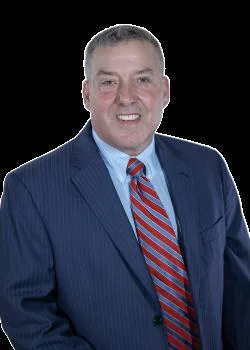
- Office
- Member of Assembly District 107
- State
- New York
- Party
- Republican · also on the Conservative line
- Status
- On the general ballot
- Election
- Election held Nov 3, 2026
- Incumbent
- Sitting legislator · Member of Assembly District 107
- Result
- Counting
Build a campaign strategy for Scott Bendett
About Scott Bendett
Experience
- New York State Assembly, Assemblymember - District 107 · 2023 – present
- Rensselaer County Legislature, Legislator · 2017 – 2023
- Habana Premium Cigar Shoppe, Owner · 1998 – 2023
- Bendett Investment Group, CEO
Where Bendett stands
Campaign site, updated Nov 8, 2026. The campaign's issues page
Cost of Living
Affordability and Cost of Living
New York now ranks 45th in the nation for affordability, with overall costs rising 18% since Governor Hochul took office. Families are being squeezed from every direction—especially by energy costs, with residential ele…
New York now ranks 45th in the nation for affordability, with overall costs rising 18% since Governor Hochul took office. Families are being squeezed from every direction—especially by energy costs, with residential electricity prices 49% higher than the national average. At the same time, state government spending has ballooned by $81 billion over the past five years. Yet despite this massive increase, everyday New Yorkers are not seeing relief at the grocery store, at the gas pump, or on their utility bills. The result is a growing affordability crisis that is pushing families and businesses to the brink and driving more residents to look for opportunity elsewhere.
Health & Human Services
Health Care
At nearly $10,000 per year, New York has the highest single-coverage health insurance costs in the nation. Not surprisingly, recent polling shows that 80% of New Yorkers are worried—or very worried—about the affordabili…
At nearly $10,000 per year, New York has the highest single-coverage health insurance costs in the nation. Not surprisingly, recent polling shows that 80% of New Yorkers are worried—or very worried—about the affordability of health care. Yet despite what families are paying, New York’s hospitals rank near the bottom nationally, coming in 48th for overall quality. New Yorkers are being forced to pay more, stress more, and accept less. The system is failing working families, seniors, and small businesses who are struggling to afford care that should be accessible, reliable, and high quality.
Children, Youth & Families
Child Care
New York now has the least affordable center-based child care for school-aged children in the nation. Sixty-four percent of New Yorkers live in child care deserts, meaning families struggle to find available care at any…
New York now has the least affordable center-based child care for school-aged children in the nation. Sixty-four percent of New Yorkers live in child care deserts, meaning families struggle to find available care at any price. In 2023, the annual cost for two children in a child care center reached nearly $36,000—almost $7,000 more than the average cost of housing. For working families, child care has become one of the biggest barriers to staying in the workforce, growing their income, and providing stability for their children.
New York must act to make child care accessible and affordable. That means increasing tax incentives and providing direct support to families and providers to reduce child poverty and strengthen the child care workforce. It means expanding access to early childhood education by increasing aid for Universal Pre-Kindergarten and improving program quality so every child has a strong foundation for success. And it means removing barriers to accessible care while using regional cost factors to make child care truly affordable across the state.
Civil Rights & Human Rights
Immigration
Since the spring of 2022, more than 210,000 migrants have arrived in New York City. In response, New York State has committed $4.3 billion in taxpayer funds through FY 2026 to address the crisis. Yet despite these enorm…
Since the spring of 2022, more than 210,000 migrants have arrived in New York City. In response, New York State has committed $4.3 billion in taxpayer funds through FY 2026 to address the crisis. Yet despite these enormous costs, New York City has failed to act on over 10,000 federal ICE detainer requests since 2016. The result has been mounting pressure on local services, strained communities, and growing concern over transparency, safety, and accountability.
New York must take a more responsible, coordinated approach. That starts with protecting taxpayer dollars by auditing all funds allocated for the migrant crisis and ending the practice of housing migrants in school buildings or daycare centers. It means ensuring community protections by requiring background checks and allowing communities to opt in before migrants are relocated from other jurisdictions. And it requires a true state-federal partnership, including mandatory notification to federal authorities when a non-citizen is arrested or convicted, and providing state assistance with immigration enforcement to restore order, accountability, and public trust.
Ending Antisemitism
Rising hatred against Jewish New Yorkers has reached alarming levels. In 2023, 44% of all recorded hate crimes and 88% of religious-based hate crimes targeted Jewish victims—the largest share of any group, according to…
Rising hatred against Jewish New Yorkers has reached alarming levels. In 2023, 44% of all recorded hate crimes and 88% of religious-based hate crimes targeted Jewish victims—the largest share of any group, according to Comptroller DiNapoli. Since the horrific October 7 attacks, anti-Israel, pro-Hamas mobs have put Jewish students at risk on college campuses across New York. Even more troubling, within hours of those attacks, the Democratic Socialists of America cited Assembly Democrat-sponsored legislation as an “effective model” for cutting off funding to Israel. Together, these developments signal a dangerous normalization of antisemitism that demands an immediate and forceful response.
New York must take clear action to confront antisemitism and protect Jewish communities. That starts with preventing public funding from supporting antisemitism by removing state funding from higher-education institutions that condone antisemitic activity and blocking tuition assistance for students who engage in antisemitic conduct. The state must also address violent pro-Hamas protests by ensuring those who make threats of mass harm are eligible for bail, reinstituting mask bans, and strengthening arrests and enforcement of hate-crime laws. Finally, New York must stand with our allies by removing state contracts from companies that boycott Israel and prohibiting not-for-profits from supporting Hamas or nations that aid terrorist organizations.
Climate change & clean energy
Environment, Energy & Utilities
Energy and Climate
New York’s radical climate agenda is driving up costs, threatening reliability, and delivering little real impact. According to the New York Independent System Operator, since the enactment of the Climate Leadership and…
New York’s radical climate agenda is driving up costs, threatening reliability, and delivering little real impact. According to the New York Independent System Operator, since the enactment of the Climate Leadership and Community Protection Act (CLCPA), more than twice as much power generation has been shut down as has been added to the grid—raising serious concerns about reliability. At the same time, the CLCPA is projected to cost taxpayers at least $600 billion. These extreme policies come with devastating human consequences as well, relying on cobalt for rechargeable batteries that is often mined by women and children working by hand in the Democratic Republic of the Congo. And despite these enormous costs, New York produces just 3.2% of U.S. carbon emissions—meaning the economic pain imposed on families and businesses will have little measurable impact on global climate change.
New York must pursue an energy strategy rooted in realism, human rights, and affordability. That means weighing the true costs and benefits of the CLCPA so New Yorkers are not crushed by irrational expenses for minimal returns. It means protecting human rights by rejecting supply chains tied to child and forced labor. It means ensuring energy choice and diversity by prohibiting government mandates that eliminate gas appliances or restrict consumer options. And it means restoring accountability by limiting executive overreach, returning authority to the legislature over climate rules and costs, and eliminating sweeping mandates—such as zero-emission vehicle requirements—that drive up prices and burden everyday New Yorkers.
State Government, Ethics & Administration
State Government, Ethics & Administration
Government Efficiency
New York’s government has become bloated, expensive, and ineffective. With more than 300,000 state-level regulatory restrictions, New York is now the second-most regulated state in the nation—making it harder for famili…
New York’s government has become bloated, expensive, and ineffective. With more than 300,000 state-level regulatory restrictions, New York is now the second-most regulated state in the nation—making it harder for families to get ahead and for businesses to grow. At the same time, state spending has increased by over $100 billion since Governor Hochul took office. Yet despite leading the nation in per-pupil K-12 spending at $33,437 per student, New York’s academic outcomes remain only middle of the pack. New Yorkers are paying more, facing more red tape, and getting mediocre results.
It’s time to reorganize state government and demand real accountability. That means making government more efficient by examining and reforming the actions of an expanding state bureaucracy. It means implementing serious state spending reforms to control costs, strengthen oversight, and rein in unchecked spending and debt. New York must focus on results—not rhetoric—and build a state government that works for taxpayers, not against them.
Economic & Community Development
Economic & Community Development
Opportunity and Economic Growth
New York’s economy is losing people, opportunity, and competitiveness. Nearly 900,000 residents have left the state for others, and New York now ranks 49th in the nation for economic opportunity. Small businesses—the ba…
New York’s economy is losing people, opportunity, and competitiveness. Nearly 900,000 residents have left the state for others, and New York now ranks 49th in the nation for economic opportunity. Small businesses—the backbone of our economy, representing 98% of all New York businesses and 40% of the private-sector workforce—have declined by at least 3% every year since 2019. At the same time, employers are buried under more than 1.4 million state and federal regulations that stifle innovation, discourage investment, and slow economic growth. The message is clear: New York has become one of the hardest places in America to build a future.
New York needs a new economic strategy focused on workers, small businesses, and growth. That starts with strengthening workers by prioritizing policies that help New Yorkers build successful, stable lives. It means removing barriers to growth by getting government out of the way of employers and employees. It requires supporting small businesses with targeted assistance to the entrepreneurs who drive local economies. And it demands redesigning economic development—moving away from a top-down model that has made New York uncompetitive and toward a modern approach that rewards innovation, regional strengths, and private-sector growth. Finally, New York must tackle soaring energy costs by building an efficient, diverse, and affordable power grid that supports jobs, families, and long-term prosperity.
Quoted from the campaign's website. What a campaign says is weaker evidence than a bill it sponsored or a vote it cast.
Track record
In the legislature
Sponsored or cosponsored 447 bills in the 2025 session, 37 as primary sponsor.
- A10154 Relates to adjusting the STAR credit depending on the age of a person · 2025 · primary · In Assembly Committee
- A10945 Authorizes Jonathan Myers to take the civil service examination for the position of police officer and be placed on the eligible list for employment as a civil service police officer for the village of Chatham · 2025 · primary · In Assembly Committee
- A11242 Directs the department of transportation to construct and install safety gates at a certain railroad crossing in the village of Castleton-on-Hudson, county of Rensselaer · 2025 · primary · In Assembly Committee
- A11449 Dedicates a portion of the state highway system to Patrick LaFortune Jr. · 2025 · primary · Assembly Floor Calendar
- A11469 Grants retroactive membership with Tier IV status in the New York state and local employees' retirement system to Christine Fernandez · 2025 · primary · In Assembly Committee
- A11637 Requires certain zoning changes that include the development of farmland or open spaces to be subject to approval under a referendum vote · 2025 · primary · In Assembly Committee
- A2470 Makes all costs and expenses of the department of public service and public service commission subject to appropriation by the legislature; repealer · 2025 · primary · In Assembly Committee
- A2471 Phases out certain reimbursements for expenditures made by or on behalf of social services districts for medical assistance for needy persons · 2025 · primary · In Assembly Committee
Showing 8 of 447 bills, primary sponsorships first.
Campaigns filed
- Friends of Scott Bendett
- Friends of Scott Bendett 2026
In the New York Assembly
Committees and subcommittees
- Member
- Member
- Member
- Member
- Member
- Member
Offices
- Capitol officeRoom 533, Legislative Office BuildingAlbany NY 12248518-455-5777
- District office1580 Columbia Turnpike Building 4, Suite 1ACastleton-on-Hudson NY 12033518-272-6149
Campaign finance
- Raised
- $17,816 · Raised this cycle, through Sep 30, 2025.
- Cash on hand
- — · As of Sep 30, 2025.
Attention
- News articles, last 30 days
- 8
- Ads seen, last 30 days
- 0
Updated Nov 26, 2026.
Ran against
Official site and accounts
Filing record
The candidacy record
| Status | True from | Known since |
|---|---|---|
| On the primary ballot | — | Oct 12, 2026 |
| On the general ballot | — | Oct 12, 2026 |
Updated Oct 31, 2026.