
Allie Wolf
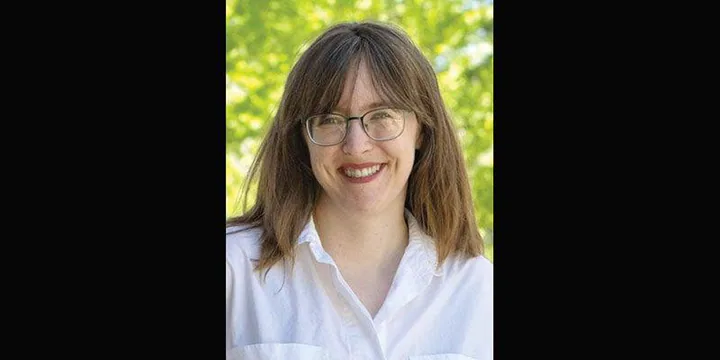
- Office
- State Representative District 26B
- State
- Minnesota
- Party
- Democratic-Farmer-Labor
- Status
- On the general ballot
- Election
- Election held Nov 3, 2026
Build a campaign strategy for Allie Wolf
About Allie Wolf
Experience
- Mills Fleet Farm, Human Resources Assistant · 2017 – 2018
- Mayo Clinic, Administrative Assistant · 2015 – 2016
- US Marine Corps, Marine, Lance Corporal · 2011 – 2013
Education
- Bachelor's, Winona State University, Computer Science · 2021
- Bachelor's, Winona State University, Mass Communications · 2011
- Associate's, Defense Language Institute Foreign Language Center, Aghan-Pashto Language · 2013
- Certificate, Rochester Community and Technical College, Administrative Assistant · 2015
Where Wolf stands
Campaign site, updated Nov 8, 2026. The campaign's issues page
Health & Human Services
Universal Healthcare
It’s time. In a state home to some of the best healthcare in the world, there is no reason why Minnesotans should be struggling to get the healthcare they need.
It’s time. In a state home to some of the best healthcare in the world, there is no reason why Minnesotans should be struggling to get the healthcare they need.
Why is healthcare so expensive? Because insurance companies are wasting provider time and resources fighting to get out of paying for the healthcare you need. So why are we bankrolling insurance companies when we could just pool our resources together and cut out the middle man? The best way to ensure citizens’ freedom to life, liberty, and the pursuit of happiness is through universal healthcare; so that we can take that risk, start that business, make that career move, all without worrying about whether we’ll be able to get that surgery, or take our kids to the dentist.
I’m tired of waiting for the federal government to do it for us. If they won’t listen, it’s time Minnesota steps up. And that’s why I support a statewide universal healthcare plan. And how do we pay for it? By closing tax loopholes that the wealthiest 1% of us use to skirt paying their fair share. There’s more than enough to go around, we just need the political will to do it.
Caring For Our Neighbors
- If there’s one thing the people of small town Minnesota do well, it’s lending neighbors a helping hand. Today, some of our neighbors need our help. With a mental health crisis sweeping the country, a substance abuse problem that has left no community unscathed, and a health insurance system that prevents many people from receiving the care they need to survive—and thrive—we need to reimagine how we provide healthcare in Minnesota. We have some of the best healthcare in the world; it’s time we make sure everyone of us can access it.
Elections & Democracy
Ranked Choice Voting
Tired of both parties? Same. No, really! I may be running as a DFLer, but make no mistake, there are plenty of things about both parties that I disagree with.
Tired of both parties? Same. No, really! I may be running as a DFLer, but make no mistake, there are plenty of things about both parties that I disagree with.
For example, I want to make it easier for you to vote DFLers like me and Republicans like Greg Davids out of office.
As it stands, the two-party system has made it next to impossible for independent voices to stand a chance in our elections. When voters find themselves morally opposed to both major party candidates, they are often discouraged from voting for independent and third party candidates by someone telling them they’d just be “throwing away” their vote.
Look at where that polarization has gotten us.
Ranked choice voting solves this catch-22. It’s simple: in an election that uses ranked choice, you simply rank each candidate for an office in order of who you would most like as your elected official, to least. If after counting up the ballots no one has a clear majority (50% plus one), then the candidate with the least amount of votes is eliminated, and those votes are then split go to the 2nd choice on each of those ballots. A second round of counting is conducted to see if a majority has been reached. If yes, we have a winner; if not, the process repeats.
With this method, everyone can vote for who they truly support, no matter how much of a long-shot it may be, while still feeling confident that if their dream candidate loses, their vote will at least still count towards one of the “lesser of two evils” if they so choose. In this system, a true consensus is reached.
Ranked choice voting is already used in some local and state elections across the country. It is the best way of reforming our electoral politics to make it easier to vote out politicians who have grown too comfortable in their seats. I want you
Electricity bills & data centers
Electricity bills & data centers
Environment, Energy & Utilities
Data Centers
Across rural America, Big Tech is manipulating communities into selling off land to build data centers to support their energy consumption—all at our expense.
Across rural America, Big Tech is manipulating communities into selling off land to build data centers to support their energy consumption—all at our expense.
The economic promises are many, but never seem to materialize. Data centers offer only a few temporary jobs during construction; but after that, the servers require little maintenance.
Within weeks the economic boom is over. Communities are left with increased energy costs, rolling blackouts, increased noise levels, contaminated water (used to cool their servers), and a loss of land that was once used for agriculture.
As representative, I will support a moratorium on data centers, and will help write legislation that would prevent local officials from signing NDAs that keep residents in the dark about data center projects. No backroom deals, full transparency.
Children, Youth & Families
Child Care
One of the biggest expenses in a family’s budget today is child care. Providers have waiting lists that are not months, but years long. Child care workers’ wages have stagnated (like all wages), and yet the cost of care…
One of the biggest expenses in a family’s budget today is child care. Providers have waiting lists that are not months, but years long. Child care workers’ wages have stagnated (like all wages), and yet the cost of care has soared to the point many parents have to either spend the equivalent of the cost of college tuition on child care, or choose which caregiver will sacrifice their career (and lifetime earning potential, investment in Social Security, and potentially benefits like healthcare) to stay home with the kids. That financial sacrifice is primarily born by mothers and grandmothers.
As a mom of two kids in elementary school, I know the struggle. When my kids were young, I had to choose jobs and schedule college courses based on when I could find someone to watch the kids for a few hours, because my husband and I could not afford child care at the time.
We can do better. I look around the country and I am encouraged to see governments from New Mexico to New York who are investing in families by subsidizing child care the way we would other too-big-to-fail sectors, like agriculture. When our families and our children do better, we all do better. Child care for all, now.
Education
Education & Tech
While working as a paraprofessional and substitute teacher this last fall, I got an upfront education on the challenges that teachers face in our schools. Over the last decade-and-a-half, Big Tech has been pushing their…
While working as a paraprofessional and substitute teacher this last fall, I got an upfront education on the challenges that teachers face in our schools. Over the last decade-and-a-half, Big Tech has been pushing their personal devices into classrooms everywhere. These tech companies profit off of selling devices to our school districts, and selling data collected on students and teachers to third parties.
Meanwhile, we are seeing a disturbing trend; literacy rates and test scores among students has been falling since 2012. The advent of generative AI is only making things worse. Students are using generative AI tools to offload the process of learning, and it’s become an extra burden on teachers to find out how to prevent cheating and plagiarism when AI tools are just one text prompt away for students.
And on top of this, we must acknowledge the mental health crisis facing our kids today, and the role that social media and a constant digital presence have played.
Countries around the world are finding out that this digital experiment in the classroom has backfired—and they are taking note. Recently, Sweden has reversed course after heavy investments into technology in the classrooms in the early 2000s; now schools there are prioritizing text books and handwriting. Even in the U.S., private schools are leading the way in a return to physical textbooks and handwriting to boost reading comprehension, reduce digital distractions, and improve information retention.
If we do not act soon, our kids at public schools will be left behind. It is for these reasons that I support a full ban on student cell phone use in the classroom, as well as a ban on individual devices, like tablets, for elementary students. With these changes, Minnesota can be an example to other states on how to protect our students from Big Tech, and a leader in elementary and secondary academic achievement.
Environment, Energy & Utilities
Environment, Energy & Utilities
Protecting Our Water
The US House of Representatives just passed legislation to repeal the ban on mining near the Boundary Waters. The problems with this decision are many.
The US House of Representatives just passed legislation to repeal the ban on mining near the Boundary Waters. The problems with this decision are many.
First is the pollution that comes with copper sulfide mining, and the destruction of some of the most pristine watersheds in the country. When these waters are destroyed, it is nearly impossible to repair the damage.
Second, the argument that such a project will create jobs is nothing when looking at the impact of the tourism and recreation industry in and around the Boundary Waters, which brings in nearly a $1 billion annually, according to an independent economics study conducted by Harvard. Proponents of mining argue that it will create about 1,100 jobs—at most. Compare that to the estimated loss of nearly 5,000 local jobs in tourism and recreation that will result from mining, according to that same Harvard study.
Not only that, but there are no assurances that our state will even profit from our own extracted resources. Twin Metals Minnesota, which is owned by a Chilean mining company, is the one that will profit from our copper and nickel, which will then be sent to overseas to China for processing. Not one dime is intended to benefit the United States, and certainly not Minnesota.
So why would Minnesota trade our most precious resource—the water for which we are named, “Land of the Sky-Tinted Waters”—as well as a vibrant tourism and recreation industry, for fewer jobs and no profits?
We won’t. I will work with legislators to ensure our waters are protected from those who would abuse them. There are plenty of ways to meet our energy needs—in fact, it is estimated that simply increasing our national recycling rate of copper from 38% to 50%, we could supply more copper annually than what would otherwise be extracted by the Twin Metals project. Let’s work together develop energy that is actually clean, without sacrificing clean water.
Values
Stewardship Of Our Land and Water
- No one appreciates just how beautiful and precious the Driftless Region is like we do. Whether you’re a hunter who spends long, quiet hours in our wooded areas, a farmer who knows and cares for the soil, or someone who loves to explore our home by hiking boot or by kayak, we all want to protect this landscape for generations to come. The people here know exactly what the word “stewardship” means; it means taking care of the land and water we belong to just as it takes care of us. We have a duty to preserve our natural resources—our forests, farmlands, and rivers—so that we can continue to thrive no matter what the future brings.
Economic & Community Development
Economic & Community Development
Resilient, Thriving Communities
- The people of Minnesota are tough enough to weather all kinds of storms—literally! But our politicians at all levels of government have left rural America behind. We need to support our communities so that in times of economic uncertainty, we have what we need to thrive. Investing in our schools, making sure every teacher has the resources they need to provide the best education to our kids; making sure that every home has access to fast, reliable, affordable Internet, no matter how long the gravel road; supporting our local business owners, from the farm to Main Street, so they can stay competitive in the market—these are the ways that we build resilient communities and give families a vision of a bright future for themselves and their children here in Southeastern Minnesota.
Labor, Employment & Workforce
Supporting Unions, Workers, and Families
- Minnesota has no shortage of honest, hard-working folk. But today, working-class families face many challenges. The cost of child care has meant many families facing the financial decision of whether one parent should put off their career in order to stay home with the kids. The price of groceries have inflated astronomically. Faced with historically high housing prices, many families are still renting. But for all the things that have increased in price, wages have not. Laborers deserve to be compensated for all they provide; things like affordable child care, fully-funded retirement systems, access to affordable healthcare, investments in our infrastructure and public schools, and family-sustaining wages. I promise to support our unions and workers and to ensure that they have what they need to thrive here in Minnesota.
Quoted from the campaign's website. What a campaign says is weaker evidence than a bill it sponsored or a vote it cast.
Track record
In the candidate's own words
I’m a mom; I’m a Marine veteran; and I’m a proud, born-and-raised Minnesotan. For most of my life I’ve been living here in Southeast Minnesota, ever since my family moved to Spring Valley in Fillmore County when I was five years old. I went to college at Winona State University to study Mass Communications, and later enlisted in the Marine Corps in 2011 as a linguist where I studied the Pashto language and Afghan culture. But after my enlistment, my husband and I felt our Southeast Minnesota roots pulling us back, and we moved back home to Spring Valley to start our own family.
Back home, I used my GI Bill to go back to school to get an Administrative Assistant degree, and later, after I realized I actually really liked math and computers, I got my Bachelor’s in Computer Science. All that time I’ve been either a full-time working mom, part-time working mom, full-time student mom, a homeschooling mom during the COVID-19 pandemic, and most recently a stay-at-home mom—I’ve taken on whatever role was needed to make sure my family was supported and cared for at any given season of life.
And now I’m ready for a new role: the opportunity to represent you as the Minnesota Representative from District 26B.
There has not been a new face representing this district since 1991—the year I was born. Times are changing; but our values remain. My fellow residents of 26B deserve a representative who knows what challenges the hard-working families of rural Minnesota face, and who will support and fight for them at the Capitol.
VALUES
Campaign site, updated Nov 8, 2026.
Attention
- News articles, last 30 days
- 1
- Ads seen, last 30 days
- 0
Updated Nov 25, 2026.
Ran against
Official site and accounts
Filing record
The candidacy record
| Status | True from | Known since |
|---|---|---|
| On the general ballot | — | Oct 14, 2026 |
Updated Oct 31, 2026.