
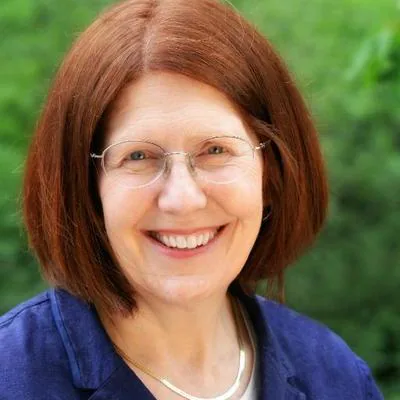
Tina Liebling
- Office
- State Representative District 24B
- State
- Minnesota
- Party
- Democratic-Farmer-Labor
- Status
- On the general ballot
- Election
- Election held Nov 3, 2026
- Incumbent
- Sitting legislator · State Representative District 24B
Build a campaign strategy for Tina Liebling
About Tina Liebling
Tina Liebling (/ˈliːblɪŋ/ LEE-bling; born 1953) is a Minnesota attorney and politician who represents District 24B in the Minnesota House of Representatives. She is a member of the Minnesota Democratic–Farmer–Labor Party (DFL). Her district consists almost entirely of the city of Rochester in Olmsted County, in southeastern Minnesota. Liebling ran for governor of Minnesota in 2018, but withdrew from the race in March.
From Wikipedia, read Nov 20, 2026.
Experience
- Minnesota State House of Representatives, State Representative - District 24B · 2022 – present
- Minnesota State House of Representatives, State Representative - District 26A · 2008 – 2022
- Attorney
Education
- JD, Boston University
- Master's, University of Massachusetts Amherst, Public Health
- Bachelor's, University of Minnesota, Spanish
Where Liebling stands
Campaign site, checked Nov 21, 2026. The campaign's issues page
Economic & Community Development
Economic & Community Development
An Economy That Works for All of Us ⌄
Minnesota is subject to the economic winds that blow throughout the country but we don’t have to accept whatever gets blown our way. Minnesota’s policy choices impact whether Minnesota does better than the national econ…
Minnesota is subject to the economic winds that blow throughout the country but we don’t have to accept whatever gets blown our way. Minnesota’s policy choices impact whether Minnesota does better than the national economy or lags behind. Minnesota can build an economy that works for all of us, not just the wealthy and well connected.
We can foster opportunity for Minnesotans who want to get ahead and will work hard to do it. We can continue to attract and retain talented workers who will build our future economy. We have the ingredients. What we need is the will.
Minnesotans of all ages, in every part of the state, are struggling to get by in this economy. Though Minnesota’s unemployment rate is at an historic low, and employers in every sector can’t find enough people to work, too many people are still struggling to find a job that supports a decent standard of living. Too many Minnesota kids are growing up in poverty–even extreme poverty–which puts their entire futures at risk. Too many people do not have food, health care, a safe and stable place to live, and other things we all count on to be productive. And too many parents can’t help their families get ahead because child care is unaffordable.
We have problems, but we also have the resources to address them. In 2022, Minnesota was fortunate to have a large budget surplus that could have been used to help Minnesotans get ahead. Instead, Minnesota’s Republican State Senators decided to walk away from any agreement to spend the money where it was needed. That November, Minnesotans elected a majority DFL House and Senate, which got right to work investing in the needs of Minnesotans.
Now more than ever, we must continue to invest in our people so they can participate in our economy and keep Minnesota strong for all of us.
Medicare for All & single-payer
Medicare for All & single-payer
Health & Human Services
Health Care for All ⌄
Everyone deserves health care. Minnesotans should not have to worry about getting the health care they need—yet this is the reality for too many. For some, the cost of insurance is too high. For those who have private i…
Everyone deserves health care. Minnesotans should not have to worry about getting the health care they need—yet this is the reality for too many. For some, the cost of insurance is too high. For those who have private insurance, the out of pocket costs may be more than they can afford. For those who qualify for public programs, getting care can still be a challenge. We can improve the lives of every Minnesotan and our entire economy by moving to a system of universal, single-payer health care. Such a system would eliminate the “middleman” between people and the health care they need.
In Minnesota, as in the rest of America, we have a complex, fractured health care system that wastes about a third of every health care dollar to figure out who should get care, how much, and at what price. Minnesota can lead the nation in moving toward a system where people can choose who provides their health care but don’t have to choose, or deal with, or pay insurance companies. Whether we call this “single payer,” "Universal Health Care," or something else, we must remove the barriers between Minnesotans and the health care they need.
We can start by getting insurance companies out of our public programs. Minnesota contracts with insurance companies to cover over 1.1 million Minnesotans on our public health care programs, Medicaid and MinnesotaCare. These companies then contract with doctors, hospitals, and others to provide care. This means that low-income Minnesotans covered by public health care must choose and deal with insurance companies, while health care providers must deal with multiple insurance companies for patients who are all covered by the same public program.
It is time to cut out the middlemen. Our state can take back control and improve our public programs by contracting directly with healthcare providers on behalf of patients. This would cost less and could deliver better care. The only thing stopping us is the power that these big insurers have over Minnesota’s government.
I believe that healthcare is—or should be—a human right. Making high quality healthcare accessible and affordable to all would be an enormous boost for Minnesota’s economy, because healthy people are more productive, and no one would be stuck in the wrong job just for health insurance. We can create a Minnesota health care system that is high quality, affordable and easy to access FOR ALL if we have the political will to do it.
Taxation & Revenue
A Fair Tax System ⌄
Minnesotans are willing to pay taxes, so long as our taxes are fair and our money is used well. In a fair tax system, those who earn more pay a larger percentage of their income. Minnesotans who are doing well must pay…
Minnesotans are willing to pay taxes, so long as our taxes are fair and our money is used well. In a fair tax system, those who earn more pay a larger percentage of their income. Minnesotans who are doing well must pay their fair share of taxes so Minnesota can create services and conditions that give everyone opportunities to succeed.
In 2022, Minnesota had a large projected budget surplus because of a quicker-than-expected recovery from the pandemic. The additional funds came from higher corporate profits (more taxes paid), higher sales tax revenues (more purchases), and more income taxes (more people employed at higher wages). In 2023-24, under DFL stewardship, Minnesota's economy continues to outperform expectations. At the same time, our state has many ways these resources to make a difference, such as: to support quality, affordable child care so families can get ahead; to better support our public schools; to build our public health system to be ready for the next public health challenge; pay better wages to the dedicated caregivers of elderly and disabled Minnesotans; and to reduce state and local taxes for Minnesotans who are struggling to get by. These investments would boost our economy and ultimately help all Minnesotans.
But we should NOT give permanent tax cuts to the wealthy, who do not need the help.
Labor unions & minimum wage
Labor, Employment & Workforce
A Minimum Wage That’s a Living Wage ⌄
People who work full time should be able to meet their family’s basic needs, but many can not. When employers pay wages that are too low for their employees to live on, taxpayers must fill the gap with food support, hou…
People who work full time should be able to meet their family’s basic needs, but many can not. When employers pay wages that are too low for their employees to live on, taxpayers must fill the gap with food support, housing support, health insurance support, and support for other needs. This subsidizes employers and undermines the dignity of the worker.
I’m proud to have voted to raise Minnesota’s minimum wage and to have it apply to tipped employees, but we must continue to raise the minimum wage until all full-time work in Minnesota pays a living wage.
Every worker in Minnesota should have access to earned sick time and paid family leave. These benefits help everyone by reducing the transmission of diseases. No one should be forced to work when sick, or be forced to choose between caring for family and keeping a job. So let’s allow everyone the dignity and security to get better at home or have the time to get or give needed care, then return to work healthy and productive. I'm proud to say that the DFL-led legislature passed this into law in 2023. Starting in 2026, Minnesota workers will be able to receive up to 12 weeks of paid leave if they are pregnant, bonding with a new child, or if they or a family member has a serious health condition.
Unions created the middle class by organizing for better wages and working conditions, but union membership has eroded. I support and defend the right to organize and bargain collectively, because this is one of the best tools we have to raise work standards and give Minnesotans a chance at a better future.
Children, Youth & Families
High Quality Child Care ⌄
Every Minnesota child deserves the best possible start in life, which often includes high quality child care. Parents can’t focus on work or school unless they know their children are in a safe and supportive place, but…
Every Minnesota child deserves the best possible start in life, which often includes high quality child care. Parents can’t focus on work or school unless they know their children are in a safe and supportive place, but high quality child care is in short supply and, even where available, too often unaffordable.
We must support many models of child care—from home day care to Head Start—so families have convenient and high quality options. Minnesota has a Child Care Assistance Program (CCAP) to help more working parents afford the cost, but it is underfunded and leaves many struggling families without help. Building an excellent, affordable system of day care and support for our youngest kids is one of the most important things Minnesota can do for our future. The DFL-led legislature invested in child care in 2023, but there is far more work to do.
Education
Fully Fund Public Education ⌄
Minnesota’s students are being shortchanged by public school funding that has not kept up with inflation. As state support has fallen, school districts must try to get more of their funding from local property taxes. Th…
Minnesota’s students are being shortchanged by public school funding that has not kept up with inflation. As state support has fallen, school districts must try to get more of their funding from local property taxes. This means that schools in communities without a big tax base don’t have enough resources for their students. Fully and appropriately funding our public education system at the state level will help all students succeed, no matter where they come from or what they look like. We also need to have enough school counselors, mental health professionals, and other support to help students make education and career decisions that are based on their interests and talents, to support those with mental health challenges, and remove barriers that keep students from achieving their dreams.
Minnesota’s Constitution says: “The stability of a republican form of government depending mainly upon the intelligence of the people, it is the duty of the legislature to establish a general and uniform system of public schools. The legislature shall make such provisions by taxation or otherwise as will secure a thorough and efficient system of public schools throughout the state.” Minnesota must live up to this promise.
In 2023-2024, the DFL-led legislature made historic investments in public schools. This included free breakfast and lunch for every student, and increases in per-pupil funding that is now linked to inflation. There is more work to do, but I'm proud to part of this historic work to support our students and our future.
College tuition & student loan debt
College tuition & student loan debt
Education
Extending Public Education for the 21st Century: No-Cost College Credits and Relief for Student Debt ⌄
In the 21st century, careers that can sustain a family require education beyond high school. Though we spend millions helping students get free college credits through the Post-Secondary Education Options program, most…
In the 21st century, careers that can sustain a family require education beyond high school. Though we spend millions helping students get free college credits through the Post-Secondary Education Options program, most students don’t use the program. All Minnesota students deserve the opportunity to go to college or get career skills, not just the fortunate few. For years I have advocated to make the first two years of post-high school education at a public college, technical college, or university TUITION-FREE to Minnesota students, as a way to take pressure off struggling families while ensuring our workforce is well trained for the needs of the economy.
I'm proud to say that the DFL-led legislature delivered on this by investing in tuition freezes at all MinnState schools, funding big increases in various financial aid and grant programs for students, and establishing the North Star Promise program, which provides the last dollar of tuition at public colleges in Minnesota for all students with a family income less than $80,000
Many students are already buried in debt, which is holding back our entire economy. The Biden/Harris administration has tried repeatedly to provide student debt relief, but many of their efforts have been stopped by rulings from conservative courts. In Minnesota, we increased our investments in a variety of loan forgiveness programs for graduates who work in geographic areas or professions (such as health care or teaching) where there are shortages.
State Government, Ethics & Administration
State Government, Ethics & Administration
A Government That Works for All of Us ⌄
Too often, Minnesotans do not see government working for us. We work more jobs and longer hours just to stay afloat and worry what the future will be for us and our families. We see large corporations and other special…
Too often, Minnesotans do not see government working for us. We work more jobs and longer hours just to stay afloat and worry what the future will be for us and our families. We see large corporations and other special interests speaking loudly to and being heard by our government, while our concerns are too often ignored. We need a government that works for all of us, not just the rich and powerful, and I continue to work for that.
We will not restore trust in government until we get the big money out of politics so politicians respond to voters, not dollars.
While Minnesota provides some public financing for state campaigns that agree to restrict campaign spending and state law restricts how much an individual can donate to a campaign, these programs are underfunded and constantly under attack. Even with this financing, special interests overwhelm candidates’ campaigns through “independent expenditure” groups, whose backers are often not disclosed.
The US Supreme Court opened the floodgates of special interest money with the Citizens United opinion and Minnesota cannot overrule it. However, we can insist on knowing who is behind the big spending and work on other ways to make sure that the voice of the voter—not the big donor—is the one that’s heard.
High Ethical Standards and Transparency ⌄
Public service should be just that: service. We must require high ethical standards and transparency from all who serve the public.
Public service should be just that: service. We must require high ethical standards and transparency from all who serve the public.
Minnesota has strong laws that bar legislators from accepting gifts from lobbyists. However, legislators and high-level staff could get a deferred gift in the form of a lobbying job right after leaving the legislature. That’s why Minnesota law should require a waiting period before a legislator or high-level staff can lobby or work for entities they regulate, oversee, or fund.
Criminal Justice, Firearms & Corrections
Criminal Justice, Firearms & Corrections
Diversity and Justice ⌄
Our diversity is our strength, but Minnesota’s gaps in health, wealth, and opportunity are holding us back. Black Minnesotans, native people, and other minorities have faced barriers that hold them back from generation…
Our diversity is our strength, but Minnesota’s gaps in health, wealth, and opportunity are holding us back. Black Minnesotans, native people, and other minorities have faced barriers that hold them back from generation to generation, often without acknowledgement that this has happened.
The well-publicized police killings of African Americans and the killings of police officers have torn the bandage off an old and festering wound. We must create a culture and system that insists on fair and just treatment of all Minnesotans. Law enforcement officers have a difficult and dangerous job, for which they deserve respect and support. At the same time, they must always be held to high and clear standards and be accountable to the public.
We need a new standard for the use of force by law enforcement officials—as exists in other countries. Officers should be expected to control a situation without using deadly force except as a last resort. This means staying out of harm’s way themselves unless there is an immediate threat to life.
Minnesota crime rates have dropped over the last few years, as in the rest of the nation. In 2023-2024, the DFL-led legislature invested more money in public safety and in support for crime victims. We also restricted the use of no-knock search warrants in the wake of Amir Locke’s tragic death, and authorized local units of government to create civilian oversight councils, which may recommend discipline for peace officers accused of misconduct. We prohibited peace officers from being involved in hate or extremist groups and banned police training on “excited delirium”.
Peaceful civil disobedience has often been the catalyst that moves society toward justice. We do not need additional penalties or threats to those who step forward to make change. The right to protest—and sometimes even to get arrested for it—strengthens our democracy.
Environment, Energy & Utilities
Environment, Energy & Utilities
Protect Our Environment ⌄
Minnesota cannot let corporate greed steal our children’s inheritance. Before we allow corporations to exploit our natural resources, we must make sure the environment is protected and that sufficient financial guarante…
Minnesota cannot let corporate greed steal our children’s inheritance. Before we allow corporations to exploit our natural resources, we must make sure the environment is protected and that sufficient financial guarantees are in place to pay for any cleanup. After the fact, we must hold them accountable for any harm they caused. Too often, polluters make their money and leave the cleanup to the taxpayer.
We Minnesotans love our natural resources and will have to stay vigilant to make sure we keep them.
Climate change has advanced rapidly in recent years and the Biden/Harris administration has made great strides, but the federal response has been hampered by Republican-appointed justices on the US Supreme Court. Reducing greenhouse gasses to reduce climate change must be an even more urgent priority at the state level. Our children deserve to grow up in a healthy environment, whether they live in the city, the country, or somewhere in between. Clean water, clean food, and clean air should be their birthright. In Minnesota, I've been proud to support many initiatives to clean and protect our environment, but a lot of work remains.
Big Tech antitrust & free speech
Big Tech antitrust & free speech
Technology, Data & Telecom
Free Speech and Right to Privacy ⌄
We must protect the freedom of every Minnesotan to speak their mind, maintain their privacy, and make their own important decisions. Government should not infringe on personal decisions such as who to love and marry, wh…
We must protect the freedom of every Minnesotan to speak their mind, maintain their privacy, and make their own important decisions. Government should not infringe on personal decisions such as who to love and marry, whether and where to worship, which bathroom to use, and how and when to reproduce. I fully support the right to choose abortion. Minnesotans deserve a full range of respectful, supportive health care services that help avoid unintended pregnancies and support healthy and wanted pregnancies and healthy births.
Cannabis, Gaming, Liquor & Tobacco
Cannabis, Gaming, Liquor & Tobacco
Cannabis ⌄
The war on drugs has failed—costing Minnesota taxpayers too much and destroying too many lives. I have long supported removing the prohibition on personal use of cannabis and policies that treat addiction as an illness,…
The war on drugs has failed—costing Minnesota taxpayers too much and destroying too many lives. I have long supported removing the prohibition on personal use of cannabis and policies that treat addiction as an illness, not a crime.
In 2023, Minnesota became the 23rd state to legalize personal adult-use cannabis. Full decriminalization authorizes the possession, use, and home growth of cannabis in Minnesota for people 21 years of age and older. Using lessons learned from other states, the law was carefully crafted to reduce youth access to cannabis and support public safety.
Minnesota has fewer felons in prison than most other states, adjusted for population. Still, too many inmates have substance abuse disorder or other mental health issues that would be better treated in another setting. Treatment courts are a step in the right direction, and we must encourage and fund these initiatives. We also need to make sure that people who have been through the justice system can find a path back to a productive life. We continue to work on solutions that support recovery from substance abuse disorders, including supportive housing, treatment, and removing barriers to employment for the formerly incarcerated and for other Minnesotans who need these supports.
Another barrier to reentry from prison is loss of voting rights. The DFL-led legislature restored voting rights to eligible Minnesotans convicted of a felony. The right to vote is automatically restored when the person leaves prison. No longer will anyone have to wait until they are finished with probation or parole.
Second Amendment & red flag laws
Second Amendment & red flag laws
Criminal Justice, Firearms & Corrections
Reduce Gun Violence ⌄
Our country suffers from an epidemic of gun violence. Recent mass shootings in Uvalde, Buffalo, and so many other places have horrified the nation. These terrible events have happened in movie theaters, malls, at concer…
Our country suffers from an epidemic of gun violence. Recent mass shootings in Uvalde, Buffalo, and so many other places have horrified the nation. These terrible events have happened in movie theaters, malls, at concerts, and–worst of all–in classrooms. But let’s not forget that most gun violence still occurs when a person turns a gun against themself.
The common denominator to all of the gun violence is easy access to guns, especially guns with such lethality that no civilian should have them.
After years of GOP obstruction on the issue, in 2023 DFLers passed two key gun violence prevention measures: universal background checks and red flag laws (also known as extreme risk protection orders, or ERPOs). In 2024 we also banned binary triggers and increased the criminal penalties for straw purchasing, two issues at the center of the shooting in February 2024 that killed three Burnsville first responders. Finally, we established a new task force that will research best practices for protecting law enforcement, victims, and others in the process of recovering surrendered firearms from the subjects of domestic violence restraining orders. These measures will help, but I believe we also need a ban on weapons of war and large magazines. When even trained law enforcement officers are outgunned by the mass killers it is time to say “enough.” Responsible gun owners should be able to own a gun for self-defense or for hunting, but they do not need weapons of war.
In my view, the Supreme Court is wrong in its interpretation of the Second Amendment. There is no individual right to bear arms in the US Constitution. The founders wrote the Constitution to “establish Justice, insure domestic Tranquility, provide for the common defense, promote the general Welfare, and secure the Blessings of Liberty to ourselves and our Posterity,...” It is inconceivable and ahistorical to believe that the founders intended for every individual to “keep and bear” any weapon they want.
Quoted from the campaign's website. What a campaign says is weaker evidence than a bill it sponsored or a vote it cast.
Track record
In the candidate's own words
In 2002, Tina ran for the Minnesota House of Representatives finishing second in a three-way race. She ran again in 2004 and won the first of her eleven terms in the Minnesota House. She is the first person from Olmsted County elected to the Minnesota Legislature with a DFL label.
Tina Liebling was born and raised in Minneapolis, the second of five children. Her dad taught film and photography at the University of Minnesota, and often took his children with him as he traveled the state photographing the people of Minnesota. He loved and admired the Minnesota women and men who get up every day and work hard to take care of their families, as well as those who struggle every day to overcome challenges like poverty, disability, and prejudice. He passed this love on to Tina.
Tina’s family also faced challenges. Her mother battled mental illness during much of Tina’s childhood. When she was 16, her parents divorced and moved out of state. Tina moved with her father to Massachusetts where she graduated from high school before returning to Minnesota on her own to attend the University of Minnesota.
With little emotional or financial support from her family, Tina took advantage of the low tuition offered by Minnesota’s public university. She worked her way through college as a waitress, a nurse’s aide at Hennepin County Medical Center, and even as an assistant in a shoe repair shop. She graduated magna cum laude with a B.A. in Spanish. She is grateful for the taxpayer investment in her future and believes that today’s students should also have opportunities to succeed.
Eventually, she moved back to Massachusetts where she earned an M.S. in Public Health from the University of Massachusetts-Amherst, then a J.D. cum laude at Boston University School of Law. During a summer internship in a large Chicago corporate law firm she met Mark, a Chicago native. Though offered a job with that firm, she did not want a career working for corporations so she turned it down. After graduation, she married Mark and practiced law in Massachusetts while he attended graduate school.
Tina and Mark then moved to the Chicago area where Tina worked as a public defender for the Office of the Cook County Public Defender. Their three children were born in Illinois.
Tina returned to Minnesota in 1994, moving to Rochester so her husband—a physician—could accept a position at Mayo Clinic. She started a solo law practice in Rochester concentrating on criminal law and doing what she loves best—standing up for the “little guy and gal” to make sure everyone gets a fair shake.
Many of Tina’s House committee assignments have been in the health and human services area, but she has also served on tax, law, and appropriations committees. She chaired the House’s Health and Human Services (HHS) Policy Committee from 2013-2014. She was chair of the HHS Finance Division, which controlled a third of the state’s budget, from 2019-2020. After a reorganization of the HHS committees, she chaired the House’s Health Finance and Policy Committee from 2021-2024. She now co-chairs the House's Judiciary Finance and Policy Committee, while still serving on the Health Finance and Policy Committee and joining the Higher Education Finance and Policy Committee.
Tina belongs to and supports many local organizations. Her three children graduated from Rochester Public Schools and from college, and she has three grandchildren.
Tina has built a life advocating for Minnesotans who need opportunities to get ahead. She stands up to anyone who plays politics with Minnesota’s future.
Campaign site, checked Nov 7, 2026.
In the Minnesota House of Representatives
Committees and subcommittees
- Co-Chair
- Member
- Member
Offices
- Capitol officeCentennial Office Building 658 Cedar St., Fifth FloorSt. Paul MN 55155651-296-0573
Attention
- News articles, last 30 days
- 12
- Ads seen, last 30 days
- 0
Updated Nov 26, 2026.
Ran against
Official site and accounts
Filing record
The candidacy record
| Status | True from | Known since |
|---|---|---|
| On the general ballot | — | Oct 14, 2026 |
Updated Oct 31, 2026.