
Joel Hollerich
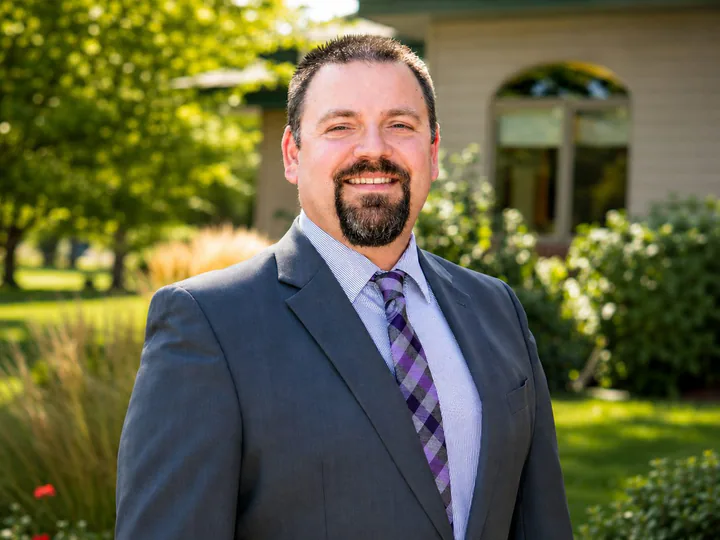
- Office
- School Board Member, Mankato Public School District
- State
- Minnesota
- Status
- On the general ballot
- Election
- Election held Nov 3, 2026
- Result
- Counting
Build a campaign strategy for Joel Hollerich
Where Hollerich stands
Campaign site, checked Nov 25, 2026. The campaign's issues page
Education
What I'd work on, and what that looks like in practice.
Reading comes first. A student who can't read at grade level is behind in every class that asks them to read something — so that's where I'd start, and the rest of this list follows from it.
54.4%
of Mankato Area Public Schools students met or exceeded state reading standards in 2025.
49.6%
of Minnesota students statewide did — down slightly from the year before.
Every child
is the standard Minnesota law actually sets: reading at or above grade level, every year, beginning in kindergarten.
is the standard Minnesota law actually sets: reading at or above grade level, every year, beginning in kindergarten.
2025 Minnesota Comprehensive Assessments. District and statewide figures as reported by Mankato Area Public Schools, August 2025. Minnesota Report Card
Every student reading at grade level
- Every student entering 6th grade reading at grade level
- More staff in reading intervention, earlier
- Weight the investment toward K-5, where it compounds
The foundation everything else is built on. A student who can't read at grade level isn't just behind in reading — they're behind in every class that asks them to read something.
My goal is that every student enters 6th grade reading at grade level, because that's the point where school stops teaching you to read and starts expecting you to read to learn. Getting there means putting more staff into reading intervention, so students aren't struggling just to follow along with the material, and weighting our investment toward K-5, where it compounds — more investment in the K-5 grades improves outcomes all the way through 6th-12th. It is also the biggest difference we can make in students' mental health: a student who feels able to do the work has reason to believe he or she can graduate and have the future they're dreaming of.
What this means in practice
Make academic achievement the goal we measure
- Academic success at the center of the strategic roadmap
- Reading and graduation as the numbers we report on
- Accountability for behavior that stops the rest of the class learning
Reading, graduating, and a classroom where learning can happen. A strategic plan should be judged on whether students learned more because of it.
I think the district's strategic roadmap has too little focus on academic success and too much focus on the school environment. Environment matters — but it is in service of learning, not a substitute for measuring it. We have too many kids who can't read at grade level, too many kids who don't graduate, and too little accountability for kids who won't follow basic rules of behavior. Those are the plain measures I'd hold us to, and we need to make sure all our students can be as successful academically as they want to be.
What this means in practice
Teachers supported enough to actually teach
- More para-professional support in the classrooms that need it
- A real answer when one student stops the learning of the other 29
- Teachers equipped for the classroom without an Amazon wish list
Good teachers can inspire students to achieve more — but not in a large class without enough support, and not while instruction stops to manage the same disruption for the fifth time.
We have many good teachers who can connect with students and inspire them to achieve more, and that gets very hard in large classes without enough para-professional support, or without a real answer for the one student who is stopping the learning of the other 29. Teachers need the support of leadership, and need to feel that instruction is their primary job rather than something to fit around disruptions. And a teacher shouldn't have to publish a wish list on Amazon to make sure he or she has the things needed to educate students.
What this means in practice
State Budget, Bonds & Finance
Budget discipline — dollars that reach students
- Balanced budgets, no borrowing to fund operating expenses
- Every category checked against last year and the trend
- More state funding for special education — and proof the dollars work
A balanced budget that doesn't borrow to cover operating costs, and a board that asks what each dollar bought.
I bring a degree in economics and years of loan underwriting, investment analysis, and non-profit budgeting. The size of a budget document doesn't make it hard to understand — comparing each category against the previous year and the trend data makes the things that are out of place easy to spot and worth a question. A good budget is balanced and doesn't require borrowing to fund operating expenses. Expenses should be monitored by the board to make sure there is some form of return for the dollars being spent, because unproductive tax revenue and state funding is the same thing as students not learning. We do need more help from the government with the ever-rising need for special education, and we also need to make sure the dollars we already have are being used wisely. I'm not afraid to ask questions or push back when what I'm presented with doesn't match what my eyes are telling me.
What this means in practice
School choice & private vouchers
School choice & private vouchers
Education
Keep our families — and win some back
- Keep the families we have
- Bring students in from other districts
- Win them on academics — an education too good to miss
Families leaving District 77 are doing what any parent would do: chasing choices for their kids. The answer is to be the district worth choosing.
We're losing kids to other schools because parents are doing whatever they can to try to raise kids who have opportunities and choices. I want to reverse that — not only keep kids in our district, but bring students from other districts because the education at MAPS is too good to miss. That follows from the first four priorities rather than replacing them: families choose a district on reading, teaching and results, and there is no version of this that we market our way out of.
What this means in practice
Three seats. Three votes.
Quoted from the campaign's website. What a campaign says is weaker evidence than a bill it sponsored or a vote it cast.
Track record
In the candidate's own words
About Joel
Campaign site, checked Nov 25, 2026.
Attention
- News articles, last 30 days
- 0
- Ads seen, last 30 days
- 0
Updated Nov 27, 2026.
Ran against
Filing record
The candidacy record
| Status | True from | Known since |
|---|---|---|
| On the general ballot | — | Nov 11, 2026 |
Updated Nov 25, 2026.