
Jeremy Bolen
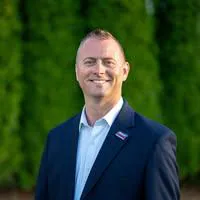
- Office
- County Sheriff, Washington County
- State
- Minnesota
- Status
- On the general ballot
- Election
- Election held Nov 3, 2026
- Result
- Counting
Build a campaign strategy for Jeremy Bolen
About Jeremy Bolen
Experience
- Ramsey County Sheriff, Commander - Community Support Services & Administrative Support · 2004 – present
- Minnesota Wild, Security Manager · 2005 – 2008
Education
- Associate's, Hibbing Community College, Homeland Security · 2002
Where Bolen stands
Campaign site, checked Nov 24, 2026. The campaign's issues page
State Government, Ethics & Administration
State Government, Ethics & Administration
COMMUNITY TRUST & TRANSPARENCY
- Open communication through regular town halls, community listening sessions & social media. Office of the Sheriff open hours to speak with the Sheriff.
- Expand data transparency creating public dashboards on crime trends, response times, and outcomes.
- Strengthen accountability systems while highlighting positive outcomes by deputies and staff.
- Continue to expand mental health resources available to community through the creation of a mental health co-responder program county-wide to provide immediate services and support.
- Committed to engaging with the community around new technology, gaining community support and feedback prior to implementation.
Technology, Data & Telecom
TECHNOLOGY & INNOVATION
- Expand the use of real-time data tools to deploy resources effectively. Invest in new technology to increase transparency. Streamline reporting systems to keep deputies in the field.
- Use calls-for-service, workload, crime, traffic, and geographic data to better understand when and where resources are needed and inform staffing and deployment decisions.
- Develop personnel and capabilities for investigating cybercrime, online fraud, digital evidence, technology-facilitated crimes, and other emerging threats.
- Make routine sheriff’s office services easier to access online when appropriate, such as records requests, permit information, crime reporting, civil-process information, public data, community resources, and appointment scheduling.
- Provide understandable public information about crime trends, calls for service, traffic safety, response activity, and other appropriate measures while protecting confidential and personally identifiable information.
- Test major technologies on a limited scale before making significant investments. Establish objectives beforehand and evaluate whether a pilot actually improves safety, efficiency, service, or employee effectiveness.
- Explore emerging tools (drones, Al-assisted reporting, LPR, search & rescue) with clear privacy safeguards.
- Before implementing new technologies, allow for public input and discussion. Additionally monitoring the use of any data collection prior to the agreement to implement a new technology.
Criminal Justice, Firearms & Corrections
Criminal Justice, Firearms & Corrections
SMART, FAIR LAW & ORDER
- Consistent enforcement, focus on violent crime and repeat offenders. Targeted enforcement based on crime trends and intelligence gathering.
- Communicate clearly with county residents and visitors - those who seek to victimize our community and break the law here in Washington County, WILL BE HELD ACCOUNTABLE.
- Enforcement and prevention do not have to compete. Combine accountability for criminal behavior with targeted efforts designed to prevent victimization and reduce repeat offending.
- Measure success beyond arrests. Invest in investigative training, evidence collection, digital forensics, report quality, and coordination with prosecutors so cases are thoroughly investigated and appropriately presented.
- Make supporting crime victims a core component of public safety. Improve follow-up communication, provide clear information about the justice process, connect victims with services, and ensure victims know the status of their cases when appropriate.
- Maintain safe and orderly correctional facilities while connecting people leaving custody with appropriate treatment, identification, housing, employment, and other services that may reduce repeated involvement with the justice system.
- Apply expectations internally as well as externally. Establish clear standards for employee conduct, supervision, complaint review, recognition of strong performance, and corrective action when policies are violated.
- Support deputies and staff with clear policies that prioritize both public safety & constitutional policing.
Public Safety & Emergency Services
Public Safety & Emergency Services
COLLABORATION ACROSS AGENCIES
- Work closely with local, state, and federal agencies to better improve community outcomes. Strengthen ties with prosecutors and courts.
- Conduct joint training among law enforcement agencies and, where appropriate, fire, EMS, dispatch, corrections, and other partners. Besides reducing costs, training together helps personnel work together more effectively during real emergencies.
- Analyze crime and calls-for-service across municipal boundaries. Criminal activity does not necessarily stop at jurisdictional borders, and broader data can reveal patterns individual agencies may not see independently.
- Improve information and service coordination among jail operations, probation, courts, treatment providers, social services, and community organizations to support safe transitions from custody back into the community.
- Treat nonprofits, neighborhood organizations, businesses, schools, healthcare providers, victim-service organizations, and other community groups as important public-safety partners where their expertise or services are relevant.
- Ensure our staffing meets the needs to support partner city police agencies during times of understaffing or overload call volume.
- Continue to partner on task forces with the federal government, however, federal immigration enforcement is not the role of local county Sheriff’s offices. But as Sheriff, I will not tolerate any assault or unlawful actions toward any member of our community or any level of law enforcement, the law is the law.
- Promote regional strategies for shared challenges such as gun violence, drug and human trafficking.
INVESTMENT IN PEOPLE
- Prioritize recruitment and retention of staff and deputies. Develop a proactive recruiting strategy focused on finding people with strong character, judgment, communication skills, and a commitment to public service—not simply filling vacancies.
- Invest in employee wellness and work environments such as our 911 dispatchers, deputies, correctional officers, support and professional staff - it takes all of our staff to support our community, they need support from administration.
- Compare compensation, benefits, leave, specialty pay, and other employment conditions with comparable agencies to understand whether the office remains competitive in attracting and retaining employees.
- Provide ongoing professional development in areas such as investigations, technology, communication, crisis response, legal updates, leadership, emergency management, and other relevant specialties.
- Establish meaningful ways for employees to provide ideas and feedback to leadership. Deputies, detention staff, dispatchers, and professional staff often know where processes are inefficient and where improvements could have the greatest impact.
- Invest in wellness, mental health, and burnout prevention for deputies and staff.
- Senior Agency leadership working alongside the units they oversee.
- Provide modern training (de-escalation, crisis response, cultural competency, leadership development)
- Allow staff to learn and develop new skills to further support career advancement.
- Implement a standardized practice for every level of leadership to identify each staff members professional goals and creating a plan to support their goals.
COMMUNITY-CENTERED POLICING
- Build stronger partnerships with schools, businesses, non-profits, community organizers and neighborhood groups.
- Treat engagement as part of everyday public-safety responsibilities rather than something reserved for special events. Encourage deputies to make regular non-enforcement contacts throughout the community.
- Identify locations experiencing recurring calls or quality-of-life concerns and work with residents, property owners, businesses, local government, and service providers on sustainable solutions.
- Provide residents and businesses with practical education on crime prevention, fraud, scams, vehicle theft, personal safety, traffic safety, emergency preparedness, and other locally relevant issues.
- Strengthen crime prevention and youth outreach programs, creating pathways to reduce violence or criminal pathways.
- Address root issues by collaborating on mental health, addiction, and homelessness responses. Supporting culturally responsive engagement across all communities.
- Establish councils representing residents, youth, businesses, schools, nonprofits, culturally diverse communities, and other stakeholders. Meet regularly to identify concerns, discuss policies, and provide feedback directly to sheriff’s office leadership.
- Develop performance measures around problems resolved, repeat calls reduced, community partnerships established, victim follow-up, resident satisfaction, referrals to services, and engagement activity.
A FORWARD-THINKING VISION
- Accountability for judges, attorneys and politicians that stand in the way of keeping our communities safe.
- Experienced, next-generation leadership that blends traditional values with modern solutions - not more of the same.
- Develop a multi-year strategic plan identifying anticipated changes in population, crime, technology, staffing, facilities, corrections, and community needs rather than operating solely from one budget year to the next.
- Regularly review longstanding practices and ask whether they remain the safest, most effective, and efficient way to accomplish the mission.
- Regularly examine successful programs and practices being used by sheriff’s offices, police departments, corrections agencies, emergency-management organizations, and other public-sector organizations.
- Incorporate scenario-based training, simulation, emerging technology, leadership development, communication, crisis response, constitutional policing, and evolving legal issues into continuing education.
- Being forward-thinking should not mean chasing every new product or trend. Require a clear operational need, realistic cost analysis, appropriate safeguards, and measurable benefits before significant investments are made.
- Make adaptability part of the culture. The ultimate goal is a sheriff’s office capable of evolving as the community and public-safety environment change while maintaining its core responsibilities.
- Bold approach to change, if we set our focus, we will be successful.
State Budget, Bonds & Finance
FISCAL RESPONSIBILITY & RESULTS
- Tie investments to measurable outcomes (reduced crime, faster response times, improved clearance rates, better employee morale)
- Pursue federal and state grants to efficiently prioritize use of taxpayer dollars.
- Identify wasteful spending and create a capital plan for agency replacement expenses of equipment.
- Conduct recurring reviews of programs, contracts, equipment, subscriptions, overtime, and other major expenses. Identify services that are effective, those that need improvement, and expenditures that may no longer be necessary.
- Give frontline employees a way to recommend process improvements and cost-saving ideas. The people performing the work every day often know where unnecessary expenses and inefficiencies exist.
- Go beyond counting arrests, citations, calls, or hours worked. Track measures such as response times, repeat calls, case clearance, service delivery times, overtime trends, employee retention, community engagement, and other relevant outcomes.
- Review administrative structures and spending to ensure resources are supporting core public-safety responsibilities. When efficiencies are found, consider whether resources can be redirected toward frontline personnel, training, technology, investigations, or community services.
Quoted from the campaign's website. What a campaign says is weaker evidence than a bill it sponsored or a vote it cast.
Track record
In the candidate's own words
Jeremy is a proud graduate of Mesabi East High School in Aurora, Minnesota, where he was active in athletics and served as the Assistant Athletic Director while still a student. His experiences supporting teammates and school programs sparked his interest in public service and leadership.
Born and raised on Minnesota’s Iron Range, Jeremy grew up surrounded by the values that have guided him throughout his life and career — hard work, integrity, responsibility, and a deep sense of community. From an early age, he learned the importance of lending a helping hand, building trust with neighbors, and leading boldly with honesty and purpose.
After high school, Jeremy pursued a degree in Law Enforcement at Hibbing Community College. While completing his studies, he worked special event details with the Gilbert, Biwabik, and Hoyt Lakes Police Departments — gaining valuable firsthand experience serving local communities.
Following graduation, Jeremy moved to Saint Paul to begin his law enforcement career as a Capitol Officer with the Minnesota State Patrol, proudly serving at the State Capitol. He later expanded his public safety experience with the Department of Military Affairs, serving as a Security Officer at the Army Aviation Support Facility.
In 2004, Jeremy found an opportunity to give back by volunteering with the Ramsey County Sheriff’s Office as a Reserve Deputy Sheriff. For several years, he dedicated hundreds of volunteer hours annually, serving residents across Ramsey County with compassion and professionalism.
Three years later, in 2007, Jeremy became a licensed police officer in the State of Minnesota and officially joined the Ramsey County Sheriff’s Office as a Deputy Sheriff. Over the years, he has served in nearly every area of the agency — including the Warrant Division, Water Patrol, Real Time Information Center, Adult Detention Center, Regions Hospital Holding Unit, Juvenile and Family Justice Center, and Patrol Division. Each assignment deepened his understanding of community needs and strengthened his commitment to public service.
In 2012, Jeremy was promoted to Acting Sergeant, where he led operations at the Juvenile and Family Justice Center before moving on to leadership roles in Patrol and Water Patrol.
In 2023, Jeremy was promoted to Acting Commander, overseeing Water Patrol Operations countywide for all bodies of water. In 2024, Jeremy had the opportunity to serve as the Acting Commander for Community Support Services and Administrative Support within the Patrol Division, officially being promoted to Commander of Administration & Executive Officer to the Undersheriff of the Public Safety Services Division in 2025.
Throughout Jeremy’s extensive career experience, he has served his community through volunteerism with Law Enforcement United, Law Enforcement Torch Run for Special Olympics, Gillette Children’s Hospital, Ramsey County Sheriff’s Foundation and several other organizations.
Today, with more than 21 years of service to the residents of Ramsey County, Jeremy continues to lead with integrity, dedication, and a genuine passion for building stronger, safer communities.
Jeremy is proud to call Cottage Grove home, where he lives with his partner, Dillon, their son, Brayden, and their two loyal dogs, Gunner and Major.
Campaign site, checked Nov 24, 2026.
Attention
- News articles, last 30 days
- 4
- Ads seen, last 30 days
- 0
Updated Nov 26, 2026.
Ran against
Official site and accounts
Filing record
The candidacy record
| Status | True from | Known since |
|---|---|---|
| On the general ballot | — | Oct 14, 2026 |
Updated Oct 31, 2026.