
Adam Elg
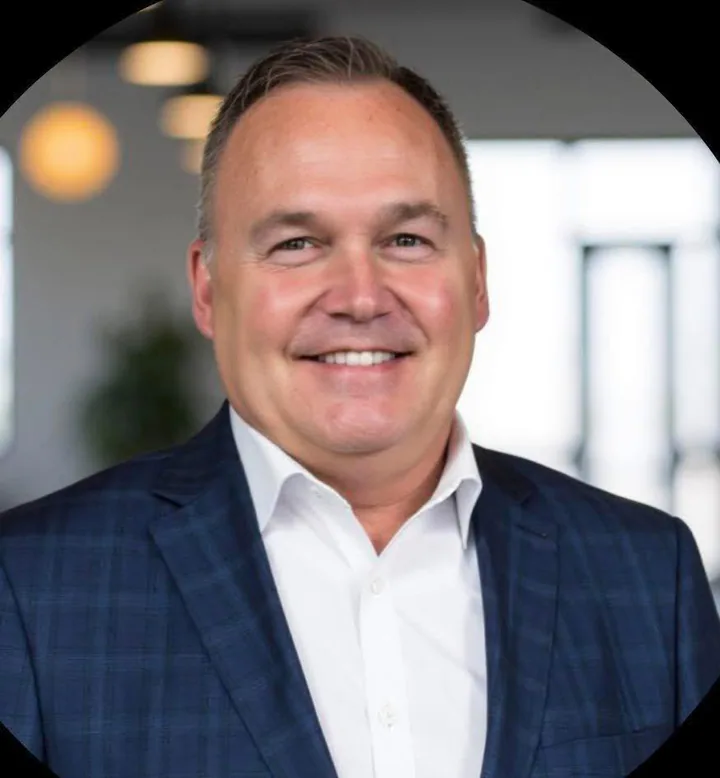
- Office
- Council Member, Wayzata city
- State
- Minnesota
- Status
- On the general ballot
- Election
- Election held Nov 3, 2026
- Result
- Counting
Build a campaign strategy for Adam Elg
About Adam Elg
Experience
- U.S. Bancorp Investments, Inc., Vice President, Senior Practice Management Consultant · 2018 – present
- AchievementInsight, President/Executive Coach · 2016 – 2018
- Ameriprise Financial Services, Inc., Financial Advice Sales Consultant · 2016
- MetLife, Director, Advisor Development and Financial Advisor · 2010 – 2014
- Ameriprise Financial Services, Inc., Practice Transition Manager · 2009 – 2010
Education
- Master's, University of St. Thomas, Organizational Development · 1997
- Bachelor's, Metro State University, Marketing · 1994
Where Elg stands
Campaign site, checked Nov 1, 2026. The campaign's issues page
Property & income tax relief
Taxation & Revenue
Fiscal Sustainability & Smart Revenue: Protecting Wayzata Taxpayers and Local Businesses
- App-Based Paid Parking & Commuter Permits: Implementing app-based paid parking (paired with free passes for residents) and structured fee-based permits for non-resident commuters using prime municipal spaces for extended periods.
- STR Licensing Fees & Lodging Taxes: Establishing mandatory short-term rental licensing fees and local lodging taxes ensures that commercial-style vacation stays directly cover their administrative/enforcement costs while generating new revenue to offset property tax levies.
- Targeted Food and Beverage Sales Tax: Exploring a dedicated food and beverage sales tax tied strictly to defined efforts to lower retail and commercial rents and downtown commercial property taxes.
Fiscal Sustainability & Smart Revenue: Protecting Wayzata Taxpayers and Local Businesses
The city’s recommended preliminary tax levy increase—even at a reduced 6.25%—demands our utmost scrutiny and discipline. We all recognize that municipalities face real inflationary pressures, and investing in core city services and public safety—especially funding the sworn police officers needed to protect our community—is essential.
At the same time, continuing to rely primarily on property taxes places an unsustainable strain on homeowners and our local businesses. Commercial properties shoulder a significant share of our tax base, and we must actively prioritize commercial relief; using alternative revenue to stabilize the local tax burden directly protects the small independent businesses that serve as Wayzata's economic engine.
The long-term answer isn't simply adjusting the levy each year; it’s aggressively diversifying our revenue. Wayzata’s population more than doubles every single day with workers and guests enjoying our restaurants and the Panoway. Modern tools can capture that outside activity and tourist footprint:
By ensuring that revenue captured from regional visitors directly relieves the property tax and rent pressures on our local shop owners and restaurateurs, we can protect our downtown economic engine, offset wear and tear, and maintain the high-quality services our community expects without constantly turning back to the property tax levy.
Housing & Land Use
A Balanced, Common-Sense Permitting Framework for Short-Term Rentals in Wayzata
A balanced, common-sense permitting framework for short-term rentals is far superior to a total ban. An outright prohibition on stays under 30 days simply doesn’t work—it overreaches, infringes upon property rights, and…
A balanced, common-sense permitting framework for short-term rentals is far superior to a total ban. An outright prohibition on stays under 30 days simply doesn’t work—it overreaches, infringes upon property rights, and leads to costly legal battles that drain valuable city resources and taxpayer dollars. Wayzata can welcome visitors who strengthen our community while still firmly protecting the peace, safety, and character of our residential neighborhoods.
The right solution rests on three clear pillars:
3. Enforceable Guardrails & Strict Nuisance Enforcement
- Mandatory Annual Licensing: Every short-term rental must be licensed, safety-inspected, and required to maintain 24/7 local emergency contact information on file with the city.
- Neighborhood Density Caps: To prevent saturation and preserve community fabric, we will cap the total number of permits allowed per block face and geographic area (applied neutrally alongside long-term rental standards).
- Occupancy & Parking Controls: Enforceable limits on overnight guest counts and mandatory off-street parking requirements prevent street congestion and overcrowding.
We do not need a ban to stop bad actors. We can safeguard our neighborhoods by establishing clear operational boundaries and aggressively enforcing existing municipal rules:
By replacing an outright ban with smart regulations, density controls, and lodging taxes, we avoid expensive lawsuits, support our downtown business district, generate new revenue to offset municipal tax levies, and keep our residential neighborhoods safe, quiet, and stable.
- Progressive Fines & Strict Violations: Swift administrative citations for verified complaints—such as noise, trash overflow, or parking violations—ensure that irresponsible hosts pay for the disruption, not their neighbors.
- Permit Revocation: A firm "three-strikes" policy gives the city full authority to suspend or permanently revoke permits for repeat offenders.
Preserving Wayzata’s Character & Community: A Balanced Approach to Housing Affordability
Preserving Wayzata’s Character & Community: A Balanced Approach to Housing Affordability
Preserving Wayzata’s Character & Community: A Balanced Approach to Housing Affordability
Affordability in Wayzata isn't an abstract concept; it goes directly to the heart of who we are as a community. With typical home values exceeding $900,000 and overall housing expenses running 60% above the national average, the financial pressures on our residents are very real. If we want to preserve our city's character, we have to preserve the people who give it character—our teachers, service workers, municipal employees, young families, and seniors living on fixed incomes.
Addressing our housing needs while managing population density doesn't require massive, out-of-scale apartment blocks that overpower our streets. Instead, it calls for a balanced approach rooted in preservation, gentle density, protection of housing stock, and developer accountability.
2. Encourage Gentle Density & Adaptive Reuse
Alongside preservation, we should embrace "gentle density" through sensible zoning updates that blend seamlessly into our existing neighborhoods. Permitting small-scale duplexes, triplexes, or accessory dwelling units n…
Alongside preservation, we should embrace "gentle density" through sensible zoning updates that blend seamlessly into our existing neighborhoods. Permitting small-scale duplexes, triplexes, or accessory dwelling units near downtown and transit corridors expands living options while strictly respecting historic massing, height, and street-facing design. We should also encourage the adaptive reuse of underutilized commercial and office space, creating vibrant, mixed-income homes without altering the architectural fabric of our streets.
Neighborhood Redevelopment and Preservation
Wayzata’s historic neighborhoods and walkable streets are what make this community feel like home, and we can welcome new investment without losing that charm. This isn’t about stopping progress; it’s about guiding grow…
Wayzata’s historic neighborhoods and walkable streets are what make this community feel like home, and we can welcome new investment without losing that charm. This isn’t about stopping progress; it’s about guiding growth with practical tools the city already has at its disposal.
First, we need to strengthen our residential design standards. That means requiring garages to be recessed, side-loaded, or rear-loaded, capping front-facing massing, and encouraging traditional front porches so our streetscapes remain human-scaled.
Second, we should establish Neighborhood Conservation or Historic Districts in our older, lake-adjacent neighborhoods to protect rooflines, setbacks, and mature trees without burdening homeowners with rigid architectural rules.
Finally, by tightening teardown reviews and offering clear design templates for builders, we give new construction a predictable path that fits the rhythm of our community. With thoughtful planning, Wayzata can grow responsibly while keeping the character that makes our city special.
Housing shortage & rents
Housing & Land Use
1. Respect Property Rights & Support Primary Residents
Homeowners have a reasonable right to utilize their property responsibly—a principle the courts have continually reinforced. For many long-time residents, the ability to occasionally rent their primary residence offers…
Homeowners have a reasonable right to utilize their property responsibly—a principle the courts have continually reinforced. For many long-time residents, the ability to occasionally rent their primary residence offers crucial financial flexibility to keep pace with rising property taxes and living costs. By focusing our framework on homesteaded properties, we support true local residents while preventing out-of-state corporate investors from buying up single-family homes to run un-hosted mini-hotels.
1. Preserve Naturally Occurring Affordable Housing
The most practical and cost-effective first step is protecting what already works: our older residential buildings, which serve as the backbone of our naturally occurring affordable housing. By offering low-interest reh…
The most practical and cost-effective first step is protecting what already works: our older residential buildings, which serve as the backbone of our naturally occurring affordable housing. By offering low-interest rehabilitation loans or repair grants, the city can help property owners update aging roofs and mechanical systems without passing drastic rent increases onto long-term tenants.
3. Protect Long-Term Stock from Commercial Conversion
Affordability is directly tied to available long-term inventory. When residential homes and apartments are swallowed up by out-of-state corporate buyers to operate as unhosted short-term rentals, we lose the long-term h…
Affordability is directly tied to available long-term inventory. When residential homes and apartments are swallowed up by out-of-state corporate buyers to operate as unhosted short-term rentals, we lose the long-term housing stock our workforce and families rely on. Implementing smart permitting guardrails and primary-residence requirements keeps our housing inventory serving local residents rather than functioning as mini-hotels.
Professional & Occupational Licensing
Professional & Occupational Licensing
2. Smart Licensing & Dedicated Revenue Capture
Instead of an unworkable ban, a formal permit process keeps the city in control. When visitors stay in Wayzata, they shop in our downtown boutiques, dine on Lake Street, and support local retailers. By establishing a sm…
Instead of an unworkable ban, a formal permit process keeps the city in control. When visitors stay in Wayzata, they shop in our downtown boutiques, dine on Lake Street, and support local retailers. By establishing a smart permitting system, we can capture critical city revenue through annual licensing fees and local lodging taxes that directly fund city services, park maintenance, and public infrastructure—turning visitor activity into tangible financial relief for our local property taxpayers while fully covering administrative and enforcement costs.
Criminal Justice, Firearms & Corrections
Criminal Justice, Firearms & Corrections
Principled Public-Safety
As a resident of Wayzata, I share the community's concerns about loud exhaust systems, modified mufflers, and exhibition driving along Lake Street, particularly during our busy summer months. Sudden bursts of noise disr…
As a resident of Wayzata, I share the community's concerns about loud exhaust systems, modified mufflers, and exhibition driving along Lake Street, particularly during our busy summer months. Sudden bursts of noise disrupt patio dining, startle pedestrians, and impact the peaceful character of our town. However, we must carefully weigh how we choose to address these quality-of-life issues.
While some have suggested deploying Flock cameras to target nuisance noise and traffic violations, I believe we must approach surveillance technology with a high degree of caution. Wayzata is a small, close-knit community where privacy and civil liberties matter deeply. The Wayzata Police Department already works hard to address traffic violations through active patrols, regular stops, and targeted enforcement during peak visitor periods, demonstrating a strong commitment to public safety without relying solely on expanding surveillance infrastructure.
I recognize that automated license plate reader technology has legitimate public safety applications, such as locating missing persons and recovering stolen vehicles. Because of these specific benefits, I am supportive of the current installation of the nine Flock cameras strategically placed in Wayzata.
At the same time, I approach any potential future expansion with caution rather than blanket opposition. Any proposal to add more cameras would need to be met with deep scrutiny regarding its specific intention and location to ensure our privacy and civil liberties are fully protected. Furthermore, discussions around additional installations must carefully weigh the annual costs against other community needs, ensuring those resources wouldn't be better spent on increasing police officer pay or funding additional public safety personnel.
Any future discussion regarding monitoring technology in Wayzata must meet the highest standards of transparency, strict data limits, independent auditing, and clear public consent. Safety and privacy are not mutually exclusive, and maintaining that balance is essential to preserving the trust and freedom that make Wayzata a place we are all proud to call home.
Environment, Energy & Utilities
Environment, Energy & Utilities
Thoughtful Environmental Stewardship Lakefront Care
Wayzata has already demonstrated municipal leadership in environmental stewardship by installing rooftop solar on city buildings, so the next step in establishing Wayzata as an environmentally focused community is exten…
Wayzata has already demonstrated municipal leadership in environmental stewardship by installing rooftop solar on city buildings, so the next step in establishing Wayzata as an environmentally focused community is extending that momentum to our private residential and commercial sectors.
First, Council must actively listen to, consult, and encourage greater involvement from Wayzata’s Energy and Environment Committee. Leaders don't need to have every technical answer alone; we should elevate the hard work of this commission, support their recommendations, and partner with local residents who bring real environmental expertise.
Second, we should actively encourage homeowners and developers to install solar. As technology evolves with lower-profile panels and integrated roof tiles, we can modernize zoning codes, offer expedited reviews, and provide permit fee reductions or density bonuses for projects that incorporate solar and high-efficiency systems.
Third, environmental stewardship here must protect Lake Minnetonka. We should continue advancing Panoway ecological initiatives—like the proposed Eco Park and restoring degraded shoreline into native fringe marshes to naturally filter stormwater and protect water quality.
Finally, we must lead on water conservation and stormwater management to protect our lake from excess runoff, while expanding safe walking and cycling infrastructure to cut commute-related vehicle emissions along our corridors. By partnering with our commissions and community, Wayzata can grow responsibly while setting the benchmark for environmental care.
State Government, Ethics & Administration
State Government, Ethics & Administration
4. Demand Developer Accountability & Smart Incentives
Finally, whenever public incentives like tax increment financing (TIF) or density bonuses are on the table, we must hold developers to clear standards. Any project benefiting from city support should include a meaningfu…
Finally, whenever public incentives like tax increment financing (TIF) or density bonuses are on the table, we must hold developers to clear standards. Any project benefiting from city support should include a meaningful 10 to 20 percent long-term commitment of affordable units for local workforce housing.
By coupling smart incentives with gentle, well-designed infill and protections for our existing housing stock, Wayzata can meet its regional obligations, keep our local workforce rooted, and preserve the charm, stability, and character of our neighborhoods for generations to come.
Roads, bridges & commuter rail
Roads, bridges & commuter rail
Transportation & Motor Vehicles
Wayzata Boulevard Safety and Redevelopment
- Upgrading crosswalks with enhanced signage, lighting, and rectangular rapid-flash beacons at key intersections.
- Adjusting signal timing to give pedestrians more time and visibility.
- Implementing proven traffic-calming tools, such as curb extensions and median refuge islands, to shorten crossing distances and naturally slow vehicles.
Wayzata Boulevard is one of the busiest corridors in our community, and right now, this stretch acts as a high-speed funnel that divides our town, making it treacherous for anyone trying to walk, bike, or cross the street. Many residents have shared concerns about vehicle speeds, difficult crossings, and the challenges pedestrians face during peak traffic hours. As redevelopment planning continues, I am committed to making this corridor safer, more walkable, and more welcoming for everyone who uses it.
Reclaiming this corridor for our residents requires a two-pronged strategy. First, we must boldly advocate to reroute Highway 101 directly onto Highway 12, removing heavy regional cut-through traffic from our local streets and exploring modern infrastructure—such as evaluating a roundabout at Gleason Road and Highway 12, and potentially another at Wayzata Boulevard and Central Avenue—to naturally slow speeds and provide safer crossings.
Second, in partnership with Hennepin County, we must take immediate steps to improve safety along the current boulevard segment. These include:
While some might call a major reroute a long shot, I don’t easily back down from a better solution. When I served on the Highway 3 redesign committee in Northfield, we successfully challenged MnDOT’s conventional highway standards—pushing back on excessive lane widths, oversized shoulders, turn-lane islands, and medians to achieve a narrower, calmer, and substantially safer road for the community.
I will bring that exact same hands-on diligence to MnDOT and Hennepin County on behalf of Wayzata. As a council member, I will push for continued collaboration to advance these vital measures and ensure that future redevelopment aligns with our community’s expectations for a calmer, safer, human-scale corridor.
- Closing sidewalk gaps and improving ADA accessibility to create clearer, more predictable routes for people walking and biking, reducing driver-pedestrian conflicts for families, seniors, and visitors.
Economic & Community Development
Economic & Community Development
Small Business Support
As a former retail owner and co-founder of the Northfield Downtown Development Corporation—now Friends of Downtown Northfield, where I served as executive director to champion local retail—I bring a hands-on, informed p…
As a former retail owner and co-founder of the Northfield Downtown Development Corporation—now Friends of Downtown Northfield, where I served as executive director to champion local retail—I bring a hands-on, informed perspective to this issue. I know the tight margins local merchants face every day. In Wayzata today, the greatest challenges are skyrocketing commercial rents, heavy property taxes, peak seasonal parking pressures, and maintaining consistent foot traffic year-round.
The City Council must be an active, collaborative partner to ensure our storefronts stay occupied by thriving independent businesses rather than sitting vacant.
First, Council should work directly in lockstep with the Wayzata West Metro Chamber of Commerce to align city policies with real merchant needs, coordinate district programming, and leverage county resources like Elevate Hennepin and Open to Business to help entrepreneurs manage startup and lease costs.
Second, we can incentivize landlords through permit fee waivers, tax abatements, or expedited reviews in exchange for below-market rents, local-first leasing, or subdividing large spaces into micro-retail bays that lower the barrier to entry.
Finally, commercial properties shoulder a disproportionate share of our local tax base. By diversifying city revenue through visitor-supported tools like app-based parking and a dedicated food and beverage tax, we can ease the property tax burden on landlords, help stabilize commercial rents, and keep Wayzata a vibrant place for local business.
Quoted from the campaign's website. What a campaign says is weaker evidence than a bill it sponsored or a vote it cast.
Track record
In the candidate's own words
We’re active volunteers at the Wayzata American Legion, where Roger is currently painting a mural. He also serves on the Wayzata Public Arts Commission, bringing his creative eye and community spirit to public art initiatives throughout the city. When we’re not volunteering, we’re usually boating on Lake Minnetonka, working in the yard, exploring estate sales, or enjoying our new screened‑in porch.
I’m Adam — a neighbor who loves art, animals, community, and the feeling of coming home. My husband Roger and I have been together for 39 years, and our life in Wayzata is filled with creativity, service, and a lot of pets. We share our home with three dogs and two cats, all of whom believe the living room sofa belongs to them.
Our mid‑century house has been a labor of love. We’ve renovated it room by room and filled it with paintings and sculptures we’ve collected over the years. It’s our favorite place to unwind — especially on evenings when we’re curled up with a great mystery or supernatural series.
Professionally, I work in financial services focused on advisor development, coaching, and practice management. I’ve spent my career helping advisors build stronger businesses, deepen client relationships, and adopt systems that support long‑term success. That work has shaped how I think about community — especially the importance of thoughtful planning, clear communication, and creating environments where people can thrive.
In the broader community, I serve on the Wayzata Planning Commission and on the Board of Trustees at the Unitarian Universalist Church of Minnetonka. I care about thoughtful development, preserving community character, and making Wayzata a place where people feel connected and welcome.
Wayzata is home — and I’m grateful to be part of it.
Campaign site, checked Nov 1, 2026.
Attention
- News articles, last 30 days
- 0
- Ads seen, last 30 days
- 0
Updated Nov 26, 2026.
Ran against
Official site and accounts
Filing record
The candidacy record
| Status | True from | Known since |
|---|---|---|
| On the general ballot | — | Oct 14, 2026 |
Updated Oct 31, 2026.