
Michelle Nard
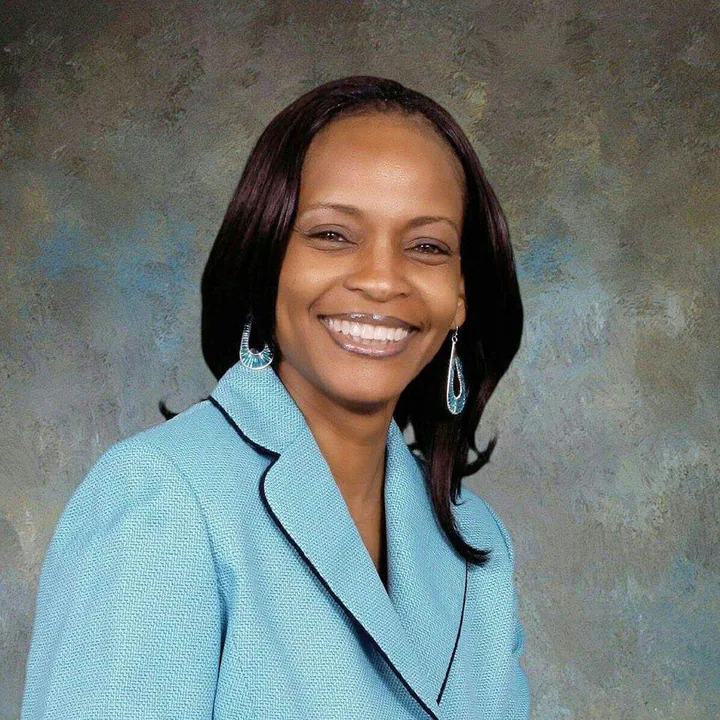
- Office
- State Senator District 10
- State
- Michigan
- Party
- Republican
- Status
- On the general ballot
- Election
- Election held Nov 3, 2026
- Result
- Lost
Build a campaign strategy for Michelle Nard
About Michelle Nard
Experience
- Zhanre Opportunity Enterprise LLC, Founder and Chief Executive Officer · 1991 – present
- Macomb County Commission, Commissioner - District 12 · current
- Asset Acceptance Capital Corporation, Customer Service Representative · 2006 – 2015
- Verizon Wireless, Customer Service Representative · 1998 – 2006
- Guardian National Acceptance Corporation, Customer Service Representative · 1992 – 1998
Education
- Bachelor's, Purdue Global, Social Work · 2020
Where Nard stands
Campaign site, updated Nov 8, 2026. The campaign's issues page
Education
EDUCATION
Issue:
Issue:
Education: The core finding is that Michigan's problem isn't primarily a lack of spending. It's weak and uneven outcomes, shrinking enrollment, chronic absenteeism, and a fragile teacher workforce.
Statewide issues can be seen in student achievement. From 2018 to19 to 2024 to 25, nearly 70% of Michigan districts posted lower reading results and nearly 80% posted lower math results. Third grade reading proficiency hit a record low.
Literacy: The state has moved to mandatory dyslexia screening and research backed literacy instruction by 2027 to 28, with big new spending on science of reading training, roughly $123 million, including LETRS training, literacy coaches, and curriculum incentives.
Funding vs. enrollment: Inflation adjusted funding rose about 10% over the decade while enrollment fell 8%, 1.49M to1.37M students. Buildings, Transportation, Special ED, and Utilities don't shrink just because student counts do. The FY2026 budget carried about $10,300 per pupil, (+$250) but the $19.8B School Aid Fund was down 7% year over year.
Enrollment decline: Enrollment fell between 2014 and 2023 in 73% of districts, a structural squeeze on fixed costs and programs.
Chronic absenteeism: The definition is missing at least 10% of school days. Macomb County ran 42.1% in 2021 to 22, improving to 31.9% in 2022 to 23, still roughly one in three students, and about 60% for students experiencing homelessness.
Teacher shortages: In 2024 to 25, 7,952 teachers left and 7,877 entered the first year since 2020 to 21 that exits outnumbered entries. In the highest poverty districts, over 16.5% of teachers taught out of field (more than double the state average) and those districts were 16 times more likely to rely on emergency credentials.
These are the beginning of many issues pertaining to Education.
Transportation & Motor Vehicles
Transportation & Motor Vehicles
TRANSPORTATION
Issue:
Issue:
Oakland and Macomb share the same underlying problem, aging infrastructure and limited funding but with different pressure points. Oakland's acute issues are freeway/interchange congestion and incomplete transit/first mile access.
Macomb's central challenge is a large road and bridge repair backlog, compounded by major construction, with transit remaining financially and geographically vulnerable. Pavement, bridges, and deferred maintenance.
Macomb estimates $2.6 billion is needed to improve every county road and bridge, Oakland's road commission has identified more than $2 billion in unfunded congestion related county road improvements over 10 years. Agencies are shifting toward preventive maintenance and mix of fixes approaches, since poor conditions raise costs, crashes, and travel unreliability.
Congestion and bottlenecks:
Oakland's I-75/M-59 interchange has short weaving sections, severe peak period turbulence, projected queues, and an average of 109 crashes annually in its influence areas. A Commerce Township intersection handles about 75,000 vehicles daily. Growth can overwhelm interchanges and local arterials even where capacity already exists.
Construction-related disruption:
Oakland's Restore the Reuther work affects I-696/I-75 through 2026. Macomb's $12 million I-94 resurfacing covers 5.4 miles with repeated weekend closures. Long duration lane and ramp closures shift traffic onto already busy parallel roads.
Transit coverage, coordination, and funding:
Oakland is developing a countywide transit roadmap to coordinate providers and expand service; Macomb's SMART network includes fixed route, flex, connector, and demand response service, but parts of northern Macomb have no fixed routes. Residents without cars, older adults, people with disabilities, and workers needing cross county trips face limited or fragmented options.
The broader regional shift is toward preservation, safety, multimodal access, resilience, and more reliable transit rather than simply adding roadway capacity.
Criminal Justice, Firearms & Corrections
Criminal Justice, Firearms & Corrections
CRIMINAL JUSTICE REFORM
Issue:
Issue:
The big picture:
Michigan's reform challenge is no longer “can we lock fewer people up?” Prison population and recidivism are at historic lows. The live questions are sustaining those gains while fixing reentry, behavioral health diversion, corrections staffing, and public safety.
Recidivism:
MDOC reported a 21.0% three year recidivism rate in July 2025, the lowest ever recorded. The FY2026 recommendation included $6.6M for peer recovery coaches, $2M for transitional housing, and $750K for prison education, on the logic that reoffending falls when people leave with housing, treatment, documents, and a job.
Opioid sentencing:
Bipartisan Senate Bills 430 to 432 advanced in October 2025 to make penalties more proportional, tougher on fentanyl and heroin while easing disproportionate penalties for less dangerous substances.
Police practices and corrections workforce:
Bipartisan Bills on police transparency and community trust moved in May 2025, alongside Republican supported measures to boost MDOC hiring and add a pension option for corrections officers.
Expungement:
Public Act 213 of 1965 continues to limit set asides for certain felonies, keeping clean slate eligibility a live debate.
Diversion is working:
Macomb's 2025 jail report records 1,754 diversions 76 mental health and 1,678 substance use placements, saving 256,950 jail bed days and $19.4M in avoided costs.
Jail capacity:
rated design capacity is 1,072 with an average daily population of 941 and 15,567 bookings in 2025. A roughly $229M expansion, including a Central Intake and Assessment Center, is due late 2027 early 2028, which raises real oversight questions on cost, staffing, and whether expansion is paired with alternatives to detention.
Opioid response:
The county is directing opioid settlement funds into treatment and recovery programs.
Elections & Democracy
INCLUSIVE DEMOCRACY
Issue:
Issue:
Inclusive Democracy measures in Michigan have shifted power toward the Secretary of State, produced uneven rules county to county, and added costs and chain of custody risks without proving the security trade off is worth it.
Prop 2 (2022) is the baseline being contested. It added at least nine days of early in person voting (which is found to be convenient for voters), expanded drop boxes, prepaid mail ballot postage, and a permanent absentee voter list (of which I believe needs to be reevaluated and monitored). Republicans now push back mainly on uniformity, cost, administration, and security grounds.
Unequal local rules. In 2023 implementation, clerks could offer more than the nine day minimum, potentially up to 29 days. Critics called that unequal access and excessive procedural discretion for the Secretary of State.
Proof of citizenship. House Republicans passed a documentary proof of citizenship bill on a party line vote in April 2026, centered on evidence like an enhanced REAL ID. Republicans frame it as protecting citizens voting power (of which I agree), opponents say it burdens eligible voters with name mismatches or limited resources.
Absentee accountability and foreign influence. The 2026 GOP agenda adds absentee ballot chain of custody measures and restrictions on foreign national spending in ballot measure campaigns, a shift from access expansion toward integrity and influence concerns.
Inclusive Democracy, as a label.
The proposed Michigan Voting Rights Act was promoted as a comprehensive inclusive democracy measure, but it had not been enacted in the material reviewed, Claims that Michigan already has one should be spoken cautiously.
Health & Human Services
HEALTH
Issue:
Issue:
Health Equity and Racial Disparities
The state tracks this systematically. Michigan's Health Equity Data Project compares Black, Hispanic/Latino, Asian, Middle Eastern/North African, and American Indian/Alaska Native populations against White residents for 2011–2013 vs. 2017–2021, measuring both gap size and direction of change.
Some gaps widened. Black residents saw the largest rise in unintentional injury mortality, 61.3 additional cases per 100,000; Asian up 36.0 and Hispanic/Latino up 25.4. Heart-disease mortality rose for Black, Asian, and Hispanic/Latino residents, stroke mortality rose for Black, American Indian/Alaska Native, and Asian residents.
Some gaps narrowed. Cancer mortality gaps closed for Black, American Indian/Alaska Native, and Asian residents, so progress is real but uneven.
Maternal mortality is the sharpest disparity. From 2016–2020, Black women were 2.2 times as likely as White women to die from pregnancy related causes, 36.5 vs. 16.3 per 100,000 live births. For pregnancy associated deaths, Black Women were at 84.3 vs. 50.3 (1.7×), and American Indian/Alaska Native women at 99.4 (2.0×).
Chronic disease. In 2020, Black residents had higher diabetes prevalence (15.5% vs. 11.7%) and obesity (42.5% vs. 34.7%).
Medicaid quality gaps. The 2024 Medicaid Health Equity Project found Black managed care beneficiaries fared worse than White beneficiaries on 8 of 12 measures, with the biggest gaps in chlamydia screening (20.19 points), postpartum care (12.33), and childhood immunization (10.94).
A data blind spot. The state reports insufficient data for many indicators for the Middle Eastern/North African population, a real limitation on how complete the equity picture is.
District 10
Demographics make equity central here. District 10 has about 273,203 residents: 43.3% Black, 46.2% White, 4.0% Asian, 2.2% Hispanic/Latino, 3.8% multiracial.
Economic conditions track directly to health access. Median household income $56,593 vs. $72,875 statewide, poverty 21.4% vs. 13.2%; per capita income $30,200 vs. $40,735 (about three quarters of the state average), bachelor's degree or higher 27.7% vs. 32.6%.
Local health indicators: About 10% of adults with diabetes, 17% with frequent mental distress, and 48% of households facing high rent burden.
The available district profile lacks racial breakdowns, so these can't be confidently compared to state averages.
What's missing: No complete, current race stratified health outcome dataset for District 10 specifically. Statewide disparity figures are context, not district measurements, worth flagging honestly in any brief.
Policy context
Public Act 653 (2006) directs MDHHS to address racial and ethnic health disparities, monitor health status, diversify the workforce, and develop policy responses.
The Michigan Racial Health Equity Think Tank (MiRHETT) focused 2024 thru 25 strategies on behavioral health, food security, and workforce diversification, plus social care integration, data infrastructure, and equity driven funding reform, treating housing, food, transportation, and economic stability as health interventions.
Quoted from the campaign's website. What a campaign says is weaker evidence than a bill it sponsored or a vote it cast.
Attention
- News articles, last 30 days
- 0
- Ads seen, last 30 days
- 0
Updated Nov 25, 2026.
Ran against
Official site and accounts
Updated Oct 31, 2026.