
Antonio Hayes
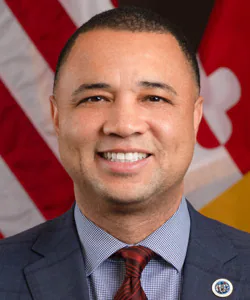
- Office
- State Senator District 40
- State
- Maryland
- Party
- Democratic
- Status
- On the general ballot
- Election
- Election held Nov 3, 2026
- Incumbent
- Sitting legislator · State Senator District 40
- Result
- Won
Build a campaign strategy for Antonio Hayes
About Antonio Hayes
Antonio Lamar Hayes (born December 9, 1977) is an American politician who represents the 40th legislative district of Baltimore in the Maryland Senate. He previously represented the 40th district in the Maryland House of Delegates from 2015 to 2019.
From Wikipedia, read Nov 20, 2026.
Where Hayes stands
Campaign site, updated Nov 12, 2026. The campaign's issues page
Criminal Justice, Firearms & Corrections
Criminal Justice, Firearms & Corrections
Prioritizing Public Safety
Protecting Baltimore City Communities from Violence: Senate Bill 929
Protecting Baltimore City Communities from Violence: Senate Bill 929
Senate Bill 929 targets violent crime afflicting communities by mobilizing resources and crime prevention measures specifically targeting high-crime micro-zones in collaboration with local organizations and State agencies.
Additionally, the bill establishes “End the Violence” P.R.O.T.E.C.T Coordinators to enact community-based crime prevention policies and programs. The passage of SB 929 represents a thoughtful, localized solution to some aspects of neighborhood crime.
Installing Surveillance Systems in Liquor Stores as a Public Safety Measure: Senate Bill 69
Given concerns about illicit activity around liquor stores, Senate Bill 69 alters the hours of operation for stores (Class A-7 licenses) and requires the installment/operation of a digital surveillance system. The bill creates a mechanism for businesses to aid the Baltimore Police Department and increase the safety of their employees by installing cameras that will both deter and help solve the crimes plaguing our city.
Public Safety
- Increased home visits to violent offenders released on parole and probation
- Expanding Safe Streets into the Mayor’s Transformation Zones, and providing the program with increased funding
- The State of Maryland staffing Baltimore’s Juvenile Booking facility so that Baltimore police officers assigned to the facility can be reassigned to patrols
As Assistant Deputy Mayor for Baltimore City, Antonio managed the City’s public safety programs. Under his tenure, Baltimore consistently drove down crime year-after-year, while still reducing the rate of incarceration for its most vulnerable populations. This success led Antonio to be a vocal advocate for results-driven public safety policies…
As Assistant Deputy Mayor for Baltimore City, Antonio managed the City’s public safety programs. Under his tenure, Baltimore consistently drove down crime year-after-year, while still reducing the rate of incarceration for its most vulnerable populations. This success led Antonio to be a vocal advocate for results-driven public safety policies.
Antonio authored a letter to Governor Hogan laying out a comprehensive vision for improved policing in Baltimore that secured support from many of his colleagues in the General Assembly. His vision calls for:
Antonio is also a strong supporter of including civilians on police hearing boards, and creating civilian oversight for community policing in Baltimore, having advocated for each measure in the General Assembly.
- Extending the patrol and crash investigations for State Police further into Baltimore’s main traffic corridors, so Baltimore police can be reassigned to patrols in our neighborhoods
- Utilizing State Police, Parole and Probation, and the Department of Juvenile Services on warrant task forces directed at violent offenses
- Increasing the number of police and frequency of patrols for MTA Police at transportation hubs like Mondawmin Mall, State Center, and Lexington Market
Economic & Community Development
Economic & Community Development
Economic Empowerment
Aiding Hospital Employees Affected by Downsizing: Senate Bill 938
Aiding Hospital Employees Affected by Downsizing: Senate Bill 938
The downsizing of hospitals over the past few years has resulted in the laying off of hundreds of loyal employees, leaving them without work and too often without the necessary resources to find employment elsewhere. Senate Bill 938 seeks to make sure that those who worked for hospitals looking to downsize are covered and can continue to prosper. The passage of SB 938 means that three programs, EARN Maryland, Maryland Business Works, and Maryland Apprenticeship and Training Program (MATP), will have a funding mechanism to aid employees during hospital downsizing.
Creating Greater Opportunity for Minority Business Enterprises: Senate Bill 442
Public-private partnerships (P3s) enable greater private sector participation, expertise, and mitigate risk for state agencies engaged in large infrastructure projects. Senate Bill 442 restores the applicability of Maryland’s Minority Business Enterprise (MBE) program to these P3s.
The passage of SB 442 enables the growth of MBEs in our State by creating positive economic opportunities for both MBEs and State agencies engaged in private-public partnerships.
Encouraging Real Estate Investment and Homeownership in Baltimore City through Equitable Tax Credits: Senate Bill 63
Current credits for property tax are not going to the most underdeveloped parts of the city. This bill builds on current law to ensure that credits for newly constructed dwellings in Baltimore City are being distributed appropriately and equitably by capping the final sales price for homes eligible to receive the credit to $500,000. It also eliminates the requirement that homes have a vacant notice from the City.
Protecting Low-Income Communities from Abusive Check Cashing Business Practices: Senate Bill 939
Individuals who live in poverty should not pay more for cashing checks because they do not have access to registered check cashing businesses or the information to seek redress when they are overcharged.
The purpose of Senate Bill 939 is to ensure that all businesses that offer check cashing services are licensed or registered with the State of Maryland. By requiring all check cashing businesses to be registered, consumers will be better protected from being taken advantage of by currently unregulated check cashing services in our State.
Health & Human Services
Increasing Access to Quality Healthcare
Increasing Access to Medication for Diabetes and HIV/AIDS Patients: Senate Bill 931
Increasing Access to Medication for Diabetes and HIV/AIDS Patients: Senate Bill 931
Some medications are deemed “specialty drugs” based on a variety of factors that increase their distribution costs. When providers deem a drug as “specialty,” consumers often have greater difficulty accessing them.
This excludes these drugs from the definition of "specialty drug" to prevent certain insurers, nonprofit health service plans, and health maintenance organizations from imposing higher co-payment and coinsurance requirements.
Ensuring the Quality of Maryland’s Crisis Centers: Senate Bill 441
Crisis services are an essential component of any comprehensive system of behavioral healthcare. They significantly reduce preventable crises and offer earlier intervention to stabilize them quickly at the lowest level of care appropriate.
The passage of Senate Bill 441 codifies the types of facilities that the Maryland Department of Health may designate as emergency facilities for purposes related to mental health evaluation.
Seniors
Our seniors have led and supported our neighborhoods for decades, which means it’s our turn to give back to them for their years of service. The first step to defending our seniors is combating threats to their quality…
Our seniors have led and supported our neighborhoods for decades, which means it’s our turn to give back to them for their years of service. The first step to defending our seniors is combating threats to their quality of life, like tax sales of their homes over unpaid water bills, sky-rocketing prices for pharmaceuticals, and quality senior housing that allows our elders to live in dignity…
Our seniors have led and supported our neighborhoods for decades, which means it’s our turn to give back to them for their years of service. The first step to defending our seniors is combating threats to their quality of life, like tax sales of their homes over unpaid water bills, sky-rocketing prices for pharmaceuticals, and quality senior housing that allows our elders to live in dignity.
Of course, Antonio has been a leading advocate for Baltimore’s seniors throughout his time in the General Assembly, which includes giving the Attorney General authority to sue drug-companies that price gouge their customers. He has also been a leading advocate for ensuring that Medicaid keeps up with inflation, so that outdated medical payouts don’t jeopardize quality treatment. Antonio’s commitment to seniors also includes improving regulations for the cooperative housing complexes that many seniors rely on.
0 LIKES
Archives:
- 2020 1
- Apr 20, 2020 2020 End of Session Report Apr 20, 2020
- 2018 4
Carlisle Creative Company 2/25/18 Carlisle Creative Company 2/25/18
- Feb 25, 2018 Seniors Feb 25, 2018
- Feb 25, 2018 Education Feb 25, 2018
- Feb 25, 2018 Transit Feb 25, 2018
- Feb 25, 2018 Public Safety Feb 25, 2018
State Budget, Bonds & Finance
2020 Capital Budget and Legislative Bond Initiatives
Under the leadership of House Speaker Adrienne Jones and Senate President Bill Ferguson, we authorized $1,108,114,000 of funds for capital projects in fiscal year 2021, including $4,623,000 in funding for Baltimore City…
Under the leadership of House Speaker Adrienne Jones and Senate President Bill Ferguson, we authorized $1,108,114,000 of funds for capital projects in fiscal year 2021, including $4,623,000 in funding for Baltimore City Community College (BCCC), $7,513,000 for Coppin State University, and $12,000,000 for the Baltimore Regional Neighborhoods Initiative. With unanimous, bipartisan support in the Senate, we also secured $57,700,000 annually over ten years ($577,000,000 in total) for Historically Black Colleges and Universities in Maryland.
This Session, my 40th District colleagues and I sponsored a handful of Legislative Bond Initiatives for organizations in our district to receive funding for capital improvement projects. This year we were able to secure funding for the projects/organizations in the 40th District listed below.
To those with projects that were not selected for sponsorship this Session, please be sure to keep in contact with our office during the interim period so you can be kept informed on when next year’s consideration of Bond Initiatives will take place!
Education
Education
When it comes to Baltimore’s future, our children will always be the most valuable investment we can make. Of course, that investment is made up in large part by properly funding Baltimore City Schools, which the City r…
When it comes to Baltimore’s future, our children will always be the most valuable investment we can make. Of course, that investment is made up in large part by properly funding Baltimore City Schools, which the City relies heavily on the State of Maryland for. Antonio will fight to get City Schools its fair share of funding, and to make sure the Kirwan Commission creates a funding formula that accounts for the higher cost of education the City faces because so many of its students come from under-served communities…
When it comes to Baltimore’s future, our children will always be the most valuable investment we can make. Of course, that investment is made up in large part by properly funding Baltimore City Schools, which the City relies heavily on the State of Maryland for. Antonio will fight to get City Schools its fair share of funding, and to make sure the Kirwan Commission creates a funding formula that accounts for the higher cost of education the City faces because so many of its students come from under-served communities.
Spending our funding properly means looking at proven programs that get results. Expanding Pre-K education to more Baltimore children can significantly reduce long-term achievement gaps between students. Embracing the community school model leads to two-fold benefits, because the model leverages community participation in the school to expand the resources at students’ disposal, while using the school as an anchor for community organizing in the surrounding neighborhoods. As students age, it is important to offer programming for building professional skills that will translate into the job market, which makes youth-employment programs extremely valuable.
Beyond advocating for funding, Antonio will use the office of State Senator to organize anchor institutions around nearby schools that can benefit from the resources they provide. Baltimore is filled with points of strength; we need leaders who will leverage our strengths to support the next generation.
Archives:
- 2020 1
- Apr 20, 2020 2020 End of Session Report Apr 20, 2020
- 2018 4
Carlisle Creative Company 2/25/18 Carlisle Creative Company 2/25/18
- Feb 25, 2018 Seniors Feb 25, 2018
- Feb 25, 2018 Education Feb 25, 2018
- Feb 25, 2018 Transit Feb 25, 2018
- Feb 25, 2018 Public Safety Feb 25, 2018
Transportation & Motor Vehicles
Transportation & Motor Vehicles
Transit
Thousands of 40th District residents depend on public transportation for their everyday needs, but live in communities designed for car-first commuting. Antonio believes that a fair City means a City with equal access t…
Thousands of 40th District residents depend on public transportation for their everyday needs, but live in communities designed for car-first commuting. Antonio believes that a fair City means a City with equal access to opportunity, whether you get there by bus, by bike, by light rail, or by car…
Thousands of 40th District residents depend on public transportation for their everyday needs, but live in communities designed for car-first commuting. Antonio believes that a fair City means a City with equal access to opportunity, whether you get there by bus, by bike, by light rail, or by car.
40th District neighborhoods should be consulted whenever changes are made to MTA bus routes, and the commute times for the new BaltimoreLink program should be measured to see whether they improve travel for our residents. Access to new infrastructure like BikeShare or transportation essentials like properly paved roads should not be limited to a handful of neighborhoods- all of Baltimore deserves to move freely and easily around our City.
Much of the transportation infrastructure in Baltimore is funded and controlled by the State of Maryland, which makes strong leadership in the General Assembly crucial to the future of transportation in Baltimore. Whether exploring signal priority for buses at intersections or adopting Bus Rapid Transit on our main corridors, each requires coordination between City and State agencies. Antonio’s record of leadership at home and in Annapolis positions him to coordinate between those bodies for years to come.
Archives:
- 2020 1
- Apr 20, 2020 2020 End of Session Report Apr 20, 2020
- 2018 4
Carlisle Creative Company 2/25/18 Carlisle Creative Company 2/25/18
- Feb 25, 2018 Seniors Feb 25, 2018
- Feb 25, 2018 Education Feb 25, 2018
- Feb 25, 2018 Transit Feb 25, 2018
- Feb 25, 2018 Public Safety Feb 25, 2018
Quoted from the campaign's website. What a campaign says is weaker evidence than a bill it sponsored or a vote it cast.
Track record
In the candidate's own words
Antonio began his career as a community organizer and went on to serve in key leadership roles, including Assistant Deputy Mayor and serving in the Maryland House of Delegates. He currently serves as Chief of Staff for the Baltimore City Department of Social Services. Throughout his career, his work has consistently focused on public safety, economic development, and improving outcomes for children and families.
Raised in West Baltimore and driven by a commitment to public service, Antonio has spent his career fighting for the people and neighborhoods that make the city strong. From City Hall to the State Senate, Antonio has built a reputation as a leader who understands Baltimore because he’s lived its challenges, celebrated its resilience, and delivered real results for its communities.
First elected to the Maryland Senate in 2018, Senator Hayes is serving his second term representing Maryland’s 40th Legislative District in Baltimore. As Vice Chair of the Senate Finance Committee, he has been a consistent advocate for policies that expand affordability, revitalize neighborhoods, and create opportunity across Baltimore.
Antonio and his wife, Jenny have two children, Antonio and Amaryllis and live in the Ashburton community in West Baltimore.
A proud West Baltimore native, Antonio will continue to fight for equity, accountability, and real progress for the people he serves and the city he loves
Campaign site, updated Nov 12, 2026.
In the Maryland Senate
Committees and subcommittees
- Vice Chair
- Member
- Member
- Member
Offices
- Capitol officeRoom 223, James Senate Office Building 11 Bladen St.Annapolis MD 21401410-841-3656Fax: 410-841-3738
Attention
- News articles, last 30 days
- 3
- Ads seen, last 30 days
- 0
Updated Nov 25, 2026.
Ran against
Official site and accounts
Filing record
The candidacy record
| Status | True from | Known since |
|---|---|---|
| On the primary ballot | — | Nov 12, 2026 |
| On the general ballot | — | Nov 12, 2026 |
Updated Nov 20, 2026.