
Kat Taylor
On the ballot as Kathy Taylor
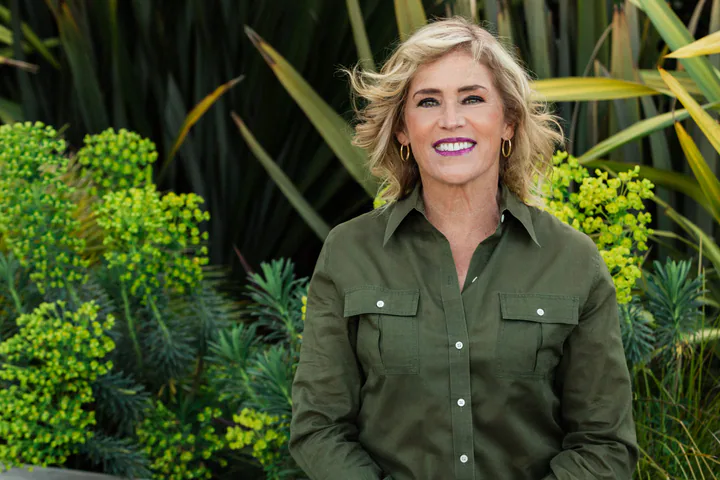
- Office
- Trustee, Washington township
- State
- Indiana
- Party
- Republican
- Status
- On the general ballot
- Election
- Election held Nov 3, 2026
- Result
- Counting
Build a campaign strategy for Kat Taylor
Where Taylor stands
Campaign site, updated Nov 26, 2026. The campaign's issues page
Economic & Community Development
Economic & Community Development
The Good Life Pledge
After decades of discriminatory lending, denial of capital access, attacks from entrenched racist systems, and devastating environmental pollution, Black and Brown communities need new access to productive capital that…
After decades of discriminatory lending, denial of capital access, attacks from entrenched racist systems, and devastating environmental pollution, Black and Brown communities need new access to productive capital that empowers control and ownership of assets. It’s time to return power – wealth, income, control – back to those from whom it has been taken. Trust is central. I pledge to shift a third of all the assets under my control to community stewardship, ownership, and control.
Learn more about the Good Life Pledge so that everyone can live the Good Life.
Fostering Equitable Community-Led Development
The Good Life Pledge
The Good Life Pledge
Storytelling for Justice
ReGenesis Institute
The Giving Pledge
Agriculture, Food & Animals
Growing the Table
Connecting underrepresented farmers with food insecure communities.
Connecting underrepresented farmers with food insecure communities.
Kat and the TomKat Ranch Educational Foundation, have partnered with California agencies and the philanthropic community to raise millions of dollars to help small farmers become mini food banks and to facilitate relationships between diverse small farms and local markets to meet the skyrocketing rates of food insecurity across the state. This partnership is called Growing the Table.
Growing the Table purchases boxes of fresh produce grown by diverse local farms, and distributes them for free to high-need families and individuals. The program pays small, diverse farmers a wholesale price for their produce during a time of unseen market insecurity for farmers. This produce is beautiful, often organic, and regeneratively grown, and can teach people who typically do not have access to such food about the benefits of healthy eating. Food can be a great equalizer. In Growing the Table, food is distributed through a network of community-based organizations, food banks, and non-traditional sites.
Growing the Table has distributed over 50,000 boxes of fresh produce, tens of thousands of freshly prepared meals, and paid small, diverse local farmers over a million dollars for their produce. This is only the beginning. The network cultivated through Growing the Table strengthens local agriculture partnerships, helps farms stay afloat during economic downturns, facilitates economic development, and promotes healthier diets.
Learn more about Growing the Table.
Regenerative Agriculture & Healthy Soils
When soils are healthy, our planet and people can begin to recover.
When soils are healthy, our planet and people can begin to recover.
In order to make our agricultural system work for the planet and people, it must change. Kat believes harmful agricultural methods are at the root of many human health pandemics like obesity and diabetes, while at the same time many of the nation’s children and young students suffer from food insecurity and hunger. This is why it is paramount to Kat’s goals to work to grow a regenerative food system that equitably improves local economies, builds on soil fertility, restores biodiversity, enables water quality to flourish, and helps to achieve climate stability by restoring carbon and other nutrients to the soil.
California Food for California Kids
Building capacity and commitment of public school districts to provide all students with fresh, locally grown food.
Building capacity and commitment of public school districts to provide all students with fresh, locally grown food.
In 2010, Kat began a partnership with the Center for Ecoliteracy, a nonprofit that advances the teaching and modeling of sustainable practices in K–12 schools. The Center for Ecoliteracy’s California Food for California Kids® initiative builds the capacity of public school districts to provide students with fresh, locally-grown food and reinforce connections between the classroom, cafeteria, and garden. With a network of over 100 public school districts, California Food for California Kids advances practical solutions that transform school food systems and how students learn about the food they eat.
In 2021, the Center for Ecoliteracy, along with the California Association of Food Banks, NextGen California, TomKat Ranch, and the Office of Kat Taylor, co-sponsored the Free School Meals for All Act and successfully advocated for California to become the first state to adopt universal school meals.
Financing the Future of Regenerative Agriculture
New Visions for Agricultural Finance
New Visions for Agricultural Finance
America’s current agricultural lending system is designed to favor large-scale commodity crop operations, creating a financial crisis for small farms across the nation. Larger loans are prioritized over smaller ones, and relationship-based lending has been replaced by a narrow set of qualifying criteria. As a result, small farmers and ranchers are being left behind. This system, known as Farm Credit, has evolved into a taxpayer-funded subsidy for large-scale commodity crops, including corn, soybeans, wheat, and rice. Annually, approximately 90 percent of all crop insurance payments, amounting to tens of billions of dollars, go to the largest 15 percent of farms. Meanwhile, smaller, regenerative, and organic farms and ranches are typically excluded from crucial risk management programs like crop insurance and other subsidies.
Farms transitioning to regenerative agriculture enhances the long-term productivity and viability of America’s lands and soils. These practices make farms more resilient to climate change and worsening crop losses. Regenerative practices aren’t just better for the planet—they can also be more profitable. But… the broad adoption of regenerative agriculture will continue to struggle without a robust financial ecosystem comparable to what is available for conventional agriculture.
By expanding access to lower-cost, flexible capital from lenders outside the traditional Farm Credit system, we can demonstrate the viability, profitability, and reliability of small producers under non-extractive lending conditions. At OKT, our thesis for change is simple: through courageous investment in innovative alternative lenders who champion the needs of small American farmers, the backbone of our local agricultural economies, we can transform agricultural finance together.
If you’re interested in supporting farmers’ access to less-extractive capital, the following pioneering organizations have been identified as better-serving small American farmers.
Akiptan is a Native American Community Development Financial Institution (CDFI) that provides loans and technical assistance for startups, operating costs, and ownership to those in Native Agriculture. Additionally, they offer alternative loan repayment options, such as interest-only payments for several years before paying the principal, decreasing initial costs, and freeing up capital for immediate growth.
California FarmLink is a CDFI non-profit business lender, dedicated to supporting farmers, ranchers, and fishers. They offer fair and flexible loans without minimum credit score requirements and accommodate people with challenging credit histories or minimal credit, ensuring that financial services are accessible to those traditionally underserved. California Farmlink also supports first-time borrowers with technical assistance and provides discounted rates to borrowers who complete their business training courses.
Dirt Capital Partners invests in opportunities that deliver across the four themes of its impact framework: ecological stewardship, farmer equity, community benefits, and field building. Dirt uses its impact framework to consider new investments and allocate its resources, weighing a project’s impact and financial return together. Dirt Capital Partners seeks to achieve these outcomes across their portfolio, and each project individually does not need to address all impact outcomes.
Fractal invests alongside farmers as a minority partner in their farmland, helping them unlock equity to finance growth while keeping majority ownership, title, and operational control. Using our technology platform, we provide fair, transparent farmland valuations that align farmer and investor interests around economic and regenerative outcomes. Farmers can buy out Fractal after two years or choose to roll over the investment at the end of a 10-year term.
Grounded Capital is a private equity firm pursuing a different model of capitalism, investing long-term capital primarily in farms, ranches and established, mission-driven food companies. The firm partners with farmers and companies that operate from a place of integrity and can serve a role in building a more regenerative food system from soil to consumer. Based in San Francisco, Grounded manages investments that include equity and debt through its funds and separately managed accounts.
Iroquois Valley® provides capital to organic, regenerative, and transitioning farmers across the United States through long-term leases and mortgages. Structured as a real estate investment trust (REIT), a public benefit corporation, and a B Corp, we offer impact-driven investors the opportunity to finance the transformation of our agricultural system in partnership with farmers. Since our founding in 2007, we have directed over $125 million in investments into transitioning over 35,000 acres of organic agriculture. Our goal is to make organic, regenerative agriculture the norm, not the exception, to benefit the health of the soil and of future generations.
Mad Capital is a financial services company that supports regenerative and organic farmers. Their main focus is providing creative capital solutions that help farmers transition away from conventional, extractive agriculture and into regenerative systems with a strong focus on holistically managing livestock and regenerative organic systems. Mad Capital focuses on private credit, including mortgages, operating loans, transition loans, equipment and infrastructure financing tailored to the unique realities of regenerative and organic farming (where cash flows and risk profiles look different from conventional farming).
Potlikker Capital is a nationally focused charitable loan fund advancing racial and climate justice through access to capital, capacity, and connection. Potlikker partners with clusters of underserved food producer and processor communities across the country to strengthen land security, market power, and governance. Their approach at the individual, community, and systems levels aims to help create the conditions for resilience, enterprise sustainability, and a more equitable food system.
Steward Regenerative Capital is a portfolio of secured loans made to a diverse collection of regenerative farms, ranches, fisheries, and food producers. Steward provides short-term, direct-to-project, bridge loans, giving regenerative farms swift access to the funds they need to keep growing. Through Steward, lenders can support regenerative agriculture operations while receiving a fixed 6.50% annual interest rate, paid monthly.
Walden Mutual Bank enables anyone to make positive and lasting change in the ecosystems that sustain us – beginning with food. They accept deposits from individuals, businesses, and non-profits who want to make an impact with their dollars. They lend those funds to sustainability-oriented organizations, with special focus on farms and food businesses. The word “mutual” in their name means cooperative, as they’re governed by their depositors, and funded by those with a bias towards the long-term – engineered to endure the test of time.
This list is provided solely for informational purposes and does not constitute an endorsement or recommendation by the Office of Kat Taylor.
Cultivating Resilient & Diverse Food Systems
Agricultural Platform Collective
Agricultural Platform Collective
California Food for California Kids
Financing the Future of Regenerative Agriculture
Freshly Prepared School Meals for All
Regenerative Agriculture & Healthy Soils
TomKat Ranch & TomKat Ranch Educational Foundation
Growing the Table
Education
Freshly Prepared School Meals for All
Advocating for increased access to freshly prepared, California-grown school meals.
Advocating for increased access to freshly prepared, California-grown school meals.
Kat advocates for state and federal policies to ensure that all children have consistent access to nourishing, culturally relevant school meals in schools.
In June 2021 Governor Gavin Newsom signed a budget that included funding to provide school meals for all California students during a time when childhood hunger has soared to historic rates due to the pandemic and economic depression. The Office of Kat Taylor was a stalwart partner and sponsor, leading the coalition of over 200 organizations supporting Sen. Skinner’s bold push to make free meals available for all school-age children in CA. Thanks to these efforts, California was the first state in the nation to provide universal school meals to all of its k-12 public school students. Now, with a $2 billion state investment in school food infrastructure, staff training, and more freshly prepared, California-grown school meals, the coalition is working to ensure the successful implementation of School Meals For All.
Learn more at Schoolmealsforall.org
Consumer Protection & Commerce
Consumer Protection & Commerce
Changing the Financial System For Good
Beneficial State Bank & Foundation
Beneficial State Bank & Foundation
Consumer Financial Protections
Donor Advised Funds & Charitable Giving
Radicle Impact
Consumer Financial Protections
Empowering Californians to take control of their financial futures.
Empowering Californians to take control of their financial futures.
Kat is dedicated to strengthening consumer protections, driving statewide efforts to restructure and revamp California’s Department of Business Oversight (DBO) into the Department of Financial Protection and Innovation (DFPI). She fought alongside consumer finance advocates like Richard Cordray, former federal director of the Consumer Financial Protection Bureau (CFPB), to establish the California Consumer Financial Protection Law.
No response to the COVID-19 pandemic’s economic fallout is complete or comprehensive without protecting our most vulnerable populations from financial predators who keep families and individuals locked in spiraling cycles of poverty and debt. California, the fifth-largest economy in the world, requires a strong financial regulator that will protect its people and enable all to build wealth and equity. We now have that regulator.
The DFPI will ensure that vulnerable Californians have an ally in their corner against financial predators as economic uncertainty and predatory lending skyrocket in the aftermath of the pandemic.
In September 2020, the California Student Borrower Bill of Rights (AB 376) was signed into law, as part of a package of consumer protection legislation. Kat was an integral supporter of this legislative package of bills, which included establishing the Department of Financial Protection and Innovation (AB1864). Aligned with Kat and the bank’s priorities of keeping harmful money out of all elements of the financial system, The Student Borrower Bill of Rights gave the DFPI the ability to regulate student loan servicers who were previously exempted from California’s student loan servicer licensing law. Protecting students from predatory high-interest rate loans, and providing them the means to protect themselves legally, was a huge step in the right direction for ensuring students of all ages have a chance at economic success and financial stability.
Related Legislative Materials
- Lawmakers Pass DFPI BILL
- DFPI Issue Brief One-Pager
- AB 376 (Student Loan Servicing)
Environment, Energy & Utilities
Environment, Energy & Utilities
TomKat Ranch & TomKat Ranch Educational Foundation
Using working lands to restore our soils and our planet.
Using working lands to restore our soils and our planet.
Kat is co-founder of TomKat Ranch, a 1,800 acre working cattle ranch, which raises grass-finished livestock with the high standards of humane treatment and sustainable practices. TKR sells its 100% certified grass-fed beef through its marketing label, LeftCoast GrassFed. LeftCoast GrassFed beef is sold to the Central Coast community, providing a healthy, local protein source. LeftCoast GrassFed is also donated to Puente de la Costa Sur for their monthly food drives. The primary purpose of all activities on TomKat Ranch is to restore healthy living soil systems to re-sequester carbon, support biodiversity, generate a product healthy for its consumers with food security for all, retain and restore water and water quality, and restore the resiliency of our rural economies.
Governor Newsom’s recent executive order N-82-20 outlined a strong plan to use California’s working and conservation lands as part of a climate solution that promotes biodiversity and is a strong foothold in support of the practices that the TomKat Ranch Educational Foundation (TKREF) has been studying and advocating for over the past several years. The Office of Kat Taylor and TKREF are working together, and with many other stakeholders who acknowledge the deep co-benefits of regenerative land management, to provide viable policy solutions and expertise that will help to address the issues of biodiversity, climate mitigation, and management of working lands laid out in the Executive Order.
California can incentivize farmers and ranchers to transition to agricultural management practices that have a multitude of benefits to farms, local economies, and society as a whole. Regenerative practices on agricultural lands can improve crop yields, help pest and disease management, increase water infiltration and retention, and resilience to extreme weather such as flood, fire, and drought. These practices can also enhance public health, improve water and air quality, increase pollinator and wildlife habitat, promote biodiversity, and significantly mitigate climate change.
Insurance & Financial Services
Insurance & Financial Services
Beneficial State Bank & Beneficial State Foundation
A just economy requires a better way of banking.
A just economy requires a better way of banking.
On the eve of the great recession, Kat co-founded, with her husband Tom Steyer, a new kind of bank in Oakland, California.
Dedicated to helping people and protecting the planet while thriving as a business, Beneficial State Bank helped inspire a growing movement of ventures adopting a triple-bottom-line approach. The bank now operates across California, Oregon, and Washington. Today, Kat serves as the Board Chair of the bank, which is both a Community Development Financial Institution and a certified B Corporation.
Beneficial State Bank has an unusual nonprofit ownership structure, with a mission to build prosperity in our communities through beneficial banking services delivered in an economically and environmentally sustainable manner. During the bank’s inception, Kat and Tom transferred their economic rights to the Beneficial State Foundation, freeing up the bank to optimize its social and environmental impact rather than maximize profits. Continuously learning from what works in the field, Beneficial State Foundation’s mission is to change the banking system for good.
Beneficial State’s mission targets at least 75% of both loans and loan dollars to impact endeavors, businesses, nonprofits, and individuals who are producing sustainable and socially just goods and services. The other 25% of lending cannot do harm or undermine the bank’s mission. Beneficial State is radically transparent and regularly publishes third-party audited, data-driven metrics as evidenced by its Annual Impact Reports.
Beneficial State has been honored with the “Best for the World” B Corp designation for creating extraordinary positive impact as a business by an independent, comprehensive assessment administered by the nonprofit B Lab.
Quoted from the campaign's website. What a campaign says is weaker evidence than a bill it sponsored or a vote it cast.
Track record
In the candidate's own words
Like so many young Americans in the 1960s, Kat vividly remembers the assassinations of Reverend Martin Luther King, Jr., President John F. Kennedy, Senator Robert Kennedy, and Malcolm X. The country was in the midst of a fight to obtain justice and equality for all of its people, as it still is today. As someone fortunate enough not to be deprived of the American dream based on bigotry and brutality, Kat is committed to being an ally against the moral injustices and exploitative economic systems which undermine what our American society could truly be – a Beloved Community for all people.
Over hundreds of years, the powerful have normalized attacks and oppression against people of color, the poor, and our planet. Slavery, environmental destruction, redlining, police brutality, and disinvestment are just some of the tools of institutional racism. This institutional harm will not change and will not stop ripping away any chance of prosperity for so many unless we change it. Today we all have an obligation and a role to play in helping to tear out injustice at its root.
In partnership with communities across the United States, Kat works in service of restoring social, racial, and gender justice and environmental well-being for an equitable and inclusive world.
Campaign site, updated Nov 26, 2026.
Attention
- News articles, last 30 days
- 0
- Ads seen, last 30 days
- 0
Updated Nov 26, 2026.
Filing record
The candidacy record
| Status | True from | Known since |
|---|---|---|
| On the general ballot | — | Nov 14, 2026 |
Updated Nov 26, 2026.