
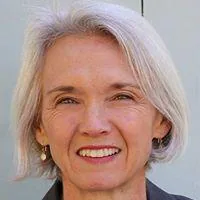
Maria Horn
- Office
- State Representative District 64
- State
- Connecticut
- Party
- Democratic · also on the Working Families and Independent Party lines
- Status
- Nominee
- Election
- Election held Nov 3, 2026
- Incumbent
- Sitting legislator · State Representative District 64
- Result
- Counting
Build a campaign strategy for Maria Horn
About Maria Horn
Maria Horn (born c. 1964) is an American attorney and politician. A Democrat, she currently represents Connecticut's 64th assembly district in the Connecticut House of Representatives. The district consists of the entire towns of Canaan, Cornwall, Kent, Norfolk, North Canaan, Sharon, Salisbury, Washington and, the southern part of Goshen.
From Wikipedia, read Nov 20, 2026.
Experience
- Connecticut House of Representatives, State Representative · 2019 – present
- Board of Trustees of the Indian Mountain School, Trustee · 2013 – 2019
- U.S. Attorney’s Office - Southern District of New York, Assistant Attorney - Criminal Division · 1995 – 2000
- Debevoise & Plimpton, Law Clerk · 1993 – 1994
- JP Morgan & Co., Corporate Finance Officer · 1986 – 1990
Education
- JD, University of Chicago · 1993
- Bachelor's, Princeton University, English Language and Literature · 1986
- High School Diploma, Hathaway Brown School · 1982
Where Horn stands
Campaign site, updated Nov 16, 2026. The campaign's issues page
Courts & Civil Law
Steady Leadership in Stormy Seas
We are living through a time of extraordinary challenges. The global pandemic threatened everyone’s health and financial security, and has re-ordered the economy and changed the labor market in ways that are still becom…
We are living through a time of extraordinary challenges. The global pandemic threatened everyone’s health and financial security, and has re-ordered the economy and changed the labor market in ways that are still becoming clear.
On top of that, in the past months we have watched a reactionary Supreme Court eliminate or threaten our rights under a pinched interpretation of the US Constitution that insists on taking us back to a time when women had few legal rights, racial discrimination and segregation were common practice, and the LGBT community was regularly persecuted by the state. Rights that aren’t expressly spelled out in the US Constitution (a category that includes the right to vote) are threatened with erasure, even when they have been recognized for half a century or more.
The court has throttled the federal government’s ability to tackle climate change, an existential and urgent challenge. And a case they have agreed to take up next year takes direct aim at democracy itself, potentially enabling further politicization of vote-counting in the states.
All of which makes it clear how important state and local government is, and, in particular, how important Connecticut’s legislature has been to protecting our rights.
Stable, well-functioning state government proved itself as a vital bulwark against the chaos sowed by the federal government during the pandemic, and now it provides some protection against a severe rightward turn in the Supreme Court.
The times call for steady leadership, communication that is accurate, timely and helpful, and a full-time commitment to the needs of our region.
My style of leadership is to make connections, not exploit divisions.
An essential part of my job, especially now, is keeping constituents informed, regardless of whether the legislature is in session. Since my term began, every week I have sent a video report and email newsletter to constituents, making them available on my website and through social media. During the height of the pandemic, when information was changing rapidly, I emailed the newsletter three times each week.
There will be tough conversations ahead and the Northwest Corner needs to have a seat at that table where the decisions get made. I have forged strong relationships with Connecticut’s legislative leadership and government officials in Hartford that have earned me that seat, reflected by my position as House Chair of the Public Safety & Security Committee in my second term.
I look forward to continuing to be a strong voice for the Northwest Corner as we chart our course into the future.
Criminal Justice, Firearms & Corrections
Criminal Justice, Firearms & Corrections
Criminal Justice & Public Safety
My own interest in criminal justice and public safety traces back to my time as a federal prosecutor, when I had an opportunity to work with many dedicated law enforcement agents. I saw firsthand both how law enforcemen…
My own interest in criminal justice and public safety traces back to my time as a federal prosecutor, when I had an opportunity to work with many dedicated law enforcement agents. I saw firsthand both how law enforcement could make communities safer and how the system often has a disparate racial impact. It is that background and experience that led me to be asked to chair the Public Safety & Security Committee.
Having brought my own experience to conversations both with local and statewide police leadership and long-time racial justice activists in the legislature, I am proud to have helped shape legislation in this area, including a significant bill passed in a July 2020 special legislative session that will begin to address the disparate impact our policing methods have had on communities of color, through increased accountability, recruitment of more minority officers, improved and increased training, and an expansion of resources available to police officers such as social workers and other mental health professionals.
In the past year, the committee I chair introduced and passed legislation creating a Hate Crimes Investigation Unit, streamlining data collection, reporting, and information sharing. We extended employment protections to police officers that seek and receive mental health care services. We funded training and resources for law enforcement to address community health crises.
We also responded to juvenile crime, auto thefts, and pandemic-related crime by improving law enforcement’s access to relevant information and training, and creating job training and engagement opportunities for young adults in a bipartisan bill.
Protecting public safety also means continuing to enhance gun safety in Connecticut. In 2019, I supported legislation to strengthen safe gun-storage laws and ban ghost guns. In 2021, we strengthened Connecticut’s “Extreme Risk Protection Order” (or ERPO) laws. These laws save lives by creating a legal mechanism, with due process protections, for anyone to warn the police about a person they believe is at risk of imminent harm to themselves or others and who may have access to firearms. If police find a risk of imminent harm, they can ask a judge to issue a “risk warrant” allowing firearms to be removed. The legislation allows family members or medical professionals to approach a court directly, and will prevent firearm purchases by those under ERPOs as well.
Elections & Democracy
Elections
Connecticut has some of the most restrictive voting laws in the country. It limits voting to a single day and restricts access to absentee ballots to those with a qualified “excuse.” Moreover, we have enshrined these re…
Connecticut has some of the most restrictive voting laws in the country. It limits voting to a single day and restricts access to absentee ballots to those with a qualified “excuse.” Moreover, we have enshrined these restrictions in our state constitution, making them cumbersome to change. But that process of amending our constitution is now well under way.
In 2019 and again in 2021, we passed legislation calling for an amendment to our state constitution to allow for early voting, and now the question will appear on your ballot in November 2022.
We need to do the same for no-excuse absentee ballots, allowing people to vote by mail as so many did successfully during the height of the pandemic in 2020. Voting by mail, with appropriate safeguards, is safe and secure. It worked well for Connecticut in the pandemic, and several states have been using it for years. A recent study looking at more than 14 million votes cast by mail found only 372 potentially fraudulent votes, or 0.0025 percent. Current technology enables us to make this process even more secure.
In 2021, we passed legislation calling for a constitutional amendment to allow for no-excuse absentee ballots, the first step in the process. We will need to pass it again in the upcoming 2023-24 term in order to put it on your ballot in 2024, and I look forward to advocating for that resolution.
Abortion access & reproductive freedom
Abortion access & reproductive freedom
Health & Human Services
Healthcare
- Reined in the costs of insulin and related supplies by capping costs at $150 per month - we were the first state in the country to do that.
- Expanded access to telehealth, a critical resource extended during the pandemic that was so successful we have made it a permanent part of healthcare, increasing access to a wide range of medical professionals by video or telephone-only platforms.
- Passed legislation that expanded Medicaid coverage, protected those with pre-existing conditions, and ensured that insurance companies cover mental as well as physical health needs.
The COVID-19 pandemic exposed glaring weaknesses in our healthcare system. It has claimed more than 11,000 souls in Connecticut, strained our ability to adequately protect our healthcare workers, exacerbated a mental health crisis, and upended everyone’s daily lives.
Tackling these weaknesses must be a priority. That starts with ensuring that everyone has access to high quality, affordable care. As I’ve learned from fighting for a “public option” in Connecticut -- that would allow small businesses and nonprofits to buy into the same insurance system that state employees benefit from – entrenched interests make this a tall order. I pledge to continue that fight.
As part of the right to increased access to healthcare in our rural district, I’m proud to have procured $3 million in bond funding to construct a new health center in North Canaan that will provide primary and mental health care for all residents, regardless of ability to pay. Construction is scheduled to begin this fall. I am fighting to protect Sharon Hospital from cuts being proposed by its owner, Nuvance Health. I am working with state officials, hospital executives, doctors, nurses, and community members to find a sustainable financial path for the hospital so that vital services including labor & delivery, after-hours surgery, and the intensive care unit will continue to be available to all of us.
During my time in office, we’ve tackled several important health issues:
In 2022, we:
We also continued Connecticut’s leadership in protecting access to reproductive healthcare, at a time when access to care is disappearing throughout the country after the Supreme Court’s erasure in Dobbs of a woman’s right to exercise autonomy over her own reproductive healthcare decisions. Connecticut remains a safe haven for an individual’s right to choose. In 2022, we set the standard in the nation on reproductive rights by bolstering and establishing protections both for those seeking abortions and those who provide such services.
- Strengthened the Certificate of Need process that regulates healthcare systems, helping increase access to healthcare facilities throughout the state.
- Established healthcare benchmarking, collecting data on what we spend on healthcare for the first time. This data will help create a road map to help lower healthcare cost growth.
- Made a significant investment in our childrens’ mental health, by increasing funding for infant and toddler care, increasing pay for childcare workers, assisting local childcare facilities with capital costs, providing grants to local schools to hire support staff (including in the areas of mental health such as social workers, psychologists, and counselors), funded expansions of school-based health centers, and expanded a new 24/7 emergency mental health response hotline.
- We expanded eligibility to perform abortion care to include advanced nurse practitioners, nurse midwives, and physician assistants.
- We blocked Texas and other aggressive states from targeting Connecticut patients, doctors, and advocates.
- We protected individuals from extradition to other states for seeking, providing, or assisting others in obtaining reproductive healthcare that is legal in Connecticut.
State Budget, Bonds & Finance
Fiscal Stability and Economic Vibrancy
When I was elected in 2018, it was clear Connecticut had work to do to get its fiscal house in order. Throughout my four years in office, I have worked on and supported the tough legislation that got us to where we are…
When I was elected in 2018, it was clear Connecticut had work to do to get its fiscal house in order. Throughout my four years in office, I have worked on and supported the tough legislation that got us to where we are today, including two biennial budgets, balanced and passed on time, and a Rainy Day Fund that has exceeded its legal limits of just over $3 billion, allowing us to make significant payments toward our pension liabilities.
One of our challenges in Connecticut is high levels of income inequality: all of the economic benefits from the last recovery went to the top income bracket. The pandemic has not been even-handed, either, with economically vulnerable communities hit much harder than others. As we craft future budgets, and rebuild our economy post-pandemic, we must create structures that make it possible for all of us to participate in that rebuilt economy. That means building the framework to create good, stable jobs, and ensuring access to healthcare, to a quality education, and to affordable housing.
Climate change & clean energy
Environment, Energy & Utilities
Environmental Protection
The environment is part of our cultural heritage in the Northwest Corner. It’s what connects many of us to this region. Our cleaner air and water are also economic assets that many local businesses and farms rely upon t…
The environment is part of our cultural heritage in the Northwest Corner. It’s what connects many of us to this region. Our cleaner air and water are also economic assets that many local businesses and farms rely upon to survive. Our parks, protected lands and state forests bring much-needed tourist dollars to the Northwest Corner and have provided a sanctuary for us.
A healthy environment is crucial to our own health. Often, the very ones who benefit most from activities that pollute and degrade the air, the land, and the water are the least likely to bear the burdens that result. Once done, that harm is hard and sometimes impossible to repair. For these reasons, it is the responsibility of our government to step in and protect our environment for the common good.
The recent Supreme Court decision in West Virginia vs. the Environmental Protection Agency severely constricted the federal government’s ability to act in this area, making it more clear than ever that state action is necessary to protect clean air, clean water, open space, and family farms.
I support legislation that will attempt to slow climate change by speeding up the shift to renewable energy and looking at structural changes such as not building more gas pipelines and tightening restrictions on leakage from those pipelines.
In 2022, we passed the Connecticut Clean Air Act, speeding up the timeline for the electrification of the state fleet of vehicles, making it easier for renters and condo owners to install electric chargers, exempting electric charging stations from property tax assessments, and incentivizing school districts to use electric school buses. We set a goal of reaching zero greenhouse gas emissions from electricity supplied to you by 2040, and expanded financing to develop zero-emission vehicle infrastructure, build more solar power and fuel cells, and reinforce our electric grid.
We also invested in sustainable farming and open space, by making climate-smart farming and forestry practices more financially accessible, and preserving approximately 1,900 acres of land this year.
In 2021, we updated the state’s bottle bill, designed to increase recycling of glass and plastic containers, reduce costs for municipalities, and support redemption centers and the people they employ throughout the region.
We face a serious issue in how our towns will deal with solid waste moving forward as our regional waste-processing plant (known as “MIRA”) closed in July. The plant is now trucking waste to other places for disposal as it searches for other solutions, which should include both waste reduction strategies and investment in alternative strategies such anaerobic digestion.
Technology, Data & Telecom
Connectivity
Our region of the state has some of the biggest deficits in terms of access to high-speed internet. The pandemic laid bare the long-term consequences of that, as students were suddenly forced to use distance learning, a…
Our region of the state has some of the biggest deficits in terms of access to high-speed internet. The pandemic laid bare the long-term consequences of that, as students were suddenly forced to use distance learning, adults worked from home, and many sought health care using telehealth services. Remote work and telehealth are here to stay, particularly in our region, and for the Northwest Corner to thrive in the decades ahead, we must invest in our digital infrastructure.
The federal government has dedicated resources to investing in rural broadband, and thanks to legislation I worked on in 2021, the state has created a program to allocate those resources. The process of mapping the need throughout the state is ongoing, and it will be critical in the months ahead to make sure that the towns of the Northwest Corner are positioned to take advantage of these resources as they become available.
Environment, Energy & Utilities
Environment, Energy & Utilities
Energy
Connecticut consumers pay the highest electricity rates in the continental United States. In 2020, Tropical Storm Isaias underscored the failures of Eversource management to meet our basic needs, leaving vulnerable resi…
Connecticut consumers pay the highest electricity rates in the continental United States. In 2020, Tropical Storm Isaias underscored the failures of Eversource management to meet our basic needs, leaving vulnerable residents and critical infrastructure at risk.
In response, in 2020 we passed the Take Back the Grid Act in CT, making our electric utilities more accountable for performance, and strengthening compensation for ratepayers who lose power for significant periods of time.
More recently, global inflation and the Russian war against Ukraine have caused further spikes in energy costs which make clear that our dependence on fossil fuels is not only harmful to the environment but puts us at the mercy of global events outside of our control. We will have to focus on ensuring that everyone in CT can heat and power their homes as the weather turns colder, increasing energy efficiency and making our electric grid more resilient and sustainable.
Quoted from the campaign's website. What a campaign says is weaker evidence than a bill it sponsored or a vote it cast.
Track record
In the legislature
Sponsored or cosponsored 9 bills across the 2025, 2026 sessions, 2 as primary sponsor.
- HB05144 AN ACT CONCERNING FUNDING FOR SCHOOL MEALS. · 2026 · primary · PUBLIC HEARING 0305
- SB00129 AN ACT INCREASING FUNDING FOR DAIRY FARMERS. · 2026 · primary · REF. TO JOINT COMM. ON Appropriations
- HB05211 AN ACT CONCERNING COMMERCIAL FINANCING. · 2026 · cosponsor · MATTER PASS RETAINED
- HB05289 AN ACT CONCERNING THE PUBLICATION OF MUNICIPAL LEGAL NOTICES. · 2026 · cosponsor · SEN. RECOMMITTED TO PD
- HB05374 AN ACT CONCERNING HEALTH COVERAGE MANDATES FOR CERTAIN HEALTH CONDITIONS. · 2026 · cosponsor · SIGNED BY GOVERNOR
- HB05476 AN ACT CONCERNING OVERSIGHT OF EFFORTS TO PREVENT HUMAN TRAFFICKING AND THE USE OF CONFIDENTIAL CRISIS HOTLINES AT CORRECTIONAL INSTITUTIONS. · 2026 · cosponsor · SIGNED BY GOVERNOR
- HB05525 AN ACT CONCERNING A RAPID RESPONSE PROGRAM FOR CERTAIN AQUATIC INVASIVE SPECIES. · 2026 · cosponsor · SIGNED BY GOVERNOR
- HB05064 AN ACT ESTABLISHING A GRANT PROGRAM FOR AGRICULTURAL PRESERVATION AND FARMLAND ACCESS PURPOSES. · 2025 · introducer · SIGNED BY GOVERNOR
Showing 8 of 9 bills, primary sponsorships first.
Campaigns filed
- Maria Horn for 64
In the candidate's own words
As your State Representative for the 64th District, I currently serve as the House Chair of the Finance, Revenue and Bonding Committee, and a member of both the Environment and Energy & Technology Committees. I am honored to represent you and work hard each day to be sure you can rely on me to be your voice in Hartford.
Before being elected to the state legislature in 2018, I worked in the nonprofit sector, government, law, and finance. I have served in all three branches of government.
I have chaired and served on several local nonprofit boards, including Women’s Support Services (now called Project SAGE), the domestic violence prevention agency in Lakeville; the Salisbury Board of Finance, and the Indian Mountain School in Lakeville. I helped raise the money to fund a program in local schools to prevent substance abuse and to build the new firehouse in Salisbury.
I grew up in rural Northeastern Ohio. I earned my BA from Princeton University (1986) and my JD from the University of Chicago (1993).
The bulk of my professional career was in New York, where I worked as an Assistant United States Attorney for the Criminal Division in the Southern District of New York. Before that, I was a lawyer in private practice at Debevoise & Plimpton and a law clerk for a federal judge. Prior to my legal career, I spent four years working in corporate finance at JP Morgan & Co.
My husband, Tom Quinn, and I live in Salisbury, where we raised our three children, Maude, Abby, and Max, and share our home with our dog, Nelly.
Campaign site, updated Nov 9, 2026.
In the Connecticut House of Representatives
Committees and subcommittees
- Chair
- Member
- Member
Offices
- Capitol officeRoom 3704, Legislative Office Building 300 Capitol Ave.Hartford CT 06106800-842-8267
Campaign finance
- Raised
- $48,798 · Raised this cycle, through Oct 27, 2026.
- Cash on hand
- $32,584 · As of Oct 27, 2026.
- Public financing
- Participating in the Citizens' Election Program
Attention
- News articles, last 30 days
- 5
- Ads seen, last 30 days
- 0
Updated Nov 26, 2026.
Ran against
Towns in the district
Official site and accounts
Filing record
The candidacy record
| Status | True from | Known since |
|---|---|---|
| Declared | Dec 7, 2025 | Jul 15, 2026 |
| Filed | — | Sep 14, 2026 |
| Filed | — | Oct 14, 2026 |
| Nominee | — | Oct 14, 2026 |
Updated Oct 31, 2026.