
Michelle Doucette Cunningham
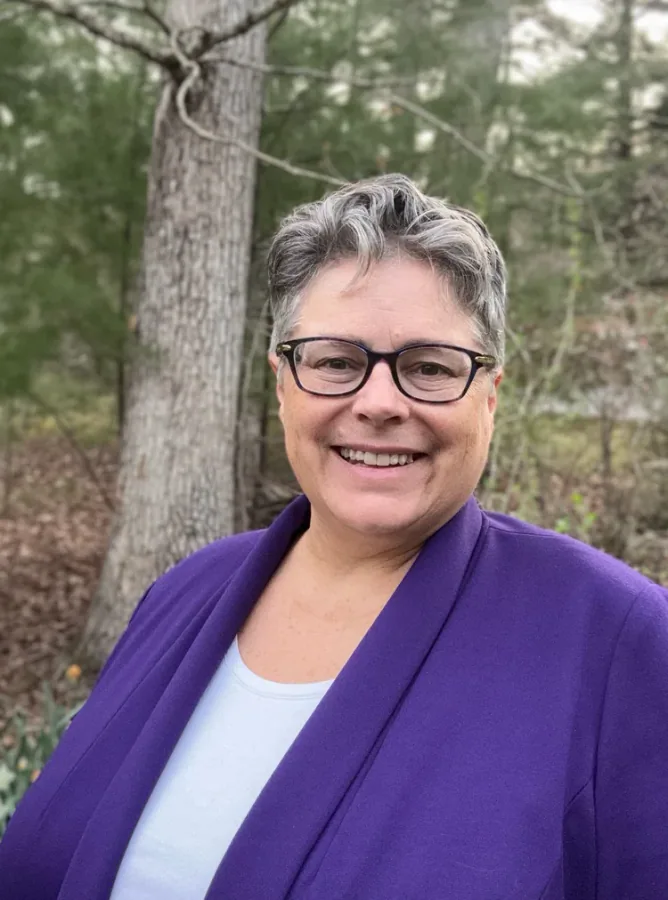
- Office
- State Representative District 53
- State
- Connecticut
- Party
- Democratic · also on the Working Families line
- Status
- Nominee
- Election
- Election held Nov 3, 2026
- Result
- Counting
Build a campaign strategy for Michelle Doucette Cunningham
Where Cunningham stands
Campaign site, updated Nov 9, 2026. The campaign's issues page
Children, Youth & Families
Child Care
Most families have working parents and depend on child care so they can work. Yet, on average child care in Eastern Connecticut costs $19,084 for a toddler per year and $15,756 for preschooler per year.
Most families have working parents and depend on child care so they can work. Yet, on average child care in Eastern Connecticut costs $19,084 for a toddler per year and $15,756 for preschooler per year.
Governor Lamont has created the Child Care Trust Fund, but much more needs to be done to address issues of affordability, wages for child care providers, and expanding the number of available spaces.
Priorities:
1. Fully fund the Child Care Trust Fund and ensure it has stable, on-going funding. When this is accomplished, child care would be free for families earning less than $100,000 per year, and those earning more would be on a sliding scale up to 7% of total income.
2. Provide government incentives and requirements that change the way child care, whether small-home based providers or larger center-based programs is funded so that all child care providers earn a living wage aligned with the salaries paid by school-based pre-K programs and have access to affordable, high-quality health care plans for themselves and their families.
3. Ensure adequate bond funds, small business grants, and no-interest loans are easily accessible to renovate and build child care facilities to ensure every family that needs child care can find affordable care need their home or workplace.
4. Expand affordable after school and summer programs that meets families child care needs, so parents can work when school is out without worrying.
Health & Human Services
Health Care
While Connecticut has wonderful health care providers, the system of funding health care is broken. Federal cuts are undermining the Husky Health CT program that made coverage affordable for hundreds of thousands of res…
While Connecticut has wonderful health care providers, the system of funding health care is broken. Federal cuts are undermining the Husky Health CT program that made coverage affordable for hundreds of thousands of residents. Now people are delaying needed care, postponing surgery, skipping medication or going into debt over basic care.
Priorities:
1. Make it possible for small businesses, nonprofits, schools and individuals to buy into the same health and dental insurance that state employees use.
2. Develop a plan for a universal single-payer health care for the state, while also advocating for a Medicare For All for the entire country.
3. Follow Massachusetts’ lead and limit growth in health care deductibles, co-pays and other out-of-pocket costs for patients.
4. Implement hospital price caps to promote cost containment and affordability standards to create downward regulatory pressure from the state’s Insurance Department.
Housing shortage & rents
Housing & Land Use
Housing
Housing costs are drastically outpacing incomes – whether a person rents or owns. We do not have enough housing supply that people can afford, for example there’s not enough good senior housing for people who want to do…
Housing costs are drastically outpacing incomes – whether a person rents or owns. We do not have enough housing supply that people can afford, for example there’s not enough good senior housing for people who want to down-size and still stay in their community. Connecticut ranks near the bottom for housing availability and has the lowest rental vacancy of any state. Even if you could afford an apartment you can’t find one that’s available when and where you need it, and you’d have no protection from unreasonable rent increases or eviction. The result is increased homelessness, families doubling up, young (and not so young) adults living with their parents far longer than they would like.
Priorities:
1. Increase the supply of housing and speed up construction, with a combination of incentives and regulations to make it easier to access funding for communities and nonprofits to build affordable housing without lengthy delays.
2. Expand Just Cause Eviction protections to every renter, not just the elderly and disabled, and ensure adequate enforcement capacity for fast resolution of issues.
3. Consider zoning and land use reform initiatives such as allowing accessory dwelling units (ADUs), duplexes, townhomes, and multi-family units near transit hubs or in areas where it was previously restricted and requiring municipalities to permit streamlined, as-of-right conversions of vacant commercial strip malls and office buildings into residential units. Local leaders from our towns need to be at the table to find a workable solution.
4. Expand the state-funded rental voucher program to prevent evictions and stabilize low-income households while long-term supply catches up to demand.
Education
Public Schools
Public schools have seen rising costs at the same time towns have reduced capacity to fund them. We must begin to shift how we finance public education from local to state funding to reduce the burden of local property…
Public schools have seen rising costs at the same time towns have reduced capacity to fund them. We must begin to shift how we finance public education from local to state funding to reduce the burden of local property taxes.
Special education costs in particular have skyrocketed, yet the state only pays for a fraction of this cost, and little has been done to control costs related to out-of-district placements.
Transportation costs (including for special education students that can not be served in-district) are also much higher with the rising cost of fuel. Schools are also being hit with huge health insurance increases (see the health insurance priorities above).
Priorities:
1. Totally rework the Education Cost Sharing grant that provides funding for schools. The formula currently used is flawed and needs to be entirely reconfigured, not just tweaked at the margins. Awaiting the results of the Blue Ribbon Commission report on this issue later this year.
2. Fully fund the Special Education Excess Cost Grant so that the state pays the full cost above three times the district’s average cost per pupil, and create a special education cost equalization funding mechanism for small districts similar to self-insurance that would help keep special education costs more constant from year to year.
3. Establish maximum reasonable cost rates for private, specialized, and residential out-of-district placements to prevent vendors from overcharging.
4. Provide additional funding for the school transportation grants to help offset rising fuel costs.
Higher Education and Training
- Ensure adequate operational funding for UConn, state universities and community college system, not just capital investment in buildings because it’s the staff that make these institutions successful. This is essential to keep costs to students down.
- Expand career exploration and entrepreneurship opportunities for middle and high school students outside the traditional school day.
- Strengthen career and tech ed programs by fully implementing Connecticut's CTE State Plan to ensure that it doesn’t just sit on a shelf.
The lifeblood of Connecticut’s economy is its people, yet state government needs to do more to help its residents get and keep good paying jobs. Education and training opportunities are economic drivers as well, and need state investment to ensure they can prosper while keeping the cost to students reasonable.
Priorities:
- Increase apprenticeship programs so that more people have an affordable, hands-on pathway to a rewarding career in the skilled trades, and expand the model to include other growth industries.
State Budget, Bonds & Finance
Fiscal Responsibility
- Create new income tax brackets for those earning above $1M, $10M & $25Million, raise the effective tax rate for those who earned more than $500,000, and implement a 1.75% capital gains surcharge on millionaires.
- Close the carried interest loophole used by private equity and hedge fund managers to avoid paying taxes on certain income.
- Establish a 10 percent gross receipts tax on digital advertising revenue for businesses with global annual gross revenues exceeding $10 billion.
How can we pay for the priorities listed here that will help regular people? Here’s how!
In Connecticut, the ultra wealthy aren’t paying their fair share – they pay less than Massachusetts, New York, or New Jersey to name just a few other states, and also have seen their federal taxes decline significantly.
Corporations also are not paying their fair share, and boost profits by underpaying workers and failing to provide health benefits, which forces taxpayers to cover public assistance. Penalties should be significant enough so that these big businesses actually feel it, not just a slap on the wrist.
Priorities:
Obviously this list can not include every issue I will fight for if elected as your State Representative. Are there other things that you think should be on Michelle’s to-do list? Email me at Michelle@CunninghamforCT.com about issues you care about!
- Penalize large, profitable corporations when their low-wage workers rely on public assistance.
- Hire more CT Department of Revenue Services’ auditors for additional enforcement.
- Provide additional funding to offset the costs of unfunded mandates – when the state requires a municipality or public school district to make expensive changes it should pay for those changes.
Quoted from the campaign's website. What a campaign says is weaker evidence than a bill it sponsored or a vote it cast.
Track record
Campaigns filed
- Cunningham for CT
In the candidate's own words
Michelle is a proud product of the public school system and was the first person in her extended family to attend college. She served on the Willington Board of Education for twelve years, serving as its chair for four.
Michelle Doucette Cunningham is a candidate for Connecticut’s 53rd State House District which includes Tolland, Willington and Vernon. Michelle and her family have called Willington home since 2007.
A practical, solutions-focused leader, Michelle has a bachelor's degree in Economics from Smith College and a master’s degree in Public Policy from Rutgers University. She has devoted her career to helping children and families working at policy-focused statewide nonprofits, most recently as the Executive Director of the Connecticut Network for Children and Youth since 2004.
Over her career, Michelle has earned a reputation for collaboration and integrity, and has a track record of getting things done. As State Representative, she’ll keep working to make Tolland, Willington and Vernon communities where families thrive, schools excel, and every voice is heard.
Campaign site, updated Nov 8, 2026.
Campaign finance
- Raised
- $45,676 · Raised this cycle, through Oct 27, 2026.
- Cash on hand
- $5,031 · As of Oct 27, 2026.
- Public financing
- Participating in the Citizens' Election Program
Attention
- News articles, last 30 days
- 0
- Ads seen, last 30 days
- 0
Updated Nov 25, 2026.
Ran against
Towns in the district
Filing record
The candidacy record
| Status | True from | Known since |
|---|---|---|
| Declared | Apr 17, 2026 | Jul 15, 2026 |
| Filed | — | Sep 14, 2026 |
| Filed | — | Oct 14, 2026 |
| Nominee | — | Oct 14, 2026 |
Updated Nov 1, 2026.