
Ned Lamont
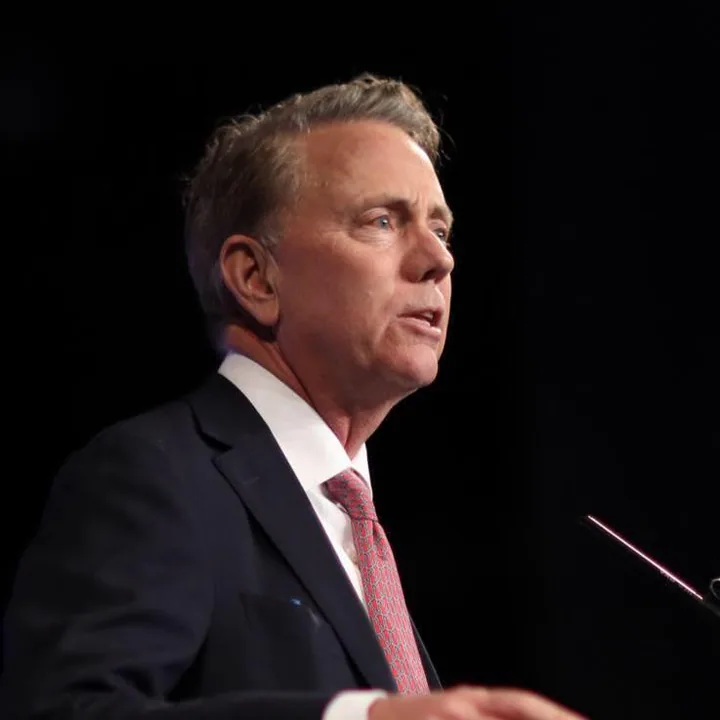
- Office
- Governor
- State
- Connecticut
- Party
- Democratic · also on the Working Families line
- Status
- Nominee
- Election
- Election held Nov 3, 2026
- Incumbent
- Incumbent
- Result
- Counting
Build a campaign strategy for Ned Lamont
About Ned Lamont
Edward Miner Lamont Jr. (lə-MONT; born January 3, 1954) is an American politician and businessman serving since 2019 as the 89th governor of Connecticut. A member of the Democratic Party, he served from 1987 to 1989 as a Greenwich selectman, and was the Democratic nominee for the United States Senate in 2006, losing to independent incumbent Joe Lieberman.
Lamont ran for governor in 2010 but lost the Democratic primary to former Stamford mayor Dannel Malloy, who won the general election. He ran again in 2018, winning the nomination and defeating Republican Bob Stefanowski in the general election. He faced Stefanowski again in 2022, defeating him by a wider margin. As governor, Lamont signed legislation legalizing cannabis, sports betting, and online gambling. In 2025, Lamont vetoed legislation that would affect housing supply in Connecticut.
From Wikipedia, read Nov 7, 2026.
Experience
- Connecticut, Governor · 2019 – present
- Central Connecticut State University, Adjunct Professor of Political Science and Philosophy
- State Investment Advisory Council, Chair
- Telecom Industry, Owner
- Greenwich Board of Estimate and Taxation, Boardmember
- Greenwich Board of Selectman, Boardmember
Education
- MBA, Yale University · 1980
- Bachelor's, Harvard College, Sociology · 1976
Where Lamont stands
Campaign site, updated Nov 8, 2026. The campaign's issues page
Cost of Living
Lowering Costs for Families
- Implementing universal pre-K and expanding affordable childcare
- Continuing to deliver universal free school meals
- Expanding access to affordable healthcare
Connecticut families deserve a state where they can afford to live, raise children, and plan for the future.
Governor Lamont’s forward agenda will continue focusing on lowering costs and making life more affordable for working families across Connecticut. Childcare, healthcare, housing, and education are essential building blocks for a strong economy and stronger communities.
- Reducing housing costs by increasing housing supply responsibly
- Supporting working parents and strengthening paid family leave protections
Environment, Energy & Utilities
Environment, Energy & Utilities
Lowering Energy Costs and Holding Utilities Accountable
- Affordability as a regulatory standard: Require affordability to be considered when determining utility profits, ensuring ratepayers are not asked to shoulder unreasonable costs.
- Hold utilities accountable through stronger oversight, transparency requirements, and regular reviews of their performance.
- Protect consumers from unnecessary spending by requiring rigorous cost-benefit analyses before major infrastructure investments can be charged to ratepayers.
Governor Lamont is taking on one of the biggest challenges facing Connecticut families: the high cost of electricity. His plan puts ratepayers first by holding utilities accountable, encouraging competition, and driving down costs.
Governor Lamont’s plan:
- Strengthen the Office of Consumer Counsel’s ability to investigate utility practices and challenge unjustified rate increases.
- Increase competition by allowing more private investment in energy infrastructure, microgrids, and innovative technologies.
- Incentivize utilities to adopt cost-saving technologies and improve efficiency while limiting excessive profit margins.
- Create a utility system that prioritizes reliability, affordability, and accountability for Connecticut families and businesses.
Health care costs & insurance premiums
Health care costs & insurance premiums
Health & Human Services
Holding Big Corporations Accountable
- Protect small businesses by applying only to large employers with more than 100 employees and non-profits with more than 1,000 employees.
- Require large corporations with employees enrolled in HUSKY (Medicaid) to contribute up to $1,000 per employee, ensuring they pay their fair share instead of shifting costs onto taxpayers.
- Close corporate loopholes by preventing large companies from avoiding responsibility through franchise structures, shell ownership arrangements, or gig-economy business models.
Governor Lamont’s Fair Share Healthcare Initiative lowers health insurance premiums by requiring large corporations to take responsibility for the healthcare costs of their workforce instead of shifting those costs onto taxpayers. The plan protects small businesses, closes corporate loopholes, and invests more than $100 million annually into making healthcare more affordable for working- and middle-class families.
Governor Lamont’s plan will:
- Invest more than $100 million annually into Connecticut’s health insurance exchange and Covered Connecticut program.
- Lower health insurance premiums by thousands of dollars for working- and middle-class families across the state.
- Strengthen Connecticut’s healthcare system without raising taxes on residents or small businesses.
Education
Universal Pre-K and Childcare
- Over the next four years, Governor Lamont will continue working to:
- Expand access to affordable childcare statewide
- Increase pre-K opportunities for families
Connecticut has made historic progress toward universal pre-K and expanded childcare access with an additional $300 million to fund the Early Childhood Education Endowment. Governor Lamont is committed to finishing the job with a long-term strategy for sustainable funding to expand access for families while supporting childcare workers and providers across the state.
Every child deserves a strong start, and every parent deserves the opportunity to work knowing their child is safe, learning, and cared for.
- Support childcare providers and educators
- Build a sustainable long-term funding structure for early childhood education
Supporting Public Schools and Fixing Special Education
- Increasing state support for special education
- Improving accountability and outcomes for students
- Supporting teachers and school staff
Connecticut’s students, parents, and educators deserve a system that works for everyone. Governor Lamont has already delivered historic investments in public education, and the next step is fixing the growing strain special education costs place on families and towns.
Governor Lamont’s agenda includes:
Housing shortage & rents
Housing & Land Use
Tackling Connecticut’s Housing Shortage
- Expanding housing supply near transit and job centers
- Supporting workforce and middle-income housing
- Revitalizing downtowns and underused properties
Housing affordability is one of the biggest challenges facing Connecticut families. Governor Lamont is committed to increasing housing opportunities while working collaboratively with communities to ensure smart, responsible growth. More housing means lower costs for all Connecticut residents.
- Working with local leaders and communities to meet housing needs responsibly
Abortion access & reproductive freedom
Abortion access & reproductive freedom
Health & Human Services
Affordable and Accessible Healthcare
- Lower prescription drug costs
- Expand access to high-quality healthcare coverage with the CT Option
- Strengthen preventative and mental healthcare services
Connecticut already has one of the strongest healthcare systems in the country, but too many families still struggle with costs. The next step is making healthcare more affordable and accessible for every Connecticut resident.
That means continuing to:
- Protect reproductive freedom and abortion access
- Explore bold solutions that move Connecticut toward universal affordable healthcare
Climate change & clean energy
Environment, Energy & Utilities
Environment and Climate Change
- Achieve a 100% zero-carbon grid by 2040 and net-zero emissions by 2050 targets. To get there, we will continue a balanced, responsive expansion of utility-scale solar, paired with small-scale and residential deployments. We will continue looking for opportunities to install more wind power and deploy innovative solutions like geothermal.
- A continued push for energy efficiency. This starts with weatherization, deploying highly efficient heat pumps, and moving towards electrification, while updating our building codes to include higher energy efficiency standards.
- Reduce transportation emissions, combining electrification whenever possible with Transit-Oriented Development (TOD). We are rethinking our cities, helping towns build dense, walkable, mixed-income housing around our major rail and bus hubs.
Climate change represents an existential crisis for our state and our nation. Governor Lamont’s forward agenda will continue to advance Connecticut towards carbon-free future, making our communities more resilient to extreme weather, while reducing energy and transportation costs to our families.
Governor Lamont’s plan:
- Permanently preserving 21% of Connecticut as open space, ensuring our state has the natural spaces to protect our wildlife.
Quoted from the campaign's website. What a campaign says is weaker evidence than a bill it sponsored or a vote it cast.
Track record
Campaigns filed
- NED for CT
In the candidate's own words
Ever since he started his career, Governor Lamont has focused on giving back to those in need. He ran a local newspaper, served in local office, volunteered as a high school teacher in Bridgeport, stood up for his convictions as a U.S. Senate candidate against Joe Lieberman and the war in Iraq in 2006, and served on the boards of Mercy Corps and the Conservation Services Group. He’s always stood up for Connecticut values. As Governor, he’s delivered real results, including the largest income-tax cut in history for middle-income families – putting money back in the pockets of working people.
Skip to main
For the first time in over 80 years, Connecticut has a Governor who began his career as a business owner and job creator. Governor Ned Lamont started a family and launched a successful business in our state because he believes in Connecticut: hard work, dedication, and neighbors looking out for one another.
Now, as Governor, he’s rolling out the welcome mat for more families and more businesses to call Connecticut home – with a focused commitment to affordability: lowering taxes, expanding job opportunities, strengthening our schools, and helping families and businesses keep more of what they earn, making it easier for everyone to build their future right here in Connecticut.
Governor Lamont started a business here in Connecticut; as a business owner and job creator, he took on telecom giants because he saw a better way to deliver value to customers, and grew his business to serve more than 400 of the nation’s largest college campuses and over a million students. He brings his business experience to work every day as Governor, and is always finding more ways to attract new, innovative companies, spur job creation, and make Connecticut a place where living and growing a business is both possible and affordable.
Governor Lamont is a graduate of Harvard College and earned a Master of Business Administration from the Yale School of Management. He and his wife Annie have been married for over 40 years.
Campaign site, updated Nov 8, 2026.
Campaign finance
- Raised
- $20,482,462 · Raised this cycle, through Oct 27, 2026.
- Cash on hand
- $1,711,093 · As of Oct 27, 2026.
- Public financing
- Not participating in the Citizens' Election Program
Attention
- News articles, last 30 days
- 629
- Ads seen, last 30 days
- 36 · $331.5K–$393.2K spent
Updated Nov 24, 2026.
Ran against
- Ryan Fazio · Republican · sitting legislator
- Christian Noe · declared write-in
- L. Lee Whitnum · declared write-in
- Zenobia Adgers · declared write-in
Official site and accounts
Filing record
The candidacy record
| Status | True from | Known since |
|---|---|---|
| Declared | Nov 7, 2025 | Jul 15, 2026 |
| Filed | — | Sep 14, 2026 |
| Filed | — | Oct 14, 2026 |
| On the primary ballot | — | Oct 14, 2026 |
| Nominee | — | Oct 14, 2026 |
Updated Oct 31, 2026.