
Tom McClintock
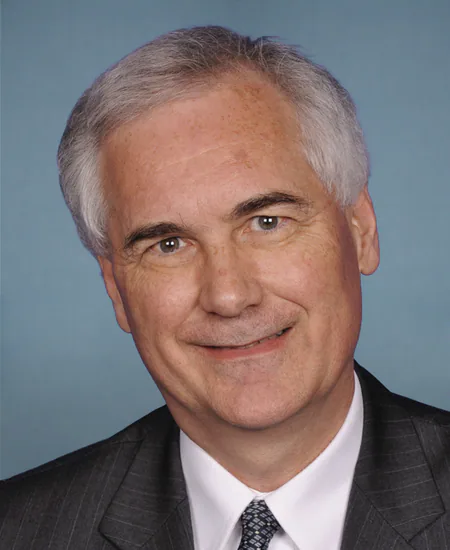
- Office
- U.S. Representative, California District 5
- State
- California
- Party
- Republican
- Status
- On the general ballot
- Election
- Election held Nov 3, 2026
- Incumbent
- Sitting legislator · U.S. Representative, California District 5
- Result
- Won
Build a campaign strategy for Tom McClintock
About Tom McClintock
Thomas Miller McClintock II (born July 10, 1956) is an American politician serving as the U.S. representative for California's 5th congressional district since 2009 (known as the 4th congressional district until 2023). His district stretches from the Sacramento suburbs to the outer suburbs of Fresno; it includes Yosemite National Park. A member of the Republican Party, McClintock served as a California state assemblyman from 1982 to 1992 and from 1996 to 2000, when he became a California state senator, a position he held until 2008. He unsuccessfully ran for governor of California in the 2003 recall election and for Lieutenant Governor of California in the 2006 election.
From Wikipedia, read Nov 14, 2026.
Experience
- US House of Representatives, Representative - California 5th Congressional District · 2009 – present
- California State Senate, Senator - District 19 · 2000 – 2008
- California State Assembly, Assemblymember - District 38 · 1996 – 2000
- California State Assembly, Assemblymember - District 36 · 1982 – 1992
Education
- Bachelor's, University of California, Los Angeles, Political Science and Government · 1978
Where McClintock stands
Campaign site, updated Nov 17, 2026. The campaign's issues page
Climate change & clean energy
Environment, Energy & Utilities
Global Warming and Climate Change
Earth’s climate has been changing since the planet formed and it has been warming – on and off – since the last Ice Age, when a glacier more than a mile thick covered most of North America. Despite increasingly hysteric…
Earth’s climate has been changing since the planet formed and it has been warming – on and off – since the last Ice Age, when a glacier more than a mile thick covered most of North America. Despite increasingly hysterical attempts by leftist politicians to stifle debate and punish contrary viewpoints, questions over the impact of human activity on this natural phenomenon are, in my opinion, dubious, political and unconvincing.
Whether or not we chose to impose policies that send our energy prices soaring and impoverish our economy, one thing is certain: the earth will continue to warm and cool as it has for four billion years.
Inconvenient Questions
Heartland Institute – New York, New York – March 9, 2009
Heartland Institute – New York, New York – March 9, 2009
I must admit to being a little nervous to accept your kind invitation to come to New York to discuss global warming. I remember that it was right here in this city a year and a half ago that no less an authority than Robert F. Kennedy Jr. said that those of us who still have some questions over their theories of man-made global warming are “liars,” “crooks,” “corporate toadies,” “flat-earthers” and then he made this remarkable statement: “This is treason and we need to start treating them now as traitors.”
Ah, the dispassionate language of science and reason.
I certainly don’t want to die a traitor’s death, so I want the record to be very clear: I believe that the earth’s climate is changing and that our planet is warming.
I must tell you that this is a somewhat sore subject for me. You see, it was me – and not Al Gore – who discovered the theory of Global Climate Change, and yet all you ever hear is, “Al Gore said this” and “Al Gore said that.”
My climate change discovery came in the fall of 1964, when Miss Conroy took our third grade class to the Museum of Natural History.
It was there that we saw the panorama of dinosaurs tromping around the steamy swamps that are now part of Wyoming. That panorama was right next to the exhibit of the Wooly Mammoths foraging on glaciers that were also once the same part of Wyoming.
And I thought to myself, “Gee, those dinosaurs are swell.” And then I thought to myself, “Good God, the climate must have changed.”
I never got a Nobel Prize for that discovery. In fact, I later found out that Miss Conroy never even nominated me!
So, instead of jetting around the world in a fleet of Gulfstream jets to tell people they need to feel guilty about driving to work, I have to take the subway.
And I don’t get paid $100,000 a speech for my original discovery. But then again, I don’t have Al Gore’s electricity bills either, so I guess it all balances out.
(You have to admit a certain Helmslyesqe quality to it all: “We don’t conserve – only the little people conserve.)
Anyway, a few years after making my discovery about planetary climate change, I got to high school in the 1970’s and learned from the Al Gores of the time that we foolish mortals were plunging ourselves into another ice age.
It was, after all, beyond dispute. All the scientists agreed.
By the way, you may have seen the Washington Times story last year about the researcher who had stumbled upon a lurid story in the Washington Post dated July 9, 1971. It included the scary headline: “U.S. Scientist Sees New Ice Age Coming.”
The scientist based this on a scientific climate model developed by a young research associate named James Hansen. They warned that continued carbon emissions over the next ten years could trigger a run-away ice age.
And it was rather amusing, because a few months before this old newspaper clipping surfaced, the very same James Hansen had published a paper claiming that continued carbon emissions over the next ten years could trigger a run-away greenhouse effect.
For those in the liberal elite who jet to environmental conferences in Gulfstream jets and drive around in Hummers singing the praises of hybrids and bicycles, the Left now sells indulgences – you can actually calculate your carbon sins on-line and they’ll gladly tell you how much money to send them (all major credit cards accepted) to assuage your conscience.
In fact, I had a friend who paid $45 for one of these “carbon offsets” for his Lincoln Navigator. By paying $45, this company sends him a very attractive 10-cent decal that certifies his SUV now has absolutely NO carbon footprint.
But then he discovered that Priuses, which do have a carbon footprint, get to use our diamond lanes for free, while his Lincoln Navigator – which for just $45 now has no carbon footprint whatsoever – has to sit in bumper to bumper traffic with all the rest of us carbon sinners.
These carbon offsets are supposed to be used for such activities as planting more trees to absorb carbon dioxide. After all, young trees absorb much more of this “greenhouse gas” than old trees.
But isn’t replacing old-growth timber with young-growth timber exactly what lumber companies used to do until Al Gore’s acolytes stopped them?
Trees are also very important to reducing energy demand – we’re told that to conserve electricity we need to plant lots of shade trees to shield our roofs from the sun so that we don’t use our air conditioners. We’re also all supposed to install solar panels on our roofs, although they don’t work so well in the shade from our trees.
In fact, a year or two ago, a Sunnyvale, California couple was ordered to cut down the old redwood trees in their own backyard. Why? Their neighbor had installed solar panels in the shade of those redwoods, and the couple was informed that under state law, they’d be fined a thousand dollars a day if they didn’t cut their redwoods down at once.
One word of warning, however. Even though you had to cut down your trees at once if a neighbor decided to install solar panels in their shadow, you are forbidden to clear flammable brush from around your home in hazardous fire areas, because that’s an affront to Mother Nature. You’re supposed to let it burn – and your home along with it – because this is the most environmentally friendly way for Nature to dispose of carbon-trapping vegetation – and thereby releasing lots of carbon dioxide into the atmosphere.
That’s also why we’re supposed to do away with chemical fertilizer and replace it with natural compost, because replacing man-made greenhouse gases with natural greenhouse gases is the wave of the future.
Another important battle in the war against carbon is to force everyone to use electric cars and trains. But this also gets a little complicated, because at the same time, we’re all supposed to be cutting way back on our electricity usage – to the point that the California Energy Commission now wants to require every household thermostat to have a remote-control device that will allow the bureaucrats to decide what is the appropriate temperature of your living room.
You need to keep your thermostat set to 90 degrees in the summer to conserve electricity, but we’ll be happy to spend millions of your tax dollars for you to take an electric bullet train from L.A. to San Francisco for the weekend.
In fact, there are only two ways of generating vast amounts of clean electricity for electric cars and trains: hydroelectricity and nuclear power. But there’s no faster way to send these Luddites into hysterics than to mention that inconvenient truth.
The politically correct replacement is solar energy. Solar energy is roughly 17 times more expensive than either nuclear power or hydroelectricity – meaning, of course around 17 times LESS electricity to run electric cars and trains.
Energy conservation, then, is the answer, which is why we’re required only to use energy efficient fluorescent lights rather than the warm and fuzzy incandescent bulbs. But wait – California has banned the disposal of fluorescent lights with your trash because of the extreme environmental hazard they pose in our landfills.
So I approach the subject this morning with an admitted level of confusion as to what these people are thinking.
Let me instead merely pose three inconvenient questions.
First, if global warming is caused by your SUV, why is it that we’re seeing global warming on every other body in the solar system? For the last decade or so, the Martian south polar ice cap has conspicuously receded. Pluto is warming – about two degrees Celsius over the past 14 years. Jupiter is showing dramatic climate change by as much as 10 degrees Fahrenheit. Even Neptune’s moon, Triton, has warmed five percent on the absolute temperature scale – the equivalent of a 22 degrees Fahrenheit increase on Earth – from 1989 to 1998.
If you have any doubt, just Google “Pluto Warming” or “Mars Warming” or whatever your favorite planet or former planet might be.
Meanwhile, solar radiation has increased a small but measurable five hundredths of a percent since the 1970’s.
Now, I’m just thinking out loud here, but do you think it’s possible that as the sun gets slightly warmer, the planets do too?
This would be a little scary in its own right, except for the second inconvenient question: If global warming is caused by your SUV, why is it that we have ample historical records of periods in our recent history when the planet’s temperature was warmer than it is today?
During the Medieval Warm Period, from about 900 to 1300 AD, we know that wine grapes were thriving in northern Britain and Newfoundland — and that the temperature in Greenland was hot enough to support a prosperous agricultural economy for nearly 500 years. That’s why they called it “Greenland.”
That period was brought to an end by the Little Ice Age that lasted from 1300 until 1850. We know that during colonial times, Boston and New York Harbors routinely froze over in winter and during Elizabethan times, an annual Winter Festival was held on top of the Thames River, which froze solid every year.
And finally, the third inconvenient question: If global warming is caused by your SUV, why is it that increases in atmospheric carbon dioxide always follow increases in global temperatures by several hundred years? Again, I’m just thinking out loud here, but is it possible that if CO2 increases follow temperature increases that might possibly mean that increased CO2 is a byproduct of increasing temperatures – not a cause.
Al Gore must have an answer to these and other questions that have been raised by us treasonous-corporate- toady-holocaust-deniers. You’ve seen the “Inconvenient Truth.” In it, Al Gore portrays himself as a tireless, lonely sentinel (who should have been President of course) wandering the planet trying desperately to awaken the world to the danger it faces. “I’ve given this speech a thousand times,” he says about a thousand times.
So I wanted to touch base with all of you today, to find out when he is planning to accept the Heartland Institute’s invitation for an international debate on the subject. I am absolutely certain that this pious paragon of truth – who assures us he’s willing to go anywhere and talk to anybody to save us from our mortal folly – should be chafing at the bit to show us the error of our ways.
As I understand it, the Heartland Institute has offered our Nobel Peace Prize laureate of the left to debate any one of three internationally recognized authorities, and that you are willing to front all costs – at Oxford University, no less, and in a format of Gore’s own choosing.
After all, Gore’s book extols the importance of science and reason in the public policy debate, so what better way to deliver the coup de grace to us “skeptics” than to expose our fallacies in front of an international audience?
Yet, Al Gore, who has given his speech “a thousand times,” won’t give it just once in a forum where it might be questioned by a knowledgeable authority.
In a sense, though, we had that debate in the British courts several years ago. The High Court of Great Britain determined that there were no less than ELEVEN factual errors on key scientific points in that film, and ordered that a disclaimer to that effect must be made in ANY public classroom where this film is shown.
We laugh and shake our heads at all of this, but it is a serious and grim subject because of the actual threat that global warming poses to our planet – and most specifically to California. And that threat is very real and it is devastating.
I speak of the radical policies that the global warm-mongers are now enacting.
In the summer of 2006, in the name of saving the planet from global warming, California adopted the most radically restrictive legislation anywhere on the planet, including AB 32, which requires a 25 percent reduction in man-made carbon dioxide emissions by 2020.
To put this in perspective, we could junk every car in the state of California right now and not meet this mandate.
At about the same time, the same politicians who adopted these measures also adopted $40 billion of bonds that they promised would be used for highways, dams, aqueducts and other capital improvements.
Now here’s the problem. Building highways, dams, aqueducts and other capital improvements requires tremendous amounts of cement.
How is cement produced? It is produced by taking limestone and super-heating it into a molten state – it comes out the other side as a compound called clinker. Clinker is about 2/3 the weight of the original limestone. The missing 1/3 of that weight is carbon dioxide. And when you include the emissions required to superheat the limestone, it turns out that for every ton of cement, a TON of carbon dioxide is released. It’s the third biggest source of carbon dioxide in all human enterprise.
But now we have a law that specifically forbids us from doing so. That was the essence of lawsuits now being filed against construction projects across the state.
So much for construction.
Agriculture is in big trouble, too.
You can start with nitrogen fertilizer, which is a critical component of all agricultural activity. Unfortunately, it produces large amounts of nitrous oxide, another so-called greenhouse gas that must be radically curtailed in California.
The wine industry is also in for a shock. Fermentation of wine occurs when a molecule of glucose in the grapes is converted into EQUAL PARTS of alcohol and carbon dioxide.
But the biggest agricultural impact is the administration’s mandate for heavily subsidized use of ethanol fuel. Ethanol is produced in exactly the same way as the alcohol in wine: the glucose in corn is converted into equal parts of ethyl alcohol and carbon dioxide.
Following AB 32, this administration imposed a requirement that all gasoline sold in California by next year must be comprised of at least ten percent ethanol, doubling the current mandate.
Now pull out your calculators and we’re going to have a little fun with math. An acre of corn produces about 350 gallons of ethanol. There are 15 billion gallons of gasoline used in California each year. In order to meet the ten percent requirement in three years, it means converting 4.3 million acres of farmland to ethanol production. Now that’s a lot of farmland, considering that we have a total of 11 million acres producing crops of any kind.
Current ethanol mandates are already producing serious shortages in other parts of the world, as farmland that had been producing food, shifts to ethanol to chase hundreds of millions of dollars of government subsidies coming out of your pocket.
Higher taxes, higher food prices – and higher gas prices. What’s not to like?
And we’re seeing this across the board – including commodities like milk and beef that are responding to increased prices for corn feed.
As you see your grocery prices rise as a result of this policy, just be glad you’re not in the Third World. Food is a relatively small portion of the family incomes in affluent nations, but it consumes more than half of family earnings in third world countries.
So when the global warming alarmists predict worldwide starvation, they’re right. They’re creating it.
Electricity prices are also taking a heavy hit. California already suffers the highest electricity prices in the continental United States, but that situation is about to worsen.
A companion measure to AB 32 was SB 1368 that prohibits the importation of electricity produced by coal – even state-of-the-art plants thousands of miles from California that meet all EPA requirements.
Truckee became the first victim of this law. Truckee was about to sign a 50-year contract for electricity produced by a new coal fired plant in Utah. They were forced to back off because of AB 1368. The original contract was for $35 per megawatt hour – the green replacement power will cost Truckee consumers $65 per megawatt hour.
The radical laws now in place in California are having a dramatic impact on energy production, agriculture, manufacturing, wine-making and construction, cargo transportation, just to name a few sectors of our economy.
We are already seeing the economic impact in California.
Until last year, Californian’s unemployment rate tracked with the national figures, but since January of 2007, California’s unemployment rate began a radical divergence from the national figures and is now in double digits and nearly 40 percent higher than the national unemployment rate.
Even more ominous are the figures reported by the census bureau. In the last three years, 2/3 of a million more people moved out of California than moved in. Outbound U-HAUL rates are now between six and seven times the cost of renting the same truck to move in to California.
You cannot blame the national economy for these developments – for these you must look to state public policy.
I was struck by the Governor’s speech to the United Nations as he was imposing this lunacy. He told them:
“Last year in California, we enacted groundbreaking greenhouse gas emission standards.
“We enacted the world’s first low carbon fuel standard.
“Do I believe California’s standards will solve global warming? No.
“What we’re doing is changing the dynamic, preparing the way and encouraging the future…”
So even the individual most responsible for this economically catastrophic public policy ADMITS that it’s not going to solve global warming.
He just wants to set an example.
And in that singular respect, I believe that he has succeeded beyond his wildest dreams.
There is one other thing that strikes me on this issue, and that is how puny is the amount of carbon dioxide produced by human enterprise, compared to simple, natural processes.
The AB 32 mandate is to reduce man-made carbon dioxide emissions by 170 million metric tons per year. That’s what all this tremendous economic dislocation is about.
Now let me mention one other man-made source of carbon dioxide that they don’t count.
Every one of us in this room will produce about 2.2 pounds of carbon dioxide today – by breathing. That’s over 800 pounds of carbon dioxide per year. Keep your calculators out and stay with me here.
There are 6.6 billion of us on this planet. That comes to 5.3 trillion pounds or 2.4 billion metric tons of carbon dioxide – simply through the process of human respiration. And that’s before you count up all the cats and rats and elephants.
So there are 2.4 billion tons of carbon dioxide emissions worldwide by breathing and 170 million metric tons is what all the fuss in California is about.
You’ve all been snickering a lot and I know that watching Californians running amock is great spectator sport. New Yorkers especially enjoy knowing that there is at least one state more screwed up than your own. But I feel compelled to warn you that if the Luddite Left finally succeeds in wrecking California, there are 49 other states that we’re all going to move to – and yours is one of them.
People love to watch events in California – in much the same way that people love to gawk at car wrecks. You feel guilty about it, of course, and you know you shouldn’t stare, but you just can’t help yourselves.
But you do anyway and there’s at least a respectable reason for it. When you drive by that wreck, you can tell your children, “Kids, that’s what happens when you don’t pay attention when you drive.”
And California’s wreck is a good time to remind voters, “Kids, that’s what happens when you don’t pay attention when you vote.”
While we’re on that subject, the Obama Administration has just unveiled its budget, a $3.6 TRILLION monstrosity that includes some $650 billion in business taxes. They call it “cap and trade” but they mean, “cap and tax.”
The problem with business taxes, of course, is that businesses don’t pay them. Business taxes can only possibly be paid in one of three ways: by us as consumers through higher prices; but us as employees through lower wages and by us as investors through lower earnings on what’s left of
Transportation & Motor Vehicles
Transportation & Motor Vehicles
Transportation
I believe that we need to restore our highway taxes for our highways, and undertake the long-overdue modernization of our once vaunted highway system.
Highway Taxes for Highways
California Asphalt and Pavement Association – January 24, 2001 – Los Angeles, California
California Asphalt and Pavement Association – January 24, 2001 – Los Angeles, California
Thank you for your invitation to discuss the transportation crisis in California. The thing that makes it so fascinating to me is how simple the problem is to correct, and how monumentally stupid has been our policy to deal with it during the past 30 years.
Throughout the first three-quarters of the 20th Century, policymakers understood the simplicity, the efficiency and the necessity of the individualized transportation system made possible by the automobile.
In 1958, they adopted the most visionary infrastructure plan in California’s history that proposed a highway system to link all of the population, commercial and resource centers of the state with this remarkably efficient system – and to do so from existing tax dollars. This highway system was on schedule for completion in the 1980’s, until a single climacteric changed everything: the election of Gov. Jerry Brown and his “era-of-limits” “small-is-beautiful” “don’t build things and people won’t come” new-age nonsense.
We walked away from our highway program, literally abandoning projects in mid-construction. In this region, they canceled the Whitnall Freeway – which was to be the third east-west freeway through the middle of the San Fernando Valley. We already owned the land for that freeway – all that remained was to grade and pave. They canceled the Reseda Freeway, the third north/south freeway for the San Fernando Valley. They canceled the Pacific Coast Freeway from Oxnard to Long Beach in mid-construction. They canceled the 118 freeway from Oxnard to San Fernando in mid-construction. They canceled the Fillmore freeway in mid-construction. They canceled the Long Beach Freeway in mid-construction. It wasn’t for lack of funds – it was because of a retrograde ideology that held that the automobile is the root of all evil.
And through two Democratic and two Republican administrations, this basic agenda has not been challenged. Since 1974, the miles driven by Californians have increased 116 percent, while lane mileage has increased just 8 percent.
According to one of Jerry Brown’s deputies: “Our job is to pry John Q. Public out of his car, and we are prepared to endure heated public criticism to do so.” Another said, “My job is to make life miserable for the single motorist.”
This policy has reached a new level with the election of Jerry Brown’s chief of staff, Gray Davis. Last summer, scant attention was paid when Davis announced that “California’s era of freeway construction is over.” I suggest to you that this statement ranks with “Let them eat cake,” and “Apres nous, le deluge” for sheer irresponsibility and lunacy in public policy.
Well, we stopped building freeways, the people came anyway, and they’re still in their cars.
I am here to state what is politically incorrect in bureaucratic circles, but what is self-evident to virtually every motorist on the road today. California policy makers have conducted a 30-year hate affair with the automobile, to the detriment of our economy, our safety, our environment, and our quality of life. And it is time – it is long past time – that Californians kicked them out of office and demanded the highways that we have paid for.
During those 30 years, we have heard the derisive and condescending comments about “Californians’ love affair with their cars.” California’s highway system was not due to an irrational love affair with a machine. It was the simple fact that the individualized transportation made possible by the automobile offers advantages that no mass-transit system could ever begin to duplicate: high-speed, low-cost, doorstep-to-doorstep, 24-hour a day on call service in safety, convenience and comfort, offering infinite flexibility in travel schedules and routes. It was this efficient, adaptable system that made 20th Century commerce possible – and it is the foundation upon which our ability to socially and commercially interact now rests.
But it is not popular with big government. Highly decentralized systems that respond to individual needs are anathema to the manipulative whims of government. Government likes centralized, command-and-control structures that can be dominated politically. Those who have lectured Californians that they have become too dependent on the automobile would rather make them dependent on government-managed mass transit.
So today, the finest highway system in the world is a shambles. It has not been merely neglected. An ideological war has been waged against it. I am here to suggest that it’s time that war was joined, and that the ideologues that have destroyed our transportation system be challenged by common sense.
Our plight is not for lack of money. California motorists bear the third heaviest taxes per vehicle in the country, and yet we rank dead last in our per capita spending for our highways.
In 1990, they doubled the excise tax on gasoline – and promised that money would be used for road construction. In the decade that followed, the miles driven by Californians increased another 30 percent, our lane mileage increased just ONE percent.
The Left likes to argue that government subsidizes the car. The truth is exactly the opposite. The car once paid for all highway construction. Now it is used to subsidize every aspect of the welfare state – except for a decent road system.
In the 1950’s and 1960’s, virtually the entire California freeway system was constructed from the taxes – lower taxes, I might add – paid by the motorists who used the freeways. Since the 1970’s, there has been virtually no new freeway construction. We are carrying 30 years more volume – 116 percent more usage — on the same road system built by our grandfathers – and paying higher taxes to boot.
The politically correct transportation system is, of course, mass transit. The only problem is that the masses don’t use it. And there’s a reason. It is inconvenient, it is enormously time-consuming, and most of all, if it wasn’t heavily subsidized, it would be cost prohibitive.
Take a look at the Los Angeles Metropolitan Transportation Authority for example. Last year, the MTA consumed $2.7 billion: $5,900 annually for every passenger it carried. Last year, they had a 32-day strike. There was no appreciable increase in traffic congestion. There was actually a decrease in air pollution. Even the MTA admitted that 90 percent of its passengers had alternative means of transportation. And for the 45,000 truly transit dependent people in Los Angeles, a low-cost jitney service immediately materialized on every street corner until LA City government aggressively shut it down.
Now, consider this. Shifting just the MTA’s mass transit subsidy funds to road construction – at Century Freeway prices – would mean four new lanes on the San Diego Freeway from the Ventura Freeway to the Century Freeway in the first year of savings alone. The next three years could do the same on the Hollywood Freeway from the Ventura to the 605 and on the Santa Monica from the Pacific coast to the 605. Within ten years, 170 miles of congested freeway routes in the Los Angeles area could have four lanes of angioplasty done, using the most conservative possible figures, for the MTA’s net operating costs for mass transit.
For the cost of the 79-mile long Los Angeles Metro-rail, we could have added 618 miles of new freeway lanes to the Los Angeles Freeway system – at Century freeway prices.
Let me ask for a show of hands. How many of you rode on the MTA in Los Angeles last year? How many of you rode on a Los Angeles Freeway last year? Any questions?
A few years ago, I attended a “transit summit,” composed of several hundred mass transit advocates throughout the region. There was a bus stop right outside the hotel. I asked these transit officials and lobbyists how many had come by bus. Of roughly 300 in attendance, three hands were raised.
More recently, the director of Rideshare for Los Angeles was asked if she carpooled. She said “No,” it seems her schedule was just too unpredictable. Well, welcome to the world.
Four years ago, the San Fernando Valley Industry and Commerce Association conducted a survey of commuter preferences. According to the poll, a vast majority of area commuters want transit service that requires no more than a ten minute wait, stops no more than once on the way home, takes no more than thirty minutes in transit, and charges no more than 75-cents. For a Southern California mass transit system, such demands are impossible. Fortunately, what the public is describing is something they already have: the convenience, versatility and economy of the (politically incorrect) automobile.
But we don’t have that system any more because the taxes that once paid for all of our roads now have been diverted to pay for everything except our roads, and specifically to mass transit systems that are wildly unrealistic, hugely inconvenient, and enormously expensive.
There is method in their madness. County Supervisor Roger Niello of Sacramento, a strong advocate for highway construction, told me of his experience at one of these “mass transit summits.” There, the speaker said to the approval of the audience, “Remember, gridlock is our friend.” If you make the highways impassable, if you make life miserable enough for the single motorist, then people will have no choice but to take mass transit, with all its inconveniences and inefficiencies.
As boring and as politically incorrect as the road system is, it is the most efficient, most economical, safest, and most environmentally friendly transportation system we have. And if that statement surprises you, it is because of a massive mis-information campaign to which the mass transit lobby has subjected us for a generation.
I have already talked about the economies. The efficiency of doorstep to doorstep service should be obvious to all.
The safety figures are there for the asking. Private automobile traffic has a lower injury and mortality rate per mile traveled than the public mass transit systems in operation today.
But let me also mention the environment, which is the most prevalent excuse we have for California’s 30-year hate affair with the car.
Gridlocked automobiles create twice the NOX contaminants and six times the carbon contaminants per mile as those operating at peak efficiency. Think about that. Bringing California’s highways back to capacity would be the environmental equivalent of removing half the automobiles from the roads during rush hours for nitrogen oxide and removing five cars out of six for carbon monoxide.
And let me ask you this: does even the most wild-eyed environmentalist ever suggest that these mass transit systems will remove half of the cars from the roads?
Instead of doing the obvious, the big government crowd is suggesting everything but. We are told that we need to expand bus systems, add more light rail, telecommute, offer flex-time schedules, more HOV lanes, and on and on.
We’re told, “If you build more lanes, in ten years they’ll be as crowded as ever.” Listen to the logic of this statement: “Don’t build more lanes, people will just use them.” Instead, they have squandered billions of dollars on transportation systems people don’t use.
We’re told, “We can’t build our way out of these problems.” Well, how would we know, we haven’t tried in 30 years. When we kept pace with our needs, congestion was limited to a brief period at the height of rush hour. Now look at us.
We’re told, “Freeways will create suburban sprawl.” Well, there’s a reason for that and it has nothing to do with freeways. People don’t like living in dense urban cores. It seems they like to have a yard for their kids to play in. And that’s why they are willing to endure endless traffic delays to provide that room for their kids. We can either recognize that and accommodate their needs, or refuse to recognize it and ruin of our standard of living and our quality of life.
It is one of the ironies of human nature that the more we invest in our mistakes, the less inclined we are to admit them.
So let me offer these politically incorrect suggestions:
First, restore highway revenues for highways. I first proposed dedicating our sales taxes on gasoline for our highways three years ago. Today, a similar measure is before us as Proposition 42, and it is a start.
Second, let’s ask that MTA and all the other mass transit systems pay for themselves through their own fareboxes, just as we expect highway users to pay for their highways through their gas taxes.
Third, fire the social engineers at CalTrans, update the blueprints for the highway system that our parents and grandparents drafted, and that we were supposed to have in place by now. And then, where it is still economically possible to do so, re-purchase the land and get to work.
This prescription raises a very important practical question: “How?” How do we change the thinking that has dominated transportation policy in this state for nearly 30 years?
I don’t have an easy answer to that question. I only have a hard answer to it. We have to change public opinion. We have to confront the mass transit lobby. We have to remove from office an entire generation of Luddites who have an utterly irrational abhorrence for the automobile and a blind faith in 30 years of failed transportation policy.
And that ain’t easy. Changing governing agendas is never easy.
But every now and then, change does occur – once the necessity for it overcomes our natural resistance to it.
Here’s the tough part – it takes years – sometimes decades of setbacks and disappointments and defeats and routs. It means going out every day into that marketplace of ideas and selling a position that a majority opposes.
The good news is, the facts are not subtle. This is not a close call. But the facts have to be out there for the people to consider, and that is where we have utterly failed. And as we educate – as we agitate – as we bang our heads against a brick wall – public opinion will start to stir – glacially at first – imperceptibly at first – then very slowly, then slowly, and then quite suddenly the folly of decades gives way in a climacteric.
The good news is that the public will exercise solid judgment once they are in possession of all the facts. The problem is, all they currently hear is the propaganda of the mass transit lobby.
Change will not originate from within the Capitol building. In order for change to occur inside a Capitol, it must first change outside.
So I must ask you, and your companies, and your organizations, and your clients, What are you prepared to do?
Are you prepared to educate every Californian that in the decade since our road taxes doubled and our driving increased 30 percent, our highways have increased just one percent? Are you prepared to confront the MTA and its clones over the misuse of our highway money? Are you prepared to pursue initiatives, back candidates, and undertake a steady drumbeat of data until every voter is as aware as each of us in this room are of the condition of our highway system and how we got there?
Because until you are prepared to do so – things are not going to change. And once you do – it might be years before we see results. And that is not an easy answer. It is a hard and expensive and uncertain answer. But it’s the truth and it is time we learned the truth – and acted on it.
What I can promise is that I will continue to press on these issues at every opportunity. And every voice that is raised will bring us closer to the day when all Californians can again enjoy high-speed transportation that is perfectly individualized to meet their precise needs — that picks them up at their doorsteps and whisks them to their destinations in safety and comfort – whenever they need to go, wherever they need to go.
In short, what we once had, what we foolishly threw away, and what we must restore for our children and our grandchildren: the finest highway system the world has known.
Diamonds Aren’t Forever
November 20, 1998
November 20, 1998
On a December morning last year, a patch of pea soup fog caused a horrific pile-up on Interstate 5, closing all lanes into Sacramento at the beginning of the rush hour commute. The Highway Patrol immediately detoured the blocked traffic onto a parallel freeway, Route 99. And the first thing they did on Route 99 was to open the diamond lane to all traffic.
Why? “To increase the capacity, of course,” said one CHP official, who sounded somewhat incredulous at the question.
A more important question is, why is something so obvious to a CHP officer managing a traffic crisis utterly lost on the bureaucrats at CalTrans? California’s highway officials plan to double the number of diamond lanes clogging California freeways by 2015.
Meanwhile in New Jersey, transportation officials have come to an entirely different conclusion. On November 30th, they abolished the diamond lane restrictions along two heavily traveled routes. The relief was immediate. One commuter accustomed to diamond lane gridlock marveled, “this morning, it was zooming. Everybody was going along like a normal highway.”
This shouldn’t surprise anyone. A typical diamond lane carries only 7 percent of the traffic, yet it consumes 25 percent of the capacity on a four-lane freeway. This means the remaining 93 percent of the traffic is deliberately crammed into 75 percent of the space.
CalTrans officials insist that diamond lanes encourage carpooling based on the false assumption that every car with more than one person is a carpool specifically created to take advantage of the lane. The engineering studies on diamond lanes, including one from U.C. Berkeley’s Institute for Traffic studies, are quite clear that the formation of new car pools is negligible and doesn’t begin to justify the deliberate gridlocking of the highway system. A study of the Route 55 Freeway in Costa Mesa concluded that the diamond lane costs commuters the equivalent of 11,000 passenger trips per day.
A quarter century of experience backs up these studies. The percentage of passengers who use diamond lanes has remained stable for many years, despite the proliferation of diamond lanes throughout California.
Nor are diamond lanes any help to the environment. Diamond lanes deliberately create gridlock, and gridlocked traffic produces twice the NOX contaminants and six times the carbon contaminants per mile than produced by traffic operating at peak efficiency. Diamond lanes have, in fact, been an environmental disaster for California.
Diamond lanes even defy their own logic. The diamond lane is supposed to give commuters an incentive to carpool, by offering the vacant diamond lane as an alternative to the artificially congested lanes. But as commuters do so, the diamond lane congests, the other lanes decongest, and the incentive disappears. Even if they worked, they couldn’t work.
In reality, diamond lanes simply provide the illusion of relief to the small percentage of traffic that can use them, while artificially gridlocking the 93 percent of the traffic that cannot.
The most common defense is that new lanes will quickly fill up with traffic and congestion will end up being as bad as it was before. In other words, California’s top transportation officials argue, “Don’t built more traffic lanes; people will use them.” Our modern bureaucrats prefer to build transportation systems that people don’t use.
It is a natural condition of human nature that the more we invest in our mistakes, the less we are willing to admit them.
Several years ago, a CalTrans official in a rare moment of candor explained the real purpose of the diamond lane. He said it was his job “to make life miserable for the single motorist.”
They have succeeded. Diamond lanes now clog virtually every major freeway artery in California. But diamonds don’t have to be forever, as New Jersey has proven.
Principles of Sound Transportation Finance
California State Senate Transportation Committee Hearing – January 24, 2006
California State Senate Transportation Committee Hearing – January 24, 2006
I want to begin by applauding the administration for finally focusing the government’s attention on our long-neglected public works.
I have often lamented the tragedy that befell our state in 1974 with the election of Gov. Jerry Brown and the introduction of a radical and retrograde ideology. He called it his “era of limits.” It was punctuated with such new age nonsense as the mantra “small is beautiful.” I think it can best be described as the naïve notion that if we stopped building things, people would stop coming.
So we stopped building highways; we stopped building water projects; we stopped building houses and electricity plants. And people came anyway. And now we’re dealing with the result.
That ideology permeated two Democratic and two Republican administrations, and I am very glad to see this administration breaking from this folly.
But as pertains to this specific proposal, I would like to offer a few general observations.
First, by definition, transportation projects provide a direct and exclusive benefit upon a distinct class of users, and they ought to be entirely supported by those users. Thus, highways should be financed entirely by the users of those highways in proportion to their use. Ports should be financed entirely by the users of ports; mass transit by the users of mass transit, and so forth.
With respect to highways, California has long recognized that the most efficient way to do so is through a tax on gasoline paid by highway users in proportion to their use.
Second, there should be a clear distinction between the state highway system, that links the principle population, commercial, industrial and resource centers of the state; and local streets and roads that exclusively serve local communities. We used to make that distinction and we divided our gasoline taxes between the state and the various local jurisdictions.
Third, it should be recognized that highway construction and maintenance is an ongoing responsibility of each generation and should be funded on a pay-as-you-go basis. Each generation has its own maintenance to do and its own roads to build without being encumbered by the decisions of previous generations. Only in the case of capital intensive projects like tunnels and bridges have genuine revenue bonds been used, redeemed not by general highway users, and not by general taxpayers, but by the specific users of those specific projects through tolls.
Measured against these principles, the bond before us is a textbook example of how NOT to finance highways.
Third, the proposal contemplates using 30-year bonds to pay for maintenance and equipment that will be obsolete long before the bonds are paid off, stripping the next generation of their ability to meet their own maintenance and equipment needs.
Fourth, the proposal locks in transportation priorities that may be entirely irrelevant or outdated a few decades from now. Population centers and transportation preferences change over time. If projects are funded on a pay-as-you-go basis, they can respond to changes in transportation needs. These 30-year measures rob our children of that flexibility.
Fifth, by encumbering gasoline taxes to pay for so-called “revenue bonds” for mass transit, you are literally robbing highway users to subsidize mass transit users – destroying the financial connection between the users and the payers of transportation projects.
Here is the fine point of it. Californians pay the fourth highest tax per gallon of gasoline in the country. We rank 49th in our per capita spending on our highways. Our problem has never been a lack of funds – but rather an abundance of very bad public policy.
Our gasoline taxes have been siphoned off for purposes unrelated to our highways, and local governments were given what amounts to veto power over state highway projects.
One other point, just for perspective. At the end of the Pat Brown administration, to produce the historic expansion of the state highway system, the state water project, the state university system and so much more, the total amount of general obligation debt incurred over the eight years of that administration – in 2004 inflation-adjusted dollars – was $20 billion. This proposal contemplates general obligation debt of nearly $70 billion.
At the end of that administration, only 2.2 percent of the general fund was consumed by debt service. Today the figure is 5.9 percent.
At the end of that administration, per capita spending – in 2004 inflation-adjusted dollars – amounted to under $1,500 per person. Today it is over $3,000 per person.
Which has delivered us to this fiscal paradox: despite record levels of debt, we have nothing to show for it; and despite record expenditures, we can’t seem to scrape together enough money to build a decent road system.
The fact that the overall plan contemplates nearly $70 billion of debt – compared to only $20 billion amassed by Pat Brown — leads me to conclude that its sponsors already anticipate that it will be just as foolishly squandered as the record levels of debt and taxes that we are already paying for our public works.
Now, at this point in the proceedings, it would be customary to offer amendments to bring the proposal into line with the sound principles of fiscal policy that Senator Dutton outlined earlier.
But, of course, we are now powerless to do so, because the leadership of the Senate has agreed to bypass the constitutional process of the legislature and instead draft this measure by six members in a conference committee. So the proceedings today are so much hot air. We cannot amend this measure in any way.
In a shameful moment in the history of the California Senate, the leadership has abandoned the legislature’s role – and especially the Senate’s role – as the central decision-making organ in the state government. The careful deliberation and amendment of public policy is now a thing of the past.
We’re told our role is now “advisory.” Excuse me, but that’s what the Public Policy Institute and the Comstock Club are for. This is a legislature. We are not supposed to be advising on legislation. We are supposed to be acting on legislation.
I cannot offer amendments, so all I can do is protest, and to vote “No” when this breathtakingly bad public policy is finally dumped in our laps for a take-it or leave-it vote.
Amtrak is on the Wrong Track
Motion to Amend THUD Appropriations Act – House of Representatives Committee of the Whole House – May 15, 2015
Motion to Amend THUD Appropriations Act – House of Representatives Committee of the Whole House – May 15, 2015
Mr. Chairman:
Every year, as Amtrak’s operating losses have mounted, Congress has dutifully shoveled more money at it; every year, its Congressional supporters have promised reforms to bring these losses under control; and every year these promises have fallen flat.
This year, we’re told, “don’t worry. We’re giving Amtrak five years to get its act together.” How many times have we heard this promise?
In 1997, facing mounting criticism, The Amtrak Reform and Accountability Act required Amtrak to operate without any federal operating assistance after 2002!
When it didn’t, in 2008 Pete Sessions attempted to eliminate its most expensive route from reauthorization. Jim Oberstar called any reduction in subsidies a “preemptive strike” and promised the legislation would solve Amtrak’s problems.
When it didn’t, in 2014, Paul Broun proposed eliminating subsidies just as my amendment does. Tom Latham said “I concede that Amtrak could be more efficient. However, it has made significant improvements in this area recently, and it is moving in the right direction.”
“Moving in the right direction.”
This year, taxpayers will subsidize Amtrak in the amount of $1.4 billion. The bill before us will authorize $1.4 billion for NEXT YEAR. Put another way, we will shell out $45 every time a passenger steps aboard an Amtrak train in direct losses billed to taxpayers. That’s up from $32 of loss per passenger six years ago. Despite endless promises, things are not getting better.
Amtrak’s apologists claim this is a 40 percent reduction in authorized funding. In fact, Amtrak received $1.4 billion in 2015 – the same as this bill authorizes in 2016.
Outside experts have reported that over the next ten years, subsidizing Amtrak will cost taxpayers $49 billion. Let me put that in family sized numbers: the average American family will cough up $392 from its taxes over the next ten years, just to pay for Amtrak’s losses. What does that $392 out of a family’s taxes pay for? Amtrak’s food and beverage employees are paid an average of $106,000 a year to provide a service that lost over $800 million over the last decade – just selling snacks on Amtrak trains.
Are we at least seeing improvements in service? Not hardly. Amtrak’s monthly on-time performance has significantly declined over the past year.
Bigger losses. Declining service. That is not “Moving in the right direction.” That was a false promise then, just like all the other false promises we’ve heard since 1971, just like all the false promises I expect we’re about to hear.
In last year’s appropriations debate, Amtrak’s apologists warned that cutting off the subsidies would – quote – “eliminate an entire transportation option.” It does no such thing.
Amtrak claims that it runs a profit on the heavily-travelled Northeast corridor; and nothing in my amendment would change this. Anything Amtrak makes on these profitable routes, Amtrak keeps. With this amendment, Amtrak would be perfectly free to continue to operate and expand its Northeast Corridor from its own profits and to subsidize its other money-losing operations to the extent its profits would cover them.
However, my amendment would end the practice of forcing American taxpayers to grant hundreds of millions of dollars to the profitable Northeast Corridor and shovel billions of dollars into subsidizing unprofitable routes across the rest of the country.
The Lease Essential Service
Motion to Amend the THUD Appropriations Bill – House of Representatives, Committee of the Whole House – June 3, 2015
Motion to Amend the THUD Appropriations Bill – House of Representatives, Committee of the Whole House – June 3, 2015
Mr. Chairman:
My amendment eliminates the $155 million of discretionary spending wasted on one of the least essential programs in the entire United States Government, the so-called “Essential Air Service.” That is the program that subsidizes empty and near-empty planes to fly from small airports to regional hubs just a few hours away or less by car.
This was supposed to be a temporary program to allow local communities and airports to re-adjust to airline de-regulation in 1978. Not only is it still going on today, it has doubled in cost in the last four years, from $130 million in 2011 to roughly $260 million in 2015. $155 million of that is in our control and this amendment zeroes it out and puts it toward deficit reduction.
We are often told that we now have $200 per person caps on the subsidies (as if that wasn’t bad enough) – but that’s only for flights under 210 miles – it continues unlimited subsidies over that distance. Actual subsidies per passenger can be as high as $980 per ticket.
Year after year, we’re promised reform, and year after year the cost goes up and up.
By the way, Essential Air Service flights are flown out of Merced and Visalia airports, serving my district in the Sierra. Trust me, a tiny number of people actually use it, and the alternative is hardly catastrophic – Visalia and Merced are less than an hour’s drive from Fresno Air Terminal. But I can assure you that every person in my district who hears about this waste of their money is outraged by it.
It is true there are a few tiny communities in Alaska – like Kake’s 700 citizens – that have no highway connections to hub airports, but they have plenty of alternatives. In the case of Kake, they enjoy year-round ferry service to Juneau. In addition, Alaska is well served by a thriving general aviation market and the ubiquitous bush pilot.
Rural life has both great advantages and great disadvantages, and it is not the job of hardworking taxpayers who chose to live elsewhere to level out the differences.
Apologists for this wasteful spending tell us it is an important economic driver for these small airports – and I’m sure that’s so – whenever you give away money, the folks you’re giving it to are always better off. But the folks you’re taking it from are always worse off to exactly the same extent. Indeed, it is economic drivers like this that have driven Europe’s economy right off a cliff.
Two years ago, one member rushed to the microphones to suggest this was essential for emergency medical evacuations. It has nothing to do with that. This program subsidizes regular, scheduled, commercial service that practically nobody uses. If it actually had a passenger base, we wouldn’t need, in effect, to hand out wads of hundred dollar bills to the few passengers who use it, would we?
An airline so reckless with its funds would quickly bankrupt itself. The same principle holds true for governments.
The Washington Post is not known as a bastion of fiscal conservatism, but I cannot improve upon an editorial a few years ago when it said,
“Ideally, EAS would be zeroed out, and the $200 million we waste on it devoted to a truly national purpose: perhaps deficit reduction, military readiness or the social safety net. Alas, if Congress and the White House were capable of making such choices, we probably never would have had sequestration in the first place.”
There are many tough calls in setting fiscal priorities, but this isn’t one of them. If the House of Representatives — where all appropriations begin – with a Republican majority pledged to stop wasting money — can’t even agree to cut this useless program off from the trough, how does it expect to be taken seriously on the much tougher choices that lie ahead?
This is the kindest cut of all – eliminating a temporary program established 37 years ago and that has become a poster-child for wasteful federal spending.
Our national debt has doubled in eight years. American taxpayers pay $230 billion a year just in interest costs on that debt. If you’re an average family paying average taxes, it means $2,000 of those taxes this year did nothing more than RENT the money we have already spent.
Continuing to pay for this obsolete and wasteful program with money we don’t have is obscene. It makes a mockery of any claim that we have cut spending to the bone.
Quoted from the campaign's website. What a campaign says is weaker evidence than a bill it sponsored or a vote it cast.
Track record
In the legislature
Sponsored or cosponsored 92 bills in the 119 session, 25 as primary sponsor.
- H.J.Res. 8 Proposing an amendment to the Constitution of the United States to provide certain line item veto authority to the President. · 119 · primary · In committee
- H.J.Res. 9 Proposing an amendment to the Constitution of the United States prohibiting the United States Government from increasing its debt except for a specific purpose by law adopted by three-fourths of the membership of each House of Congress. · 119 · primary · In committee
- H.J.Res. 99 Proposing an amendment to the Constitution of the United States to provide that new States may be admitted to the United States upon a concurrence of two thirds of each house of Congress. · 119 · primary · In committee
- H.R. 10128 To codify Secretary's Order 3434 of the Department of the Interior. · 119 · primary · Hearing held
- H.R. 10192 GRANT Reform Act of 2026 · 119 · primary · In committee
- H.R. 1133 Repeal Community Development Block Grants Act of 2025 · 119 · primary · In committee
- H.R. 174 Consequences for Social Security Fraud Act · 119 · primary · In committee
- H.R. 175 Deport Alien Gang Members Act · 119 · primary · Reported by committee
Showing 8 of 92 bills, primary sponsorships first.
Campaigns filed
- MCCLINTOCK FOR CONGRESS
In the candidate's own words
As an outspoken member of the House Budget Committee, McClintock has proposed major fiscal reforms to curb unauthorized appropriations, control mandatory spending, balance the budget and protect the nation’s credit. He is a senior member of the House Natural Resources Committee where he has advocated construction of new reservoirs and land management policies to promote forest health, public access and fire prevention. He chairs the Subcommittee on Federal Lands and serves on the Subcommittee on Water and Power, which he chaired from 2011 to 2015.
Rep. Tom McClintock is running for re-election in the 5th Congressional District which encompasses El Dorado, Amador, Calaveras, Tuolumne, Mariposa, Stanislaus, Madera, and Fresno counties.
Often described as “the gold standard” for fiscal conservatism in Congress, the National Taxpayers Union rated him the best vote for taxpayers in the House in 2014 and 2015. Citizens Against Government Waste recently named him as one of only two perfect votes in the House fighting wasteful government spending.
Prior to his election to Congress, McClintock served 22 years in the California legislature, where he became one of its most recognized conservative leaders. He twice received the Republican nomination for State Controller, narrowly losing in 2002 by 23/100ths of one percent. He ran as the conservative standard bearer for Governor in California’s historic recall election in 2003.
Campaign site, updated Nov 9, 2026.
In the U.S. House
Committees and subcommittees
- Member · Member · Member
- Member
- Member · Chair · Member
Offices
- District office4359 Town Center Blvd., Suite 210El Dorado Hills CA 95762916-786-5560
- District office1020 15th Street, Suite 11Modesto CA 95354209-550-6910
Campaign finance
- Raised
- $1,254,442 · Raised this cycle, through Oct 14, 2026.
- Cash on hand
- $314,100 · As of Oct 14, 2026.
Attention
- News articles, last 30 days
- 39
- Ads seen, last 30 days
- 0
Updated Nov 25, 2026.
Ran against
Official site and accounts
Filing record
The candidacy record
| Status | True from | Known since |
|---|---|---|
| Filed | Aug 29, 1985 | Sep 17, 2026 |
| On the general ballot | — | Oct 16, 2026 |
Updated Oct 15, 2026.