
Arthur Webb
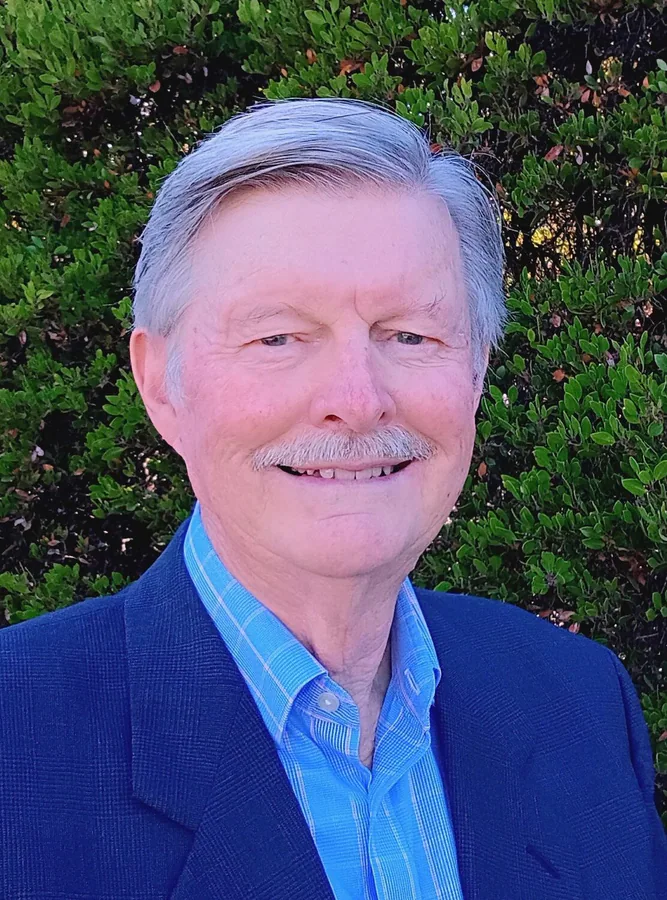
- Office
- Assembly Member District 15
- State
- California
- Status
- On the general ballot
- Election
- Election held Nov 3, 2026
- Result
- Lost
Build a campaign strategy for Arthur Webb
Where Webb stands
Campaign site, updated Nov 18, 2026. The campaign's issues page
Gasoline prices & refinery costs
Gasoline prices & refinery costs
Environment, Energy & Utilities
California, Yes We Can Reduce Our Fuel Bills
Sep 29
Question: Are you happy paying an extra $16 per fill-up?
- State spending should be based on progressive income tax money from the General fund.
- Appropriations to state agencies should be controlled by the Legislature.
- Regular order and debate should set priorities and fund CTC properly.
Correction: As of Oct 7 it is now $20 extra per fill-up. Same AAA source.
How can this be possible? Let’s dig into the facts and the causes. First, the above estimate is based on 10 gallons per typical fill-up. The Sep 11 difference between California prices and the national average is $1.63, as measured by AAA. So, $16 per fill-up. Take a $20 bill out of our pocket and let it fly away in the wind. Feels good, right? Not.
Several components to this problem are not measurable and appear near the end of this article. One that can be solved is the excessive gas excise tax, which takes us to SB1 (2017). EV owners might want to read along, since SB1 affected you also.
In 2017, our California government targeted gas car drivers as people doing planetary damage who must be stopped from driving fossil fuel cars. SB1 (2017) passed the Senate with overwhelming Democratic Party support. SB1 (2017) passed the Assembly almost immediately and without debate.
SB1 (2017) did several things. For a detailed analysis, please see ArthurWebbAssembly.com\Issues. Besides organizational changes, SB1 nearly doubled the fuel taxes, created new TIF and RIF line items on the DMV vehicle registration bill, mandated local transportation taxes, and created automatic tax rate increases. None of the addition pays for road maintenance and instead pays for bus, rail, biking, and walking alternatives.
In short, SB1 re-organized state transportation funding. It funded the independent California Transportation Commission (CTC) with self-sustaining revenue flows from ever increasing automatic tax rates. That funding and agency grants occur independently of the Legislature. Annual Reports.
Today, the gas excise tax is 63.4¢/gal plus 2.25% sales tax. Diesel excise tax is 48.2¢/gal plus 13% sales tax. Both are the highest in the nation.
The residents of California are suffering from inflation and high fuel tax rates. When the tax base goes up and the tax rate also goes up, it is a double slam on residents. Voters must elect new people who have the will to eliminate or greatly reduce fuel excise taxes, eliminate fuel sales taxes, and return CTC funding control to the Legislature.
The following proposals are based on fundamental principles.
Proposal 1: reduce gas excise tax, keep TIF unchanged
Proposal 2: eliminate the gas excise tax by raising TIF
Proposal 1 leaves drivers paying for road maintenance via the gas excise tax, as it was prior to 2017. Proposal 2 still leaves drivers paying, but annually when they register their vehicles. The TIF is already a progressive tax schedule. Proposal 2 steepens that schedule to put more burden on people choosing to drive expensive cars. Proposal 2 also makes any discussion of mileage taxes unnecessary since every car owner pays for roads on the same schedule, regardless of type of fuel.
The rest of California’s premium on fuel prices is much harder to quantify.
Cap and Invest:
Sometimes called Cap and Trade, this is the program that gives us a small rebate from PG&E based on their use of solar and wind. Where does that money come from? It comes from our pockets. Fees are charged to wholesalers when they buy hydrocarbon molecules and are embedded in the wholesale fuel cost. Cap and Invest is advertised as a market, but it is a tax by another name. It can be cancelled if the Legislature has the will.
Low Carbon Fuel Standard (LCFS):
This is another state program that adds to wholesale fuel cost. This includes a CAL Air Resources Board (CARB) market place and a LCFS Credit Banking and Transfer System. It can be cancelled if the Legislature has the will.
Summer fuel blend:
There is a national requirement for 10% Ethanol during summer months. California’s resulting blend is CaRFG, which is slightly more expensive than the national blend, leads to a slightly higher air quality, and is unique to California. As a result, California cannot sell or buy gasoline from other states to balance supply and demand. There is debate in California to raise to 15% Ethanol, which costs more. The issue for the next Legislature is to stay at the CaRFG standard, drop to the cheaper national standard, or raise to the more expensive 15% standard. This election matters.
NEWSFLASH E15: The choice just got made for you. The screws have already been tightened. Our costs are going up. E15 sale is approved, apparenly effective immediately. How? In 2025, AB30 passed which allowed the option of using E15. On Sep 1, 2026 SB795 passed (bi-partisan) which required the state fire marshall to set regulations by Dec 31, 2026 to make it safe to sell E15 through the same pumps and nozzle vapor control systems now selling E10. In the meantime, SB795 declared that if an E15 supplier said it was safe, SB795 deemed it to be safe, right now. No independent health and safety testing. Rush it through, get it done. The Governor has declared SB795 to be the resolution of an “administrative hurdle” blocking E15. The Governor signed SB795 Sep 19. On Sep 24, CARB, an unelected rules making agency, passed its amendments to implement the sale of E15. Notice the rapid turnaround. This is a rubber stamp of an already approved agenda. No agency indeendence here in California. Also, as has become customary, SB795 declared it unnecessary for the state to reimburse any company or agency implementing the new state mandated regulations. That means we pay for it.
Structural issues unique to California: These are the result of decades of state energy planning and cannot be reversed by the Legislature. We all are paying for this.
California imports up to 70% of its crude oil, historically mostly from Saudi Arabia. Despite having one of the highest reserves of heavy crude oil in the world, California imports heavy crude across oceans at great expense and environmental risk. The absence of pipelines creates a reliance on ports. The Jones act adds costs. Current closures in the Middle East add costs. Refineries are closing. California has become vulnerable to severe gasoline cost spikes and shortages. For a good description of California’s structural dilemma, please read this oilprice.com article.
$16 extra per fill-up can certainly be reduced, probably not eliminated. The tension between environmental concerns and lower costs will always exist. This author certainly does not want to return to the days of LA smog, but there needs to be a balance. The status quo will make California so unaffordable that millions more will be forced to leave. Is that a worthy goal? This candidate prefers a different goal, that being a balance to make California affordable and prosperous for everyone.
- Any climate change funding should come from people paying income taxes, not from drivers.
- Eliminate the automatic tax rate increases
- Roll back fuel excise taxes to 2017 levels
- Roll back RIF from it’s current $121 to $60
- Redirect fuel excise taxes, TIF, and RIF from CTC to Caltrans and local jurisdictions to maintain existing road repair funding
- Fund CTC reductions with appropriations made by the Legislature
- Eliminate fuel sales taxes
- Same as in Proposal 1, except:
- Roll back the gas excise tax to zero and diesel to 16¢/gal
- Reduce RIF from its current $121 to $0, matching the gas tax
- Steepen the TIF schedule to offset the funding loss
Gas Tax - How Much? Where Does It Go?
Gas Excise Tax – How Much is it? Where Does It Go?
Gas Excise Tax – How Much is it? Where Does It Go?
July 8, 2026
Let’s dive deeper into the California gas and diesel excise tax. Relevant sources are listed at the end of this report. Some of you may have read my earlier report. This one is much improved and uses additional sources. It also gives attention to the diesel excise tax. That indirectly affects our grocery prices and the issue of affordability.
I am using the term “excise tax” rather than “tax” to differentiate this topic from “sales tax”, which is out of scope. The federal excise tax of about 18 cents/gallon, is also out of scope.
Gas + Diesel excise tax is budgeted at about $9.5 Billion / year. That makes them important as an affordability issue.
Bottom Line:
The following estimates are taken from the Controller allocation spreadsheet Issue Date May 4 for March 23 - April 23 and adjusted against annual budget and YTD actual spreadsheets. See Sources.
Gas Excise Tax collects about $660 million / month. Where does it go?
$660 M Gas excise tax (rising from 61.2 to 63.4 cents/gallon July 1)
32% - Cal Trans for State Highway Account (SHA)
24% - California Transportation Commission (CTC)
for Road Maintenance and Rehabilitation Account (RMRA)
19% - Debt service (SHA) - DMV collected weight fees are now used for debt service by Cal Trans, including:
1B - 2006 - $19.925 Billion - Highway Safety, Traffic Reduction, Air Quality, and Port Security Bond Act
1A - 2008 - $9.95 Billion - Safe, Reliable High-Speed Passenger Train Bond Act for the 21st Century
10% - Local Streets & Roads – Counties
10% - Local Streets & Roads – Cities
4% - Other state funds and programs where gas tax was collected (aviation, water, parks, off-hwy, etc)
1% - Administration – State Controller Office (SCO), General Fund, and
California Tax and Fee Administration (CTFA)
Diesel Excise Tax collects about $97 million / month. Where does it go?
$97 M Diesel excise tax (rising from 46.6 to 48.2 cents/gallon July 1)
28% - Cal Trans for State Highway Account (SHA)
56% - California Transportation Commission (CTC)
28% for Road Maintenance and Rehabilitation Account (RMRA)
28% for Trade Corridor Enhancement Account (TCEA)
8% - Local Streets & Roads – Counties
8% - Local Streets & Roads – Cities
What you are paying at the pump is clearly not coming home to fix the roads you drive on. I expected more money to be returned to the counties and cities since that is where most of the tax is paid. CTC, RMRA, and TCEA should get more review. What projects have they approved?
Other Gas Taxes:
Although we pay an extra $1.25 to $1.50 per gallon at the pump, the gas excise tax itself is 61.2 cents, rising to 63.4 July 1. Why the difference?
The above chart for gas focuses on the excise tax, which is accounted for in the Controller’s spreadsheet as being for transportation, writ large. (The popular thought that these taxes are only for road maintenance became invalid about 9 years ago with the passage of SB1 in 2017.) Other taxes paid at the pump need brief mention though. There is a 2.25% sales tax and an 18.4 cents/gallon federal excise tax. There is a 2 cents/gallon fee for underground tank cleanup. Then it gets more complicated. There are “climate change” related fees embedded in the wholesale price. They are not directly tacked onto the price at the pump. They can vary from station to station, depending on how much of that wholesale price increase is passed along to you, the consumer. Much more work is needed on these and the funds that receive the money. What do they do with it?
The additional taxes and fees are:
Federal Excise Tax - 18.4 cents/gallon
2.25% Sales Tax – 10 cents/gallon
Underground Storage Fee 2 cents/gallon
Underground Storage Tank Cleanup Fund (USTCF)
Cap and Trade auctions 20 – 30 cents/gallon
Greenhouse Gas Reduction Fund (GGRF)
Low Carbon Fuel Standard 15-20 cents/gallon
California Air Resources Board (CARB) market place
LCFS Credit Banking and Transfer System (LRT-CBTS)
Excise Tax Rate Summary: (State Excise Tax only) (before July 1 increase)
Gas: The following few lines total to 61.2 cents/gallon excise tax.
$0.224 → Price-based portion (PBET) (sheet 2103) ($236 million)
$0.233 → Base excise portion (sheet 2104-2108) ($245 million)
$0.155 → SB1 portion (sheet 2031) ($163 million)
Diesel: The following few lines total to 46.6 cents/gallon excise tax.
$0.000 →Price-based portion (sheet 2103) ($0)
$0.207 → Base excise portion (sheet 2104-2108) ($39.6 million)
$0.259 → SB1 portion (sheet 2031) (49.6 million)
Use Fuel: This refers to alternate fuels, such as LNG or CNG.
$0.0887 per gallon equivalent CNG
$0.1017 per gallon equivalent LNG
Notes:
Note: There is a little bit of apples and oranges in the data, some budget, and some actual, slightly different time periods that do not coincide with monthend dates, some combining of line items such as gas including aviation fuel sometimes and sometimes DMV collected weight fees. Nevertheless, the large numbers allow a fairly stable monthly percentage distribution of the collected taxes.
Note: Named laws behind the gas tax are Streets and Highways Code §2103-§2108 and §2031, Budget Act Items, and Revenue and Taxation Code §8655.5 and §8655.6. That is where new laws to reduce or eliminate gas tax can focus as a starting point. One big source of these laws is SB1 from 2017, which added money and authority to the California Transporation Commission, which in turn is controlled by the Governor. SB1 also mandates a COLA style automatic tax increase, which means tax rates actually increase without any vote within the Legislature.
Sources:
California State Controllers Office (SCO) fund allocations, Look for Highway Users Tax under Payments. Reviewing the entire list might be interesting to many of us. Here is May allocation of HUTA account used for this report.
State Budgets in General
Fiscal Year 25-26 California Transportation Financing Package from Cal Trans
California Department of Tax and Fee Administration (CDTFA) Gas and Diesel Excise Tax Guide and Regulations
CDTFA Laws, Regulations, and Annotations
CDTFA Gas and Diesel Gallon Usage
CDTFA Tax Rates
Streets and Highways Code §2031 and §2103-§2108
Revenue and Taxation Code §7360 - paragraph 5 starts SB1 - 5(d) is auto tax increase
Revenue and Taxation Code §8352.5
Updated: June 20, 2026
The tax on vehicle registration suggested below already exists. it was imposed 9 years ago by the same SB1 (2017) that ramped up the gas tax and re-organized California transportion. The tax money obtained in this case…
The tax on vehicle registration suggested below already exists. it was imposed 9 years ago by the same SB1 (2017) that ramped up the gas tax and re-organized California transportion. The tax money obtained in this case all goes to the California Transportation Commission, who then allocates money as grants for road maintenance, but also climate change priorities. Please read the issues article about SB1. So, if we are already paying a road maintenance tax to register our vehicles, then that could be made to suffice for all road maintenance. The gas tax only funds about half of road maintenance anyway, so why not eliminate the gas tax entirely and modify vehicle registration tax as need for road maintenance.
Check your latest registration bill. Some of us see a Transportion Improvement Fund (TIF) line item that taxes gas vehicles by a progressive rate scale based on the value of the vehicle. Others of us see a Road Improvement Fund (RIF) line item that taxes EV vehicles a fixed rate regardless of the vehicle value. I cannot report where Hybrids fit into this model. The rate scale can be changed, it can be applied to EV vehicles, the TIF and RIF can be merged, the destination of the tax money can be diverted to road maintenance only. There is a lot of possibility here. There is a lot of opportunity to eliminate the gas tax.
Original Post follows:
A quick comment on gas tax and the proposed mileage tax. We are told this money goes into a transportation fund for road maintenance. Drivers all know we are not getting our money’s worth. Where is the money actually used? How much is used for road maintenance? Are we allowed to know? Why aren’t we shown an audit report?
General Fund? Wouldn’t it be better to move transportation / road maintenance to a General Fund item? That would eliminate the gas tax and avoid the mileage tax discussion altogether. Given that the General Fund is not a politically viable option (debatable), I propose a simple alternative.
Registration: We register our cars each year and we see various line item fees on the registration bill. I think we could have one more line item on that bill for transporation / road maintenance.
Based on VIN and perhaps vehicle weight, that amount can vary. If gas taxes persist, then gas engines would be zero, hybrids some higher amount, and electrics some even higher amount. Such a schedule eliminates the entire argument for mileage taxes; that being “everyone pays their fair share.” If the mileage tax remains under discussion, then it is clearly all about control of our driving habits. The mileage tax is a bad idea.
Let’s take this further. Let’s charge cars with gas engines with a non-zero fee. In fact, let’s just move all cars to the same annual fee schedule for transportation maintenance, again with possible weight variations. Make that fee match what is needed for the actual transporation / road maintenance budget. At that point, we can zero out the gas tax, except for normal sales tax. Zero gas tax sounds pretty good to me.
Advantages: Having the transportation / road tax paid once a year when we register our vehicles has advantages. It is simple and transparent. The tax would no longer vary with a person’s choice of lifestyle. There would be less control of lifestyle. The administrative overhead behind the gas tax would be eliminated. Transportation planners would benefit from a more stable source of funds. We can see our annual tax bill total amount and debate what is reasonable. Voters may even eventually decide to cancel the registration fee and move transportation / road maintenance to a General Fund item.
Taxation & Revenue
Transportation Funding - Drop the Gas and Diesel Tax? – a Serious Proposal
- Federal excise tax will still be collected.
- Local sales tax will still be collected.
- State sales tax will still be collected (2.25% for gas, 13.0% for diesel).
Transportation Funding - Drop the Gas and Diesel Tax? – a Serious Proposal
July 13, 2026
This proposal results from two nearby reports:
Issues - SB1 (2017) Road Repair and Accountability Act
Issues - Gas Excise Tax – How Much is it? Where Does It Go?
SB1 was a bold move made 9 years ago. It addressed a chronic shortage of transportation funding. It optimistically assigned priority to climate change measures. It assigned the cost of those measures to people driving gas powered vehicles. It did so in the expectation that somehow people would convert.
Now, nine years later, we need to make a mid-course correction. We need to recognize the situation today is not the same as was expected. We need to recognize that gas fuel is here for the long term. We need to recognize that affordability is so difficult in California that people having trouble making rent cannot possibly buy an EV, especially an EV work truck. We need to recognize that regressive taxes are very unfair to the working people of California, especially those spending hours each day on the road to get to work sites because of housing costs. We need to stop targeting those people. We need to recognize that automatically increasing tax rates are taxation without representation. We need to replace regressive taxes with the already existing and more progressive TIF tax mechanism used when we register cars with DMV. I would expect all “progressive tax” advocates reading this must agree.
Affordability within California will be improved when the working class, the “blue collar” labor in California, will see 63.4 cents per gallon reduction in their gas prices. I would expect all “pro-labor” advocates reading this must agree.
Affordability within California will be improved when delivery of food to grocery stores sees a 48.2 cents per gallon reduction in diesel fuel prices. I would expect everyone who buys food must agree.
There is one more small benefit. Currently, EV owners are paying extra. Not only do they pay TIF, they pay a flat $121 when they register. It is the Road Improvement Fee (RIF), another regressive tax set to automatically increase each year. Obviously, that was a 2017 dated attempt to have them pay some proxy for gas excise taxes. If gas excise taxes are eliminated, so too should the RIF be eliminated. I would expect all EV owners must agree.
To be clear, I am not advocating the repeal of SB1. Parts of it, yes, all of it, no. The TIF created by SB1 should be kept, and possibly expanded, with its money redirected back to actual road maintenance. The current organization of CTC as defined by SB1 is fine, once the State Legislature is back involved.
Climate change is controversial. Decisions should not be made by a small appointed group of 11 Directors within CTC. Tax rates should not be raised automatically without any vote. That is taxation without representation. Removing CTC gas excise tax funding and replacing it with General Fund money returns the State Legislature to its regular appropriations and taxation role. CTC funding will return to normal government debate within the elected Legislature and be funded as the Legislature sees fit. CTC will continue to administer the money, but as part of normal representative government.
At least 6 years of CTC reserves are available at current CTC allocation rates. This proposed change has plenty of time to work without interruption. The detailed Controller spreadsheet for allocation of funds will still work when the TIF money (about $2.7 billion/year) is redirected to the Controller input fund (MVTA) rather than directly to CTC. The Controller spreadsheet process will see funds from a different source, but the allocation will still be by law.
Some people might suggest that the gas excise tax could be reduced, rather than eliminated. Perhaps it could be rolled back to pre-SB1 rate of 29.7 cents per gallon, or post-SB1 rate of 47.3 (removing the automatic tax increases since 2017). When a tax becomes abusive, when the tax receipts are not used as originally advertised, is it really possible to correct that tax? Isn’t it better to just eliminate the tax?
This proposal will not fully correct the California gasoline problem:
The price at the pump will still be higher than in the rest of the country. The problems listed above can be corrected next. In the meantime, this proposal represents a significant improvement for all Californians.
- The 30-50 cents per gallon addition to wholesale prices by the Cap and Trade auctions will continue.
- The special blend of California gas will continue.
- The requirement to import crude to California refineries will continue.
7. Home Improvement - Taxes
Home owners are at a disadvantage in the tax laws.
Home owners are at a disadvantage in the tax laws.
a. If a home owner improves their home, they have one choice. Wait until they sell and then add the costs to their basis. At that time, the “profit” on the house is reduced and taxes are saved. If a landlord or company spends the same money on a rental, they can deduct the costs in that tax year. Taxes are saved in that year; i.e. right away. I suggest that a better tax law is one that allows an owner, whether individual or company, to choose whether to deduct costs in the year or when the sale occurs. That decision will vary depending on individual circumstances and freedom means it is the owner’s choice. If deducted in the current year, the landlord or company would deduct on a Schedule C as a business expense. The home owner should be allowed to deduct similarly, without the limitations of Schedule A. If the owner uses standard deduction, the owner should still be able to deduct the full improvement costs.
b. The benefits would be many. The cost of home ownership would be reduced. Owners would be more likely to improve their homes, which benefits society at large. Home sales might be a little lower because it wouldn’t be necessary to sell a home in order to re-coup improvement costs, thereby leading to more stable neighborhoods. The advantage that “flippers” have over an owner doing the same renovation work would disappear.
Property & income tax relief
Taxation & Revenue
California Gas Tax Rate is Higher than the Maximum Income Tax Rate – UNFAIR!
- eliminate the gas and diesel tax – or cut it 2/3 to 2017 levels.
- eliminate the automatic tax rate increases.
- declare that sales tax does not apply to gas and diesel and drop it.
August 15, 2026
Gas Tax Rate is Higher than the Max Income Tax Rate – UNFAIR!
Why am I so pre-occupied with the gas tax? Why the diesel tax? You are being taxed at high tax rates for those. You are also paying the same tax rate as the richest person in California would pay. That is why I call them regressive. We all pay the same tax rate in regressive taxes, such as gas tax, diesel tax, sales tax, property tax (which feeds into rent), wage tax.
An example of a progressive tax would be income tax. For that, if someone makes more money, they pay a higher percent of their income (tax rate) than someone making less money. Not just tax money, but a higher percentage. There are several tax rate brackets involved. The highest income tax bracket for the highest income people in California is 12.3%.
So, back to gas tax at 63.4 cents per gallon. At today’s California average of $5.66 per gallon, what is the gas tax rate as a percentage? My math says the gas tax is 12.6%. Higher than the highest income tax rate of 12.3%.
To repeat: we each pay a higher tax rate to buy gas than the income tax rate paid by highest income person in California. For gas itself, we pay the same rate as that highest income person. This is not fair.
Let me take a detour for diesel tax. That tax is currently 48.2 cents per gallon. At today’s California average of $6.62 per gallon, the diesel tax rate is 7.9%. This is a cost in our food supply, since diesel trucks deliver most food to stores. Affordability is affected by both gas and diesel taxes.
I mentioned sales tax as another regressive tax. That applies in addition to gas and diesel taxes. For gas, the added sales tax is 2.5%, raising gas tax to 14%. For diesel, the added sales tax is 13.3%, raising diesel tax to a whopping 21%.
We are being taxed harshly. Who is doing this? The Democratic Party is doing this. They control the state and have done so for decades. They pushed through SB1 in 2017 to double the existing gas and diesel taxes and also create an automatic annual tax increase. Automatic, without any vote by the people or the legislature, COLA style, the only time this has been done that I am aware of. Since then, they have done nothing to reduce or eliminate the tax burden. They have instead raised taxes at every opportunity. 90% overall increase since Covid.
To repeat: 90% budget and tax increase since Covid by the Democratic Party.
For all the talk we hear from the Democratic Party about “tax the rich” and “we help the average person,” the reality is that the Democratic Party does what hurts the average person the most. We all should pay attention to what they actually DO, not what they say at election time.
This is another election year when voters can shock the politicians into working for the people. In this election, I ask everyone to teach the Democratic Party a lesson and vote against them in every race. They must be made aware that they work for the people. Democrats, Republicans, NPP like me, and the several minor parties can all send this message – this election. After all, how many of us recognize the modern Democratic Party?
In the case of gas and diesel taxes, nine years ago the people driving normal vehicles were targeted as the villains behind climate change. They were targeted with excessive and always increasing tax rates. The goal at the time was to raise the cost of gas and diesel so high that no one could afford to drive their cars and trucks. Everyone would have to walk, take public transit, or buy an electric vehicle. In addition, most of the gas and diesel tax was redirected to bus, rail, bike, and walking routes to bolster those goals. The people making these decisions were well intentioned, maybe, but completely upside down in their thinking. As government employees, they were targeting the people. They were as wrong as they could be. It is time to fix the problem.
The government must:
In addition, related but not mentioned in this essay (see SB1 essay):
- redirect gas and diesel tax money to its original road maintenance role.
- redirect car registration TIF and RIF money to road maintenance.
- eliminate or reduce car registration line RIF.
- replace bus, rail, bike, walk funding with income tax money.
- return transportation appropriations to legislative control.
- eliminate the Cap and Invest program, a hidden tax on wholesale prices.
- eliminate the costly and ineffective summer blend program.
Roads, bridges & commuter rail
Roads, bridges & commuter rail
Transportation & Motor Vehicles
SB1 (2017) Road Repair and Accountability Act
SB1 (2017) Road Repair and Accountability Act
SB1 (2017) Road Repair and Accountability Act
July 11, 2026
The reader is also referred to the nearby report and its sources: Issues - Gas Excise Tax – How Much Where Does It Go?
SB1 was passed in 2017. SB1 re-organized California’s transportation system, both development and maintenance. It included more than the road repair previously funded by gas excise taxes. SB1 re-defined the scope of transportation work. It included aeronautical, waterway, state parks, inter-city rail, intra-city rail, bus transit operations, bus transit subsidies, truck corridors, biking, and walking, and additional climate change priorities.
SB1 nearly doubled gas excise taxes, doubled diesel excise taxes, and then added 4% points to the diesel sales tax. It added two cost lines to vehicle registration, one for EV (Roads Improvement Fund (RIF)) and one for gas vehicles (Transportation Improvement Fund (TIF)). EV owners now pay both the RIF and TIF. It added a COLA style automatic annual tax rate increase throughout, with the diesel excise tax being the only exception.
July 2017: gas 29.7 cents/gal diesel 16 cents/gal
Nov 2017: gas 47.3 diesel 36 plus 4% added to sales tax rate (after SB1)
July 2026: gas 63.4 diesel 48.2 (automatic increases)
How many other regressive taxes have doubled or tripled in 9 years?
Who controls this new tax money? Monies are assigned per law to several places. Most to the California Transportation Commission (CTC), an independent agency appointed by the Governor (9 of 11 Directors) and assigned to receive and allocate transportation related tax money. Over the last several years, the CTC has built up a huge war chest of money, far in excess of the actual allocations and far above the required reserve levels. The legacy departments of Cal Trans and local counties and cities receive a fraction of the money from the new taxes. It is hard to tell exactly, but the total gas excise tax has about 30% directly to Cal Trans and 20% directly to counties and cities operating funds. All of the diesel fuel excise tax goes to CTC. All of the new DMV car registration fees (TIF and RIF) go to CTC. The majority goes to RMRA and TCEA funds within CTC, for their allocation via grants to support a wide variety of programs, far beyond road repair itself. Some of those allocations are made to Cal Trans and local counties and cities, of course; however, related work is done per application rules and grant requirements of the CTC. Read the annual reports of CTC and you will see that road repair is not a priority.
SB1 created the Office of Inspector General within Cal Trans, but controlled by CTC, not by the Controller’s office or the Governor’s office or Cal Trans itself. Cal Trans has a mandate to report annually to CTC. Cal Trans is still a government agency and continues to do road maintenance, but now under control of CTC.
SB1 created a CTC rule for local governments that in order to qualify for future state grants to improve local roads those local governments must first create local taxes or fees on transporation. In addition, those new taxes and fees must comply with directives from the CTC. SB1 not only re-organized state level transportation funding and planning, it asserted state mandates over local jurisdictions.
In short, SB1 funds an independent agency, CTC, with self sustaining revenue flows from ever increasing automatic tax rates.
CTC controls the transportation expenditures for the State. CTC is controlled by the Governor’s office. CTC is not dependent on appropriations from the California Legislature. CTC has amassed a large fund balance, far exceeding the mandated reserve levels. Taxes have been paid and not yet spent for public benefit. Currently, CTC annual revenue and grant expenditures more or less match. What is the point of the large fund balance sitting unused? CTC operates as a shadow government, one of several in California. Those must be returned to Legislature appropriations control. The reader is invited to read through CTC annual reports. Lots of verbage, especially climate change related verbage, but no detail on grants. If there is oversite being done, it doesn’t appear to be public.
The following SB1 list is taken from multiple sources and is not to be considered complete. It is included as illustration of how comprehensive SB1 changed California.
New Funding Accounts:
Road Maintenance and Rehabilitation Account (RMRA)
estimated about 50% of gas excise tax,
half of diesel excise tax
all of new TIF and RIF
Cal Trans is mandated to send up to $100M per year to RMRA
this is supposed to come from operating efficiency savings
Trade Corridor Enhancement Account (TCEA)
half of the diesel excise tax increase
Reduced Funding Accounts:
State Highway Account (SHA) – Cal Trans operations
estimated about 30% of gas excise tax
LR&T Account – existing for local counties and cities
estimated about 20% of gas excise tax
New and Expanded Programs:
State Transportation Improvement Program (STIP)
State Highway Operations and Protection Program (SHOPP)
Transit and Intercity Rail Capital Program (TIRCP)
Trade Corridor Enhancement Program (TCEP)
Congested Corridors Program (CCP)
Active Transportation Program (ATP) – bike and walking
Cities and Counties Local Streets (50/50 based on population)
Reserve Balances for CTC Major Accounts:
RMRA: stable at about $3 Billion – prudent balance $400 million
PTA: stable at about $2 Billion – prudent balance $300 million
TCEA: stable at about $1.7 Billion – prudent balance $50 million
for comparison: Cal Trans operating account (SHA) is declining to below prudent balance of $415 million
Those of us familiar with grants and fund accounting governance know that this is the most expensive and least efficient way of funding normal operations. It is also the most effective in asserting control over what work is authorized and what other work can be mandated to even qualify for authorizations.
Sources:
CA Senate: SB1 Third Reading
CA LAO: Overview of the 2017 Transportation Funding Package
Cal Trans to CTC (see Appendix C)
K-12 public school funding
Education
School Funding Thoughts
School Funding Thoughts:
School Funding Thoughts:
July 18, 2026
Disclaimer: I am not and have not been part of the school system funding. These are my thoughts alone as an outsider.
In short: The use of school bonds doesn’t seem practical in the long term. Even for buildings, use of the General Fund seems a much better alternative. Wealth Disparity Reduction goals, Equality of Opportunity goals, and lower costs of school funding goals are better met with General Fund money instead of bond money. My proposal is furthering the decades old process of moving school funding from local to the state, while maintaining local control over the schools themselves.
Current Status
California school funding is best divided into Operating funds and Capital funds. Operating funds would be annual expenses, mostly teachers, administrators, building maintenance, and other annual operating costs. Capita…
California school funding is best divided into Operating funds and Capital funds. Operating funds would be annual expenses, mostly teachers, administrators, building maintenance, and other annual operating costs. Capital funds would be new buildings, campus renovation, large equipment, technology, and other large expenses to be paid for over time.
In 1970 and earlier, school funding was almost entirely by local property taxes. Widespread disparities existed. For example, Emeryville was mostly commercial with few kids, so Emeryville schools were very well funded with a tiny property tax rate, I think the lowest in the State. Wealthy districts paid higher property tax rates and had high property values, so their schools were highly funded. Districts with low property values and lots of kids paid high property tax rates and still had underfunded schools.
Serrano vs Priest was the court case that led to the current funding model. That case has a long and complicated history. Ultimately, the then existing funding model of nearly all local property taxes was declared in 1971 to be in violation of the California Constitution and that violation was re-affirmed in 1976. During those years, various funding programs were tried and abandoned. Then Prop 13 occurred in 1978 followed by Proposition 98 in 1988. Ultimately, the following mechanism emerged.
Current Operating funding in rough percentages is about:
State 55–60% General Fund (progressive taxes)
Local 30–35% Property taxes (regressive taxes)
Federal 6–11% Grants
Other 1–2% Lottery
Operating funds are disbursed from the State Education Fund and allocated at the state level under the Local Control Funding Formula (LCFF). All districts get a base amount. Then a series of supplemental allowances are added that are intended to send more money to poor and stressed districts than to rich districts. The intent is “equality convergence.” This program is reviewed and adjusted and its procedure and allocations are public. The State Controller’s monthly allocations to each school district are public.
Capital funds are disbursed by the state in the form of matching to local funds, usually 50%. Sometimes, a grant might pay for something specific like technology. Unfortunately, matching often requires a local bond issue to generate those local funds. Some districts can pass a bond, some cannot.
Occasionally, local funds can be partially obtained by charging fees to housing developers. This can seem contradictory to the housing affordability issue. But, perhaps not. If the subdivision is large enough, it is natural to need a new elementary school or two and even a new middle school or high school. Brentwood is a good example. It is also natural for the developer to earmark funds for the school, subtract any grants or government payments, add the net amount to the price of the houses, and re-coup their money from eventual buyers. This is similar to what happens with roads and underground infrastructure to support a new neighborhood. This only works if the regulatory environment works well enough for very large scale building projects to be approved. This also leads to more housing, which is badly needed.
First, my proposal, then two benefits. The lower cost of school funding should be readily apparent without further mention.
Reform Proposal
The term mentioned earlier for Operating funds was “equality convergence.”. Perhaps that can be the goal of Capital funding too. For example, what if the current matching program was modelled after the LCFF supplemental…
The term mentioned earlier for Operating funds was “equality convergence.”. Perhaps that can be the goal of Capital funding too. For example, what if the current matching program was modelled after the LCFF supplemental and adjustment decisions. Adjust the matching rate based on district level conditions. Perhaps some capital projects would not even need local matching or a bond issue.
Matching comes from wanting local districts to have buy-in. That can just as well be handled during the application process. That process should be able to interpret need for funds and commitment to success throughout the state without the rather artificial process of matching funds. When State Education Fund money is made available by legislative action, the matching could and should be abandoned.
One more point to emphasize. The State sometimes issues state level bond programs to get its funds for matching. That is very expensive and should be discouraged. The State has to live within its means without such borrowing and increased taxing. See comments below under Wealth Disparity Reduction.
The General Fund is being used in ways many of us find wasteful or objectionable or simply unnecessary. It would be so much more appropriate to re-allocate General Fund money to the State Education Fund for both Operating and Capital school funding.
A cynic might say that doing so would prevent the General Fund money from being spent on higher priority or more preferred (pet) projects.
I say that schools are very high priority. I also say that doing so can lead to undesirable variability in the General Fund budget. Some years will have more campus building costs and some years will have less. Any variable application process would collide with the budget process.
To smooth out General Fund spending, a Reserve fund should be set up to collect General Fund money for eventual school capital funding. De-linking funding and allocations, like a clutch between engine and transmission, makes it work. Let’s call that fund State Education Capital Reserve Fund (SECRF), make it part of the State Education Fund, and fund it from the General Fund. The State Controllers Office can transfer reserve funds in the same way they routinely transfer other funds, usually monthly. Capital allocations can be made to local districts as approved and would be independent from inbound transfers.
Warning: I realize this creates a centralized source of funds, which also creates a centralized application process. That cannot be allowed to become political. That cannot be allowed to dictate local priorities, like transportation funding has done. Great care must be taken to minimize the application burden on local school districts. They must not be required to spend classroom money on grant writers. Pre-requisites for grant authorizatons must remain minimal without State mandates. Local districts may have to wait for funding and to justify their funding levels, but getting in the queue for funds must be easy. Local school districts must remain as independent of the State as they are now.
Wealth Disparity Reduction
Bonds are an expensive way to fund things. They are debt. They pay interest. They last a long time, such as 30 years, which is often longer than the buildings being financed. We can relate to home mortgages. A 30 year home mortgage often costs triple (depending on interest rate), meaning you pay triple the initial borrow amount. Bond debt is similar.
It is better to save into a Reserve for 10 years and then build rather than build first and pay debt for 30 years. Affordability is easier when interest is not being paid.
Who pays that debt service and that “triple.” Residents of the district, or all of us for state bonds. Bond debt service gets added as a line item to property tax payments, yet another regressive tax. They add cost to home owners. As landlord owners pass that cost along, bonds add to rental costs. Everyone pays.
Who receives that interest money? Pension funds, retirement funds, wealthy people, foreign investors, or anyone with extra money who can buy those bonds and collect a steady income stream over a long time.
Can we not find a better way to fund capital school expenses than tax everyone for the income of a few? This is another example of taxing people who use something that they have no choice but to use (or don’t even use at all) and paying the tax revenue to wealthy people who don’t need government assistance. That seems very upside down to me.
Civil Rights & Human Rights
Equality of Opportunity
Some districts in California can pass school bonds for capital improvements and for other things, such as music or drama or science or tech. Other districts cannot afford to pass such school bonds. Where is the equality…
Some districts in California can pass school bonds for capital improvements and for other things, such as music or drama or science or tech. Other districts cannot afford to pass such school bonds. Where is the equality of opportunity in that scenario?
California tried to fix school funding disparity almost 50 years ago. We made good progress with Operating funding. It is time to finish the job with Capital funding.
Housing shortage & rents
Housing & Land Use
Housing Thoughts
Housing Thoughts
Housing Thoughts
July 16, 2026
The Housing issue is complicated and has some very subtle side effects. I make some comments below. I also ask for input from fellow residents and housing advocate organizations. Please send me your ideas or volunteer to get involved using the Contact form, or by sending an email to ArthurWebbAssembly@gmail.com. I have my ideas and am also open to thoughtful solutions.
Contents:
1. Housing Shortage
2. Rent Increase Reasons
3. Rent Subsidy Negotiations
4. Home Ownership Help
5. Large Corporations Buying Single Family Homes
6. Right to Repair Act
7. Home Improvement - Taxes
8. Rent Control
1. Housing Shortage
We need a huge number of new housing units in California. Let's start with 30,000 in Contra Costa alone. I mean all price ranges, but mostly lower end and affordable. The government cannot build those housing units, but…
We need a huge number of new housing units in California. Let's start with 30,000 in Contra Costa alone. I mean all price ranges, but mostly lower end and affordable. The government cannot build those housing units, but it can help in at least two ways.
a. The one everyone talks about is to lower regulatory costs and time to approval. When the regulatory cost of a new single family home is $100,000, we must say we have a problem to solve.
b. The second is some form of government payment to builders. What? Builders make a little more profit when they build higher priced houses or apartment complexes. They lose that profit when they build lower cost houses or apartment complexes or building in marginal areas. If the government could offset that profit loss, they would be stimulating lower cost housing and apartment complexes and building in marginal areas. I know this is government subsidy of corporations, which I normally am against. We are in a state of emergency though and a several year temporary program seems to be worthwhile.
2. Rent Increase Reasons
We need to reduce or eliminate the pressure on landlords to raise rents.
We need to reduce or eliminate the pressure on landlords to raise rents.
a. Every bond issue that adds to property tax payments raises costs to the landlord and puts upward pressure on rents. School bonds, transportation bonds, and all other bonds end up raising rents. The benefit might be worth the cost, but that is a decision to be taken seriously by everyone, not just home owners.
b. Every month of inflation puts upward pressure on rents. Utilities, materials, labor increases, and licensing increases to landlords get passed to renters eventually. There are a lot of regressive taxes in California, way too many. Perhaps the worst is inflation. Even the 2% federal policy is bad. We have been well above that for over 5 years. Cumulative inflation since Covid is about 30%. In other words, a dollar in 2002 is now worth 70 cents. That puts pressure on rents to raise by the same amount if the landlord wants to stay even with inflation. Have wages gone up 30%?
c. Affordability is about not being able to control all the cost increases while also not being to control wage increases. Landlords can pass along their increases. People renting cannot.
3. Rent Subsidy Negotiations
We need to stop propping up rents with rent subsidies. The aggregate size of rent subsidies is very high. Certainly high enough to give the agencies who administer most of the subsidies a lot of negotiating power. Those…
We need to stop propping up rents with rent subsidies. The aggregate size of rent subsidies is very high. Certainly high enough to give the agencies who administer most of the subsidies a lot of negotiating power. Those agencies pay subsidies directly to a small number of landlords and should be more active in negotiating prices, hopefully downward. By doing that, they allow more people to be helped with the same tax money. They will also benefit everyone else not receiving subsidies because the prices would be lower for them too. This option is affected by the housing shortage issue since it is very difficult to threaten to move subsidized people when there is no place to move them to.
8. Rent Control
This is a tough one. To me, rent control eventually feeds into gentrification and large scale development projects which displace everyone in a neighborhood. That would be long term. In the short term, rent control ofte…
This is a tough one. To me, rent control eventually feeds into gentrification and large scale development projects which displace everyone in a neighborhood. That would be long term. In the short term, rent control often means having shelter or being forced to move. Move where? That is the question. I have no method of finding the proper balance. This is where someone could help me set policy.
Housing & Land Use
4. Home Ownership Help
We need to make it easier to buy a home. I am not talking about repeating the mistakes that led to the housing debacle in 2008. There are opportunities but the legislature has to put them into law.
We need to make it easier to buy a home. I am not talking about repeating the mistakes that led to the housing debacle in 2008. There are opportunities but the legislature has to put them into law.
a. The federal government could raise the federal FHA limits, at least for California. If not, the state could create an equivalent program to lower interest rates on FHA (or CA FHA) qualified home purchases.
b. The state could pay for the mortgage insurance in some instances, such as for first time buyers. I do not want to make this a means tested benefit. I subscribe to the nordic concept that any government available to some should also be available to all. That means a child of a wealthy family would be eligible for the same first time buyer benefit. They may choose to not take it, they may choose to donate an equivalent amount, but the benefit should be available to everyone. We do not need another admin army doing means testing and we do not need to create a class system.
5. Large Corporations Buying Single Family Homes
We need to stop the current trend of large corporations buying single family homes. The makes the housing shortage even worse. The high volume of such transactions indicates a problem in the tax law. Somehow, the tax la…
We need to stop the current trend of large corporations buying single family homes. The makes the housing shortage even worse. The high volume of such transactions indicates a problem in the tax law. Somehow, the tax law makes it highly profitable for corporations to own rental property. Large apartment complexes are understandable since they are too expensive for small companies or individuals. Single family homes and small apartments like 2-plex and 4-plex should be owned by individuals living nearby.
6. Right to Repair Act
The Right to Repair Act (SB800 2002) created a law that says a condo owner can sue a builder for up to 10 years. No doubt there was a beneficial intent, but there is a nasty side effect.
The Right to Repair Act (SB800 2002) created a law that says a condo owner can sue a builder for up to 10 years. No doubt there was a beneficial intent, but there is a nasty side effect.
a. SB800 created a distortion in which large scale builders of large condominium complexes often do not put the individual condos up for sale. Instead, they transfer building title to a controlled company that rents out the condos for 10 years. During that time, the builder and the controlled company shield themselves from lawsuits and make inflation profits. The people living in the condos do not share inflation profits but only pay high rent. After 10 years, the opportunity to sue evaporates and the condos can go on the market, but now at much higher prices. The people living in the condos can buy or move. Alternatively, another large corporation can buy the building and continue to rent it indefinitely. Not a good alternative. We see this everywhere in urban and suburban towns.
b. The issues of the previous paragraph are difficult to solve. Do we want to drop the 10 year rule and promote shoddy or dangerous construction? How do we find a balance? Again, probably in the tax law. Also, possibly some change to the mentioned law that turns the right to sue into right to mediation. Possibly by creating a construction and design repair fund paid into by builders and from which condo owners can draw for repairs. Possibly in some kind of fair and balanced rent to own contract in which the individual buyer can share in property value increases during that 10 year period and the builders still are liable for repair costs. All of this involves the state legislature, which has not acted since the original law went into effect. 25 years. We need to put many new people into the state legislature.
Cost of Living
Affordability
Affordability is a popular topic of conversation these days. Let’s take a look.
Affordability is a popular topic of conversation these days. Let’s take a look.
Core Principle: It is the people who have the ability, the right, and the duty to keep the cost of government in line with affordability. This is the point of elections, especially this one. No one should expect the government to control itself. That just isn’t reality. The people in government naturally serve their own interests by expanding government. The people not in government must serve their own interests by shrinking government.
Vote as if your livelihood is at stake.
Big Government Hurts Affordability: The proposed 2026/7 California budget is $349 Billion, up 17% from just two years ago. (Source data ebudget.ca.gov, see my nearby issues post) That is a lot of money taken out of the California economy. Said differently, that is a lot of money taken out of our pockets, definitely affecting affordability. Yes, it is then spent and goes into other’s pockets. But whose? Do you feel like you were even asked? Do you feel that you are getting your money’s worth? That budget also has a $20 Billion shortfall. We need not wonder about the current push for new taxes.
In my opinion, $349 Billion is too much money. As a percentage of the economy, the state government is currently taking a higher percentage than ever before. It is time to cut that cost, dramatically. California has a spending problem, not a revenue problem. To improve affordability for everyone, cut costs and don’t raise taxes.
Control of the Money: Affordability is improved when individuals retain more control of their own money. As free people, we have individual Freedom to Choose what to do with our money in the most effective way, as we see fit, and including our personal values and sentiments towards helping others. As an aggregate of those personal decisions, our society has better values and benefits most when we individually make money decisions based on what we think is best for us.
The above belief statement is foundational to America. This is the classic belief that a body of free people can think for themselves, make decisions for themselves, and govern themselves (John Locke). People are not brutes who need lords and masters or central planners to control their lives (Thomas Hobbes).
In short, we improve affordability for everyone by limiting how much money the state government controls. We ourselves can do better.
Monopoly and Owners: We can choose to shop around for lower prices. We cannot choose whether to pay taxes for government though. Government is a monopoly. We have no choice but to pay. The owners of the government are the citizens and it is us owners who must control our government. When it gets out of bounds, we must correct it.
Again, vote as if your livelihood is at stake.
Specific Sectors: We can also improve affordability by specific sectors. Let’s consider a few.
Housing: We clearly need more housing. We have underbuilt housing for decades. Scarcity drives up prices. We need to encourage home builders wherever possible. What also drives up prices is the cost of regulations.
There are two obvious reforms possible.
One reform is to reduce compliance requirements to what is needed for health and safety and the local environment, possibly even aesthetics. What should be removed are regulations to promote social and cultural change mandates, including “world wide climate effects” of the local project.
The second reform is to reduce time to approval. That can make a big difference in a build or not build decision. The approval should be days to weeks, even hours, but not months or even years. From time to time, we hear of a push to “fast track” approvals. That should be the norm, not some special event.
Inflation: Currently, inflation is over 3% and likely to rise over the next few months. More importantly, the federal government’s stated goal is an inflation rate of 2%. In my opinion, even that seemingly small number is hurtful to affordability. The goal of “price stability” should be interpreted as 0% inflation, not 2%. Yes, 0% has a slightly higher risk of mild deflation, but is that so bad? Deflation means prices drop. Would that not help affordability? I don’t want prices to drop precipiously, but how much would an occasional and temporary 1% deflation actually hurt our economy?
Alternatively, what does a 2% inflation do to our economy. Anyone familiar with the “rule of 72” (or 70 or 71 – look it up) would know that a 2% inflation means prices double every 35 years or so. Or, your money is worth half every 35 years or more. A dollar in 1991 would now be worth 50 cents, not even counting the high inflation during the previous administration. The US Inflation Calculator (https://www.usinflationcalculator.com) shows a dollar in 1991 now worth 41 cents. If we go back to 1965, back past the inflation of the 70s, that same calculator has a dollar then worth a penny today. Not even one typical lifetime. That should shock us all! “Penny candy” is no more. Gold didn’t get so expensive in intrinsic value so much as the dollar collapsed in its buying power. No wonder the stock market sets records.
Wage gains and investments have to deal with inflation, as if they were a person on a treadmill, always running just to keep up. 2% is not such a benign number after all. It is popular in government circles because they can pay debts on discounted dollars, but it hurts savers, bond holders, and definitely hurts affordability.
Taxes and Fees: As we move through our day, taxes and fees are taken out of our pockets. Gas taxes, sales tax, property taxes, fees of all kinds. Fees might be the worst. They often go to special funds. How often do you hear of any audit of those special funds? My Google Workspace account for the campaign has five different state fees. My phone bill has four different state fees. The gas tax has several components, even incredibly a cost of living (COLA) automatic increase. Lack of affordability has been mechanized by policy! Before voting, look at your own property tax bill. Look at your own water, power, phone, and other bills. Everywhere, the state takes its cut. This is a constant drain on affordability.
One Obvious Correction: Every fee and gas tax has a state law or an agency decision authorizing it. That list needs to be developed and published. It might be long but it is finite. Then it can be debated, kept, or repealed as the voters decide or as their elected representatives decide. Instead of all this incremental increase, we need to see it as a whole. We need to realize we are the frog and the dial is set to boil.
Currently, proper reviews are not done in Sacramento. One party controls 75% control of the legislature and 100% of state officers, including the Governor and the Controller and the Treasurer. That has to end by moving closer to 50% parity in Sacramento.
Who Pays: Let’s answer the claim that richer people and companies pay these taxes and fees, or should pay them, so we shouldn’t be concerned. No, we all pay. The mom and pop shop or restaurant pays and passes the bill on to customers or reduces incomes for the owners. Large companies do the same. The landlord paying higher property taxes passes the bill on to their renting tenants or loses income themselves. The person commuting to work or various job sites throughout the day pays. The person driving their kids to school or day care pays. Ultimately, the cost of government is borne by the people, we as individuals.
This fact returns us to citizens being owners. We authorize a limited government for mutual benefit, such as the legal system, public safety, and education. We voluntarily comply with it. We agree to pay for it. As owners, we must maintain control of our government, its scope of work, and its size. It is our ability, our right, and our duty.
Repeat: Vote as if your livelihood is at stake.
State Government, Ethics & Administration
State Government, Ethics & Administration
Our State Government is Too Big - Too Costly
- Total annual state expenditures grew 90%, from roughly $183 billion to $349 billion - an increase of about $165.
- The proposed 2026/7 budget contains a $26 billion revenue shortfall, as shown in Schedule 6, link below.
- Staff positions rose 33% - an increase of about 118,000 positions.
Over the past decade, California's state government has expanded dramatically in both spending and staffing, even as the State's total population has remained stable. The huge revenue shortfall in the proposed 2026/7 leads to a serious effort to raise taxes throughout California. California has a spending problem, not a revenue problem. Californians cannot endure more tax increases.
This growth in spending and taxation raises serious questions about long-term sustainability and affordability. Voters should demand an explanation from incumbents and a return to more historical norms.The upcoming election offers Californians an important opportunity to choose leaders committed to fiscal restraint and prioritizing essential services.
Key Data Summary (2017/8 to proposed 2026/7 budgets - 10 years - links below):
Even after accounting for inflation and staffing growth, a substantial portion of the spending increase - about $60 billion annually - remains unexplained by these factors alone. This suggests significant expansion into new roles and programs, with increases in transfer payments, such as to Non-Governmental Organizations (NGOs).
Data sources are official ebudget.ca.gov and dof.ca.gov/forecasting. The Reader is recommended to visit the sites for excellent historical information, including a pie chart showing 43% of total state expenditures are in Health and Human Services, far exceeding the next highest category K-12 Education at 26%. The nearby chart of flows needs a warning since it is General Fund only and excludes special funds. We built a spreadsheet of expenditures and staff positions ranging across 10 years.
Some examples:
It is beyond scope to dig deeper, but the data is there for interested readers.
California's budget is among the largest in the world for sub-national government, yet core challenges remain. Housing costs, homelessness, education outcomes, and infrastructure have worsened. One party has controlled the State for nearly 20 years. Sustainable government requires a return to balance where debate can improve legislative action, eliminate pet projects, and generally make life better and more affordable for Californians.
- Population has been essentially flat. Several factors have affected population, including out-migration, birth versus death rates, immigration of all types, and people becoming naturalized citizens. Those factors leave the population hovering around 39 million residents, including about 35 million citizens and about 4 million non-citizens of various categories.
- Cumulative inflation over the period is estimated at roughly 30%, based on US Inflation Calculator (US and LA area).
- Schedule 6 of the budget overview section compares similar data to population levels. Staff per 1000 people has a historical norm of 8 to 9. In the last few years, that has risen to over 12. The percent of total personal income being collected and spent by the State has a historical norm of 7 to 8. In the last few years, that has risen to over 9.
- Health and Human Services itself increased by $83 billion per year. It grew staff by 33%. Adjusting for inflation and staff increases leads to $30B unexplained for that one department. Again, remember the high levels of fraud being reported.
- Compare to K-12 Education which gained about only 500 people over 10 years, but $36 billion dollars increase. Inflation and staff increases leave about $18 billion unexplained.
- The next highest is Higher Education with a staffing increase of 50% (75,000 new people in 2 years). It’s expenditure increase is explainable by inflation and staff though. The 75,000 new people is suspicious, although there may be a new campus in planning, but they do explain the added cost.
- A final example is Government Operations, which increased 408% from $1 billion to $5 billion and a 40% increase in staff. Smaller dollar amounts than other departments, but 408%? What is going on there?
Quoted from the campaign's website. What a campaign says is weaker evidence than a bill it sponsored or a vote it cast.
Track record
In the candidate's own words
Please hover over the About tab and choose from the popup submenu.
Campaign site, updated Nov 18, 2026.
Attention
- News articles, last 30 days
- 0
- Ads seen, last 30 days
- 0
Updated Nov 25, 2026.
Ran against
Filing record
The candidacy record
| Status | True from | Known since |
|---|---|---|
| On the primary ballot | — | Nov 12, 2026 |
| On the general ballot | — | Nov 12, 2026 |
Updated Nov 18, 2026.