
Jennifer Mak
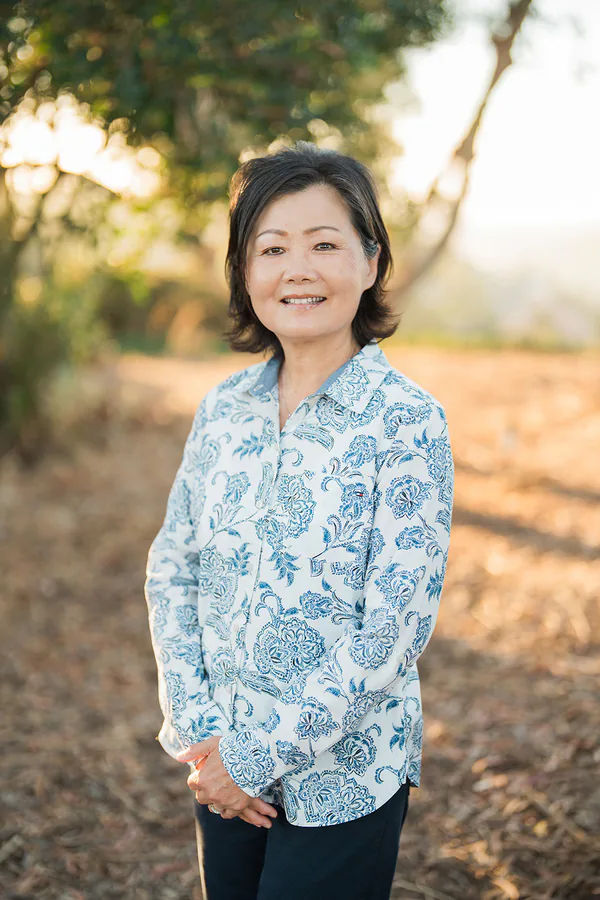
- Office
- School Board Member, Torrance Unified D District
- State
- California
- Status
- On the general ballot
- Election
- Election held Nov 3, 2026
- Result
- Counting
Build a campaign strategy for Jennifer Mak
Where Mak stands
Campaign site, checked Nov 25, 2026. The campaign's issues page
Education
What do our TUSD students need to thrive?
September 21, 2026 · By Jennifer Mak
September 21, 2026 · By Jennifer Mak
A few conversations with educators recently have made me think more deeply about what our students need to thrive and succeed.
A professor at Long Beach State, where she taught physical therapy courses, continues to have a deep love and passion for education even after retirement. She shared how important it is to emphasize critical thinking and ensure that every student has the knowledge, skills, and tools they need to succeed. She also shared her personal experience as a parent of a child who struggled with reading—and how, with the right accommodations and support, her son was able to find success.
An instructor at El Camino College shared another perspective: some students arrive at college without the academic foundation they need. For example, students who do not pass Algebra 2 may not be able to move on to chemistry courses. For some, the pathway to transferring to a four-year university can then become much more difficult. This conversation reinforced my belief that we need to build a strong foundation beginning in kindergarten and continue strengthening it throughout a student’s education.
I also had the opportunity to meet a couple who teach at a high school in TUSD. They explained how the Early College program can help students earn college credit while in high school and potentially open the door to higher education for even more students.
Finally, a retired philosophy professor from Cal State Dominguez Hills shared his concern about the decline he has observed in students’ writing skills. He emphasized the importance of a rigorous curriculum and strong academic foundations to prepare students for future success.
These conversations have left me with an important question:
How do you choose a school’s textbooks?
September 30, 2026
September 30, 2026
Residents kept asking Jennifer the same question at the door: what is your take on curriculum? She spent her career as a principal and district administrator going through textbook adoptions. These are the three things she looks for.
How will you support teachers?
October 8, 2026
October 8, 2026
“How can you even try to support us teachers, since you are a career administrator?” It’s a fair question. Before I was a principal, I was a classroom teacher for 16 years. I was in the trenches. Once a teacher, forever a teacher. These are the three things I will do for our teachers.
“Is my child ever going to leave special education?”
September 17, 2026
September 17, 2026
More than 20 years ago, Jennifer was chairing an IEP meeting. During a break, a parent in tears asked her a question she still remembers: “Is my child ever going to leave special education?”
“So I carry that with me,” Jennifer says.
Why elementary school is so important
October 2, 2026
October 2, 2026
How can you help a high school where 30% of students fail Algebra 1?
Start before they get there. The gaps begin years earlier, in middle school and elementary school. After 38 years as a teacher, principal and district administrator, Jennifer believes success starts in TK.
What can I do if my child is falling behind?
October 8, 2026
October 8, 2026
“I’m afraid my child is getting left behind. As a parent, what can I do?” I hear this at so many doors. As a parent, we always want to support and advocate for our own children. Here are three things you can do.
My lessons from 38 years in public education
October 1, 2026 · By Jennifer Mak
October 1, 2026 · By Jennifer Mak
On September 1st, I was the guest speaker at the Kiwanis Club of Torrance. I was thrilled to share, since I’ve lived in Torrance for nearly 30 years now, and all three of our children graduated from TUSD schools.
They asked me to talk about my 38 years in public education at LAUSD. I was a teacher, instructional coach, assistant principal, and principal. From there I became a K–12 coordinator, and a district administrator.
This is an excerpt of my talk.
How can parents help a young child learn to read?
September 17, 2026
September 17, 2026
A parent of a kindergartner asked Jennifer how to help a child who is still learning to read. She answered as both a former principal and a mom.
Why do students fail Algebra 1?
Students don’t fail in ninth grade all of a sudden. Jennifer explains why success starts in TK and elementary school, and why teaching to the state standards from kindergarten on is the answer.
Students don’t fail in ninth grade all of a sudden. Jennifer explains why success starts in TK and elementary school, and why teaching to the state standards from kindergarten on is the answer.
Read her full answer
What Jennifer looks for in a textbook
- It aligns with the California Common Core State Standards. The state sets the standards; the district chooses the materials that teach them. That alignment is the first priority.
- It supports differentiation. The textbook has to come with resources for the students who are still below grade level and for the students who are already ahead, so a teacher can do something specific for both.
- It has progress monitoring built in. A quick check at the end of a lesson, sometimes a single question, so a teacher knows who actually got it before moving on.
- Who decides: a collaborative process. The district team, principals, teachers and parents all have a voice, and the central question stays the same — is this adoption going to meet the needs of our students?
What do our TUSD students need to thrive and succeed over the next four years?
I believe this is a question worth thoughtful discussion. Let’s put our students and their future at the forefront as we gather information we need to make an informed decision on the November 3 election.
I believe this is a question worth thoughtful discussion. Let’s put our students and their future at the forefront as we gather information we need to make an informed decision on the November 3 election.
For 38 years, Jennifer Mak served as a teacher, award-winning principal, and district administrator. Now she is running for Torrance Unified (TUSD) School Board, Trustee Area D, in the November 3, 2026 election. Her priorities: put students first, empower educators and leaders, and strengthen family and community partnerships. Learn more at jennifermakfortusd.com and in her answers on Ballotpedia.
Three things a parent can do
- Start with your child’s teacher. Find out exactly where your child is struggling or falling behind, so you are working on the right thing together.
- If needed, ask for a team meeting. In LAUSD we called it a Student Success and Progress Team meeting. The assistant principal, the school psychologist, a resource teacher and sometimes the school nurse sit down with you. They look at your child’s work samples, test results, behavior, attendance and health. At the end you get actionable next steps, and the team meets again to check that those steps are working.
- Don’t be afraid to ask for intervention. It just means extra help, during the school day or after school, so your child gets an additional dose of support.
And sometimes it is simply developmental. Your child could be a late bloomer, just like me. I was struggling when I was an elementary student. If elected, I want every parent to know that there is help at school they can lean on. Don’t be scared. Don’t be afraid.
My three commitments
- A higher starting salary. A brand-new TUSD teacher starts at Step 1, which trails Manhattan Beach and Redondo Beach. If we want to recruit the best and the most talented, we must increase the beginning salary.
- A raise that reaches take-home pay. Our teachers pay out of pocket for their health insurance. Whatever the pay raise is, teachers should actually take that money home. That means working on the structural health premium deficit over the long run.
- Support for a 24/7 job. Teaching is not a nine-to-five job. Teachers grade papers and plan lessons on evenings and weekends. They deserve meaningful, top-quality professional learning, and more ways to show we appreciate them.
Where Jennifer stands on early learning
- The foundation starts early: struggles in high school math trace back to middle school, and middle school struggles trace back to elementary school.
- Standards start in kindergarten: play still matters, and children learn through play, but California’s grade-by-grade standards begin in kindergarten and build year over year.
- Writing is a K–5 job: from kindergarten through fifth grade, students learn narrative, informational and persuasive writing, so they are ready for high-level writing in secondary school.
- Teaching to the standards comes first: as a principal, the first thing she looked for in a lesson was which standard it taught, and whether students showed they got it.
Where Jennifer Mak stands on early reading
- Know the standards: parents can look up exactly what their child is expected to learn in reading by the end of each grade.
- Read together every night: her advice as a mom whose three children all graduated from Torrance Unified.
- Sounding words out is not enough: children also need to understand what they read.
Jennifer Mak, candidate for Torrance Unified School Board, Trustee Area D, believes reading is the foundation for every other subject, and that parents are a child’s first reading partner.
Read together every night. “Every night, I would read to them,” Jennifer says of raising her three children. “And it doesn’t matter how tired I was.” When children build that relationship with books, “because books take you places,” she says, “they will grow up learning and loving to read.”
- Reading unlocks every subject: a child who struggles to read will struggle in math, social studies and science too.
Where Jennifer Mak stands on special education
- A support system for parents: a comprehensive system so families know where and how to look for help, and what resources and services are available to them.
- Plans that happen in the classroom: students receive the accommodations and modifications their IEP promises, and teachers get the support to provide them.
- Intervene early: when a need first appears, try accommodations and modifications in the classroom right away, and move to a formal assessment if they don’t work.
Jennifer Mak, candidate for Torrance Unified School Board, Trustee Area D, wants every family of a student with special needs to know where to get help, and every student to actually receive the support written into their plan.
- Educate parents: door knocking has shown her that many parents don’t know what to ask for, or how.
How do you choose a school’s textbooks?
“We taught it” is not the same as “they got it.” The three things Jennifer looks for before any textbook reaches a TUSD classroom.
“We taught it” is not the same as “they got it.” The three things Jennifer looks for before any textbook reaches a TUSD classroom.
Read her full answer
What this means on the school board
A school board trustee doesn’t build a school’s budget. The board approves the district’s budget and its Local Control and Accountability Plan, the LCAP, and sets the priorities every school’s plan has to follow.
A school board trustee doesn’t build a school’s budget. The board approves the district’s budget and its Local Control and Accountability Plan, the LCAP, and sets the priorities every school’s plan has to follow.
That is where this experience matters. I built a school budget every year for 10 years, and as a Community of Schools Administrator I reviewed and approved the budgets of 16 schools. I know what spending makes a real difference in a classroom, and what doesn’t.
When the LCAP comes to the board, I will go through it line by line and ask the same question I asked as a principal: does this make a direct, positive difference for our students’ learning and achievement? If it doesn’t, that money belongs back in the classroom. That is the responsible fiscal leadership I will bring to the Torrance Unified school board.
Transcript
Quite a few residents asked me, what is your take on curriculum? So my stand is whatever curriculum that we choose, or textbook that we choose, it must align with the California Common Core State Standards. That is the…
Quite a few residents asked me, what is your take on curriculum? So my stand is whatever curriculum that we choose, or textbook that we choose, it must align with the California Common Core State Standards. That is the number one priority.
And number two priority is that I should be able to find resources of that particular textbook to offer teachers. So these are the students who are still not there yet, they are below grade level. These are some of the things that you can do, lessons and resources. As well as, these are the students who are already there, they are above grade level, so these are the resources that you can use to help them excel. So the differentiation piece is critically important to me.
The third component that I’m looking for is if the textbook offers some quick assessment at the end of a lesson, maybe one question, to see if students have learned whatever the teacher set out to teach. Because a lot of times you hear us say, oh, we taught this lesson. But a more important question is, do you know if the students got it?
So that quick one question, progress monitoring, will let the teachers know. Oh, wow, 80% of the students got it. Great. So those 20%, maybe just three or four students, the next day I need to bring those kids together, do a quick mini lesson in small group. Oh, only 50% of the students got it. Tomorrow I need to reteach this lesson. But what is another way of teaching the same concept, or another way to teach into the same standard?
So those are the three elements that I will look for, for any curriculum, for any textbook adoption.
What do you think a parent should do if they don’t think the curriculum is working for their kid?
Well, this is a collaborative process. So the district team, principals, teachers, parents have a voice. So I think in the end, we listen to all those voices. And going back to the central question: is this textbook adoption going to meet the needs of our students?
That’s the question that we always need to ask. Does it teach to the Common Core State Standards? Does it meet the needs of different learners and students at different performance level? Does it progress monitor students’ learning and mastery? I think those are three very objective, key questions that we need to consider when it comes to the final decision.
For 38 years, Jennifer Mak served as a teacher, award-winning principal, and district administrator. Now she is running for Torrance Unified (TUSD) School Board, Trustee Area D, in the November 3, 2026 election. Her priorities: put students first, empower educators and leaders, and strengthen family and community partnerships. Learn more at jennifermakfortusd.com and in her answers on Ballotpedia.
“Come listen to my thinking”
Then I was asked to lead a math initiative across eleven schools, the lowest performing in the entire Los Angeles Unified School District. Before I started anything, I looked at two years of data to find the root cause.…
Then I was asked to lead a math initiative across eleven schools, the lowest performing in the entire Los Angeles Unified School District. Before I started anything, I looked at two years of data to find the root cause. Then I built a schedule that put me in two schools every single day, teaching demonstration lessons with the teacher, the coach and the principal in the room.
One was in a third grade class. Picture the rug with two classes on it, close to fifty children. I posted the math problem and invited the students to think about what strategies they might use. When they turned and talked, the entire room filled with students thinking.
One of the students pulled the hem of my pants and said, “Come, Miss, come listen to my thinking.”
I still remember it today. It is because of those voices that I kept showing up, rain or shine.
It does not matter what zip code our students come from. They are brilliant. They are full of potential. It is up to us to take them where they are supposed to be.
How to look up your child’s reading standards
- Go to the California Department of Education website, open Teaching & Learning, and choose English Language Arts. Or open the English Language Arts standards (PDF) directly.
- The standards are grouped into kindergarten through fifth grade, and sixth through twelfth grade.
- Find your child’s grade under Reading Standards for Literature (stories) and Reading Standards for Informational Text (nonfiction). That is what your child is expected to learn and master by the end of the school year.
Jennifer walks parents through this at her parent workshops. The California Department of Education publishes the reading and writing standards for every grade:
What that means in practice
- An accommodation changes how a student learns or shows what they know, like extra time on a test, a seat near the board, or directions read aloud.
- A modification changes what the student is expected to learn or do, like fewer problems or a shorter reading.
An IEP is a promise on paper. Every student in special education has an IEP (Individualized Education Program), a written plan that lists the support the student will get and the goals they are working toward. As a principal, Jennifer Mak chaired IEP meetings, then walked classrooms to see whether those plans were actually happening for each student, and to support the teachers carrying them out.
Accommodations and modifications, in plain terms:
Intervening early. When a parent or teacher first notices a child may be struggling, Jennifer Mak’s approach is to act right away: try accommodations and modifications in the classroom first, see whether they work, and move to a formal assessment if they don’t. Before that step, she says, a school should look at the big picture and make sure it has tried every other kind of support.
Door knocking has shown her the need is real. Some parents of students with special needs, she says, “don’t know the what and they don’t know the how.” Her answer is to educate parents and to equip teachers to provide accommodations and modifications.
For 38 years, Jennifer Mak served as a teacher, award-winning principal, and district administrator. Now she is running for Torrance Unified (TUSD) School Board, Trustee Area D, in the November 3, 2026 election. Her priorities: put students first, empower educators and leaders, and strengthen family and community partnerships. Learn more at jennifermakfortusd.com and in her answers on Ballotpedia.
Transcript
Jennifer, you worked in administration. How can you even try to support us teachers since you are a career administrator?
Jennifer, you worked in administration. How can you even try to support us teachers since you are a career administrator?
Well, first of all, I was a teacher for 16 years. I was in the trenches. Once a teacher, forever a teacher. So these are the three things that I will support our teachers.
Number one, I will advocate for a higher beginning teacher salary. Right now, we’re sitting at $62,000 for a brand new teacher, step one for TUSD, which is trailing behind Manhattan Beach and Redondo Beach. If we do want to recruit the best and the most talented, we must increase the beginning salary.
Number two, I will also advocate for our teachers’ benefit compensation. I understand that teachers need to pay out of pocket to pay for their insurance, and I think it’s so important to make sure that whatever the pay raise is, teachers are actually taking home that part of money and that we are able to support and compensate their health benefits. I think this is a structural health premium deficit that we need to work on in the long run.
Number three, I also think that teaching is a tireless profession. Teachers spend time during the weekend, in the evening, to grade paper, to lesson plan. This is not a nine-to-five job. It is literally 24/7. So we need to come up with ways to make our teachers feel supported, providing them with meaningful, top-quality professional learning opportunities, and also use more ways to show appreciation.
And once again, I’m going to say, once a teacher, forever a teacher.
See all of Jennifer’s answers on the issues.
For 38 years, Jennifer Mak served as a teacher, award-winning principal, and district administrator. Now she is running for Torrance Unified (TUSD) School Board, Trustee Area D, in the November 3, 2026 election. Her priorities: put students first, empower educators and leaders, and strengthen family and community partnerships. Learn more at jennifermakfortusd.com and in her answers on Ballotpedia.
Transcript
I’m afraid my child is getting left behind. As a parent, what can I do?
I’m afraid my child is getting left behind. As a parent, what can I do?
As a parent, we would always want to support and advocate our own children. So there are three things that a parent can do.
Number one, always work with your child’s teacher to find out exactly what your child is struggling or falling behind.
Number two, if needed, request an SSPT meeting, Student Success and Progress meeting. So the team meeting is comprised with the assistant principal, a school psychologist, a resource teacher, and sometimes school nurse. And they are going to look at your child’s maybe work samples, some of the test results, looking at behaviors and attendance, health. At the end of the meeting, usually they will come up with some actionable next steps. And sometimes they will need to reconvene and see, hey, are these actionable items working for the student?
Three is don’t be afraid to ask for if there’s any intervention available during the day or after school, so that your child can get an additional dose of support. Very simple. They can support your student at school, right?
If elected, I want to make sure that all parents know that there’s help at school, that they can lean in, and that sometimes it could be because of developmental, right, that your student could be a late bloomer, just like me. I was struggling when I was an elementary student. So don’t be scared, don’t be afraid. There are things that our schools can help all parents to support our students.
See all of Jennifer’s answers on the issues.
For 38 years, Jennifer Mak served as a teacher, award-winning principal, and district administrator. Now she is running for Torrance Unified (TUSD) School Board, Trustee Area D, in the November 3, 2026 election. Her priorities: put students first, empower educators and leaders, and strengthen family and community partnerships. Learn more at jennifermakfortusd.com and in her answers on Ballotpedia.
Transcript
The foundation begins in TK, in elementary school. I will never forget: my comprehensive high school had a 30% failing rate on Algebra 1. How could that be? Algebra 1 is the gateway. But I also understand that they don’…
The foundation begins in TK, in elementary school. I will never forget: my comprehensive high school had a 30% failing rate on Algebra 1. How could that be? Algebra 1 is the gateway. But I also understand that they don’t just fail as freshmen. It’s because the foundation they came from, middle school, is not strong enough. And kids in sixth grade don’t fail all of a sudden, because the elementary school foundation is not solid. When I say teachers need to teach to the California Common Core State Standards, I mean it, because that is the criteria.
So where does it start?
Back in the day, kindergarten was very casual, very informal. You learned to play. I’m not saying that is not important. It is important. We learn through play. But when I share the standards with our parents, standards start in kindergarten. And it shows you the progression.
In elementary, from kinder all the way to fifth grade, students need to write narrative, informational and persuasive. There’s no letter writing. There is no penmanship. Penmanship is not writing. They have to set the foundation so that when they get to secondary, they can do the high-level writing. That is the number one priority to me as a principal.
You know how sometimes lessons can look so great? But then I ask, what standards is this teacher trying to teach? Or is it just a dog and pony show to impress me? Sometimes I walk into a classroom and you can literally see the teacher shifting gears, because Jennifer is in the room. Nobody can impress me. If you teach to the standards and your students show that they get it, then I’m impressed.
See Jennifer’s priorities Get involved
For 38 years, Jennifer Mak served as a teacher, award-winning principal, and district administrator. Now she is running for Torrance Unified (TUSD) School Board, Trustee Area D, in the November 3, 2026 election. Her priorities: put students first, empower educators and leaders, and strengthen family and community partnerships. Learn more at jennifermakfortusd.com and in her answers on Ballotpedia.
“I only see myself as a support”
My last role before retiring was leading the Hamilton Community of Schools: 16 schools and about 7,000 students, from early education centers to a comprehensive high school. Some were Title I. Some had earned Distinguis…
My last role before retiring was leading the Hamilton Community of Schools: 16 schools and about 7,000 students, from early education centers to a comprehensive high school. Some were Title I. Some had earned Distinguished School and Gold Ribbon recognition.
I never see myself as their supervisor. I only see myself as a support. How am I going to work alongside you so that I can build your capacity, so that you can lead your school community the way you think is best for them?
How can parents help a young child learn to read?
Jennifer’s advice as a principal and as a mom: know the grade-level standards, and read with your child every single night.
Jennifer’s advice as a principal and as a mom: know the grade-level standards, and read with your child every single night.
Read her full answer
Phonics and comprehension, in plain terms
- Phonics is matching letters to sounds, so a child can sound out a word.
- Comprehension is understanding what the words mean: who did what, why, and what happens next.
As a principal, Jennifer Mak noticed students who could sound words out beautifully but struggled to answer questions about what they read. Phonics alone was not enough. “If they cannot read, then they will have a hard time accessing math, social studies, science.” Children spend the early grades learning to read. After that, they read to learn.
For 38 years, Jennifer Mak served as a teacher, award-winning principal, and district administrator. Now she is running for Torrance Unified (TUSD) School Board, Trustee Area D, in the November 3, 2026 election. Her priorities: put students first, empower educators and leaders, and strengthen family and community partnerships. Learn more at jennifermakfortusd.com and in her answers on Ballotpedia.
Still learning
I retired in 2023, and I still coach principals across Los Angeles County. This is the lesson I give them, and it is the one I carried out of all 38 years:
I retired in 2023, and I still coach principals across Los Angeles County. This is the lesson I give them, and it is the one I carried out of all 38 years:
When leadership is grounded in meaningful relationships, driven by inquiry and purpose, and strengthened through critical reflection, growth and change take place.
And let me tell you, I am still learning. Every day, I am still learning.
Thank you to the Kiwanis Club of Torrance for having me.
For 38 years, Jennifer Mak served as a teacher, award-winning principal, and district administrator. Now she is running for Torrance Unified (TUSD) School Board, Trustee Area D, in the November 3, 2026 election. Her priorities: put students first, empower educators and leaders, and strengthen family and community partnerships. Learn more at jennifermakfortusd.com and in her answers on Ballotpedia.
What can I do if my child is falling behind?
Three things every parent can do: start with the teacher, ask for a student success team meeting, and ask about extra help. And why a late bloomer is nothing to be afraid of.
Three things every parent can do: start with the teacher, ask for a student success team meeting, and ask about extra help. And why a late bloomer is nothing to be afraid of.
Read her full answer
“Is my child ever going to leave special education?”
A question a parent asked Jennifer more than 20 years ago, and how she wants TUSD to support families of students with special needs.
A question a parent asked Jennifer more than 20 years ago, and how she wants TUSD to support families of students with special needs.
Read her full answer
How will Jennifer support teachers?
“Once a teacher, forever a teacher.” A higher starting salary, raises that reach take-home pay, and real support for a 24/7 job.
“Once a teacher, forever a teacher.” A higher starting salary, raises that reach take-home pay, and real support for a 24/7 job.
Read her full answer
What did 38 years in public education teach Jennifer about leading?
“If we don’t believe in them, how are they going to have a chance?” What a Title I school, eleven struggling schools and sixteen principals taught Jennifer about leading.
“If we don’t believe in them, how are they going to have a chance?” What a Title I school, eleven struggling schools and sixteen principals taught Jennifer about leading.
Read her full answer
What do our TUSD students need to thrive?
Four conversations with educators, from Long Beach State to El Camino to a TUSD high school, and the question they left her with.
Four conversations with educators, from Long Beach State to El Camino to a TUSD high school, and the question they left her with.
Read her full answer
K-12 public school funding
Education
How did you run a school budget?
October 8, 2026
October 8, 2026
When it comes to budgeting for schools, I’m the only candidate with 10 years of experience as a principal. Here is how I built my school’s budget every year as a principal, step by step.
How I ran a school budget
- The money arrives as an allocation. Every year the district gives each school its share of federal and state funds.
- December: the data comes first. I start with a needs assessment. I look at test results and other data to see what is working well and where our students are not there yet.
- January and February: ask the people closest to the work. Before the allocation letter even arrives, I send a budget survey to all of my teachers, and I ask our parents too.
A budget is more than numbers. It shows what we choose to invest in: our students, and the educators who teach them.
- One question guides every decision. How might we maximize our fiscal allocation to help our students learn and achieve?
- The plan is shared, not handed down. I write a proposal, take it to my teachers, then to the School Site Council: classified staff, certificated staff and parents. The council approves the budget before the numbers go in.
- Where the flexible money goes. Some school funds can only be spent on specific programs. The general fund is where a principal has a say. When declining enrollment would have cost us a teaching position, I used it to keep that teacher so our students would not end up in combination classes, year after year. I also used it to pay teachers who stayed after school to plan lessons together.
Transcript
I can walk you through how I handle school budget from a principal’s perspective. So every year we receive allocation from the district. And the process usually starts in December, that I would begin to do a comprehensi…
I can walk you through how I handle school budget from a principal’s perspective. So every year we receive allocation from the district. And the process usually starts in December, that I would begin to do a comprehensive needs assessment based on summative data.
And so usually around January and February, I will do a budget survey that goes to all my teachers. I think it’s very important to listen to our teachers’ voices, because after all, they are closest to the work. And I also do that with our parents.
And what I will do is to really think about one question: how might we maximize our fiscal allocation to help our students learn and achieve?
Then I put together a proposal. So then I will present it to the school site council, made up of classified staff, certificated staff, as well as parents.
Then I will need to use general funds to purchase teaching station to avoid having combination classes. I did everything that I could to avoid that. And I also use my general fund to provide teachers with compensation. They want to stay after school beyond their working hours to collaboratively lesson plan.
I think balancing school budget or district budget is more than just managing numbers. It reflects how we put our investment in our students to promote their learning and their achievement, our investment in our educators to build their capacity.
If elected, I will bring the same responsible fiscal leadership to our school board.
See all of Jennifer’s answers on the issues.
For 38 years, Jennifer Mak served as a teacher, award-winning principal, and district administrator. Now she is running for Torrance Unified (TUSD) School Board, Trustee Area D, in the November 3, 2026 election. Her priorities: put students first, empower educators and leaders, and strengthen family and community partnerships. Learn more at jennifermakfortusd.com and in her answers on Ballotpedia.
How did Jennifer run a school budget?
Start with the data, ask teachers and parents, and hold every dollar to one question. What 10 years of building a school budget means for approving the district’s.
Start with the data, ask teachers and parents, and hold every dollar to one question. What 10 years of building a school budget means for approving the district’s.
Read her full answer
Technology, Data & Telecom
Should my fifth grader be using AI?
September 26, 2026
September 26, 2026
A parent with a fifth grader asked Jennifer where she stands on artificial intelligence in the classroom. Jennifer’s answer is not one rule for the whole district, but different principles for different ages.
Where Jennifer stands on AI in schools
- Elementary school: AI should be limited. These are the formative years when children learn to interact, explore, communicate, build confidence and learn through creativity and play.
- Middle school: teachers should teach digital citizenship. Student privacy, security, and the risk of over-reliance on technology.
- High school: students can use AI for projects and research, under a teacher’s oversight, planning and supervision, and at the teacher’s discretion.
- The principle underneath it: differentiate by developmental stage, rather than applying one policy to every grade at once.
Transcript
Got a fifth grader. Should my fifth grader be using AI?
Got a fifth grader. Should my fifth grader be using AI?
We want to be very mindful and critical in the use of AI at school. I understand AI makes information readily accessible to anybody. However, my stand on AI in elementary school is that I believe it should be limited. And let me tell you why.
One is because elementary school, those are the formative years where our students need to learn how to interact with one another, how to explore, how to communicate, and get to know who they are. Build confidence, and learn through creativity and play. So I think if we can just dedicate the elementary years to creating conditions for students to do that, that will be the most important thing. So I don’t think AI should have a place in elementary school.
And I’m going to take it a little bit beyond. I think during the middle school years, our teachers can teach digital citizenship. I think that is very important. When information is so readily available, we need to teach our students the safeguards, student privacy, security, and over-reliance on technology. So I think teaching digital citizenship during the middle school years is appropriate.
Now, high school. I think this will be the time, let’s say when teachers want to assign some projects or research. With a teacher’s oversight, planning and supervision, students can engage in a group project using AI for information. But I’m going to say it one more time: it must be under the teacher’s discretion.
So to answer your question, it’s not like AI for all. We need to differentiate it by elementary school, middle school and high school, based on the developmental stages.
Little kids, they’re learning how to think.
Yes. Critical thinking skills, problem solving skills, are fundamental to everything we do. And we don’t want to let AI take over. That’s why I think AI should not be used in elementary school, for that reason. This is the time we need to teach our students how to be a problem solver, how to be a critical thinker, how to be a collaborative member of the school community.
So we don’t want it to take over the thinking. At the appropriate time, it can be a tool, though.
Yes. It can be a powerful tool for learning. But I cannot emphasize enough that we need to be critical consumers, and we need to do it in a very thoughtful and cautious manner. That security piece, the privacy piece, is very important.
For 38 years, Jennifer Mak served as a teacher, award-winning principal, and district administrator. Now she is running for Torrance Unified (TUSD) School Board, Trustee Area D, in the November 3, 2026 election. Her priorities: put students first, empower educators and leaders, and strengthen family and community partnerships. Learn more at jennifermakfortusd.com and in her answers on Ballotpedia.
Should my fifth grader be using AI?
Not in elementary school. Jennifer explains why the early years should stay hands-on, and where AI does belong in middle and high school.
Not in elementary school. Jennifer explains why the early years should stay hands-on, and where AI does belong in middle and high school.
Read her full answer
Children, Youth & Families
“The kids can’t. The parents won’t.”
For ten years I was principal of 15th Street Elementary in San Pedro. It is a Title I school, which means it qualifies based on family income. Ours qualified for 100 percent free and reduced lunch. The before‑school pro…
For ten years I was principal of 15th Street Elementary in San Pedro. It is a Title I school, which means it qualifies based on family income. Ours qualified for 100 percent free and reduced lunch. The before‑school program opened at 6 a.m. and the after‑school program closed at 6 p.m., because a lot of our parents worked two jobs to make ends meet. A lot of our students were being raised by grandparents.
I stood at the gate every morning and greeted every student. Our parents trusted us and believed we were absolutely doing our best, and that trust put a burden on my heart. So here is the standard I held myself to when I walked into a classroom: if I was not willing to put my own three children in that classroom, then we had work to do.
At the beginning I would hear my staff say, well, the kids can’t. Or the parents won’t.
And I thought, if we don’t believe in them, if we don’t believe in those possibilities, then how are they going to have a chance?
It was hard at first. Changing a mindset always is. But the other half of that bargain is that I owed them the support. That is why I was always in classrooms. That is why I brought in the best professional development I could find, and then went back and asked, how did that feel, what else do you need?
Parents were the other half. At the start you did not see them at back‑to‑school night, because school felt like an intimidating institution. So I facilitated the monthly Title I workshop myself, and showed them what their children needed to learn and how we were teaching it. Over time they came in to volunteer, and I ended up hiring some of those parents as yard supervision aides.
Every dollar went back to students. How do we support them so that they have a chance to dream big? During those ten years the school earned the California Gold Ribbon School Award and the Title I Academic Achievement Award.
Quoted from the campaign's website. What a campaign says is weaker evidence than a bill it sponsored or a vote it cast.
Track record
In the candidate's own words
Thank you for voting, watch the results here
Campaign site, checked Nov 25, 2026.
Attention
- News articles, last 30 days
- 0
- Ads seen, last 30 days
- 0
Updated Nov 27, 2026.
Ran against
Filing record
The candidacy record
| Status | True from | Known since |
|---|---|---|
| On the general ballot | — | Nov 14, 2026 |
Updated Nov 24, 2026.