
Michael Wallman
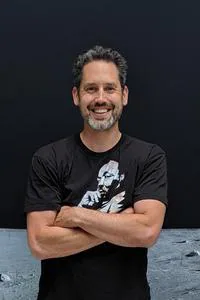
- Office
- Council Member, Berkeley city District 8
- State
- California
- Status
- On the general ballot
- Election
- Election held Nov 3, 2026
- Result
- Counting
Build a campaign strategy for Michael Wallman
About Michael Wallman
Experience
- Google, Technical Lead - Compute · 2016 – present
- The Commons Project Foundation, Senior Technical Advisor · 2022 – 2023
- Amazon Web Services, Sr. Consultant · 2012 – 2016
- Aspera, an IBM company, Principal Systems Engineer · 2007 – 2012
- Sensys Networks, Inc., Applications Engineer / Founder · 2005 – 2007
- InVision Technologies, Software Test Engineer · 2003 – 2005
- InnoMedia, Staff Engineer · 2000 – 2003
Where Wallman stands
Campaign site, updated Nov 18, 2026. The campaign's issues page
Economic & Community Development
Economic & Community Development
Small Business Support
Our empty storefronts are a policy failure. Protect the neighborhood commercial districts that keep Berkeley livable.
Our empty storefronts are a policy failure. Protect the neighborhood commercial districts that keep Berkeley livable.
DraftSmall BusinessUpdated October 3, 2026
This is a working draft. It will change, and comments are welcome.
Small businesses serve as the cornerstone of a thriving local community, going far beyond their role as economic drivers. Operating on thin profit margins makes these local shops uniquely vulnerable to operational conditions—including parking access, foot traffic, neighborhood cleanliness, and natural light.
The shortcomings of our current policy approach are glaringly evident. A stroll through Downtown Berkeley along Center Street reveals a heartbreaking wave of storefront vacancies. This problem spreads far beyond downtown: both historic structures and modern commercial spaces along University and San Pablo Avenues reflect the exact same concerning decline.
Although vibrant commercial pockets persist in areas like Elmwood, 4th Street, Hopkins, and the Alcatraz-Adeline intersection, these critical business clusters face ongoing threats.
We must safeguard these essential neighborhood hubs from the broad and targeted upzoning measures typical of major transit corridors. Sustainable growth in these sensitive zones demands closer collaboration with commercial stakeholders, prioritizing owner-occupied units and requiring construction methods that minimize disruption to pedestrian flow.
By enacting these targeted safeguards, Berkeley can foster commercial districts that are both economically resilient and deeply inclusive.
To fill lingering commercial vacancies, we need streamlined programs for faster, lower-cost small business onboarding, such as flexible pop-ups and short-term leases without major upfront or long-term commitments. Sharing foot and vehicle traffic data will also help business owners choose optimal locations to serve the community.
Small Business Support
Our empty storefronts are a policy failure. Protect the neighborhood commercial districts that keep Berkeley livable.
Environment, Energy & Utilities
Environment, Energy & Utilities
Wildfire Safety in the Hills
Real evacuation plans and safety standards for District 8's wildland edge — before the next fire.
Real evacuation plans and safety standards for District 8's wildland edge — before the next fire.
DraftWildfireUpdated September 2, 2026
This is a working draft. It will change, and comments are welcome.
District 8's wildland edge is exposed. Build real evacuation plans and resident safety standards with the fire department and the university — before the next fire, not after it.
Wildfire Safety in the Hills
Real evacuation plans and safety standards for District 8's wildland edge — before the next fire.
Housing & Land Use
Cal as a Good Neighbor
- Our housing crisis in Berkeley was driven in part by increasing student admissions without a corresponding, joint housing plan created alongside the city.
- The University continues to push development deep into Strawberry Canyon, constructing stadiums illuminated for modern broadcast athletics. No public transit, nor meaningful pedestrian infrastructure exist in these locations.
- Financing the stadium project has created a severe debt burden.
No district feels Cal's decisions more than District 8 — we need a representative who works with the university and defends the neighborhood.
DraftUC BerkeleyUpdated October 3, 2026
This is a working draft. It will change, and comments are welcome.
Due to its close proximity to Cal, District 8 is particularly impacted by the university's decisions. Cal is the 800-pound gorilla in the room—a complex maze of bureaucracy and regulations, much like the city itself. For many residents, it remains a love-hate relationship.
We need a representative who works closely with the University while steadfastly defending the best interests of Berkeley and, above all, District 8 residents.
- The University continues to concentrate parking on Bancroft Way, where its new structure, opened in September 2026, funnels roughly 600 cars onto a street already narrowed by Class 4 bike corridors and dedicated bus lanes—a combination that predictably creates severe traffic bottlenecks for District 8.
- Under the UC Berkeley–City of Berkeley Settlement Agreement, the University pays the City about $4.75 million this year ($4.1 million in 2021, rising 3% annually) — roughly one-seventh of the more than $32 million the University of Michigan provided Ann Arbor in fiscal year 2025.
Housing For All
- Berkeley continues to fall short of its targets for both low-income and middle-income housing.
- A significant majority of new units are rentals, eroding the traditional role of property as a tool for local wealth generation.
- Development is heavily skewed toward one-bedroom and studio apartments rather than family-sized homes.
Berkeley's housing debate has become all-or-nothing. We need genuinely affordable, family-sized homes — not just dormitory-style blocks — and a streamlined permitting process that makes it easier to build for homeowners.
DraftHousingUpdated October 3, 2026
This is a working draft. It will change, and comments are welcome.
Our community requires residential spaces designed for long-term family vitality, rather than transient occupancy. This necessitates sensible three- to four-story scale developments within residential neighborhoods situated away from downtown and major transit corridors, such as specific stretches of San Pablo Avenue.
While I do not claim to have every answer or a total grasp of every complex zoning regulation, the data I have examined is deeply concerning:
My approach to delivering new housing relies on several core initiatives:
My perspective is straightforward: unless the city makes direct investments in truly affordable housing, partners effectively with developers, and helps homeowners scale their own properties, Berkeley will be defined by massive, dormitory-style blocks that fail our community.
- Parking mandates have been removed, and essential spaces are frequently excluded to cut development costs.
- Establish open, organized housing datasets to ensure complete policy transparency. Informed decision-making requires verified metrics covering constructed, active, and proposed units, categorized by bedroom count, parking, outdoor spaces, tenure type, and proximity to essential services or transit.
- Streamline red tape for resident-led developments across our approximately 20,000 single-family parcels, driving organic, neighborhood-scale expansion instead of relying exclusively on high-density downtown models.
- Conduct a thorough council retrospective to identify structural barriers causing stagnant corridor development and stalled projects (like downtown), establishing clear key performance indicators and actionable target objectives.
- Implement policy frameworks like Community Benefit Programs to facilitate thoughtful density while preserving neighborhood character and architectural standards.
- Protect historic districts and significant structures. As a resident in a contributing property within the Panoramic Hill Historic District, I remain committed to expanding historic designations that safeguard the architectural fabric defining our city.
- Cultivate closer partnerships with commercial stakeholders and advocate for mixed-use, mixed-income builders to prevent isolating neighborhoods by income tiers.
Housing For All
Berkeley's housing debate has become all-or-nothing. We need genuinely affordable, family-sized homes — not just dormitory-style blocks — and a streamlined permitting process that makes it easier to build for homeowners.
More Parks for a Growing Berkeley
More homes, more people, more students — and our parks have to grow with them. Put parks in the infrastructure equation alongside roads and sewers: plan new open space with every wave of housing, and turn underused lots…
More homes, more people, more students — and our parks have to grow with them. Put parks in the infrastructure equation alongside roads and sewers: plan new open space with every wave of housing, and turn underused lots and street space into pocket parks and playgrounds.
AI regulation, deepfakes & safety
AI regulation, deepfakes & safety
Technology, Data & Telecom
Privacy, Cameras, and Smart Policing
Public safety is a civic duty — not an excuse for surveillance networks that outlive their promises and put our privacy at risk.
Public safety is a civic duty — not an excuse for surveillance networks that outlive their promises and put our privacy at risk.
DraftPublic SafetyUpdated September 12, 2026
This is a working draft. It will change, and comments are welcome.
Residents should not have to deploy private surveillance systems because of crime; public safety remains a fundamental civic duty. While no one argues against alerts for stolen cars or violent fugitives, that is not what this technology is about. We are witnessing the creeping importation of authoritarian monitoring models — reminiscent of how governments like China use facial recognition to track citizens and suppress dissent — right into our own backyards.
Although proponents claim current cameras are restricted to license plates and basic vehicle attributes, hardware outlives software policies. As AI models rapidly evolve, these systems will easily cross the line into identifying individuals, tracking anyone in the city at any time, and morphing into automated data brokers that harvest our daily movements. Most concerning is that neither local police departments nor municipal governments possess the cybersecurity expertise required to defend against a future where sophisticated AI agents and foreign state actors can effortlessly breach networked municipal databases.
If any cameras are used at all, they should be strictly closed-circuit and limited solely to anonymous data like traffic counts and speed, completely devoid of vehicle or user identifications. Ultimately, the speculative benefits of these surveillance networks do not outweigh the profound dangers to our civil liberties and digital security. Rather than investing heavily in fragile, invasive technology, I recommend that the council instead direct those resources toward hiring additional police officers.
Roads, bridges & commuter rail
Roads, bridges & commuter rail
Transportation & Motor Vehicles
Claremont Slow Down
- Sustained Speed Enforcement: Partner directly with the Berkeley Police Department to institute persistent, continuous traffic control throughout the Claremont corridor rather than relying on brief, sporadic operations.
- Cyclist Priority Safeguards: Install explicit street signage and high-visibility pavement markings to formally designate the right lane as a dedicated right-of-way for cyclists.
- Timely Infrastructure Repairs: Although major repaving and restriping initiatives remain tied to the forthcoming underground bypass project, deteriorating roadway conditions may demand immediate attention regardless of timeline delays.
Claremont Avenue outside an elementary school needs a real signal and real traffic safety — not temporary plastic posts.
DraftStreets & TrafficUpdated October 3, 2026
This is a working draft. It will change, and comments are welcome.
After an uplands neighborhood association meeting, a resident voiced frustration over dangerous traffic district-wide. Walking my children across Claremont Avenue to John Muir Elementary, I have long wondered why an active school zone lacks a proper signal.
Watching the Star Market intersection next morning confirmed these concerns. Commuters speed down Claremont on mobile devices while cyclists struggle to navigate.
To address these challenges effectively, I propose the following short-term and long-term strategic initiatives:
- Utility Undergrounding Coordination: Engage promptly with PG&E and EBMUD to evaluate placing power and communications lines subterranean, guaranteeing that necessary conduit installation proceeds alongside the bypass construction.
- Illumination Upgrades: Modernize and upgrade street lighting across Claremont Avenue and surrounding Uplands residential areas.
- Data-Driven Traffic Analysis: Launch a comprehensive metric collection framework analyzing pedestrian activity, vehicle counts, and parking usage—highlighted by an Origin-Destination study—while evaluating adjacent arterial routes to assess neighborhood impacts from potential capacity reductions on Claremont.
Sources
- Underground Bypass – Zone No. 12 (Claremont Avenue) — Alameda County Public Works Agency
Claremont Slow Down
Claremont Avenue outside an elementary school needs a real signal and real traffic safety — not temporary plastic posts.
Children, Youth & Families
Universal After School Care
Fund onsite after school care at every BUSD elementary school, so every family has a safe, enriching place for their kids until the workday ends — no waitlists, no scramble across town.
Education
Reintroduce Trade Programs at BHS
Bring hands-on career and technical education back to Berkeley High — shop, construction, automotive, electrical — so students can graduate straight into an apprenticeship or a good union job, not only a four-year degre…
Bring hands-on career and technical education back to Berkeley High — shop, construction, automotive, electrical — so students can graduate straight into an apprenticeship or a good union job, not only a four-year degree.
Health & Human Services
Save Alta Bates Medical Center
Sutter plans to move Alta Bates' emergency room and hospital beds to Emeryville, leaving Berkeley without a full-service hospital. Keep acute care here by putting every creative option on the table — a partnership with…
Sutter plans to move Alta Bates' emergency room and hospital beds to Emeryville, leaving Berkeley without a full-service hospital. Keep acute care here by putting every creative option on the table — a partnership with UC, a voter-backed healthcare district, or a new operator for the Ashby campus.
Police funding & accountability
Police funding & accountability
Public Safety & Emergency Services
Privacy, Cameras, and Smart Policing
Public safety is a civic duty — not an excuse for surveillance networks that outlive their promises and put our privacy at risk.
Quoted from the campaign's website. What a campaign says is weaker evidence than a bill it sponsored or a vote it cast.
Track record
In the candidate's own words
About Me
Campaign site, updated Nov 18, 2026.
Attention
- News articles, last 30 days
- 0
- Ads seen, last 30 days
- 0
Updated Nov 25, 2026.
Ran against
Official site and accounts
Filing record
The candidacy record
| Status | True from | Known since |
|---|---|---|
| On the general ballot | — | Nov 17, 2026 |
Updated Nov 17, 2026.