
Neal Foster
On the ballot as Neal W. “Quannaq” Foster
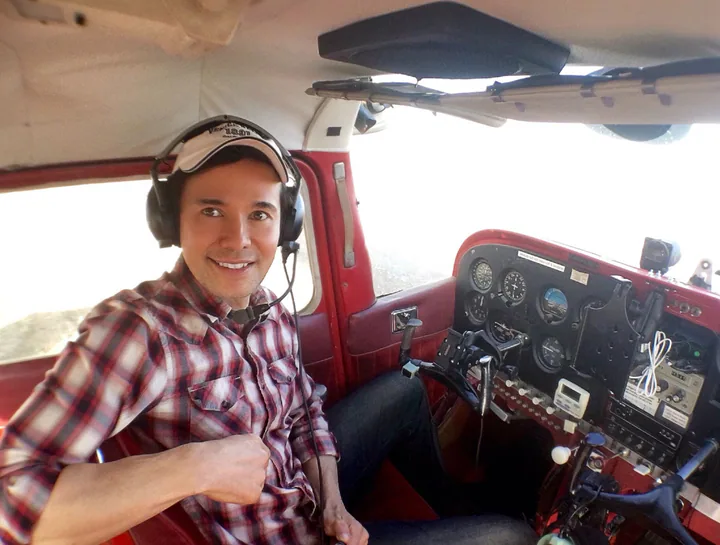
- Office
- State Representative District 39
- State
- Alaska
- Party
- Democratic
- Status
- On the general ballot
- Election
- Election held Nov 3, 2026
- Incumbent
- Sitting legislator · State Representative District 39
Build a campaign strategy for Neal Foster
About Neal Foster
Neal Winston Foster (born May 29, 1972) is a member of the Alaska House of Representatives, representing the 39th District, which is centered on Nome, Alaska. He has served in the House since November 15, 2009. He was appointed to the House to replace his father, Richard Foster, who had died in office the previous month. In the 27th Alaska State Legislature, Foster joined along with the other three Democrats from Western Alaska, Bryce Edgmon, Bob Herron and Reggie Joule, as members in the Republican-led majority caucus in the House. Neal Foster is longest serving Chairman of the House Finance Committee with 10 years. At the end of his next term he will have 12 years in the position.
Neal Foster, as was Cathy Muñoz, is a third-generation member of the Alaska Legislature. Foster's grandfather, also named Neal W. Foster (1916–1979) and nicknamed "Willie," served one term in the Territorial legislature during the 1950s and in the State Senate in the 1960s.
From Wikipedia, read Nov 25, 2026.
Experience
- Alaska House of Representatives, Representative - District 39 · 2009 – present
- Foster Properties, Owner · 1994 – present
- Nome City, Councilmember · 2008 – 2009
- Banner Wind, President · 2008 – 2009
- GBS LLC, President · 2004 – 2009
- Bonanza Fuel, President · 2002 – 2009
- The Country Store, Interim Manager · 1999
- Sitnasuak Native Corporation, Vice President · 1999 – 2009
- Kawerak, Economic Development Specialist · 1997 – 1998
Education
- Bachelor's, Stanford University, Political Science · 1996
- Bachelor's, University of Alaska, Business Administration, Finance · 1997
Where Foster stands
Campaign site, checked Nov 20, 2026. The campaign's issues page
State Budget, Bonds & Finance
Public Services
Alaska's low oil prices and production have created multi-billion budget deficits, and tough decisions will have to be made about which public services are cut or kept. The next budget cycle will not have any savings to…
Alaska's low oil prices and production have created multi-billion budget deficits, and tough decisions will have to be made about which public services are cut or kept. The next budget cycle will not have any savings to fall back on, and the budget has already been cut by over 40% over the last several years.
We will continue to find cuts where it makes sense, but we must also protect those services that are important to rural Alaska. This includes education (our schools are the center of many of our communities), public safety (including both our troopers and VPSO's), health care (and village clinics), transportation (airport and road maintenance), and energy support for rural residents (through PCE).
There are a total of 40 representatives, but only 4 of them are rural legislators. This means substantial cuts are once again likely to be proposed to rural areas. Often these cuts are disproportionate relative to our population. It's through a combination of seniority and experience that we can overcome our low numbers in the legislature to fight back against such cuts.
Permanent Fund
The permanent fund was created as an ingenious way of allowing future generations to benefit from Alaska's oil wealth. Oil is a finite resource that will one day run out. Alaska's leaders didn't want all the oil money t…
The permanent fund was created as an ingenious way of allowing future generations to benefit from Alaska's oil wealth. Oil is a finite resource that will one day run out. Alaska's leaders didn't want all the oil money to go to just 2-3 generations. So they created the permanent fund. Oil revenues are invested in the permanent fund, and the earnings can be used to pay for dividends and public services. As long as we do not take out more than the fund earns then the benefits of oil wealth can be passed on indefinitely to future generations. We owe it to our children and their children and their children to protect the permanent fund.
Community Assistance
This program is particularly important in villages where there is no tax base. In places like Mountain Village these funds pay for heat to keep the water lines from freezing during winter. Other villages use the money t…
This program is particularly important in villages where there is no tax base. In places like Mountain Village these funds pay for heat to keep the water lines from freezing during winter. Other villages use the money to pay for city workers. They in turn apply for state & federal grants for landfill operations and transportation improvements. Others maintain the water & sewer lines. In places that do have a tax base (like Nome) if this money disappears then either services get reduced or property/sales taxes have to go up.
Education
Education
Our schools are important for a variety of reasons. They serve to educate our youth and prepare them to get jobs that keep our communities strong. And for many of our villages the school is where potlaches, basketball,…
Our schools are important for a variety of reasons. They serve to educate our youth and prepare them to get jobs that keep our communities strong. And for many of our villages the school is where potlaches, basketball, dance festivals, and other community gatherings occur. Not only must we support our schools, but we must also work to improve other education related efforts. This includes support for pre-kindergarten programs and distance delivery technology. As the co-chair of finance I have supported increased education funding. I have helped to forward fund education to provide for stable funding. I have voted for school bond debt reimbursement and for new schools in our villages. And I carried a Senate bill that increased the internet capacity in our small rural schools.
Electricity bills & data centers
Electricity bills & data centers
Environment, Energy & Utilities
Power Cost Equalization
Starting in the 1970's urban areas received funds for hydroelectric projects and transmission lines. More recently they received over a billion in natural gas tax credits. As part of that package rural Alaska received t…
Starting in the 1970's urban areas received funds for hydroelectric projects and transmission lines. More recently they received over a billion in natural gas tax credits. As part of that package rural Alaska received the "power-cost-equalization" (PCE) program.
PCE is rural Alaska's energy assistance program. And there has been extreme pressure to drain the program and use it to balance Alaska's budget. We must not allow this program to be de-funded. Once it goes away it will likely never return.
Many of you may have noticed a credit on your electricity bills. Every household in our small towns and villages are beneficiaries of this program. The average subsidy received in St. Michael, for example, was nearly $1,900 last year.
How it works is simple. There is $1 billion in a fund. It is invested, and each year it earns money. In the past few years it has earned anywhere from $40-$60 million, and that money is used to bring down electricity costs.
Back in March of this year the $1 billion in the PCE program was not reauthorized by a margin of only 1 vote. But through a combination of experience, an understanding of the complexities of the budget process, and negotiation we were able to secure the votes needed upon reconsideration to save the program.
I expect this fight to continue, and I stand ready to defend rural Alaska's energy needs.
Transportation & Motor Vehicles
Transportation & Motor Vehicles
Transportation
Rural Alaska's airports are vitally important to getting services, groceries, and health care in and out of our communities. But we are already starting to see a reduction in maintenance to some of our rural airports. T…
Rural Alaska's airports are vitally important to getting services, groceries, and health care in and out of our communities. But we are already starting to see a reduction in maintenance to some of our rural airports. This next year's budgeting process will be even more difficult than the last, and there may be efforts to divert resources to larger airports where there are other transportation options (such as being connected to the road system). We need to keep our rural snow removal budgets healthy not only to keep supplies and mail coming in on a regular basis but also for life saving reasons such as medivacs.
Environment, Energy & Utilities
Environment, Energy & Utilities
Village Safe Water
Water & sewer is a basic need that we can all agree is a hallmark of any first world nation. And yet many of our communities either do not have the infrastructure in place, or their pipes are in need of major maintenanc…
Water & sewer is a basic need that we can all agree is a hallmark of any first world nation. And yet many of our communities either do not have the infrastructure in place, or their pipes are in need of major maintenance. I grew up with a "honey bucket" in Nome, and sadly many folks still have what should be relegated to a museum. When I was the co-chair of finance in charge of the capital budget I was successful in adding millions of dollars to the village safe water program. But it was a fight. As we move forward with increasing budget shortfalls I fear that some legislators may not be supportive of appropriating the full matching funds needed to receive federal water & sewer funds. I think my seniority and position in leadership will help to ensure that this issue is not left on the back burner.
Health & Human Services
Senior Benefits
This may be more commonly known as the longevity bonus program. It provides a small stipend to seniors based on income. Most of our elders live on fixed incomes, and yet the cost of living continues to go up. These are…
This may be more commonly known as the longevity bonus program. It provides a small stipend to seniors based on income. Most of our elders live on fixed incomes, and yet the cost of living continues to go up. These are the folks who helped build our state, and we should continue to fully fund the program.
Criminal Justice, Firearms & Corrections
Criminal Justice, Firearms & Corrections
Village Public Safety Officer
In the last few years there has been a major push to increase public safety. Funding has been increased for our troopers, crime lab, prisons, and courts. And I've supported all of these. And yet year after year I've fou…
In the last few years there has been a major push to increase public safety. Funding has been increased for our troopers, crime lab, prisons, and courts. And I've supported all of these. And yet year after year I've found myself having to fight off amendments to reduce funding for the Village Public Safety Officer (VPSO) program in our villages. It just boggles my mind that some folks do not hold our villages in the same light as urban areas when it comes to keeping folks safe. Earlier this year there was an amendment in finance to reduce the VPSO program by $1 million. I literally began to filibuster the amendment as a way of educating everyone on the importance of the program. I also got one of my urban colleagues to introduce an amendment to the amendment to change it from a "minus" $1 million to a "plus" $1 million. In the end no cuts were made, but this is an issue that we will no doubt continue to face.
Quoted from the campaign's website. What a campaign says is weaker evidence than a bill it sponsored or a vote it cast.
In the Alaska House of Representatives
Committees and subcommittees
- Co-Chair
- Member
Offices
- Capitol officeState Capitol Room 511, 120 4th St.Juneau AK 99801907-465-3789
- District office103 E. Front St.Nome AK 99762907-443-5036
Attention
- News articles, last 30 days
- 1
- Ads seen, last 30 days
- 0
Updated Nov 27, 2026.
Ran against
Official site and accounts
Filing record
The candidacy record
| Status | True from | Known since |
|---|---|---|
| On the general ballot | — | Nov 15, 2026 |
Updated Nov 20, 2026.